These Five Aquatic Animals Are Halloween Icons
It is scary how cool some of the animals at the New England Aquarium are.
By New England Aquarium on Saturday, October 31, 2026

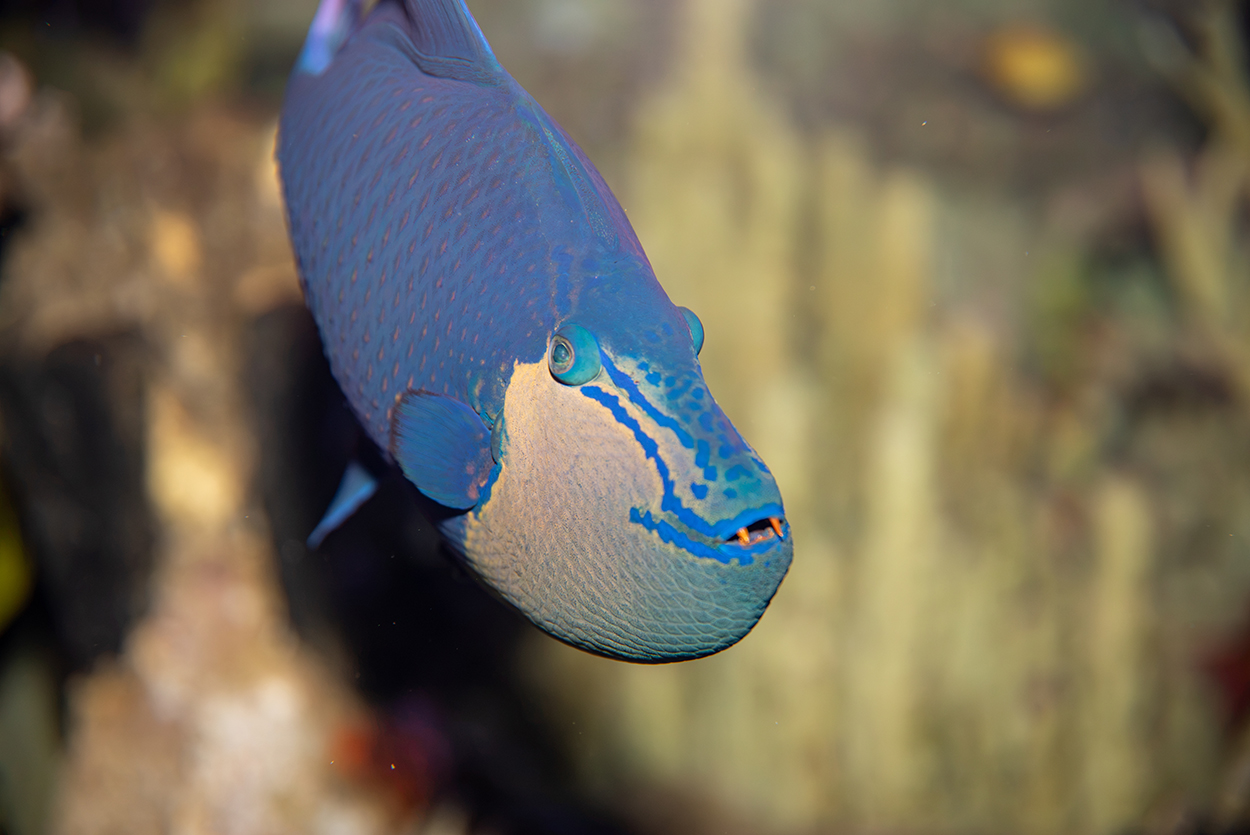
Their names might sound like they belong in a haunted house—dead man’s fingers, vampire triggerfish, bat sea stars—but the science behind them is more fascinating than frightening. Their unique features and behaviors help them hide, hunt, and survive in their environments.
Meet some of the New England Aquarium’s most Halloween-ready fish and invertebrates.
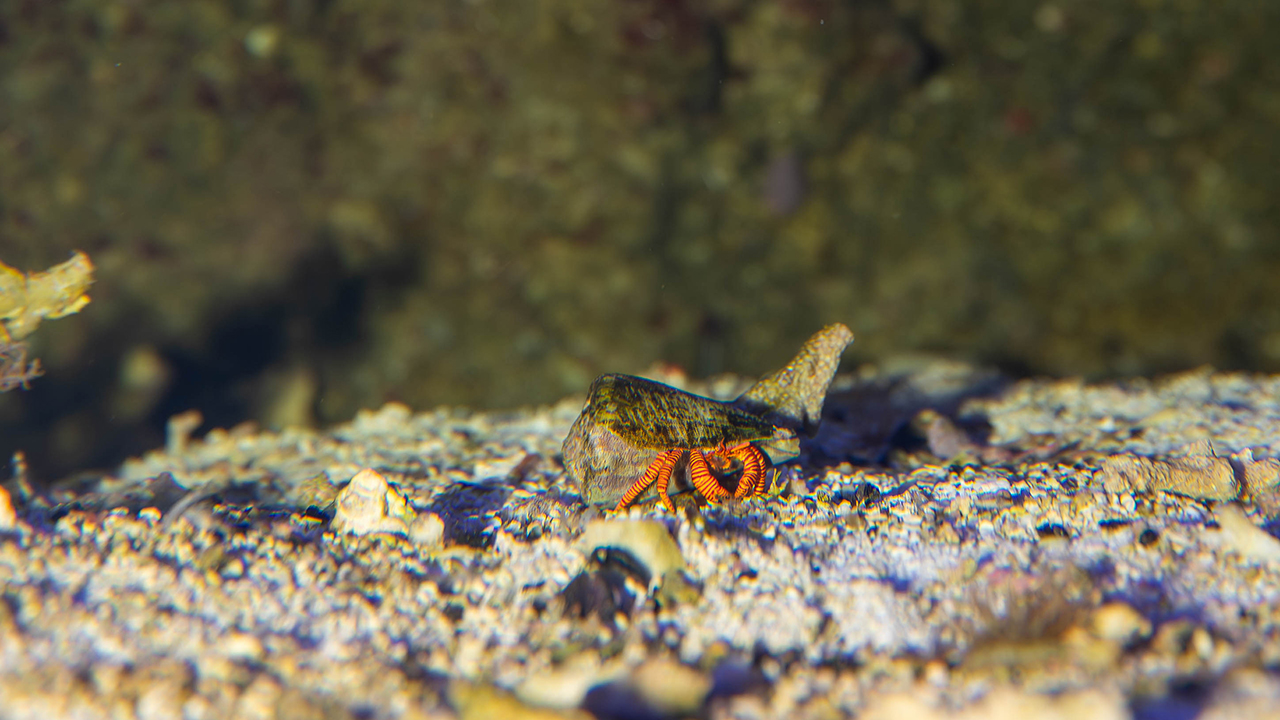
Halloween hermit crab
These crustaceans get their name from their bright orange-and-red striped legs, reminiscent of Halloween decorations or a witch’s tall striped socks. They are mostly nocturnal, coming out at night to scavenge. As omnivores, they’ll eat both plant and animal matter.
Like other hermit crabs, they move into bigger shells as they grow, but their costume of choice is almost always a cone snail shell. Their flattened bodies can slip into the narrow openings of these shells. Native to the Indo-Pacific, in areas like Hawaii and the Red Sea, these festive crabs can be found in our Lagoon Coral Reef exhibit, the Science of Sharks, and Living Mangroves exhibit.
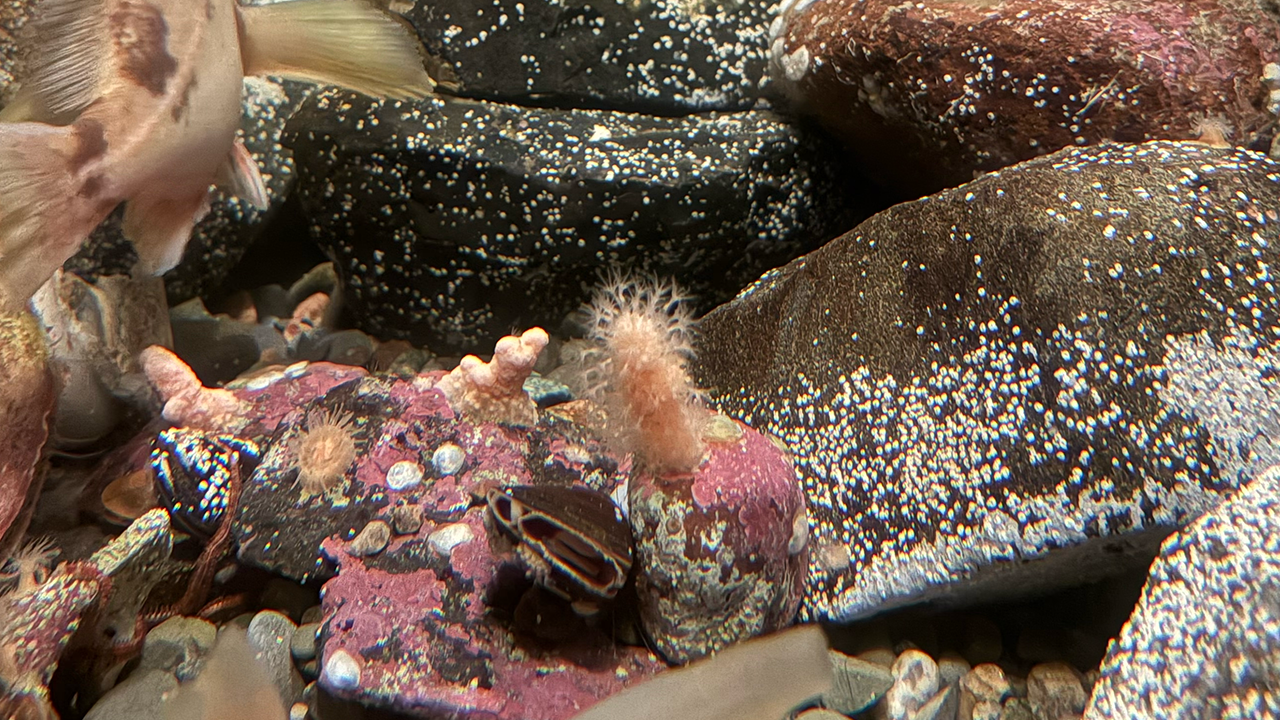
Dead man’s fingers
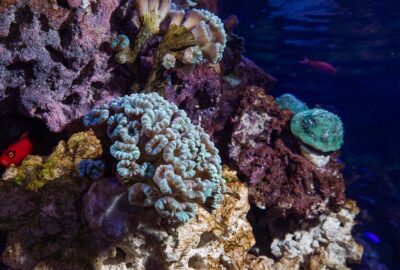
Few animals have a more Halloween-worthy name than dead man’s fingers, a soft coral named for its resemblance to a human hand reaching up from the seafloor. Like many of their octocoral relatives, these corals can extend their tiny polyps to feed or catch the current, giving them a fuzzy, feathery look. When the polyps pull back in, the “fingers” look more like little heads of broccoli. You can find them in our New England Harbors exhibit. But if you’re hoping to catch them looking their creepiest, you may have to wait until after Halloween. Come back in December or January, during their breeding season, when their polyps are more often extended and look their most hand-like.
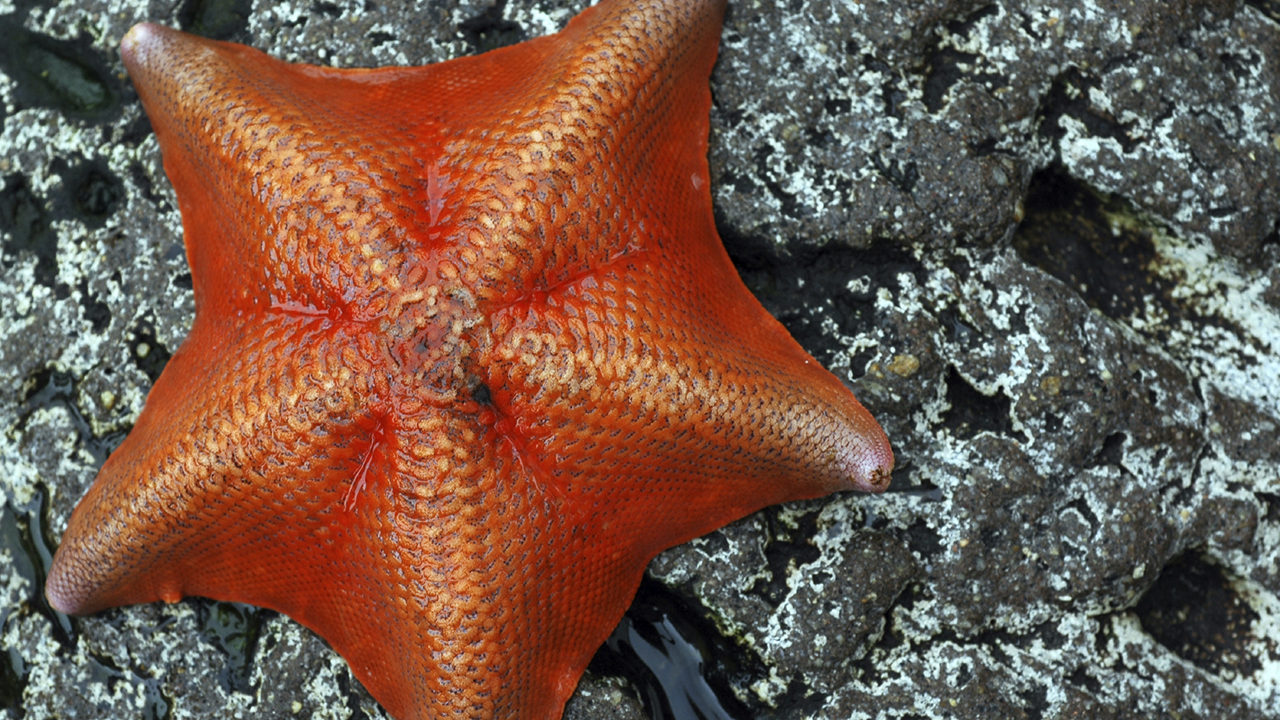
Bat sea stars
Commonly known as starfish, sea stars like the bat sea star are invertebrates, closely related to sea urchins, sand dollars, and sea cucumbers. Though some are bat-brown, bat sea stars come in a rainbow of colors, including purple, red, orange, pink, and white—many of which you can spot side by side in our Olympic Coast Sanctuary exhibit.
Compared to other sea stars, bat sea stars have wider tissue between their arms, which looks like the webbing of a bat’s wings. Most have five arms, but some have been found with as many as nine in the wild. Their range stretches along the Pacific coast from southern Alaska to Baja California, and they live everywhere from tide pools to depths of around 1,000 feet.
While bats cling to cave ceilings, bat sea stars cling to rocks. Their tube feet secrete a natural adhesive that keeps them in place when the current is strong or waves are rough. Their most impressive trick to get treats? They can push one of their stomachs out through their mouths and onto the seafloor, digesting almost any organic matter they find.
Vampire triggerfish
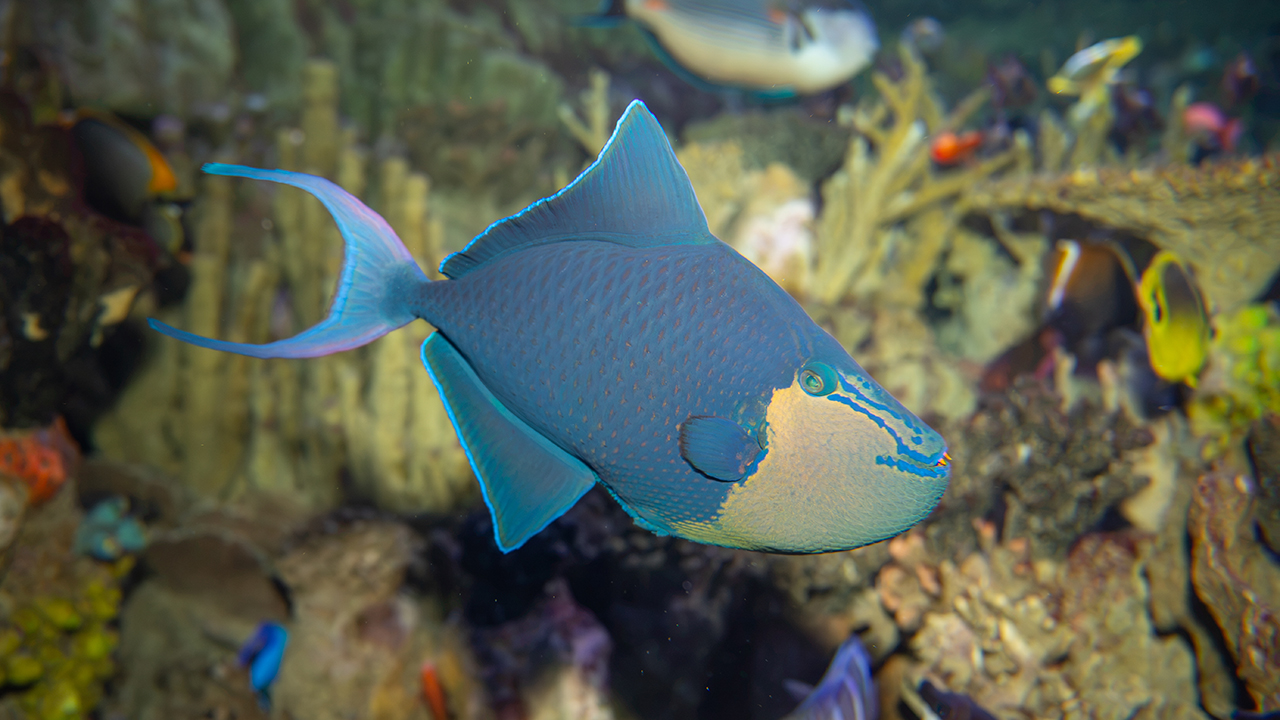
Though it’s more commonly known as the red-toothed triggerfish or Niger triggerfish, one look at its bright red, fang-like teeth explains this fish’s more monstrous nickname. These deep blue fish live on coral reefs across the Indo-Pacific, from South Africa to Indonesia, and can grow up to 12 inches long. Like any good vampire, they can be a bit aggressive toward other fish.
All triggerfish share a special spine on their dorsal fin, the “trigger” in their name. When threatened, they dart into a crevice and lock that spine upright, wedging themselves in so tightly that predators can’t pull them out.
Visit our Indo-Pacific Coral Reef exhibit to see one for yourself. If it’s lounging on its side, don’t worry. Our resident triggerfish has a quirky habit of lying down that’s unusual for other fish but perfectly normal for this individual.
Pumpkinseed sunfish
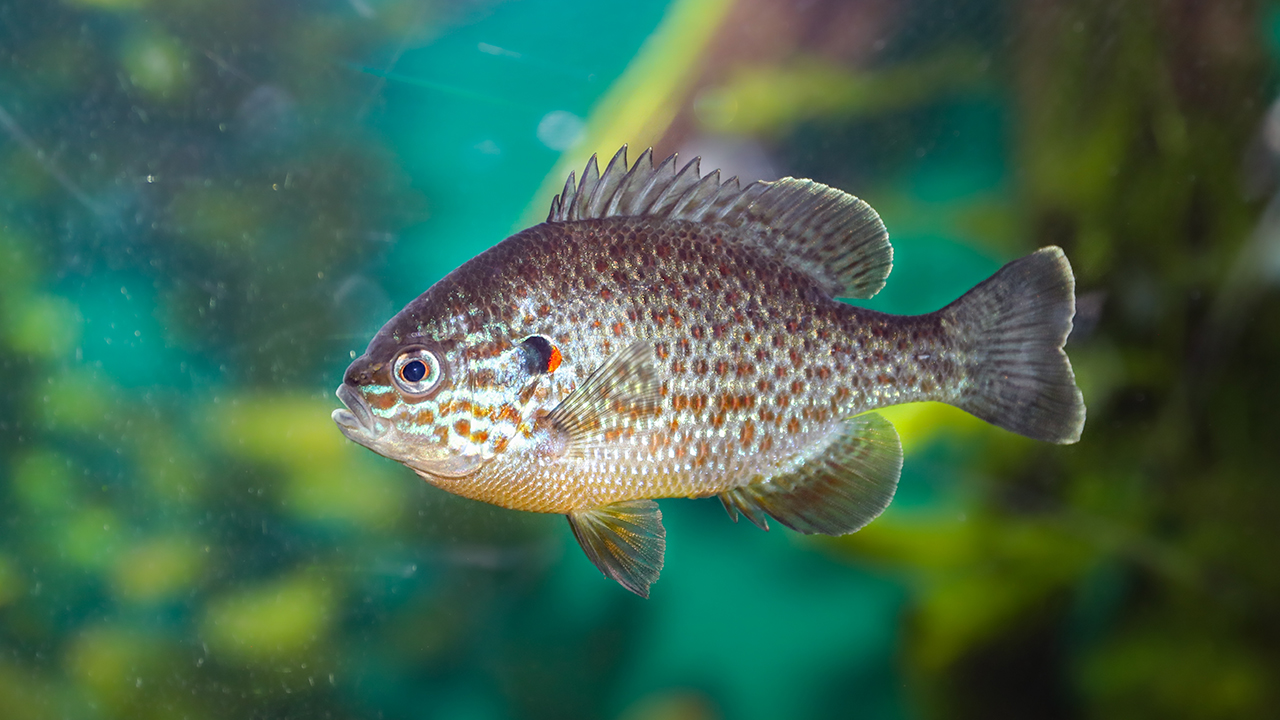
Though their orange and yellow undersides alone might be suggestive of a pumpkin, they are actually named for their pumpkin-seed-shaped bodies. This coloration and shape, paired with a bright red outlining the flap covering their gills, make them easy to identify.
Native throughout the United States and Canada, including here in New England, they live in lakes, ponds, and slow-moving streams and rivers, often swimming in groups alongside other sunfish like bluegill and long-eared sunfish. Unlike some of our other Halloween animals, they’re active during the day and rest at night.
In late spring and early summer, pumpkinseeds build nests by sweeping out shallow, saucer-shaped dips in sand and gravel, often clustered together in colonies. The males guard their nests fiercely from predators, and once the eggs hatch, they’ll even scoop up straying babies in their mouths and spit them back into the nest. You can find them in our Atlantic Salmon exhibit!
Halloween might be one night a year, but you can see these not-so-scary animals in every season during a visit to the New England Aquarium!

Related Stories

Protect the Blue Planet
Your ticket purchase to the New England Aquarium directly supports our work to create a vital and vibrant ocean for future generations.