Play as Enrichment: Reggae’s Rubber Ducky and More
Play is an important part of enrichment for animals at the Aquarium, from Atlantic harbor seals to South American lungfish.
By New England Aquarium on Monday, April 13, 2026

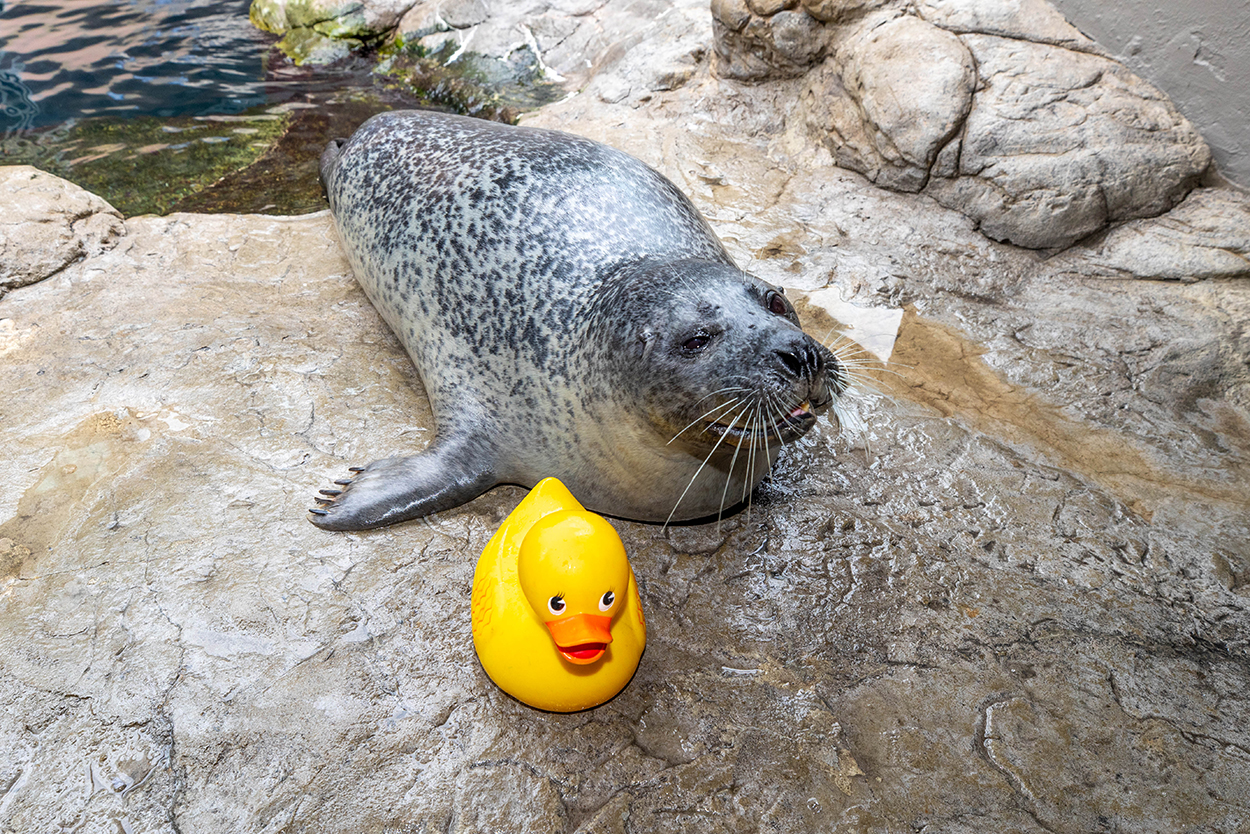
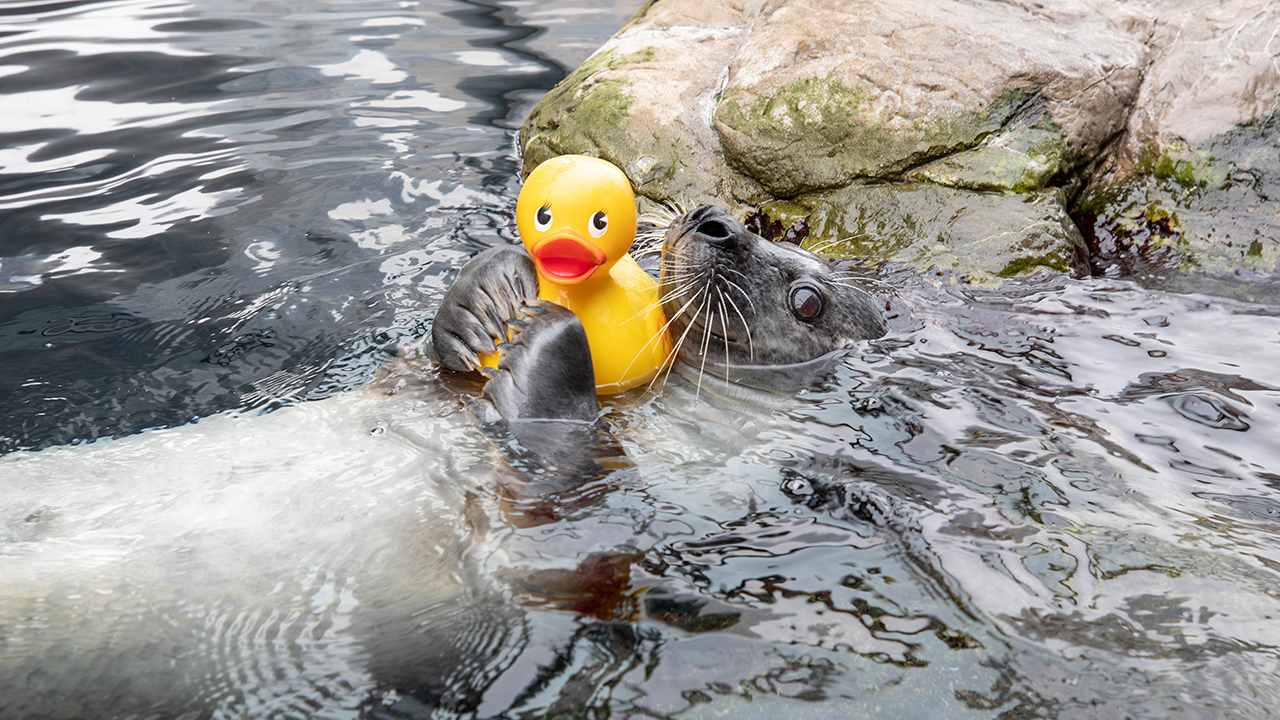
Reggae the Atlantic harbor seal’s favorite toy is a big, yellow rubber ducky. He’ll chase after it as it floats in the exhibit, bopping it with his nose, or hold it with both flippers while swimming on his back.
This playtime is more than just adorable—it’s an important part of enrichment for animals like Reggae, whose trainers and caretakers design activities like “Find It,” which asks Reggae to search for his ducky within his habitat. These “games” keep animals mentally engaged and help them hone behaviors that they’d naturally display in the wild.
“Play is a huge part of what we do to build relationships with our animals,” said Kristen McMahon, curator of Penguins and Pinnipeds. “We like to see good, naturalistic behaviors like foraging and play is a part of that.”
Fun with a purpose
Play is an element of a well-rounded enrichment program, which also includes training behaviors and providing novel stimuli to support an animal’s overall physical and mental well-being. These elements also aren’t always distinct from one another. “A training session may involve play, or we may want to reinforce a correct behavioral response, and we do that not only with food but by playing and spending time with them,” Kristen said. “It’s our way to letting the animals know we appreciate them, and it has a positive impact on the increase of appropriate behaviors that we see from the animals.”
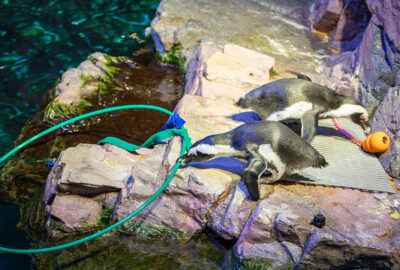
Toys—like Reggae’s rubber ducky—give animals and their trainers opportunities to be creative, solve problems, and have fun. Whether it’s chasing a ball around the exhibit or searching for fish hidden in a snuffle mat, it’s important that the animals to are engaged with the activity, reinforcing behaviors trainers would like to see, and socializing either with one another or with their trainers. “Play can be many things: social, physical, cognitive, sensory, and involve food,” Kristen said. “There are a lot of ways to get them engaged, and our goal is to provide them with variety in their day.”
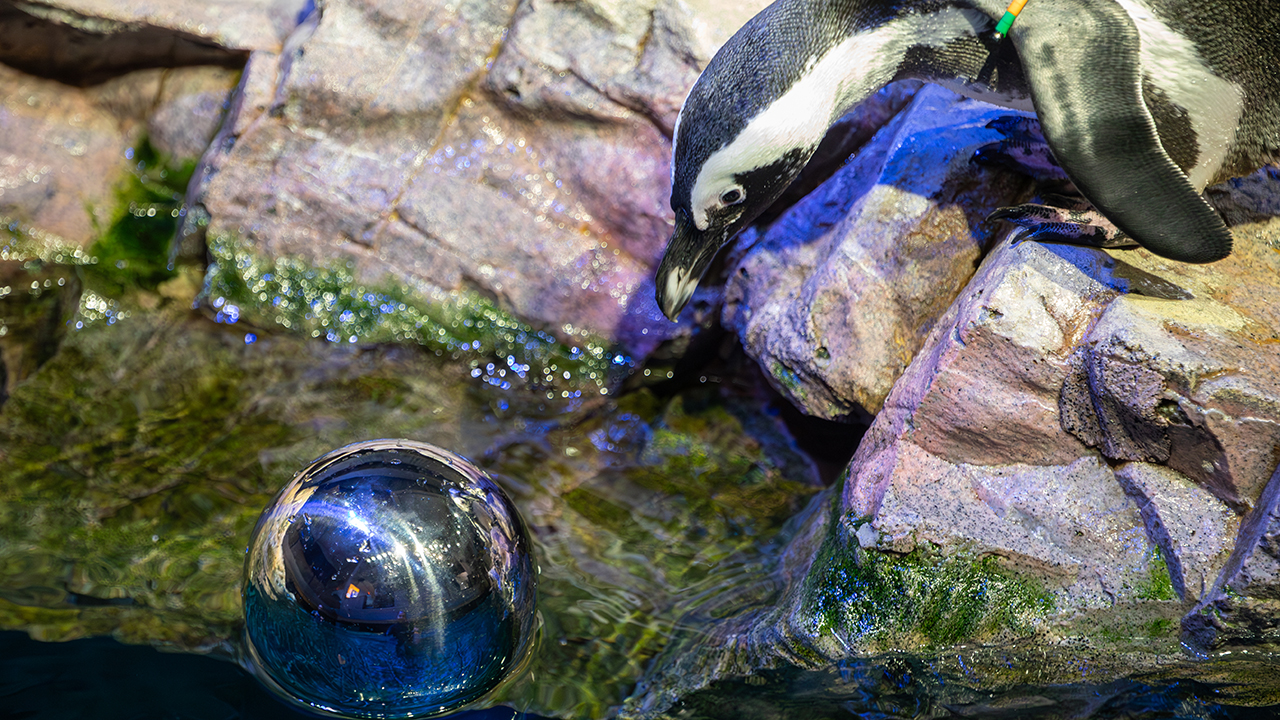
Play can also be impromptu between animals, Kristen said. When penguins and California sea lions are zooming through the water or the Atlantic harbor seals are diving in their exhibit, what they’re doing just may be playing. It’s the type of behavior that their wild counterparts display, too—exploration, interaction, and innovating new ways to engage in their environment.
“Play is a natural behavior for lots of animals,” said penguin trainer Mia Luzietti. “We can start to characterize it by asking: What is the animal trying to get out of this behavior?” An indicator of play is whether an animal has intention or motivation for their actions beyond interacting with objects, trainers, or other animals. “For example, playing tug of war with us does not have a biological need or implication, so an animal might participate in that just because they are having fun!” Mia added.
Play also looks different for each individual. As animals get older, they may engage less in active play and find entertainment and enrichment elsewhere in their environment— “a bit like how an older person might prefer not ‘play,’ but will enjoy a nice walk,” Mia said.
“Enrichment is probably one of the best parts of our job,” Kristen added. “We brainstorm it, we put enrichment items in the pool with the animals, and we get to see them enjoy it.”
Can fishes play?
The answer, said aquarist Allison Waltz-Hill, is yes—fish do seem to play!
“What this looks like can vary a lot depending on species and it’s important to distinguish ‘play’ from normal survival activities like foraging,” Allison said. They pointed to a paper that investigated the topic which outlined criteria for defining “play” in animals, including that the behavior is spontaneous, and that it is “begun in the absence of stress, hunger, predation,” or other “unhealthy” circumstances. The experiment utilized laser pointers to test whether fishes engaged in play by recording the fishes’ interest level in the laser pointer, as well as behavioral changes.
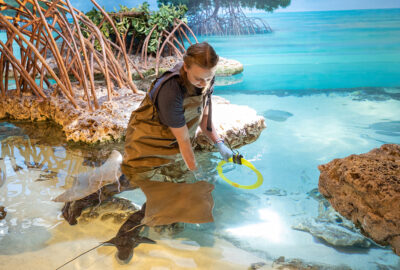
Here at the Aquarium, “I’ve seen a lot of different examples of what I would interpret as play behaviors,” Allison said. Fish will interact with tools during exhibit maintenance, push and manipulate enrichment items like balls when food is not involved, engage with water flow and bubbles to “surf” seemingly unnecessarily, and investigating aquarists in exhibits.
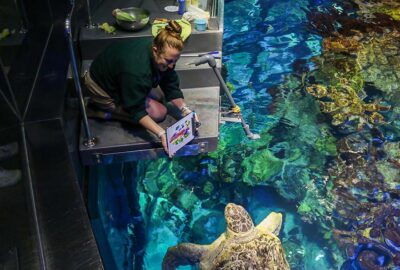
“They will also watch a video on an iPad,” Allison added. “I’m not sure if this is ‘playing,’ but it’s certainly an example of how curious fishes can be!”
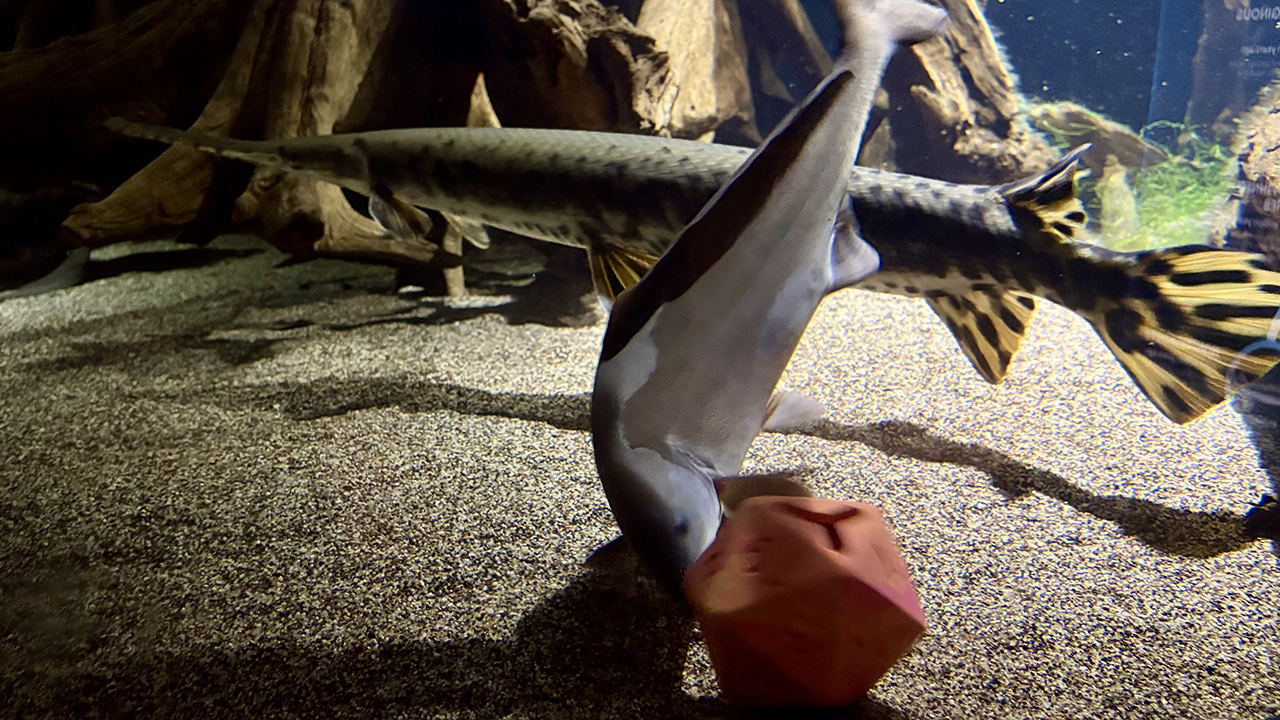
Like their colleagues who work with penguins and marine mammals, Allison and their fellow aquarists offer enrichment to fishes, too—for example, Captain Bobo, a South American lungfish, engages with a dog toy shaped like a twenty-sided die. The dolphin-headed elephantfish in the Ancestral Fishes exhibit can also be playful. As part of the mormyidae family of fishes, a group of notoriously inquisitive and clever fish, the dolphin-headed elephantfish enjoys moving objects around—including the die and other dog toys—and likes investigating tools and interacting with them.
“Some fishes may playfully interact with and manipulate elements of their everyday environments,” Allison added. “This is why providing a complex environment with lots of options to engage in natural behaviors, including play, is important—even for fishes!”

Related Stories

Protect the Blue Planet
Your ticket purchase to the Aquarium directly supports our work to create a vital and vibrant ocean for future generations.