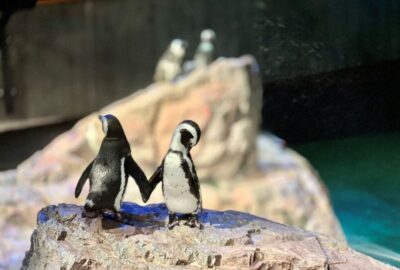
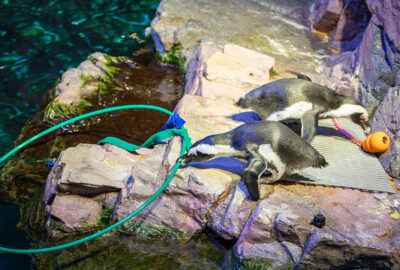
African penguin
Spheniscus demersus
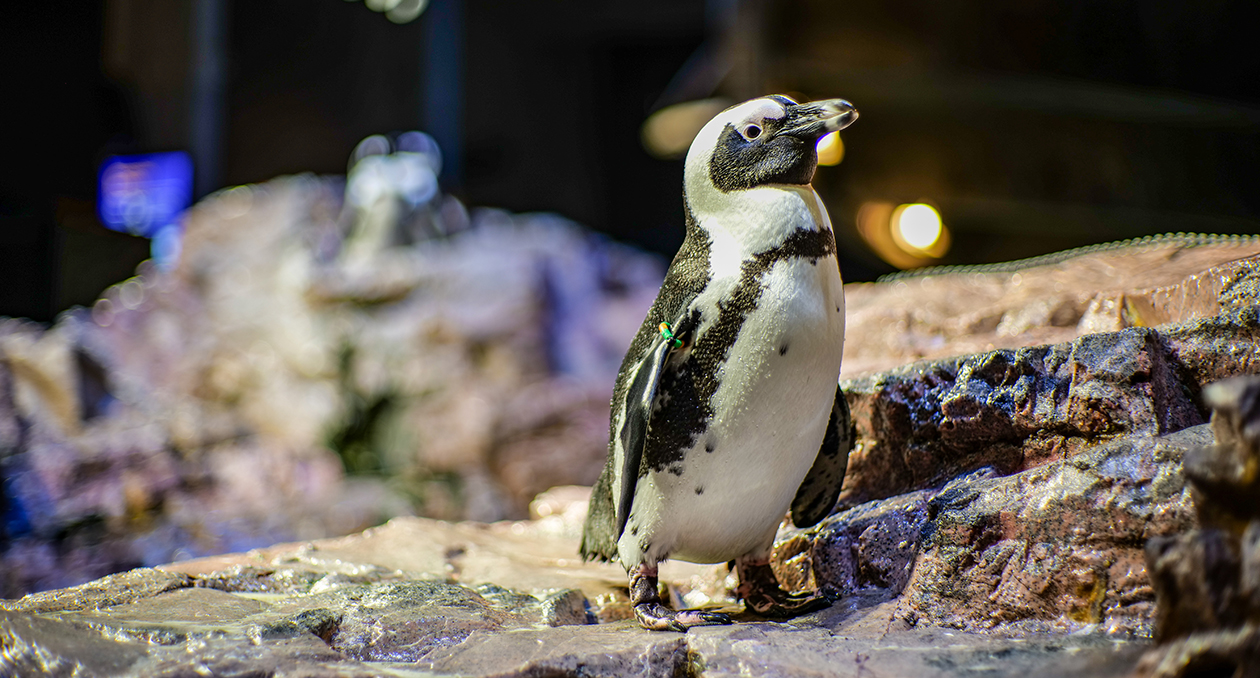
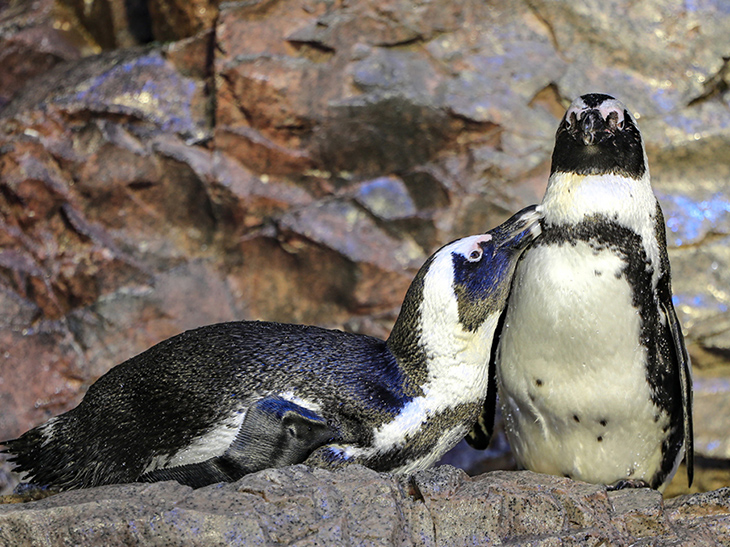
African penguins make a sound that is very similar to a donkey’s bray. Hear it for yourself at the Aquarium, which is home to more than 50 African and southern rockhopper penguins!
Animal Facts
Size
23–25 inches tall; five to nine pounds
Diet
Small fishes, such as pilchard, anchovies, horse mackerel, and sardines
Lifespan
10–15 years in the wild
Range
Africa’s coastal waters and islands, from Namibia through South Africa
Conservation Status
Critically Endangered
Threats to Survival
- Climate change
- Habitat loss
- Pollution
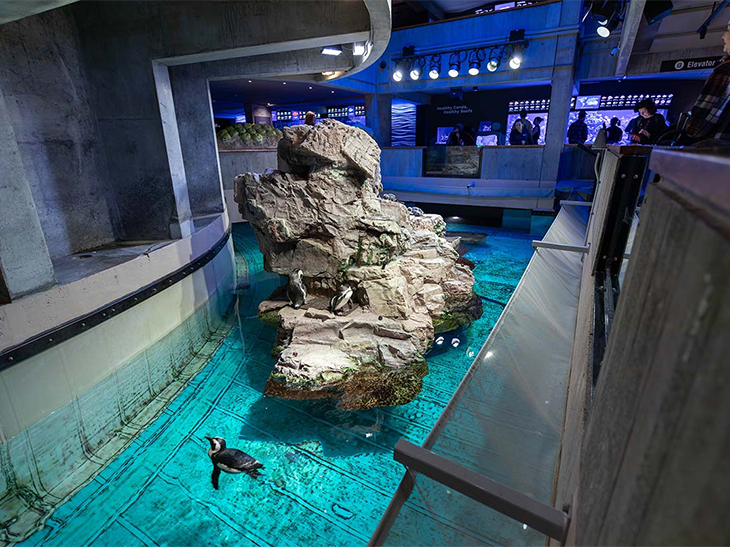
Older Penguins Get a New "Retirement Island" at the Aquarium
As penguins age beyond their typical lifespan in the Aquarium’s care, they now have a place where social dynamics are more relaxed, slopes are more gradual, and health care is a part of daily life.
Species Survival Plans for Penguins
Wild colonies of penguins are threatened by the depletion of their food from climate change, overfishing, and pollution from incidents such as oil spills. Penguin aquarists at the New England Aquarium are doing all they can to keep the birds in our care thriving, and that means maintaining a thoughtful breeding program.
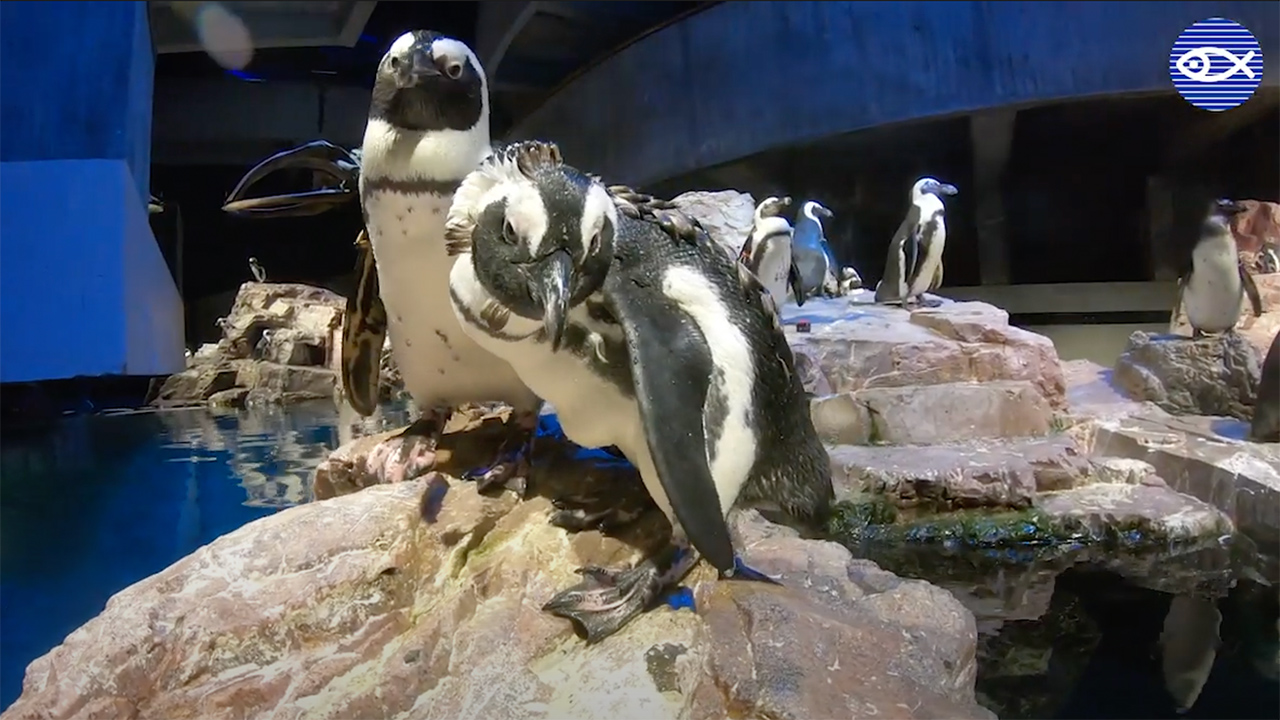
Why do penguins molt?
You may notice some penguins’ coats looking a little disheveled. This is how they look during the molting process, which each penguin goes through annually to completely replace their very important feathers.

Donate to Support Ocean Conservation
At the New England Aquarium, ocean conservation is at the center of everything we do. And with your help, we can tackle pressing threats like climate change and its effects on ocean animals and habitats.
Ask the Expert
Learn more about African penguins with aquarist Eric.
What are African penguins?
00:27How many African penguins does the Aquarium have?
00:47What challenges do African penguins face?
00:41What does the Aquarium do to help African penguins?
00:56




Related Stories