From Axolotls to Dart Frogs, Meet the Aquarium’s Behind-the-Scenes Stars
These animal ambassadors don’t live on exhibit—but you can get to know them up close during Animal Encounters.
By New England Aquarium on Monday, March 30, 2026

Some of the most memorable animals at the New England Aquarium aren’t part of our main exhibits.
Instead, they’re “animal ambassadors”—species that help guests learn more about conservation. These behind-the-scenes animals regularly join our Visitor Experience team for Animal Encounters, a rotating series that gives guests the chance to see them up close and hear their stories.
“These programs are really a partnership,” said Becky Heidt, an aquarist who works closely with many of the animal ambassadors. “You have the education team connecting with guests and Animal Care making sure everything happening behind the scenes is in the best interest of the animal.”
Animal Encounters take place daily from 10:45 to 11:15 a.m. in our Blue Planet Action Center, or on the first floor or upstairs in our Temperate Waters Gallery. From rare amphibians to local turtles, learn more about some of the fascinating species you might get to meet.
Axolotls
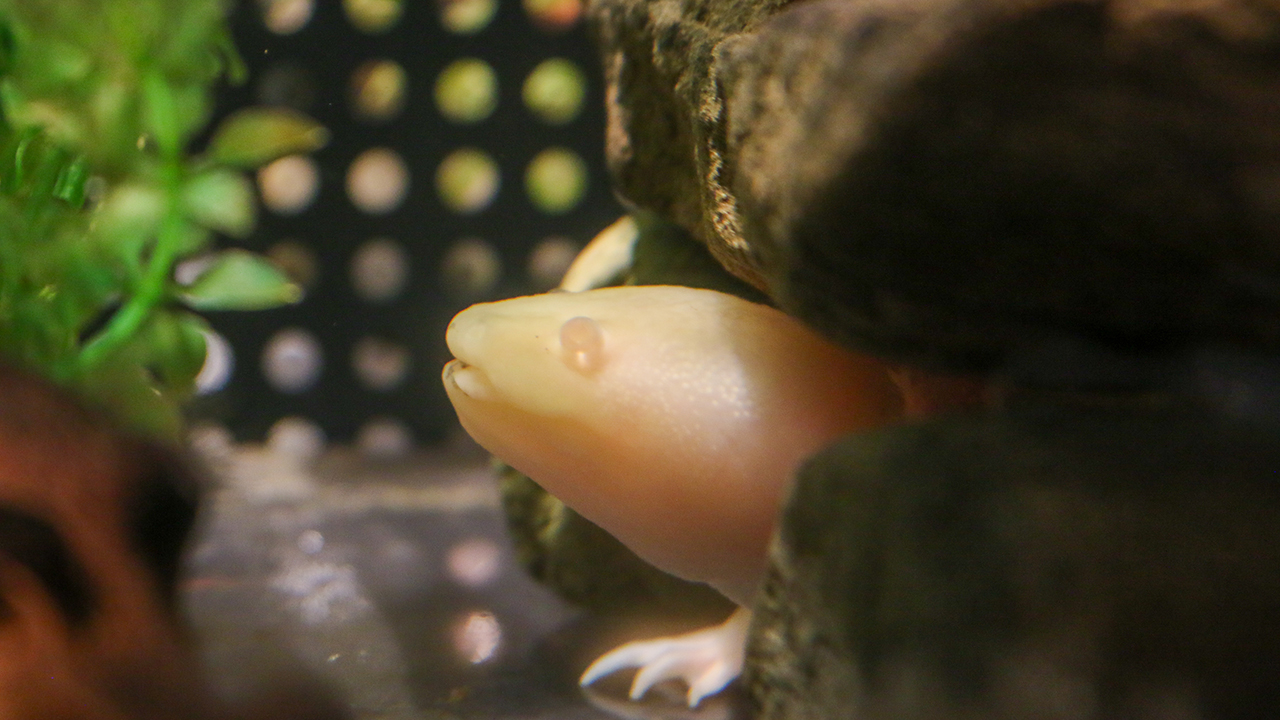
For most, an Animal Encounter is their first time seeing axolotls in real life.
In the wild, this endangered species of salamander only lives in the waters and wetlands of Lake Xochimilco in Mexico City, Mexico.
“Chi,” a 14-year-old male axolotl at the Aquarium named for this lake, is a pinkish white color because he is leucistic—a genetic mutation that results in reduced pigmentation, except for a small spot above his right eye. “Fantasma,” a female axolotl at the Aquarium, is primarily mottled brown, more closely resembling wild axolotls.
Animal welfare is always top of mind during Animal Encounters, which is why the axolotls travel to and from the programs in style, in a mobile enclosure. They don’t like being touched, and it is important not to disturb the sensitive layer of mucus on their skin, so transporting their habitat as a whole works best.
“They’re super cool to learn about because they’re an awesome, really unique animal,” Becky said. They are known for their frilly external gills, their curved mouth “smile,” and their remarkable ability to regenerate limbs.
Dart frogs
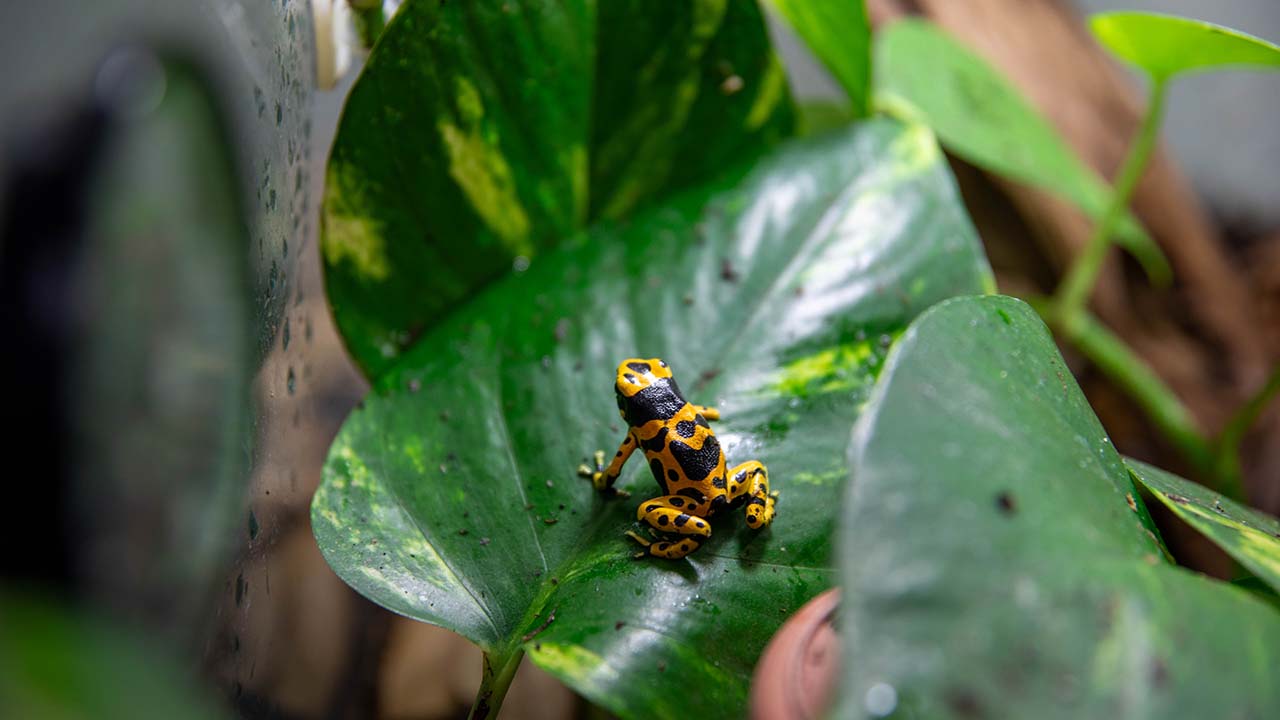
Bright, tiny, and constantly on the move, dart frogs are among the newest additions to the ambassador lineup. Housed in lush, planted terrariums, they also travel in a mobile enclosure—eliminating the need for handling and reducing stress for both frogs and staff. You might see them exploring leaves, popping in and out of the hiding places all animals are provided for their wellbeing, or even grabbing a bite to eat.
In the wild, their bright coloration warns predators that they are toxic—but dart frogs aren’t naturally poisonous. They acquire toxins from the insects they eat. At the Aquarium, they are fed fruit flies that our team cultures in-house, along with small pinhead crickets, so they don’t possess enough of the toxins to become poisonous.
During Animal Encounters, guests might also learn about the dart frog’s Amazon habitat, the challenges it’s facing there, and what they can do to help.
“These programs are so beneficial for education,” Becky said. “It’s so much easier to absorb a conservation message when you’re looking at an adorable face.”Animal Encounters also provide enrichment for animal ambassadors, giving them opportunities to experience new sights and sounds.
Turtles
“The turtles are definitely some of the most interactive animals,” Becky said. Depending on the day, guests might meet Emy, a red-bellied cooter, or Skip, a Blanding’s turtle who was seized from illegal captivity and deemed non-releasable due to years spent living in a backyard pool. Today, they help tell an important conservation story, connecting guests to Zoo New England’s partnership with the Aquarium giving turtles a “head start” by raising and releasing young turtles to boost wild populations.
The turtles get extra enrichment through the substrate made of leaves, moss, and dirt in their Animal Encounter bin. You might see them exploring this new texture, “running” around, or even snacking on a leafy salad.
“They’re the messiest eaters,” Becky noted. “You might see broccoli by their eyes, tomato in their noses.”
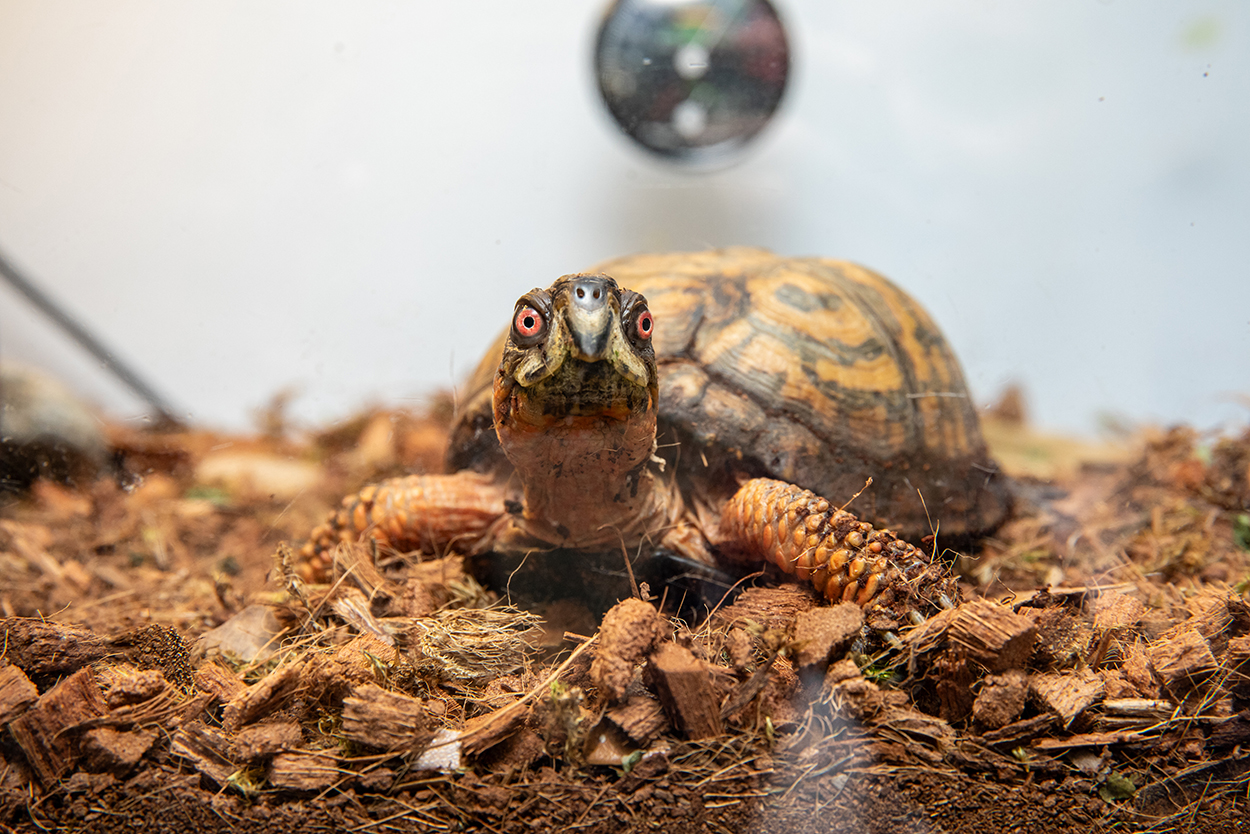
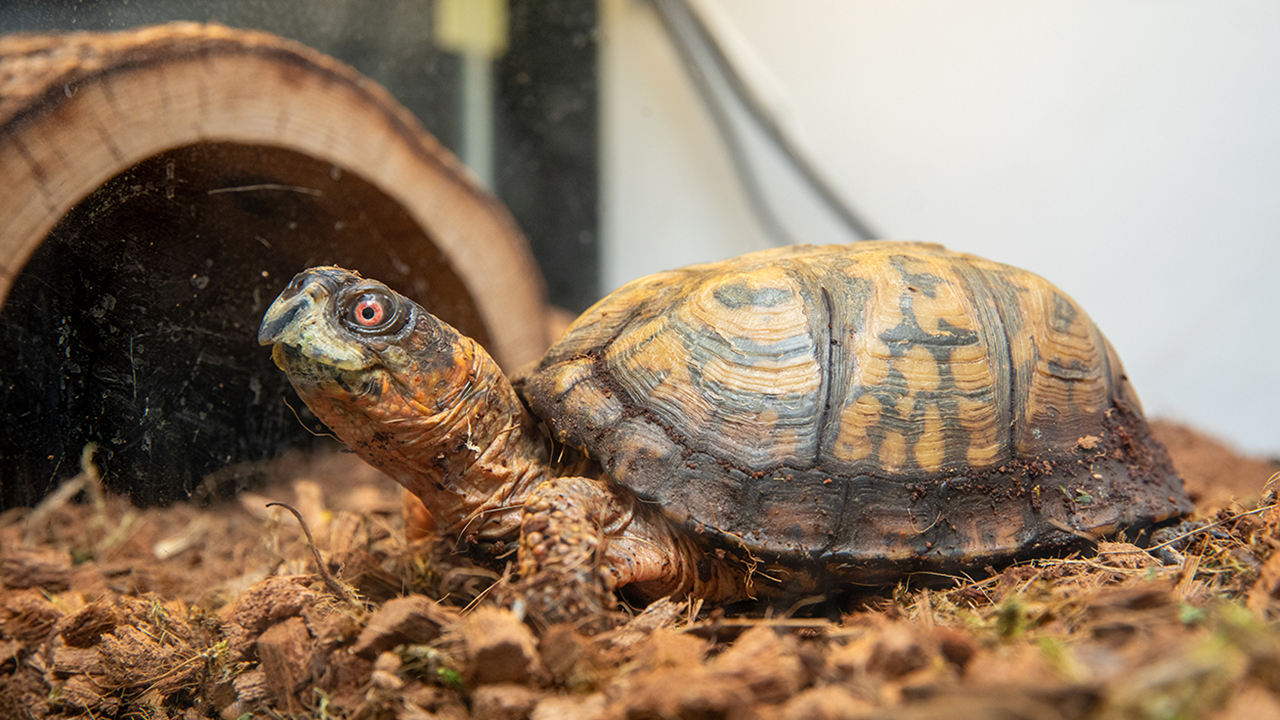
Pandora and Jack are fan-favorites Eastern box turtles who also make an appearance as ambassadors.
“The box turtles are so cute,” Becky said. “I’ve seen them interact with kids, kind of just looking at them, maybe following them around in the bin.”
Animal encounters with these turtles can be especially meaningful because they’re species we see in our own neighborhoods, and guests learn how they make a difference locally.
Jellies, lobsters, and more
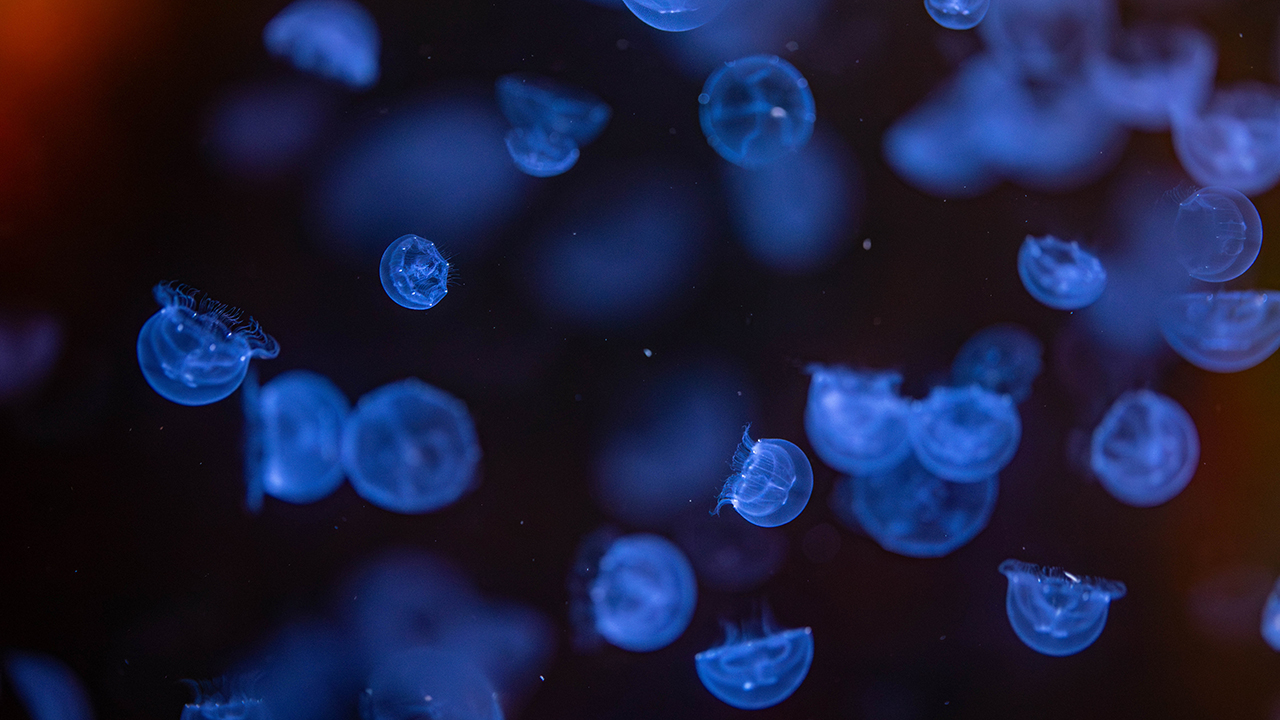
On other days, guests might get to see sea jellies—commonly called “jellyfish,” though they aren’t fish—in a new light. During Animal Encounters, a group of jellies is on view in a long, illuminated tube that makes their translucent bodies easier to observe. Our team raises colonies of jellies behind the scenes, carefully mimicking ocean temperatures to simulate seasonal changes and support spawning.
Lobsters make an appearance during the colder months, when the heat of the building won’t alter the temperature of the chilly water they thrive in. And our team continues to brainstorm new species that may be a fit for future Animal Encounters, centering all decisions around the safety of the animals, staff, and guests.
Our Animal Care team regularly conducts specialized welfare assessments for animal ambassadors, evaluating everything from environmental quality to animal behavior during and after the program.
“It’s not just about bringing animals out,” Becky said. “It’s about making sure the experience is enriching and appropriate for them every step of the way.”
Next time you visit the Aquarium, join an Animal Encounter for a unique experience. You never know who you’ll meet on a given day!

Related Stories

Protect the Blue Planet
Your ticket purchase to the Aquarium directly supports our work to create a vital and vibrant ocean for future generations.