Lights, Plants—Habitat!
Learn about some of the details from nature that go into making animals’ habitats feel like home.
By New England Aquarium on Monday, March 09, 2026

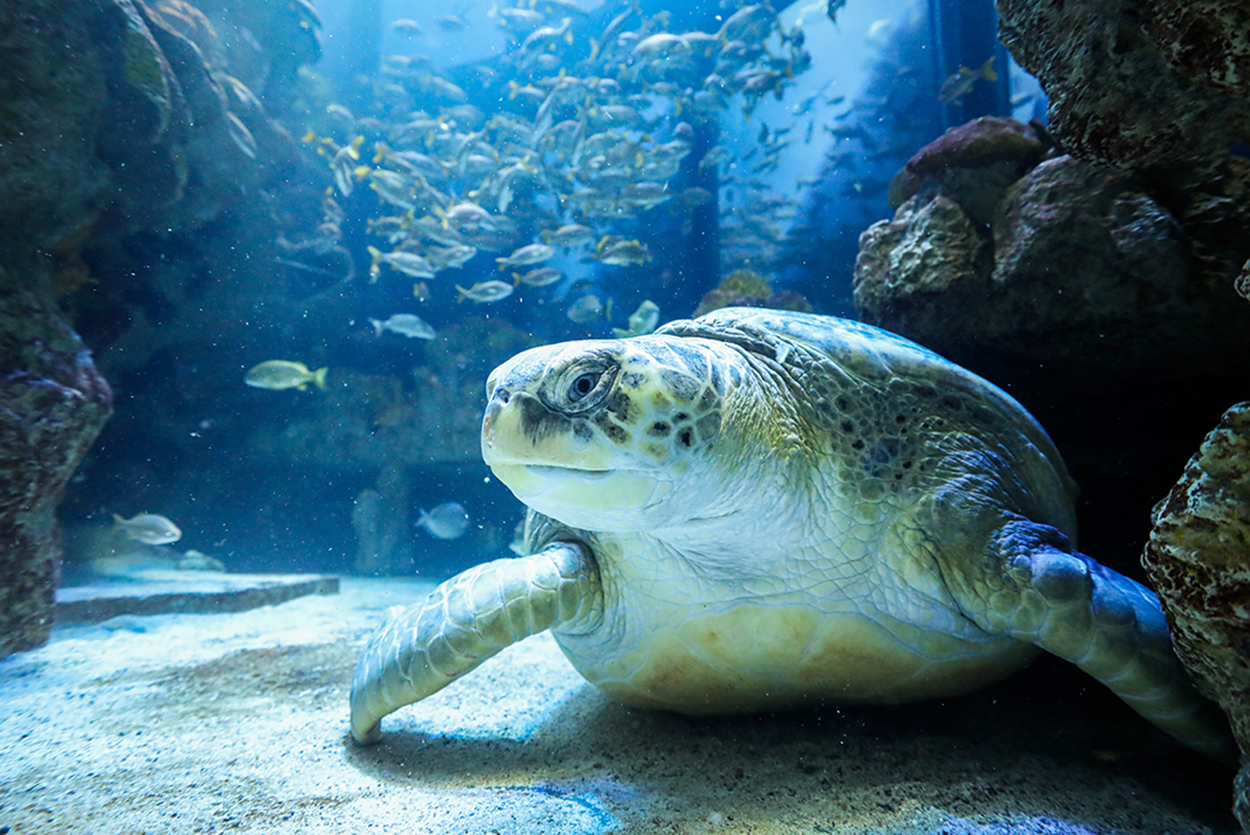
Part of providing the best care possible for the Animals at the Aquarium is ensuring their habitats are well-suited for their needs. From maintaining the right water temperature to providing enriching and animal-appropriate “decor,” a lot of thought goes into the design and upkeep of every exhibit.
Some of these elements might be easy to overlook as a visitor, but they make a big difference for the animals’ well-being! Here, learn about two not-so-small ways we help keep our animals’ homes close to nature.
Lighting
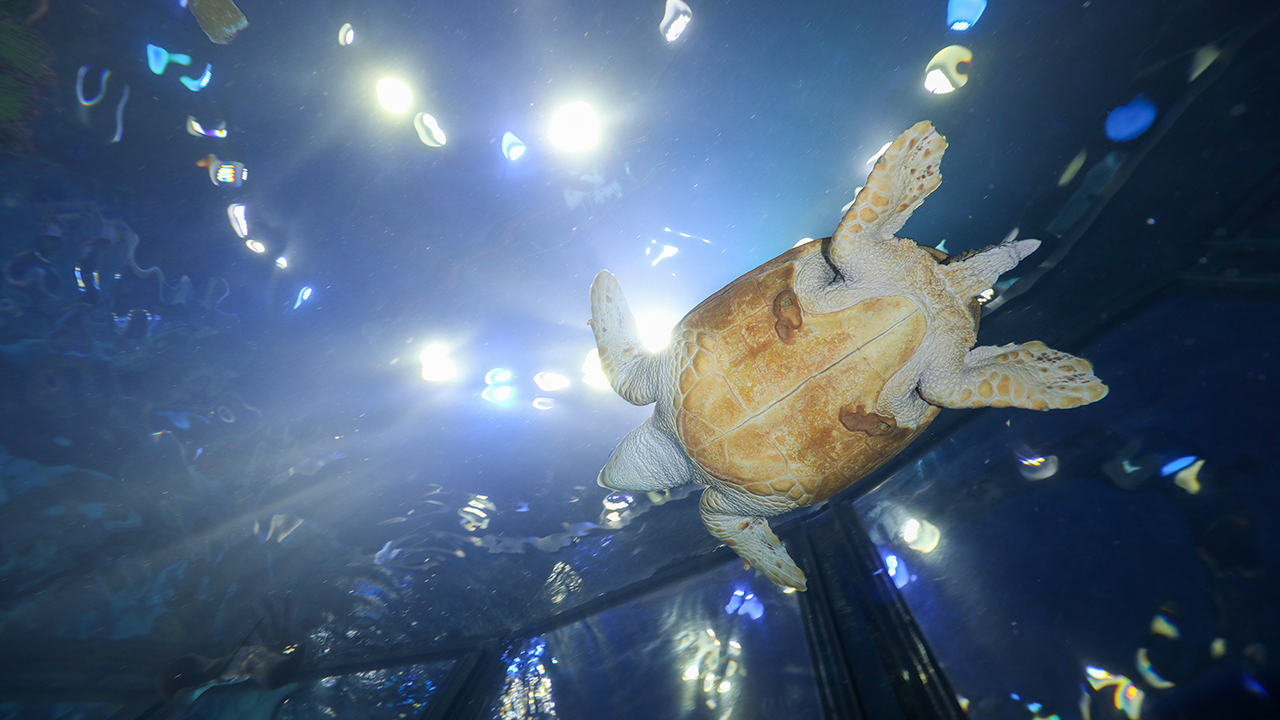
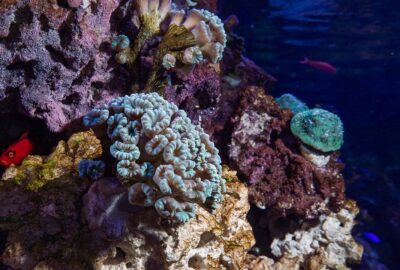
Some animals, like those in our Caribbean Deep Reef exhibit, live in deep waters in the ocean, where sunlight doesn’t reach. These dark exhibits are designed for the needs of deep-sea animals who thrive in low light, and whose adaptations—including biofluorescence—help them to make these dark waters home.
For others exhibits, our aquarists aim for lighting to mimic a natural day-to-night cycle. In the Giant Ocean Tank, that means following the conditions of the Caribbean and adjusting the timing of the lighting throughout the year.
“The Giant Ocean Tank lights have a gradual ‘sunup’ phase where lights slowly come on to simulate dawn, then full lighting during the day, and a gradual ‘sundown’ phase where lights dim and shut off to simulate dusk,” said Lindsay Phenix, a senior aquarist. “At night, the tank lights are all completely off except for one light to simulate the moon.” Throughout the day, the lights will also periodically dim to simulate passing clouds.
The Giant Ocean Tank isn’t the only place where lights are a major consideration. In our Shorebirds exhibit, where the birds have a harbor view, aquarists also work to have the lighting follow outside conditions. That means adjusting the photoperiod at the start of every month, and sometimes even mid-month, too!
Live plants
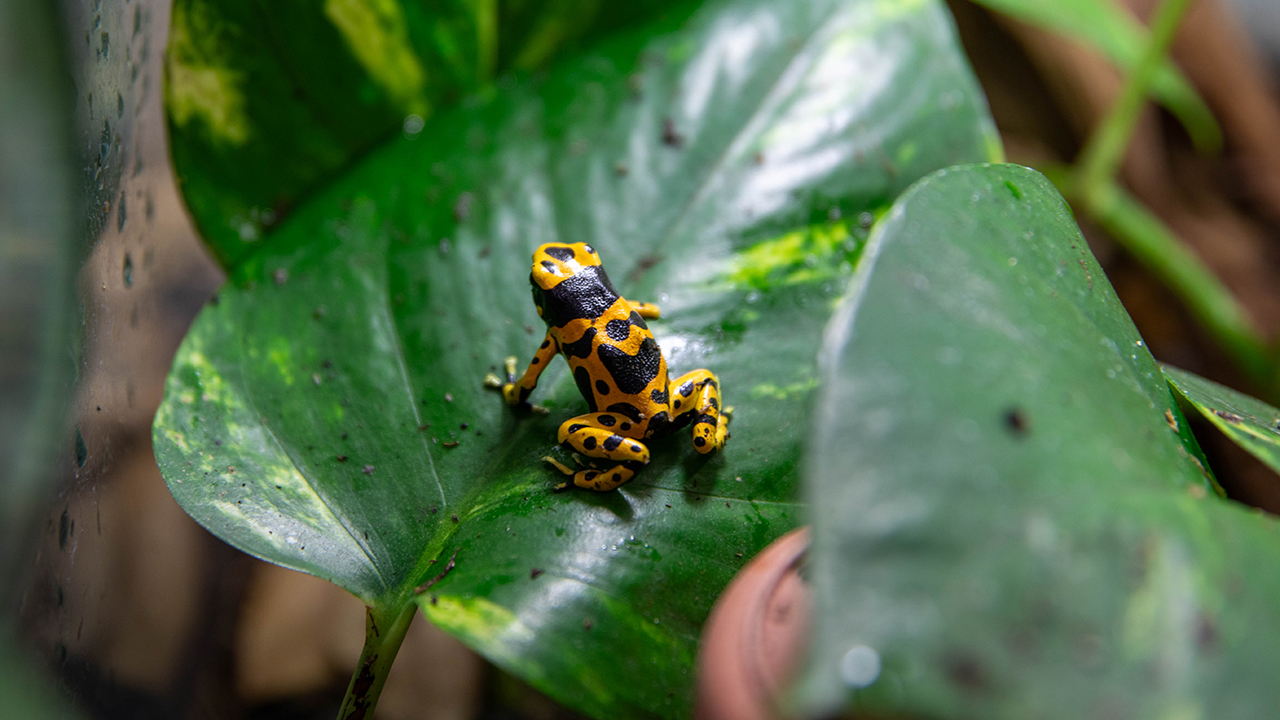
In our Amazon Rainforest exhibits, live plants make up much of the animals’ environments, recreating the lush jungle landscapes that they would inhabit in the wild.
“The live plants help to make the exhibits as naturalistic as possible,” said aquarist Katy Roscoe. “Visible roots or dead leaves might not look nice to us, but these are definitely highly present in their natural habitats and help to create a dynamic environment.”
Because the plants are real, aquarists also take time to care for them, too! They require periodic trimming, and a behind-the-scenes sprinkler system helps keep terrestrial exhibit plants hydrated.
“Fertilizer is added to exhibits in a few cases,” Katy added. “Occasionally plants get uprooted and need to be replanted.”
The plants in the Amazon exhibits are all species you might find in the wild—including ferns, monstera, and bromeliads. As for aquatic plants, there are also Amazon sword, vallisneria (a type of eelgrass), and subulata.
“I only select species that you might find in the Amazon so you won’t see any plants that are native to Asia, Africa, or Europe in the Freshwater Gallery, but you can see native aquatic African plants in our African Rivers exhibit!” Katy said.
Now that you know a bit more about how we make our animals feel at home, see if you can spot these details during your next Aquarium visit!

Related Stories

Every Visit Makes a Difference
Your ticket purchase to the Aquarium directly supports our work to create a vital and vibrant ocean for future generations.