Big and Small Ways We Protect the Blue Planet
Decades of sustainability efforts, everyday habits, and a new roadmap at the New England Aquarium.
By New England Aquarium on Wednesday, April 22, 2026


At the New England Aquarium, we think about the health of the ocean a lot—which means we think about the health of the planet a lot. The two are inseparable. So while the most visible parts of our work happen in the exhibits, sustainability shapes efforts across the Aquarium too, from choices we make in the Harbor View Café to the gift shop to our employee culture.
Read on to learn about the sustainable strides we’ve made while recommitting to the work still ahead.
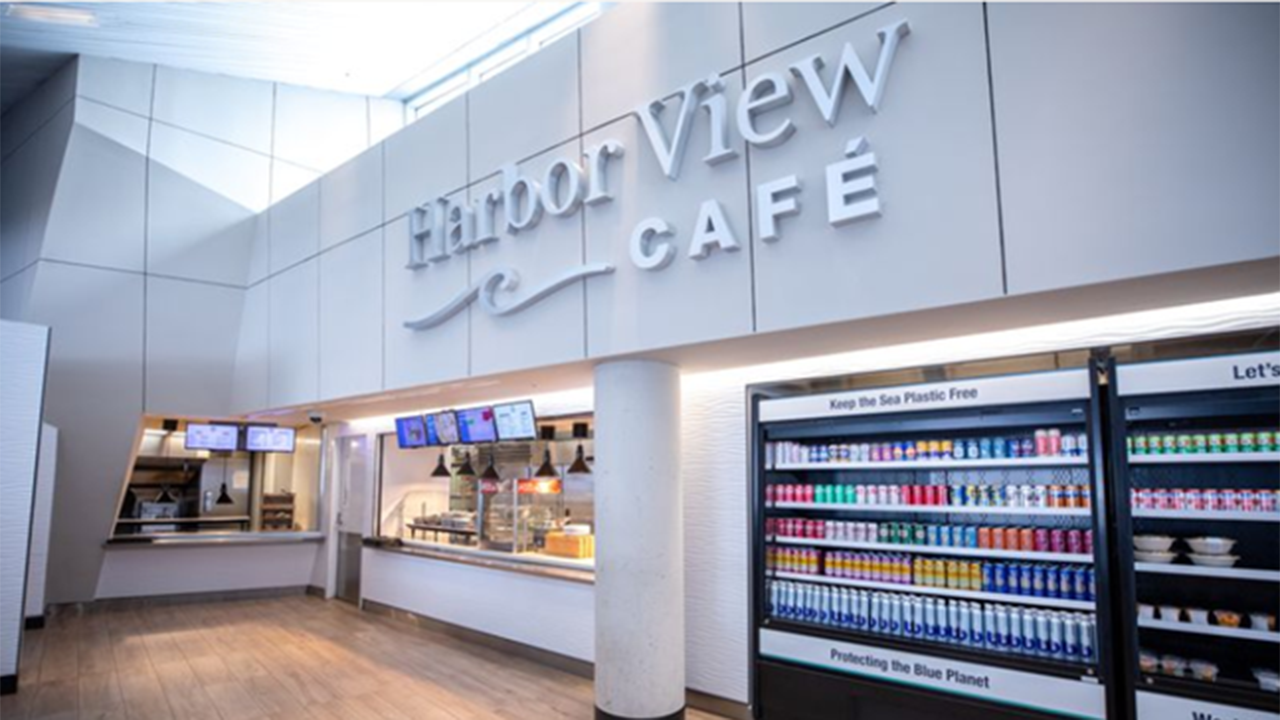
Sustainability … in the Harbor View Café
Over nearly a decade, the dining team has quietly transformed the Aquarium’s Harbor View Café into a plastic-free operation, one menu item and disposable at a time.
This work began in 2017, when the team eliminated plastic straws and single-use take-away bags. Plastic beverage bottles followed in 2018, replaced by aluminum. In the following years, plastic utensils, serving ware, and food packaging were swapped out for recyclable or compostable versions. Individual plastic condiment packets were replaced by portion-controlled dispensers. To-go containers and cups became biodegradable or compostable, and even the candy and snack packaging can now be composted, commercially or at home.
The latest milestone in the café’s evolution came earlier this year, when the dining team removed 33% of café menu items that still came in plastic or non-compostable packaging: yogurt cups, cereal boxes, bags of pretzels, popcorn, and chips, and individually wrapped cookies and desserts.
Why the commitment to going plastic free? Because plastic is the most common form of marine debris. Every plastic item removed from our café makes a small but meaningful difference in the health of the ocean and the planet.
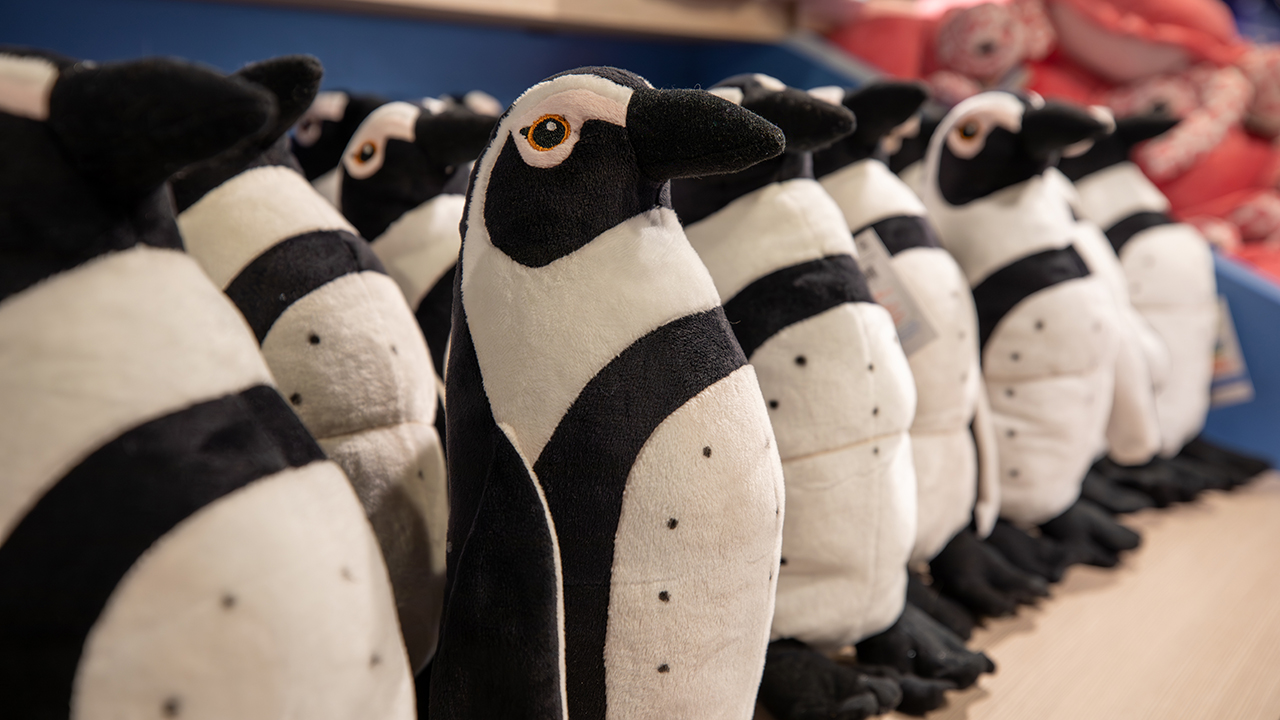
… at the Aquarium gift shop
The Aquarium gift shop has undergone an equally sweeping overhaul to remove plastic from its shelves—and its supply chain.
In 2018, the Aquarium’s retail partner removed plastic pellets from an assortment of plush animals—the small beads traditionally used to fill stuffed toys. The fill of those plush animals was replaced with recycled, post-consumer material—and they’re no less huggable for it. Today, more than 380,000 plastic bottles have been recycled to create and fill the store’s stuffed animal collection, and all plastic items for sale in the shop have been replaced by plastic-free, biodegradable, or recycled plastic alternatives.
Shipping materials—once individually bagged in plastic—were also upgraded to plastic-free, biodegradable, or recycled-plastic replacements. Meanwhile, receipts moved to EcoChit, a recyclable paper that supports reforestation projects worldwide.
The results of these changes have added up. In 2023 alone, the gift shop sold more than 26,000 reusable bags, the equivalent of keeping nearly 1.4 million plastic bags out of landfills over a year of use.
Beyond plastic reduction, the shop has leaned into thoughtful sourcing. A fair-trade apparel line called Wearsponsible sits alongside merchandise from local vendors and artists like Maritime Tribes, Mystic Knotworks, and Beacon Designs, as well as pieces created with Boston-based artist Silvia López Chavez.
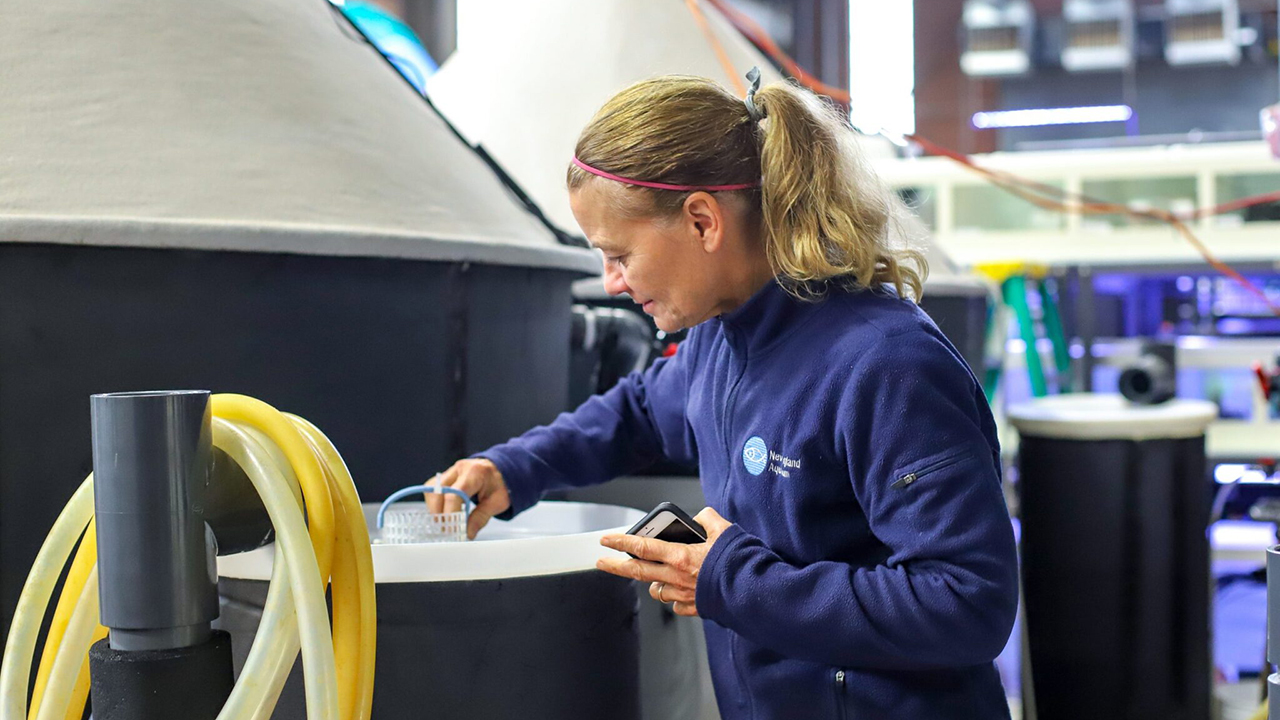
… in fish rearing
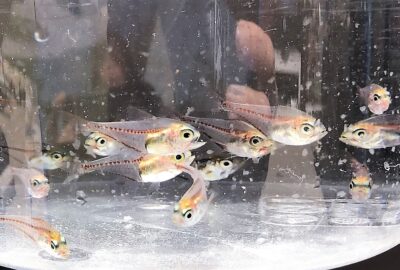
Some of the Aquarium’s most distinctive sustainability efforts happen behind the scenes, at the Animal Care Center in Quincy. Since 2008, in partnership with Roger Williams University, the Aquarium has run a sustainable aquaculture program dedicated to raising fish in-house—from eggs to adults—to reduce pressure on wild populations and improve animal well-being. Today, more than 60% of the fish in the Giant Ocean Tank exhibit, the Aquarium’s largest exhibit, were hatched and raised this way.
To date, the program has successfully raised 15 species, five of which had never been cultivated in an aquaculture setting before.
The Aquarium’s team has also created a Marine Fish Egg Catalog, with photos and key information on more than 100 species of fish eggs, and shares it with public aquariums across the country. Through a partnership with the Association of Zoos and Aquariums, both the fish and the protocols for raising them now travel well beyond Boston, helping more institutions rear their own fish and, one tiny egg at a time, make aquarium exhibits more sustainable.
… as part of the Aquarium’s culture
Sustainability efforts at the Aquarium are something our team is building from the inside out. In March 2024, employees from across the institution came together to form the Aquarium’s Sustainability Committee, a group dedicated to weaving sustainable practices into the everyday rhythms of working here.
The committee leads and supports a range of efforts, including clothing swaps, beach cleanups, textile recycling drives, and even pumpkin composting after Halloween. They’ve set up “SeaCycle” free sites around the building, where staff can drop off items for colleagues to take rather than send them to the landfill. A dedicated “techno trash” bin now makes it easy to dispose of small electronics properly. To date, the committee’s efforts have kept more than 400 pounds of textiles out of the waste stream.
The time commitment alone demonstrates our staff’s genuine care for the planet: in 2025, committee members collectively invested more than 600 hours in sustainability planning meetings and events.
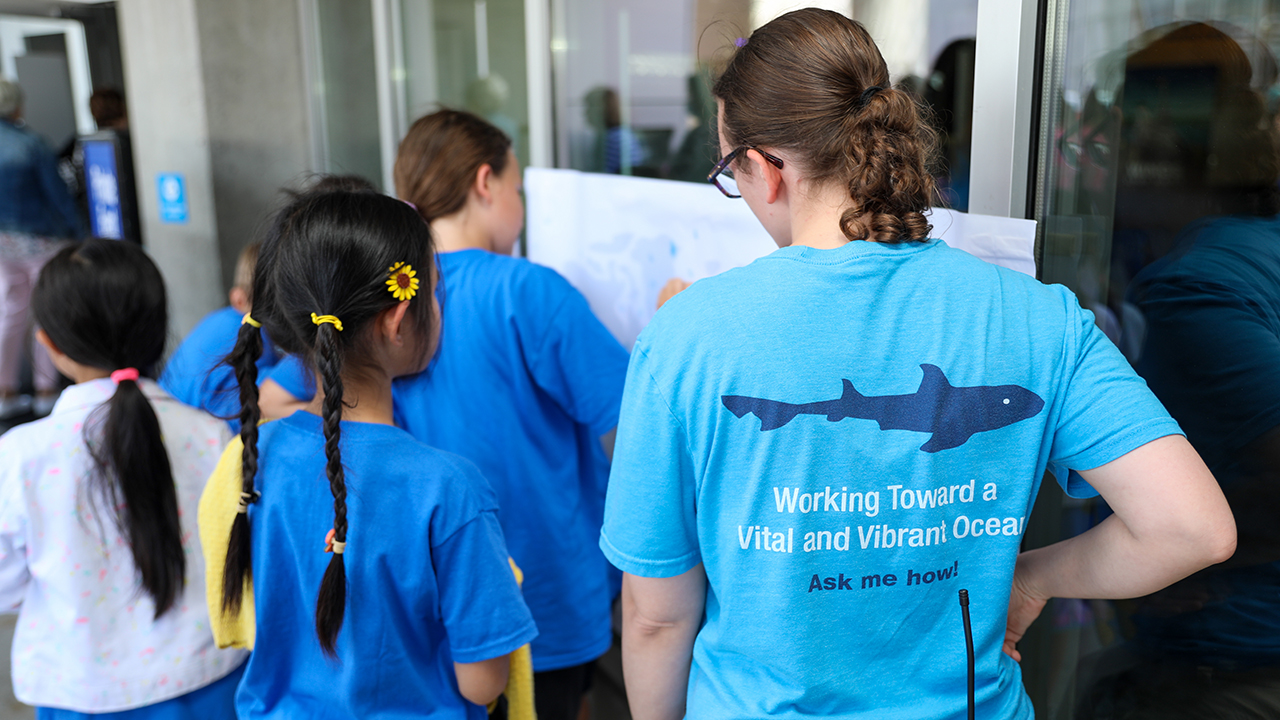
… in a roadmap for the future
One of the Sustainability Committee’s biggest achievements to date is the Aquarium’s Sustainability Plan, a formal roadmap developed in partnership with external sustainability consultants. The plan covers six focus areas, including energy and water usage, waste reduction, and organizational culture and capacity.
“The Sustainability Plan is the first of its kind for the New England Aquarium and was created through a participatory planning process involving staff and vendor partners across the organization,” said Letise LaFeir, chief of conservation and stewardship. “Through the Sustainability Plan, we’re ensuring our operations align with our mission, vision, and values toward protecting the blue planet, and supporting a vital and vibrant ocean for future generations.”
Among the plan’s key goals: achieving net-zero Scope 1 and Scope 2 emissions by 2050, further embedding sustainability as a formal pillar in the Aquarium’s next strategic plan, and implementing resilience projects to prepare for the effects of climate change, including rising seas and more frequent flooding events on Boston’s waterfront.
Care for the ocean and planet isn’t a single act. It’s a thousand small ones—and some big ones, too. From the café to the gift shop to the Animal Care Center to the new Sustainability Plan, the Aquarium’s mission runs through all of it.
Visit the Aquarium to see and support our ongoing efforts to protect the blue planet!

Related Stories


Let’s Take Action for the Ocean Together
An Aquarium membership gives you access to all the wonders of our blue planet and supports our work to protect the ocean.