Please note: The Atlantic harbor seals will temporarily be off exhibit while we improve their habitat for their comfort and well-being.
A Novel Treatment for Brain Injury Gives a Sea Turtle a Second Chance
A rescued Kemp’s ridley treated at the New England Aquarium Sea Turtle Hospital recovered from a brain injury thanks to hyperbaric oxygen therapy.
By New England Aquarium on Thursday, October 29, 2026

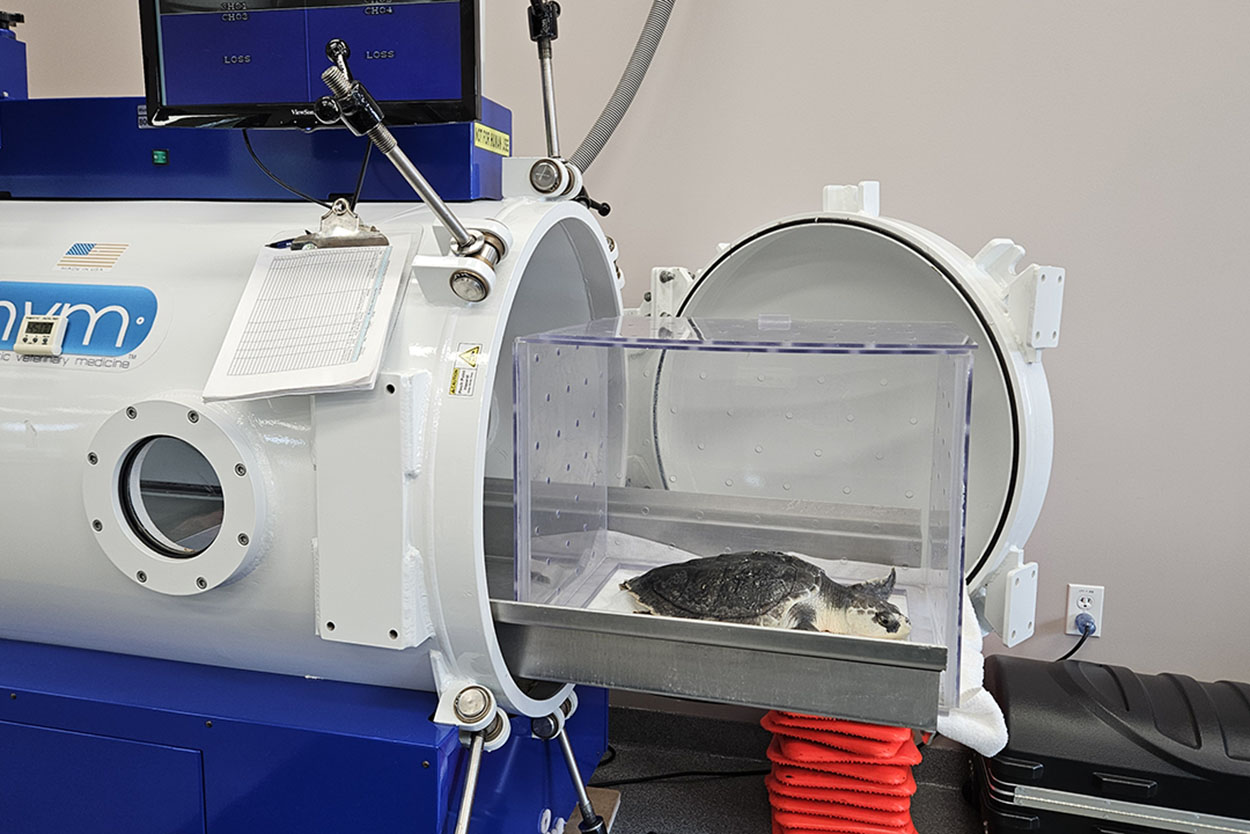
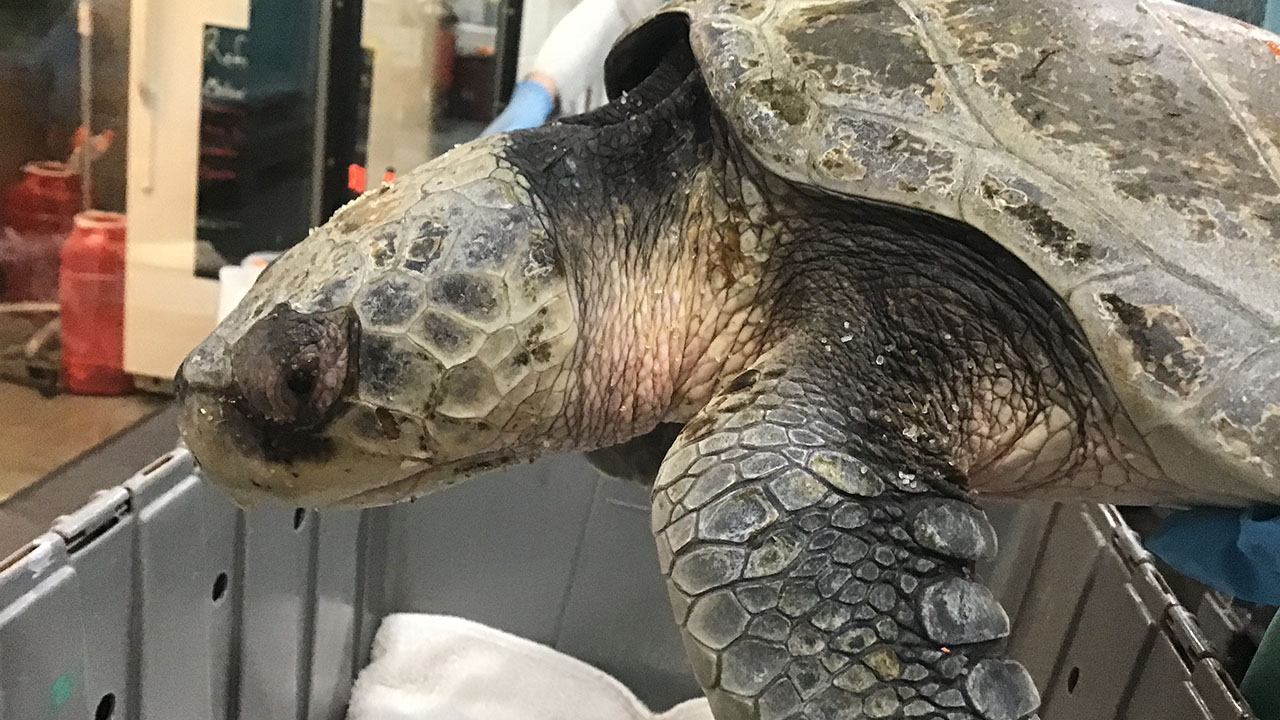
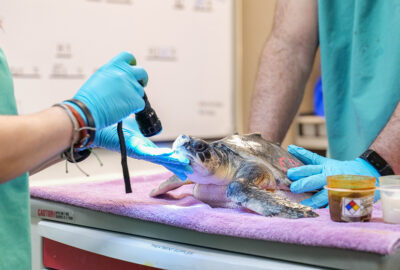
When a Kemp’s ridley sea turtle presented with apparent confusion and listlessness, the team at our Sea Turtle Hospital diagnosed the animal with a hypoxic brain injury. The turtle, given the font-inspired nickname “Young Frankenstein,” arrived at the New England Aquarium’s Sea Turtle Hospital in December 2025 after being cold-stunned—a life-threatening form of hypothermia—and stranding on Cape Cod.
For more than 25 years, the Aquarium has partnered with Mass Audubon’s Wellfleet Bay Wildlife Sanctuary to rescue endangered sea turtles, treating hundreds of patients each year. Young Frankenstein proved to be an especially difficult case.
Diagnosis and treatment
Upon intake, Young Frankenstein had severe lung changes and was barely breathing. “The turtle ended up having to be intubated after they first arrived,” said Dr. Melissa Joblon, the Aquarium’s director of Animal Health. After their initial recovery, Young Frankenstein remained inattentive, had difficulty swimming normally, and wasn’t able to track food in the water.
Dr. Joblon and team suspected that, because of their impaired breathing and need for intubation, Young Frankenstein had suffered a hypoxic brain injury, which occurs when the brain is starved of oxygen.
“Brain damage was our biggest concern,” Dr. Joblon said. The team treated Young Frankenstein with steroids, antibiotics, nutritional and fluid support and hundreds of hours of rehabilitation, but the turtle remained “stable, but not improved,” she added. So, by July, they decided to try something new.
A new plan for recovery
Our Sea Turtle Hospital team turned to Dr. Stephanie Kube, a veterinary neurologist—and a New England Aquarium board member—to try and repair Young Frankenstein’s damaged brain tissue.
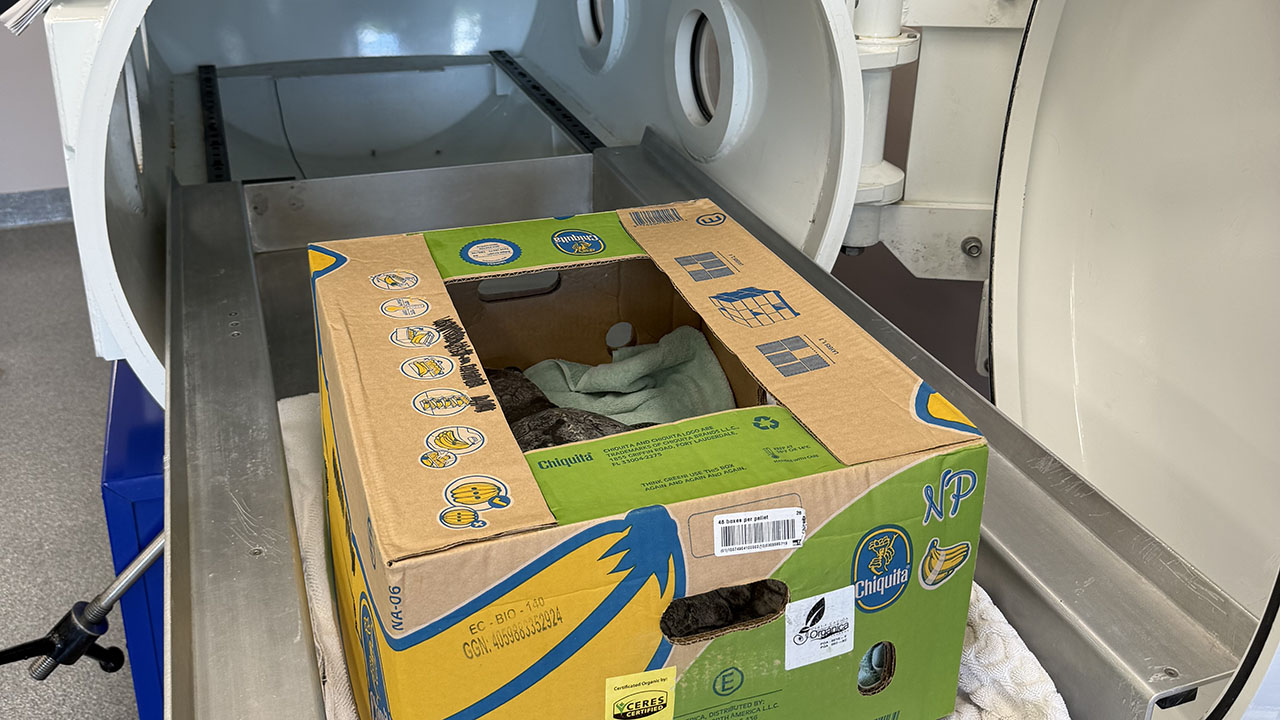
As owner of Advanced Veterinary Specialty Center in Walpole, MA, Dr. Kube offered her expertise, and suggested the turtle receive twice-weekly therapy in a specialized hyperbaric oxygen chamber.
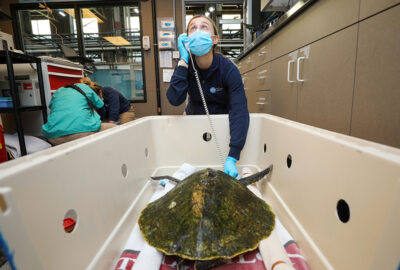
The air pressure inside the hyperbaric chamber is two to three times higher than normal, allowing a patient’s lungs to gather more oxygen and improving oxygen delivery to other parts of the body. In sea turtles, the treatment had proven effective for decompression sickness and joint diseases, but this would be the first documented attempt to administer oxygen therapy for brain injury in a sea turtle.
Still, the team had a hunch that it could work. “The idea is that the treatment leads to an increase in circulation and oxygen directly to areas of the brain that were previously depleted” Dr. Joblon said. “It decreases inflammation overall and helps the brain heal.”
By the second treatment, Young Frankenstein showed marked improvement—they suddenly began foraging for food in their environment and were able to eat on their own. After just two weeks, the turtle was medically cleared for release. This was the first documented success in treating a turtle with hypoxic brain injury.
“It was remarkable to see the drastic improvement in Young Frank’s ability to navigate and forage for food, even after just two treatments,” said Dr. Joblon.
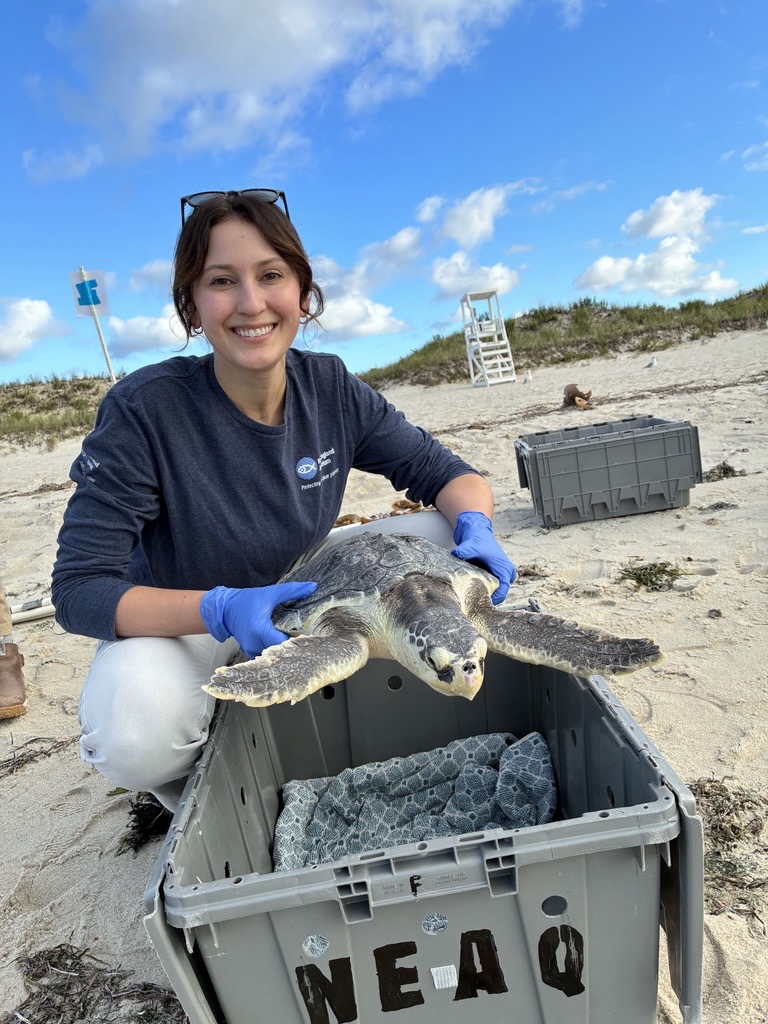
In early September, a crowd gathered on the beach in Dennis, MA, to wish Young Frankenstein farewell in our last sea turtle release of the season.
“We’re thrilled to see this turtle respond so well to hyperbaric oxygen therapy,” said Dr. Kube. “Watching a patient recover and return home is exactly why we do what we do.”

Related Stories

Protect the Blue Planet
Your ticket purchase to the New England Aquarium directly supports our work to create a vital and vibrant ocean for future generations.