PRESS RELEASE
New England Aquarium has treated more than 450 live sea turtles during 2025 stranding season
Specialized long-term care for turtle patients underway as triage efforts continue

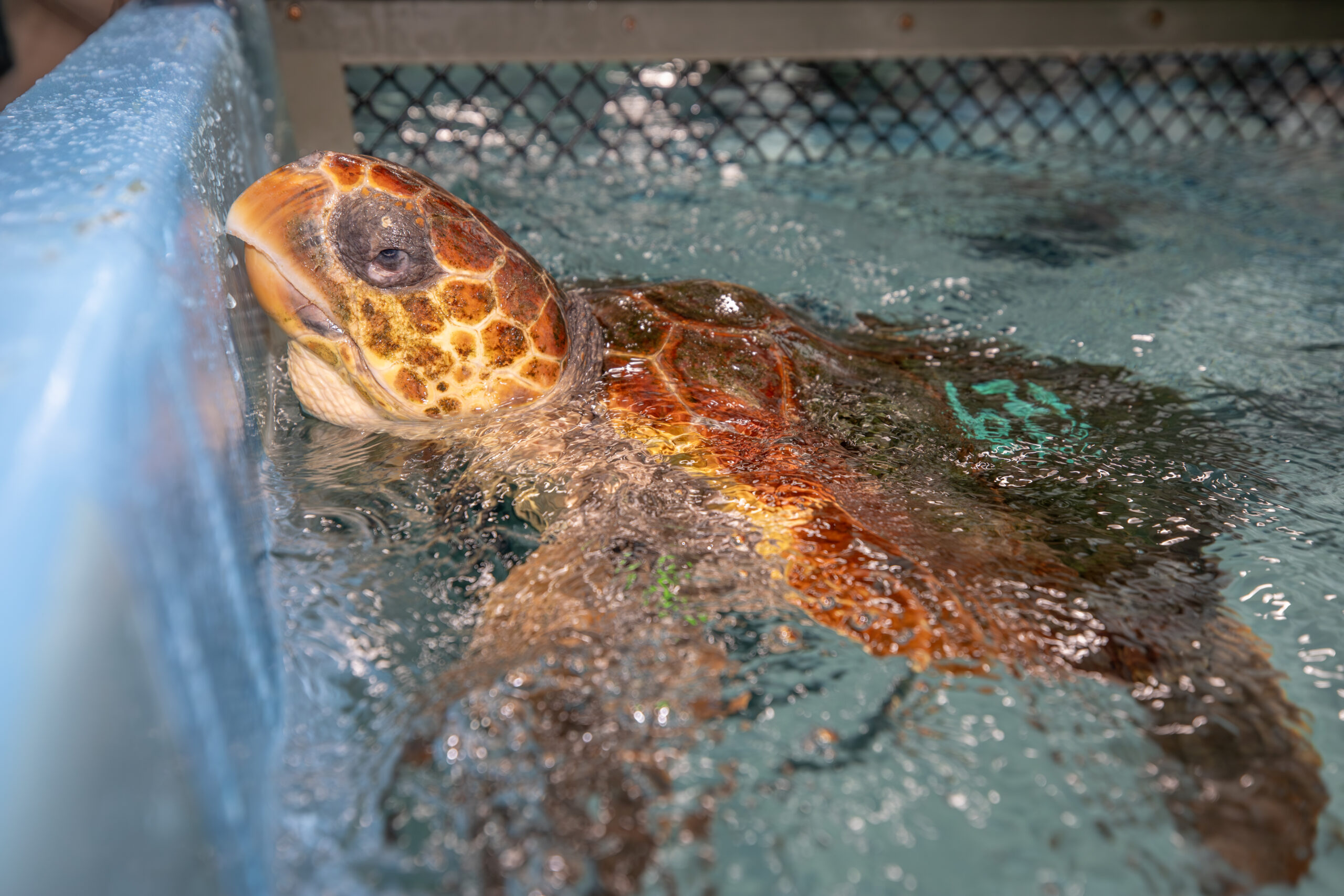
QUINCY, MASS. (Dec. 18, 2025) – As the annual sea turtle stranding season continues, the New England Aquarium has treated more than 450 live turtles, with new patients still arriving at its Sea Turtle Hospital.
*PHOTOS AND VIDEO AVAILABLE HERE WITH CREDIT TO NEW ENGLAND AQUARIUM*
Sea turtles started stranding on Cape Cod on Nov. 7 with more than 200 sea turtle patients requiring care in the first two weeks of the season. Intake numbers steadily rose from late November into December but have slowed in the last week amid cold temperatures. While most patients are critically endangered Kemp’s ridley sea turtles, larger loggerhead turtles have been stranding recently. To date, the Aquarium’s Sea Turtle Hospital in Quincy, Mass., has admitted 473 sea turtles this season: 404 Kemp’s ridleys, 21 loggerheads, and 48 green sea turtles. Currently, there are 84 turtles undergoing treatment at the hospital.
“This is when the next stage of rehabilitation work here at the New England Aquarium starts: the expert care of extremely debilitated sea turtles. We’re now transitioning from triaging hundreds of turtles to concentrating on the individualized care of each animal,” said Adam Kennedy, the Aquarium’s Director of Rescue and Rehabilitation.
Each year in late fall and early winter, sea turtles become cold-stunned and wash up on the shores of Cape Cod Bay. Because of the rapidly changing water temperature and wind pattern, many turtles cannot escape the hook-like shape of Cape Cod Bay and become hypothermic. Staff and volunteers from Massachusetts Audubon Wellfleet Bay Wildlife Sanctuary have been searching for cold-stunned turtles on the beaches along Cape Cod Bay and transporting the animals to the Aquarium’s Sea Turtle Hospital, where they are gradually warmed and receive care for life-threatening medical conditions resulting from hypothermia and the inability to feed or swim.
As the Aquarium team continues to triage new patients arriving from Cape Cod, many of the turtles are beginning long-term rehabilitation. These sea turtles are closely monitored daily by both the Rescue and Rehabilitation and Animal Health Departments, who record and review details about the turtles’ swim behaviors and appetites. All turtles receive routine bloodwork until they are eating well to detect any abnormalities that may need addressing through fluid or medication support. The team also uses X-ray imaging to monitor lung health, as most turtles have pneumonia that can require intensive treatment for several weeks.
“These turtles have endured incredibly harsh weather conditions and require very close monitoring, detailed care, and treatments to survive and eventually be released back into the wild. Everyone is rooting for every single turtle that comes through our doors. It takes a village to help these animals,” said Dr. Kathy Tuxbury, Senior Veterinarian at the Aquarium.
To make room for new arrivals at its Sea Turtle Hospital, the Aquarium continues to work closely with the National Oceanic and Atmospheric Administration’s (NOAA) Fisheries Service to transfer turtles to partner organizations to continue rehabilitation and make room for new arrivals at the Aquarium’s facility. More than 15 secondary rehabilitation facilities have stepped in to take turtles this year, with non-profit organizations LightHawk and Greater Good Charities providing key support by donating transport flights. The most seriously ill turtles will remain in New England Aquarium care, where many will complete their full rehabilitation process before being released back into the ocean in the spring and summer months.
Amid ongoing sea turtle rescue, rehabilitation, and research efforts, donations are crucial to continuing this conservation work. Gifts to the New England Aquarium’s Mission Forward Fund help sea turtles and all the animals in our care. Now through Dec. 31, donations will be matched dollar-for-dollar. Supporters can visit this website to contribute.
MEDIA CONTACT: Pam Bechtold Snyder—617-686-5068; psnyder@neaq.org