On Wednesday, April 8, the Aquarium will be closed for an internal event. Normal operating hours will resume on Thursday, April 9.
It Takes Two: Animal Pairs at the Aquarium
In honor of Valentine’s Day in February, we’re highlighting a few aquatic “couples” you might spot during your Aquarium visit.
By New England Aquarium on Friday, February 06, 2026

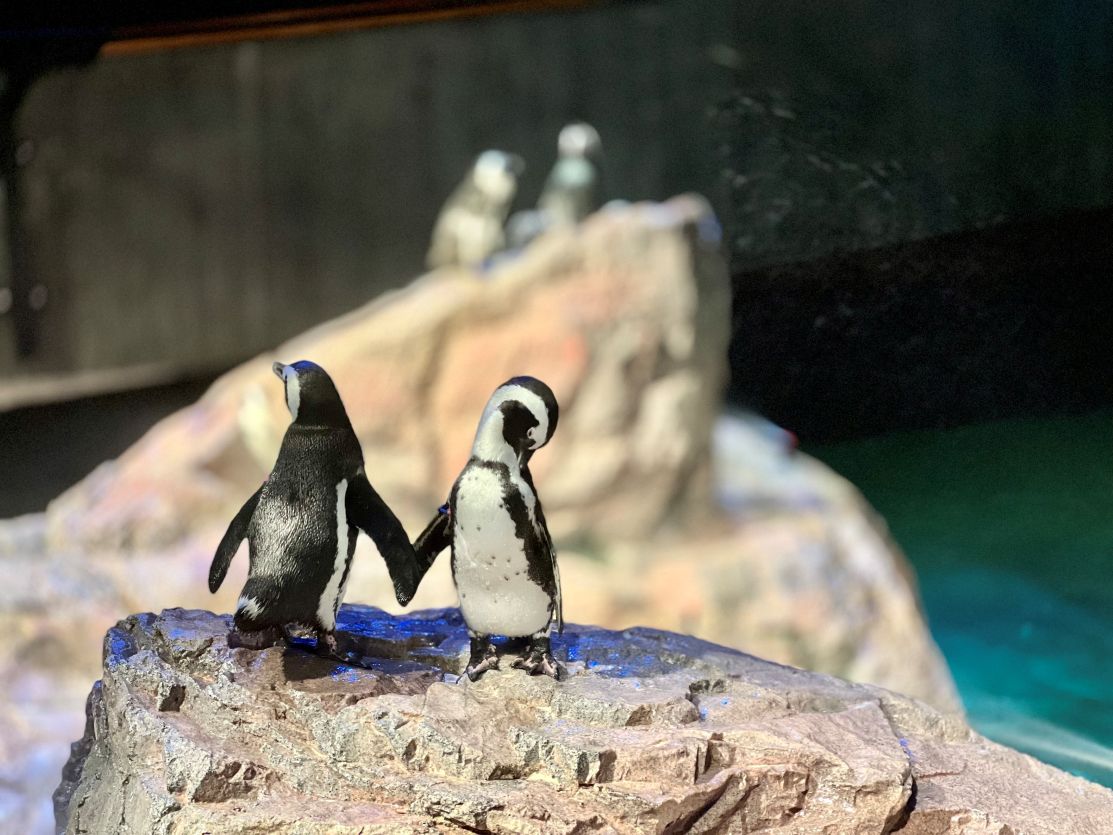
From the serially monogamous to symbiotic species and bonded-for-life mates, there are many different types of relationships in the ocean. Here, meet a few animal pairs you might see at the Aquarium and learn about the unique behaviors they display to attract (and keep!) a partner.
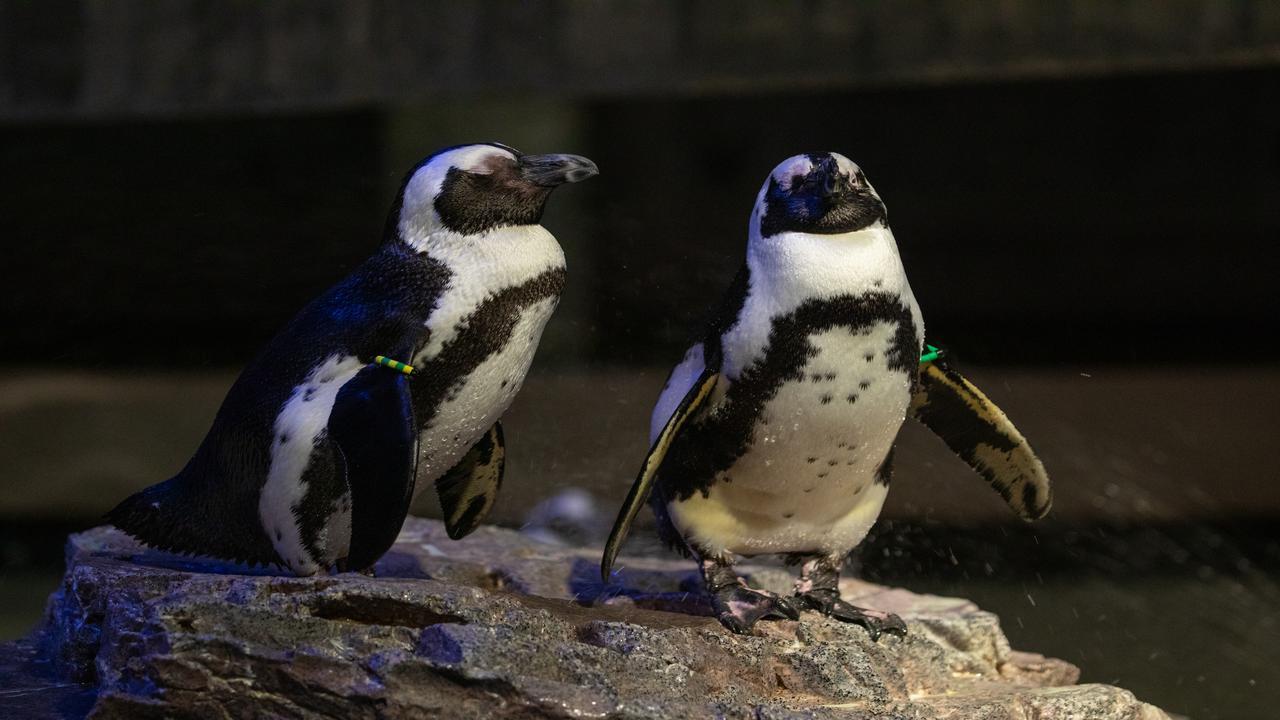
African penguins
While films like March of the Penguins have highlighted the species’ seemingly unbreakable fidelity, the reality is that penguins, like those in our African and southern rockhopper colonies, can be a bit fickler. Long-term pairing is the norm, and many penguins will pair up for most of their lives—but penguin “breakups” can still happen. Sometimes, birds are only together for one or a few breeding seasons.
Preening, loud calls, headshaking, and bowing are all behaviors the birds will display for their partners. They’re also territorial, and pairs will stake out a spot on the exhibit islands to call their own. Over on “retirement island,” where elder African penguins enjoy a slower pace of life, Lambert and his younger mate Dyer have laid claim to the very top of the island. While Lambert takes it easy, Dyer can be spotted swimming around the exhibit.
The birds often pair up organically, but occasionally our Animal Care staff does a bit of “matchmaking.” African penguins are critically endangered in the wild, and here at the Aquarium, we participate in a Species Survival Program (SSP), which supports field conservation efforts as well as responsible breeding to promote a sustainable future for these endangered penguins.
Namibia IV was donated to the New England Aquarium from the Georgia Aquarium as part of the SSP and was “set up” with Jahleel III, a then single male. They quickly formed a bond and have now successfully raised their first chick together—one of our youngest birds, Oyster! When visiting the Aquarium, you can spot this couple by their green and orange bracelets on their wings—Jahleel’s is on the left, and Namibia’s is on the right
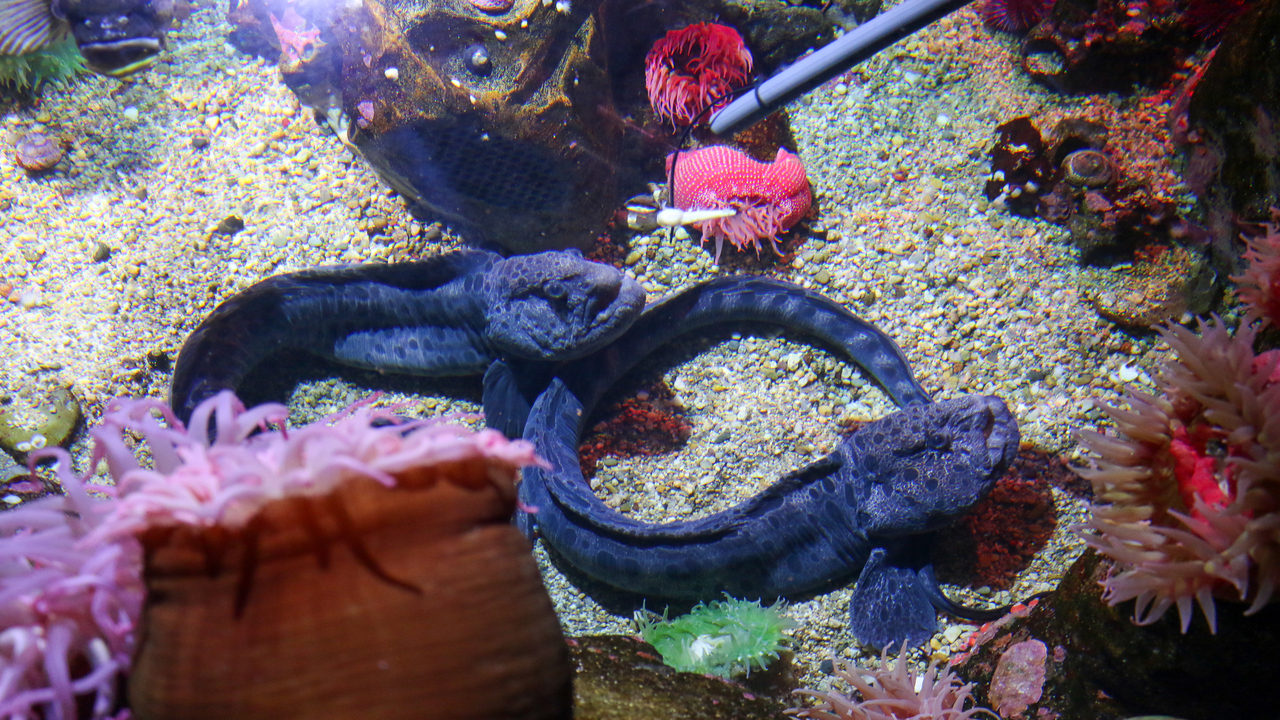
Wolf eels
Although wolf eels share a name and body shape with other types of eels, they’re one of five species in the wolffish family. The duo in our Olympic Coast exhibit has been at the Aquarium since 2006 and recently celebrated 19 years together!
While the wolf eels like to hide in crevasses and can be hard to spot, especially in the colder months while they’re hibernating, they’re often together. Wolf eels typically mate for life and will share a den for that entire time. Both parents will also share responsibility for protecting eggs, even making a “nest” with their bodies.
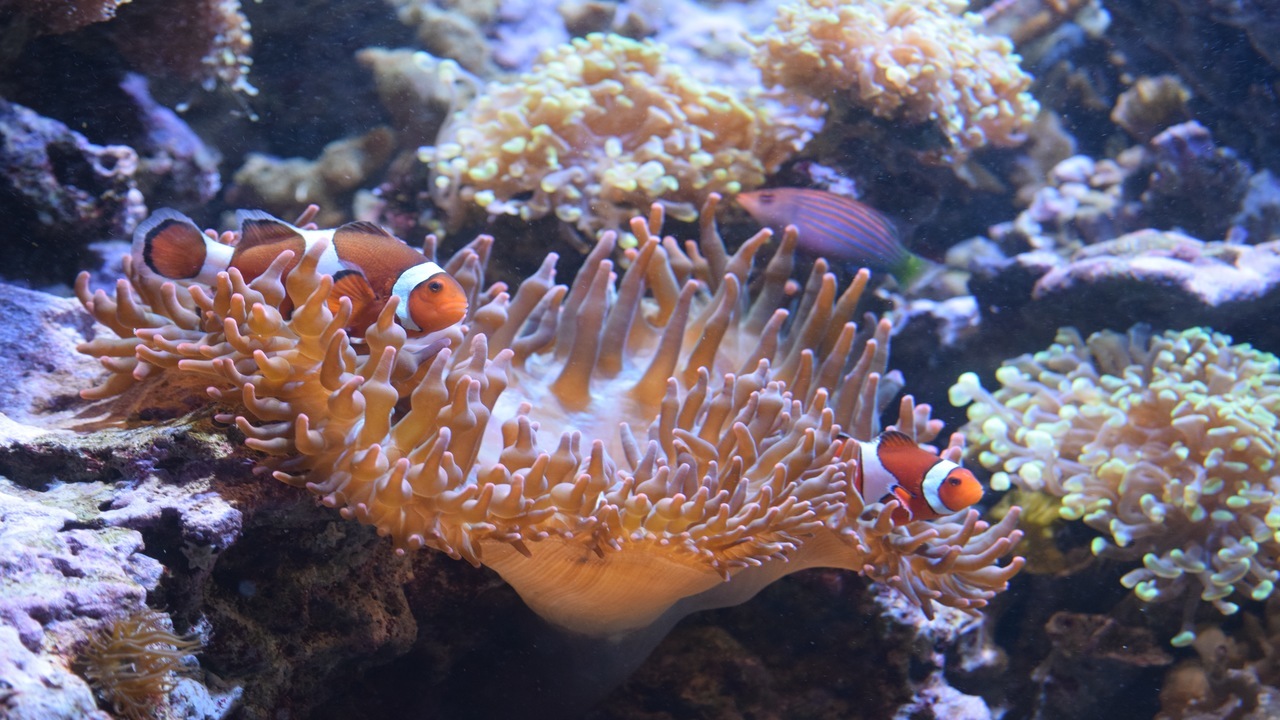
Clownfish
Clownfish—also known as anemonefish, after the symbiotic relationship they share with sea anemones—can be spotted in pairs in our Healthy Corals, Healthy Reefs exhibit. In the wild, clownfish will live in groups, with the two largest fish of the bunch becoming a breeding pair. Male clownfish can also change sex if the breeding female is lost, and then the next-largest male will become part of the breeding pair.
Several of the clownfish pairs in our exhibits have laid eggs among their anemones. In clownfish families, it’s the male who takes on much of the egg care, cleaning the eggs with his mouth and fins to keep them free of bacteria and debris. Way to go, dads!
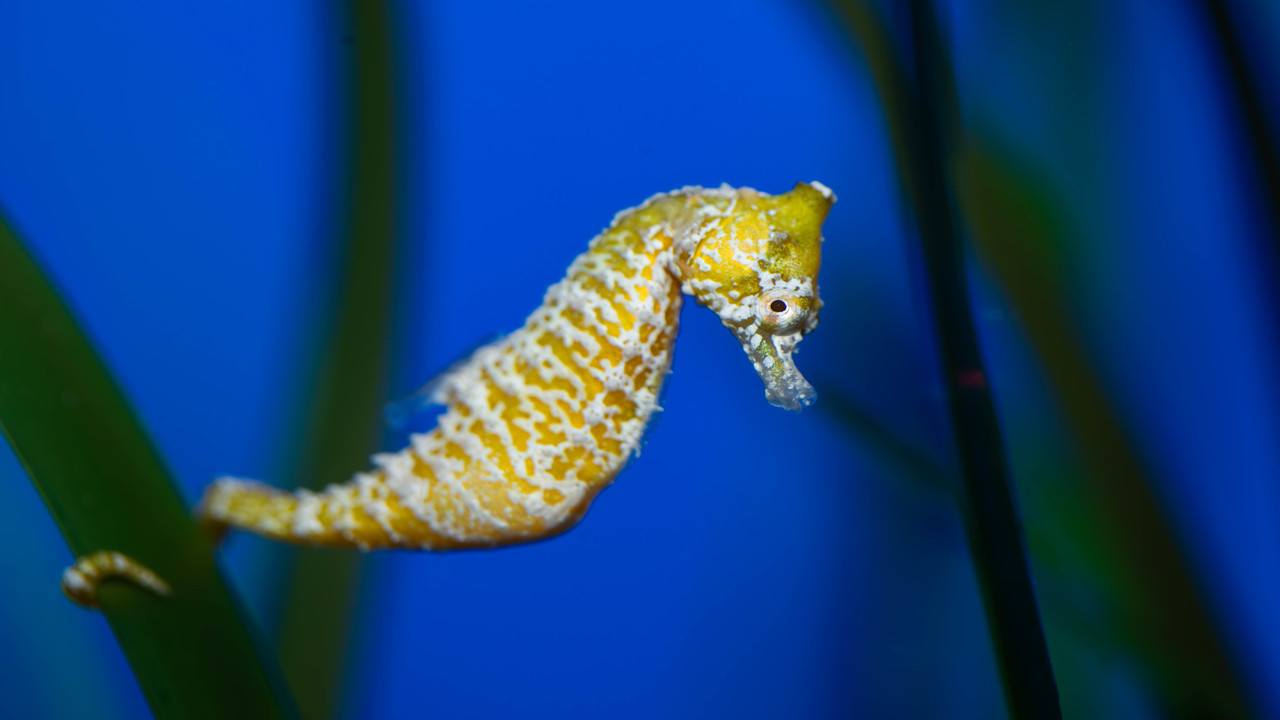
Dwarf seahorses
The dwarf seahorses in our Yawkey Coral Reef Gallery are some of the smallest animals you can see at the Aquarium, measuring around two inches long. These tiny fish also mate for life—and they can be picky about their partners. At our Animal Care Center in Quincy, where our team previously maintained a sustainable breeding program for the animals, staff often paired up male and female seahorses by color and size to reflect their apparent preferences.
Dwarf seahorses, like many other species of seahorse, also have a complicated courting ritual. The process begins with the seahorses engaging in behaviors like brightening their coloration and pointing upwards with their heads. A male seahorse will inflate his pouch with water, likely to show off his egg-carrying abilities. If the breeding ritual is successful, it culminates in a “dance” where the seahorses rise together in the water as the female deposits her eggs in the male’s pouch.
If you’re really lucky, you might even spot a brand-new father on exhibit!
Next time you’re visiting the New England Aquarium, keep an eye out for a few of these dynamic duos!

Related Stories

Become an Aquarium Member
An Aquarium membership gives you access to all the wonders of our blue planet and supports our work to protect the ocean.