Beyond the Boat: Gendered Participation in Artisanal Billfish Fisheries on Kenya’s Coast
Hear from Marine Conservation Action Fund project leader Sylvia Adisa, whose work analyzes the roles, challenges, and opportunities for women in Kenya’s billfish fisheries, informing more equitable fisheries management practices.

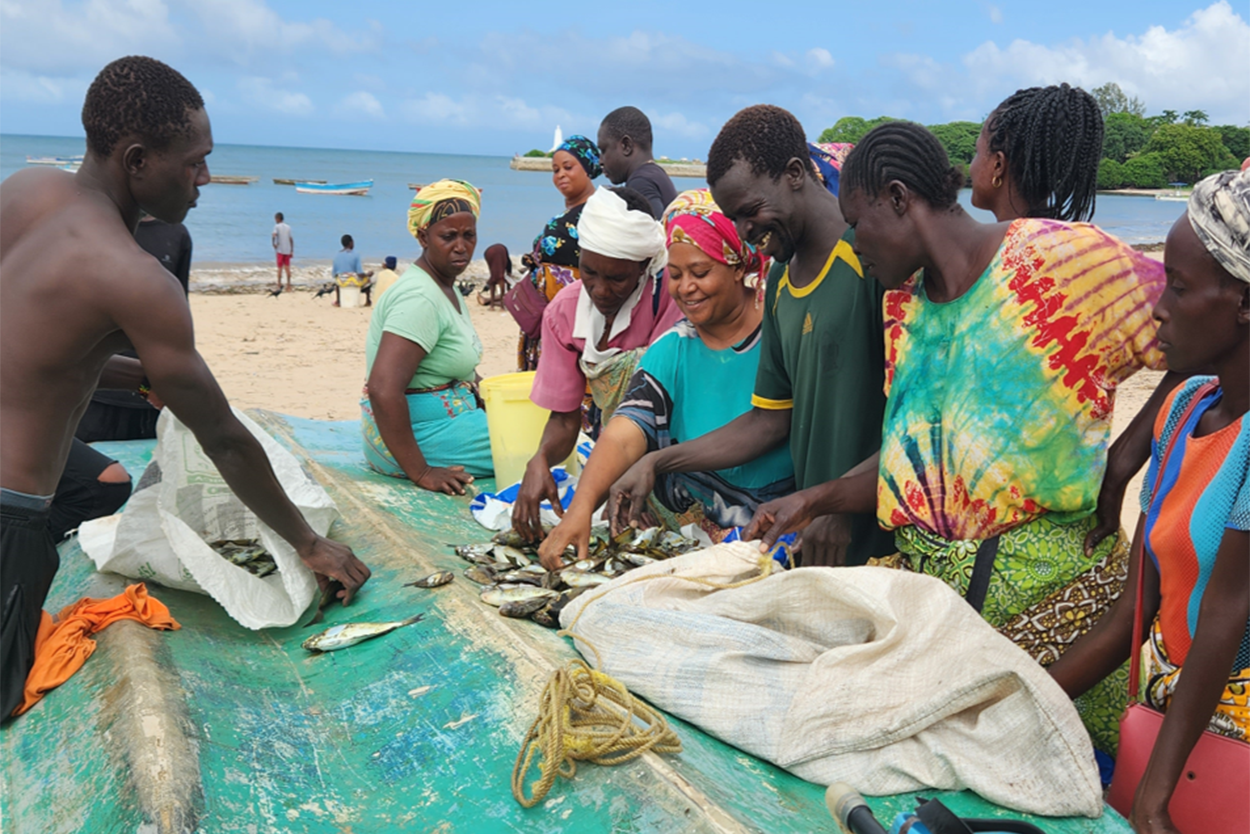
This post is one of a series on projects supported by the New England Aquarium’s Marine Conservation Action Fund (MCAF). Through MCAF, the Aquarium offers multi-faceted support to leaders from low- and middle-income countries who are spearheading community-based ocean conservation initiatives.
By Sylvia Adisa
“Fishing” is often visualized as venturing out to sea in search of a catch. This long-standing perception has influenced how fisheries are understood, studied, and managed, placing primary emphasis on the harvesting node, which is predominantly dominated by men. However, the absence of women on fishing vessels does not mean the absence of women in fisheries; women also play crucial roles throughout the fisheries value chain, contributing significantly to livelihoods, local economies, and food systems. Unfortunately, because many of these activities fall outside conventional definitions of ”fishing,” their contributions have frequently gone unnoticed. Fishing extends far beyond what happens on the water. The journey from catch to consumer involves a fisheries value chain that includes harvesting, processing, trading, transportation, marketing, and retail.
Focusing on billfish harvested by small-scale fishers for local food systems and livelihoods, rather than the recreational and industrial fishing industry, we used Kenya’s coast as a case study to apply a gendered value chain approach and better understand how women and men participate in artisanal billfish fisheries in the Western Indian Ocean. Our study combined participant observation with 17 group discussions and 75 semi-structured interviews with actors across the artisanal fisheries value chain, as well as surveys of 25 fisheries experts from selected sites along the Kenyan coast.
A clear gender gap
One of the clearest findings was the pronounced gender gap in participation across the artisanal billfish fishery. Men were considerably more likely than women to be involved in billfish-related activities, a pattern consistently reflected in interviews, group discussions, and expert surveys (Figures 1 and 2).
Participation in the billfish sector was closely linked to broader involvement in artisanal fisheries. Rather than targeting billfish exclusively, most participants encountered them as part of their regular fishing activities. Men and women contributed across the value chain through harvesting, processing, trading, retail, and food preparation, playing distinct but interconnected roles.
-
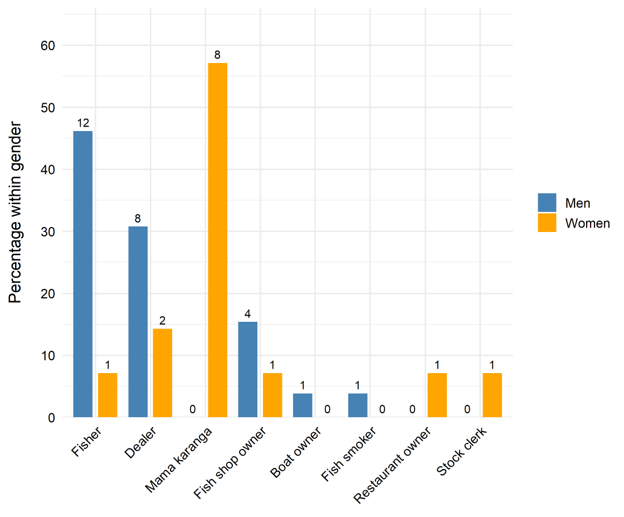
Figure 1: Distribution in the role of men and women in billfish fisheries. The numbers displayed above each bar represent the absolute count of participants in that category, while the axis shows the same values expressed as percentages within each gender. Source: Interviews with actors of the artisanal fishery value chain (n=40;26men,14women). -
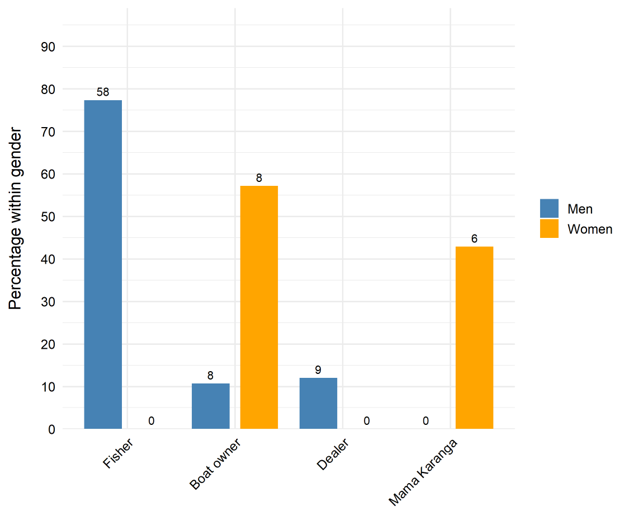
Figure 2: Gender distribution across roles held by men and women in billfish fisheries. The numbers displayed above each bar represent the absolute count of participants in that category, while the axis shows the same values expressed as percentages within each gender. Source: Group discussions with actors of the artisanal fishery value chain(n=89;75men,14women).
/
Why the gap?
Although women are generally underrepresented in artisanal fisheries, the gender gap becomes even more pronounced in the billfish sector. Billfish are typically caught offshore using specialized gear, larger vessels, and significant financial investment. Combined with limited access to productive assets and prevailing social norms, these requirements create substantial barriers to participation, especially for women.
Men often begin fishing at a young age, learning from fathers, relatives, and peers while gradually building the skills, experience, and social networks needed to fish offshore. Women, in contrast, frequently face cultural expectations that discourage offshore fishing, while mixed-gender fishing crews are generally considered socially unacceptable. As a result, women have fewer opportunities to gain experience at sea, develop professional networks, and access higher-value harvesting activities. These findings suggest that gender differences in participation reflect structural and social constraints rather than differences in interest or capability.
Beyond traditional roles
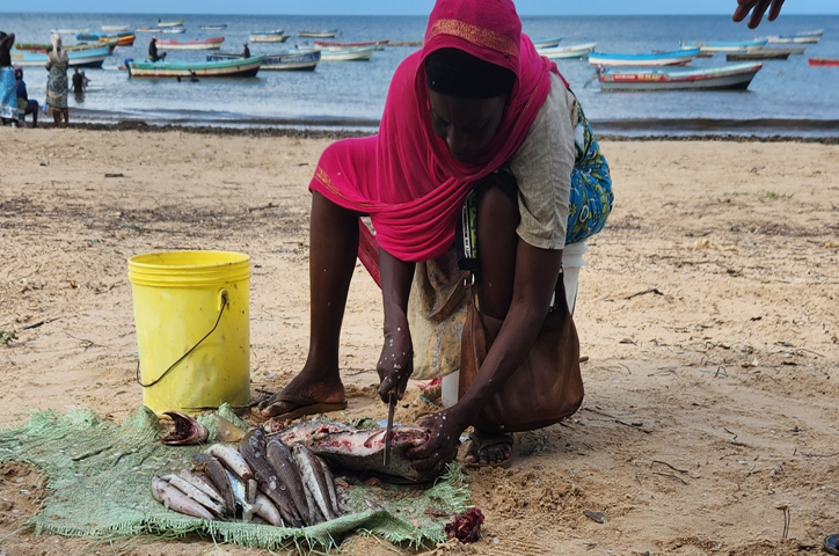
Despite these barriers, women’s participation in billfish fisheries is far from absent. Most women were engaged in processing, trading, marketing, and food preparation, while a small number had also entered the production side of the value chain through boat ownership and crew management, demonstrating that women’s roles are more diverse than commonly assumed.
One particularly inspiring example came from Kilifi Central, where women’s self-help groups pooled monthly savings throughout the year to hire boats and employ fishers during the peak billfish season. By collectively mobilizing financial resources, these groups overcame one of the sector’s biggest barriers—access to capital—and created new opportunities to participate in higher-value segments of the fishery.
Their experience illustrates an important lesson: when financial barriers are reduced and supportive institutions are in place, women can and do participate in areas of fisheries traditionally viewed as the domain of men.
Final thoughts and policy recommendations
Fisheries systems are shaped by the people, relationships, and institutions that sustain them. Social constructs such as gender influence who participates, who has access to resources and opportunities, and ultimately who benefits from the fishery.
When women are not immediately visible in fisheries, it is worth asking why. More often than not, their absence from certain roles reflects structural and social barriers rather than a lack of interest, knowledge, or capability. Looking beyond the boat reveals the many ways women contribute to fisheries, from processing and trading to entrepreneurship, leadership, and, increasingly, production itself.
Building more inclusive fisheries will require looking beyond harvesting alone. Policies and management should recognize women’s contributions across the value chain, improve access to assets and finance, strengthen women’s participation in decision-making, and ensure that sex-disaggregated data inform fisheries planning and management.
Ultimately, our findings reinforce a simple but important message: fisheries are not just about catching fish. They are interconnected systems embedded in households, markets, and communities, where both women and men make indispensable contributions. Recognizing and supporting these contributions is key to creating a more inclusive and sustainable future for Kenya’s coastal fisheries.

Related Stories

Supporting Locally-Led Ocean Action Worldwide
The New England Aquarium’s Marine Conservation Action Fund is a small grants and fellowship program that provides support for community-based projects spearheaded by local conservation leaders in low- and middle-income countries around the globe.