Tropical Fish in New England? How We Collect and Study Gulf Stream Orphans
By New England Aquarium on Tuesday, November 11, 2025

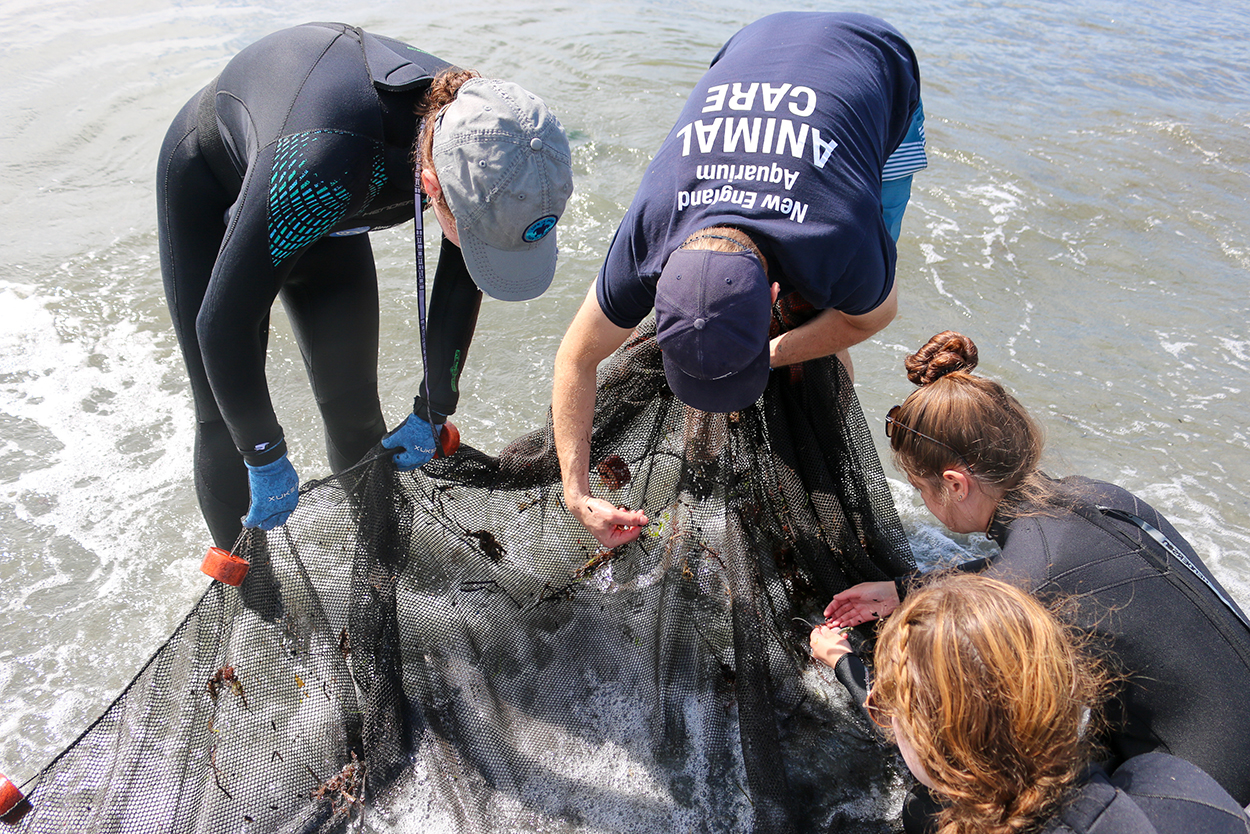
The Gulf Stream is a strong Atlantic Ocean current that carries warm water from the Gulf of Mexico all the way up the East Coast of the US and Canada. This current influences the climate of eastern coastal regions of North America, and because the current reaches across the Atlantic, it even affects the climate in Europe.
The warm, tropical waters of the Gulf Stream also carry planktonic life, including juvenile fish—and occasionally, those young fish ride the current all the way here to New England. While juveniles can thrive here during the summer, cooler months present a significant challenge for these little fish that are a long way from home. Together with other institutions and with help from public sightings, the Aquarium is working to study these “Gulf Stream orphans” to understand better what fish are ending up here and what those fish can tell us about changing ocean temperatures in the Gulf Stream and around New England.
“This isn’t a new phenomenon,” said Associate Curator of Aquatic Collections Mike O’Neill, who is one of the staff members leading the Gulf Stream orphan (GSO) Project. He’s been working to collect and catalog Gulf Stream Orphans since 2016. “It’s probably been happening for as long as the Gulf Stream has existed—something like 20,000 years.” One of his favorite historical examples of the phenomenon is a paper from 1898 entitled “Fishes Found in the Vicinity of Woods Hole,” which recorded sightings of tropical fish around Cape Cod.
Gulf Stream orphan season peaks in late summer and early fall. For decades, many aquariums, including the New England Aquarium, have taken advantage of this phenomenon as an opportunity to collect tropical fish for display. But, Mike says, the community is also interested in learning which fish are arriving in New England and what that might mean for the region’s ecology.
Community science for Gulf Stream orphans
Part of that data is being collected through “citizen science,” relying on the public to report sightings of uncommon fishes in New England waters. Mike started a website for the GSO Project to publicize the effort, and he and the GSO team collect sighting reports through iNaturalist. There, anyone who spots an unusual fish can make a report, which is then verified by the community.
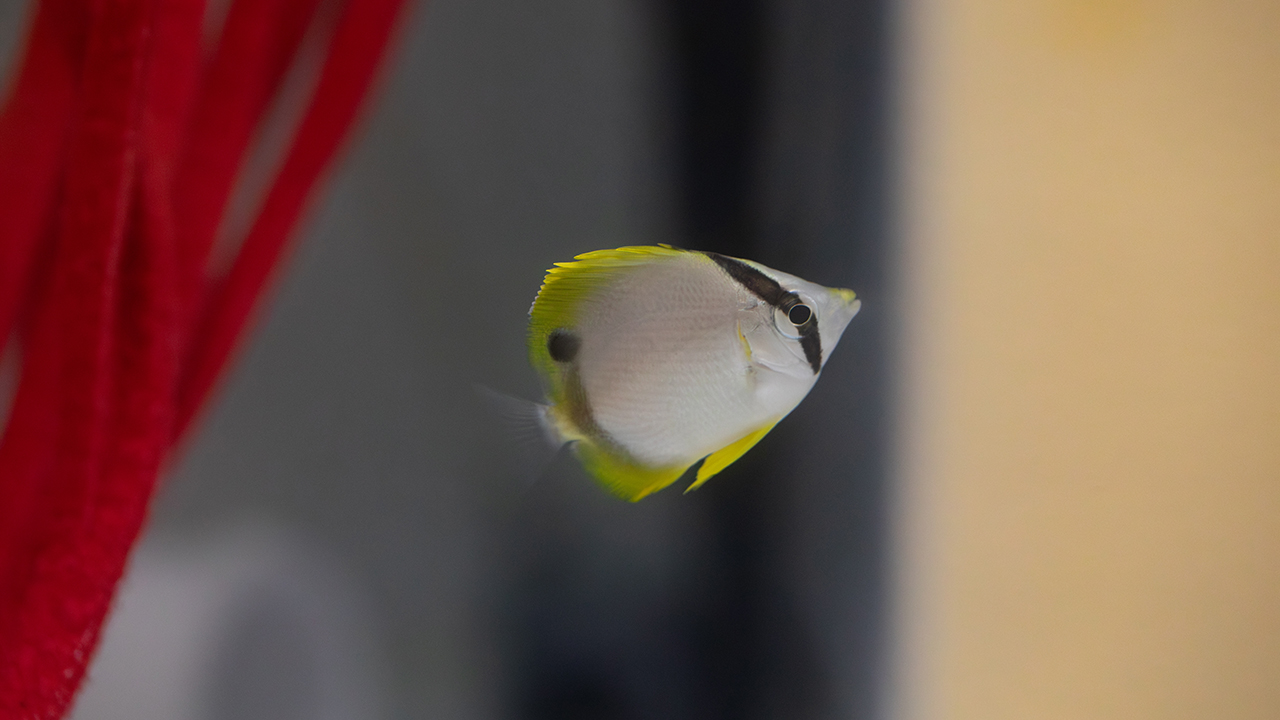
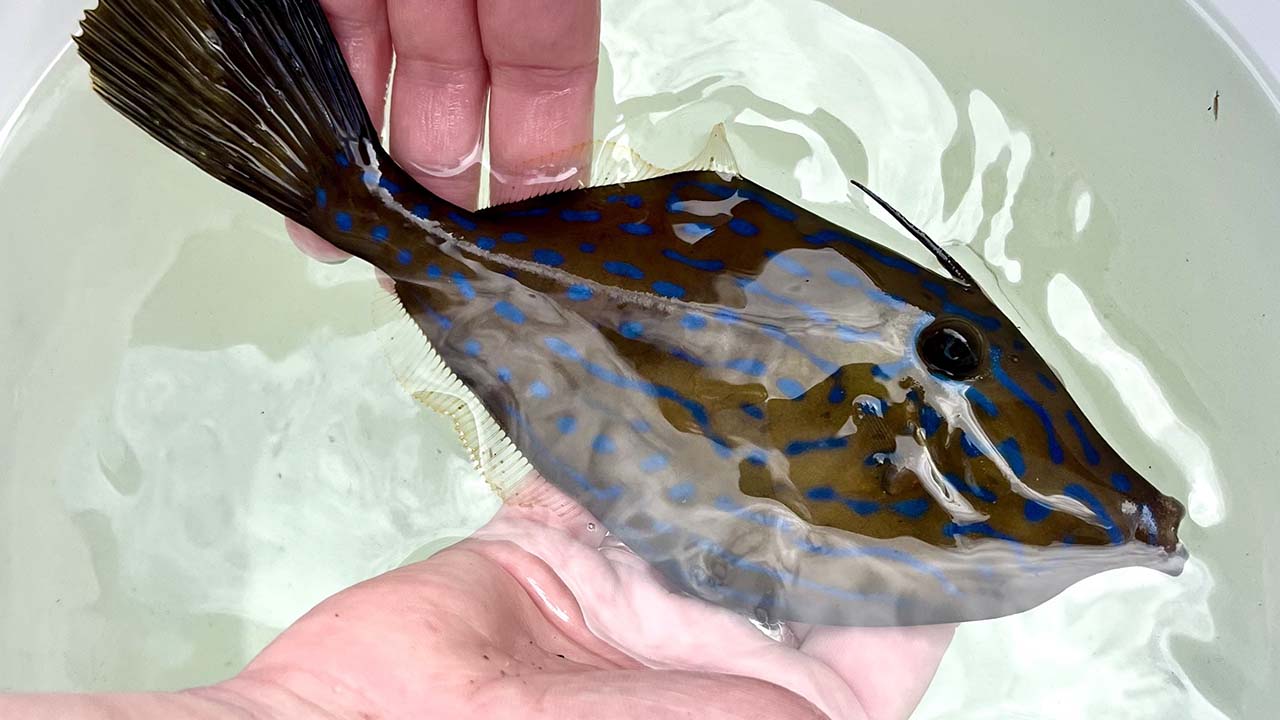
In the data, there are commonly found species—such as the spotfin butterflyfish, which Mike calls the “mascot” of GSOs—as well as filefish, groupers, trunkfish, and more. Rarer are other species of butterflyfish, as well as juvenile angelfish. How a fish ends up a Gulf Stream orphan likely depends a lot on its behavior and biology, Mike said. What they eat, where they live, how they spawn, and how quickly they mature can all affect the likelihood of a fish arriving in New England and its ability to thrive here.
Conducting fieldwork and the future for GSO research
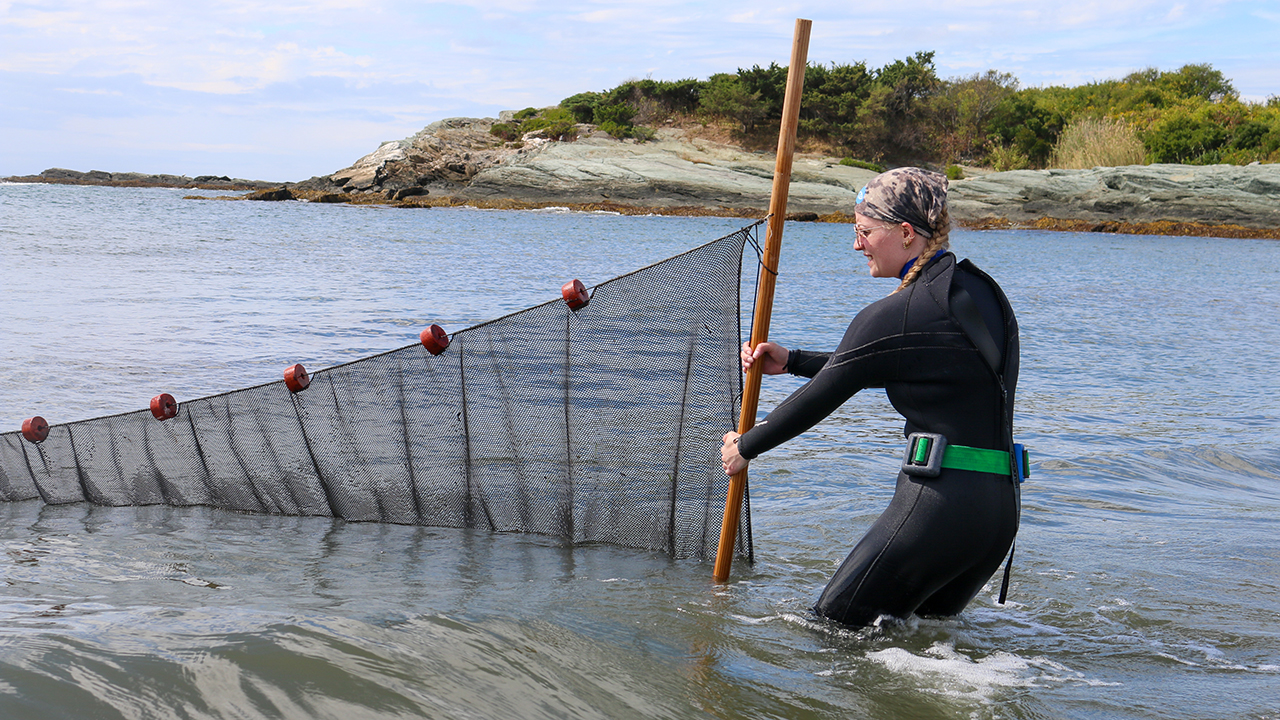
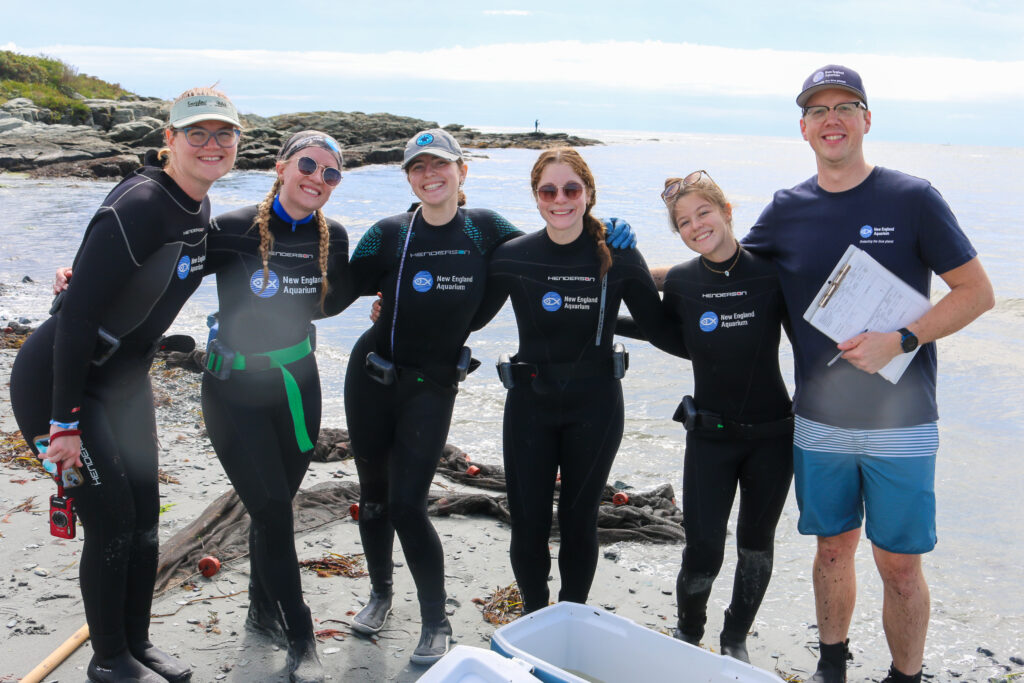
In addition to the data from the GSO Project, Mike and the team also head for local collecting trips and field surveys in September, when the water in New England is warmest. These trips happen in Massachusetts and Rhode Island, with the goal of gathering data on the environmental conditions and cataloging the native species as well as any tropical species they see. To conduct a survey, the team uses a seine net close to shore or dives further out in the water. In addition to documenting the species they observe, if they see a fish that is on the “wish list” for the Aquarium, they may collect that fish and bring it back to our Quincy Animal Care Center, where it will undergo quarantine before being introduced to an exhibit.
The hope is that by gathering this data, they can report on the species incidence of fishes they detect and compare with estimates of native species richness, getting a bigger picture view of Gulf Stream orphans in New England. “We’re interested in looking at the same sites as the years go on, as well as comparing different sites from different years,” Mike said.
2025 GSO report
This year, the team conducted five GSO collecting trips: two dives, two seines, and a combo trip using both methods.
“Most of the time, between three and six people from our Fishes department are on these trips,” Mike said. In total, the team documented seven GSO species across 45 individual fish. Four of this year’s GSOs—two spotfin butterfly fish collected by the Aquarium team and two “absolutely adorable, teeny tiny” trunkfish donated by a Rescue and Rehabilitation volunteer in Woods Hole—will quarantine in Quincy before making their way to Boston.
Looking back at the 2025 iNaturalist data, Mike said he’s seeing trends that suggest 2024 was a boom year for GSOs. This year, with around 600 observations along the East Coast, was more in line with 2023’s numbers so far. Mike and his collaborators plan to dive into past years’ data to try and further understand what made 2024 such a busy GSO season if they expect the trend between 2023 and 2025 to continue.
“As for the future, we’re always going to be collecting data,” Mike said. “Citizen science reporting has been growing continuously, like almost exponentially—as people learn about citizen science, they come on board.”
The GSO Project reaches a wide swath of people who interface with the ocean, from divers and boaters to birdwatchers and “micro-fishers,” a community of hobbyists who fish with dozens of tiny lures to document as many fish as possible. “It’s one thing that made iNaturalist such a good platform for this work,” Mike said. “We’re trying to highlight that these fish show up for a variety of reasons. With iNaturalist, we have a variety of people reporting on it. We’re really getting representation from a lot of the marine community.”
Moving forward, Mike added, this work can help start to understand how Gulf Stream orphans impact native species and ecosystems in New England and how climate change may affect the ranges of warmer water fish.
“What I appreciate about this effort is that it’s hard for any one person or any organization, like the Aquarium, to gauge what’s happening with our own efforts alone,” Mike said. “So, it’s nice to be able to look at iNaturalist and see what’s happening with the citizen science and say, ‘Okay, we’re getting the bigger picture here.’”
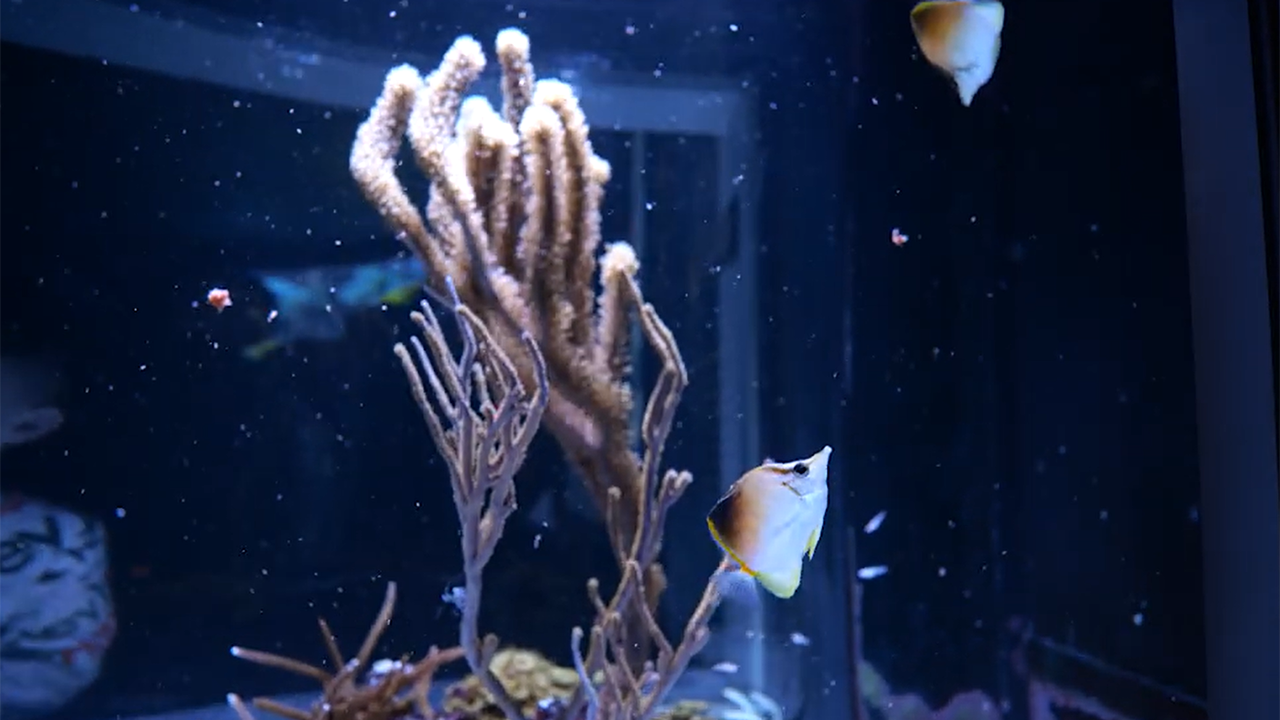
Watch: What Is the Gulf Stream Orphan Project?
Learn more about the GSO Project, a local collecting effort that happens every fall to find tropical fish in New England waters.

Related Stories

Become an Aquarium Member
An Aquarium membership gives you access to all the wonders of our blue planet and supports our work to protect the ocean.