Online and in person tickets are sold out for 3/14/26. Tickets are still available beginning 3/15/26!
Visit the Aquarium for a Tropical Escape in New England
Explore six New England Aquarium exhibits that will transport you to warmer destinations around the globe.
By New England Aquarium on Tuesday, December 23, 2025

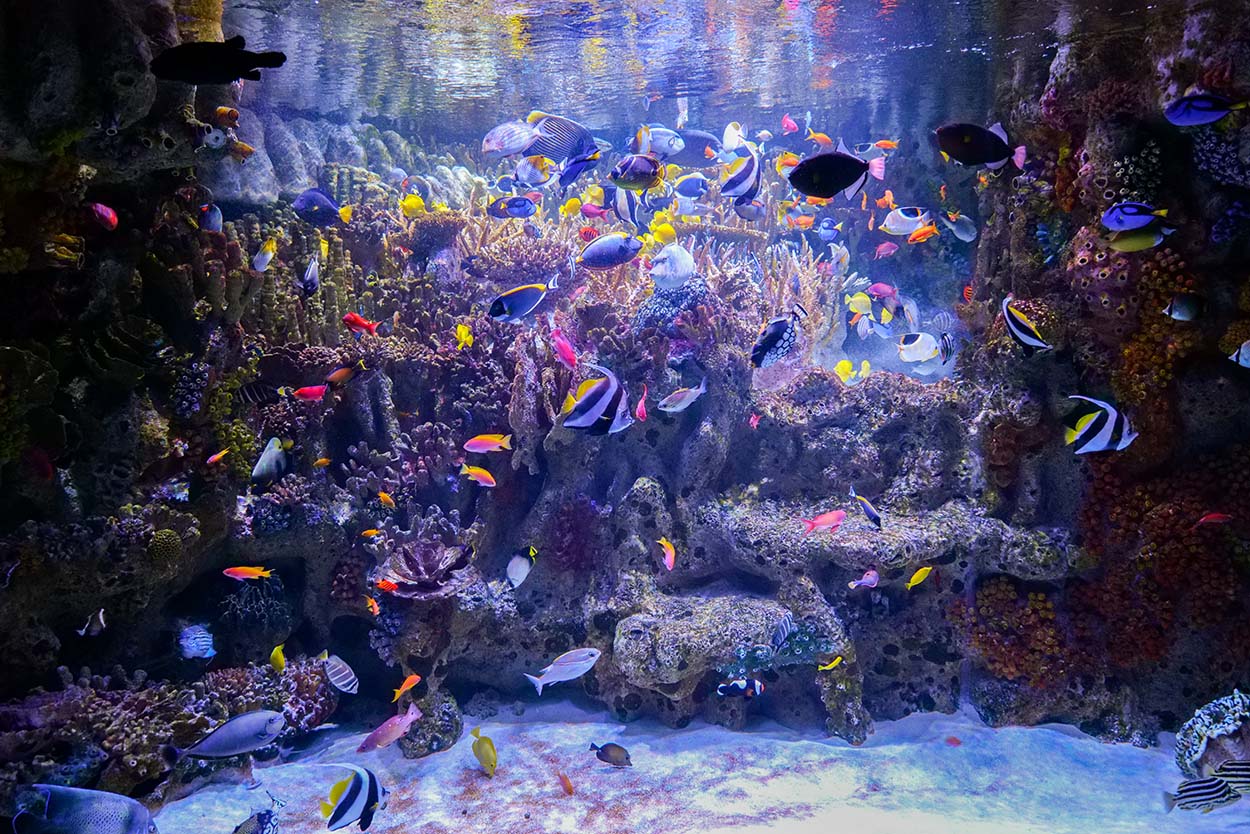
When winter settles across New England—short days, heavy coats, frozen sidewalks—the New England Aquarium offers a unique escape. Visit and take a journey through tropical climates around the world, from Caribbean coral reefs to an Amazon Basin ecosystem, all at 1 Central Wharf in Boston.
The Caribbean
Giant Ocean Tank exhibit
The first stop on your Aquarium tropics trip is the Giant Ocean Tank. Holding 200,000 gallons of natural saltwater maintained at 73–75°F, the exhibit immerses visitors in the feel and scale of a tropical Atlantic coral reef. The reef structure was built using fiberglass and rubber models of real coral skeletons, with coral species arranged by depth to mirror a wild reef. In nature, a coral reef of this size would take about 1,000 years to grow.
The species in the exhibit are native to the Caribbean too. Visitors might spot:
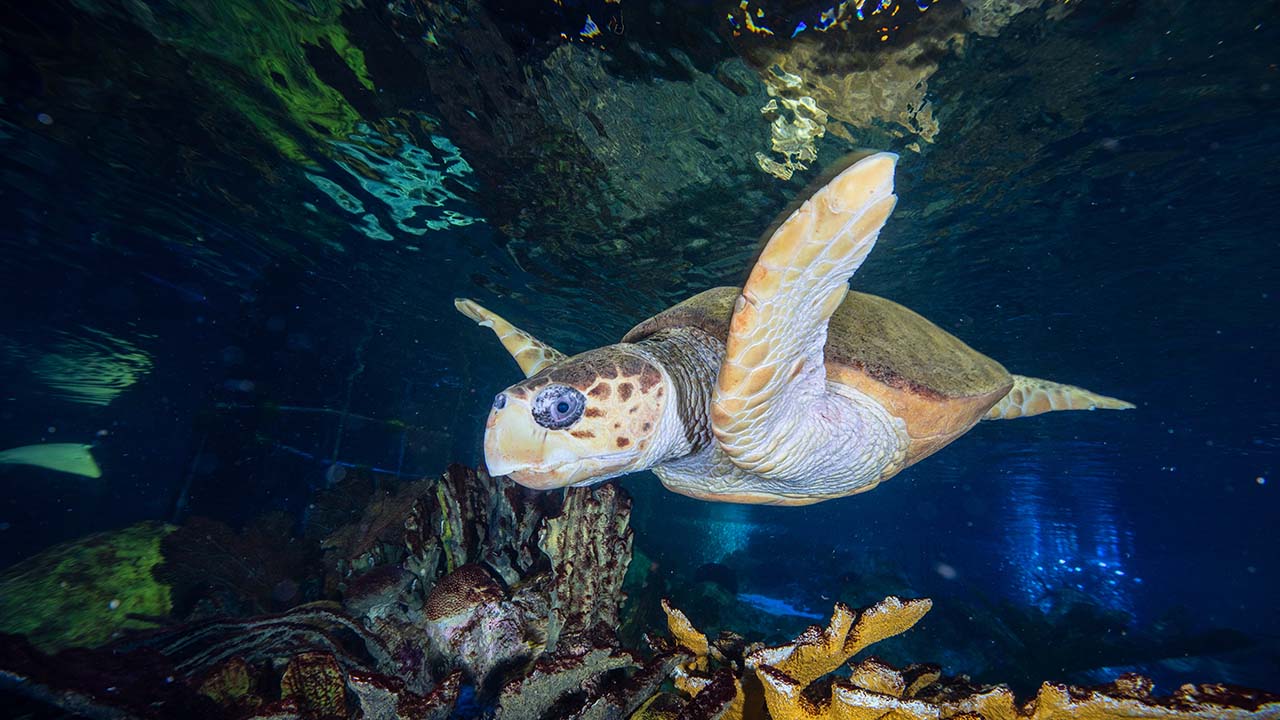
- Loggerhead sea turtles Carolina and Retread, both of whom came to the exhibit after being cared for through the Aquarium’s sea turtle Rescue and Rehabilitation program.
- Myrtle, a green sea turtle estimated to be between 75 and 95 years old.
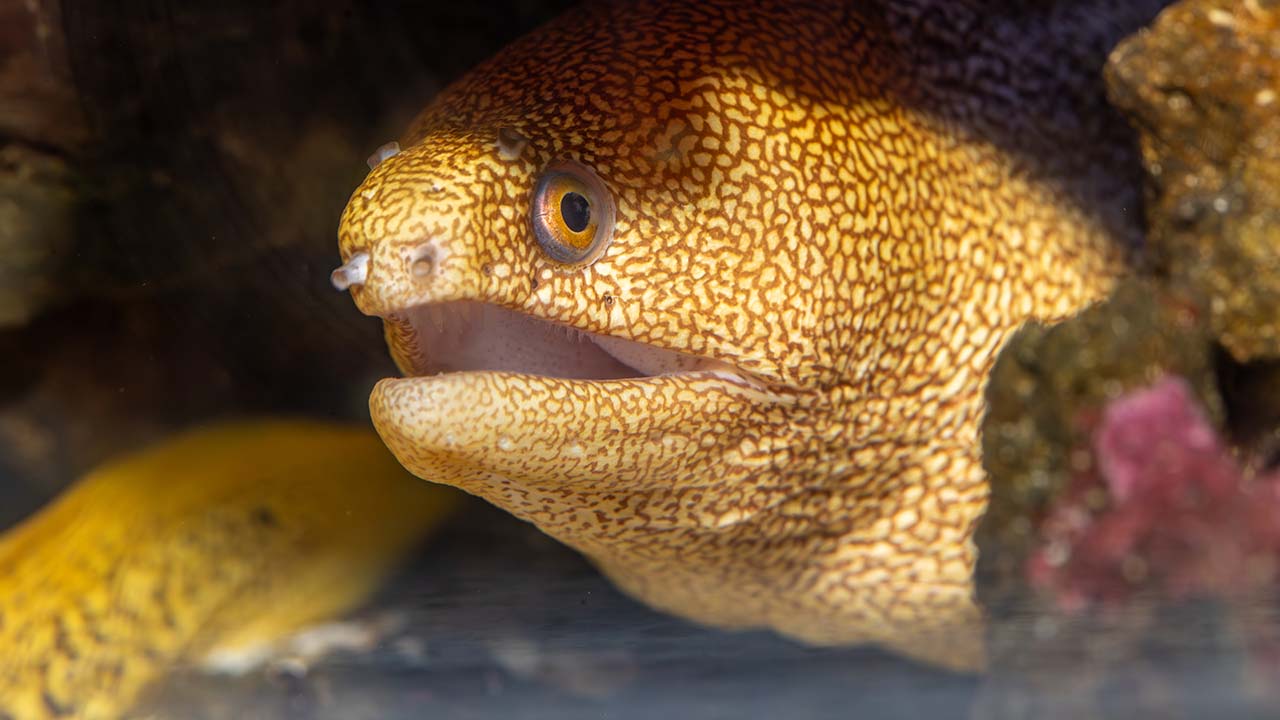
- Thomas and Marie, green moray eels. Although this species appears green, morays are actually brown with a yellow mucous coating that gives them their distinctive color.
- Cirri, the nurse shark, who uses sensitive barbels on her snout to navigate the reef’s nooks and crannies.
- Smaller reef fish displaying a range of adaptations, from parrotfish that form mucous cocoons while resting to damselfish that fiercely defend their nests—even from much larger animals. Trixie the porcupinefish can inflate by taking water into her body, while schooling fish like smallmouth grunts and lookdowns move together for protection.
Yawkey Coral Reef Center
The Yawkey Coral Reef Center brings together species found from southern Florida through the Caribbean, regions that are home to some of the most iconic—and increasingly threatened—species in the tropical western Atlantic.
At the heart of the gallery is staghorn coral, a key reef-building species whose branching structure creates a habitat for countless fish and invertebrates while helping buffer coastal communities from storms. Staghorn coral has experienced dramatic population declines, and it is now a major focus of reef-restoration efforts.
Looking more closely reveals a world of reef life:
- Dwarf seahorses, one of the smallest seahorse species, camouflage among seagrass beds. Males give birth, producing up to 25 young at a time.
- Royal grammas hover near reef caves and ledges, their striking purple-to-yellow coloration making them easy to spot—often upside down.
- Yellow garden eels sway gently in the current from mucous-lined burrows, retreating tail-first into the sand when startled.
Indo-Pacific Reef exhibit
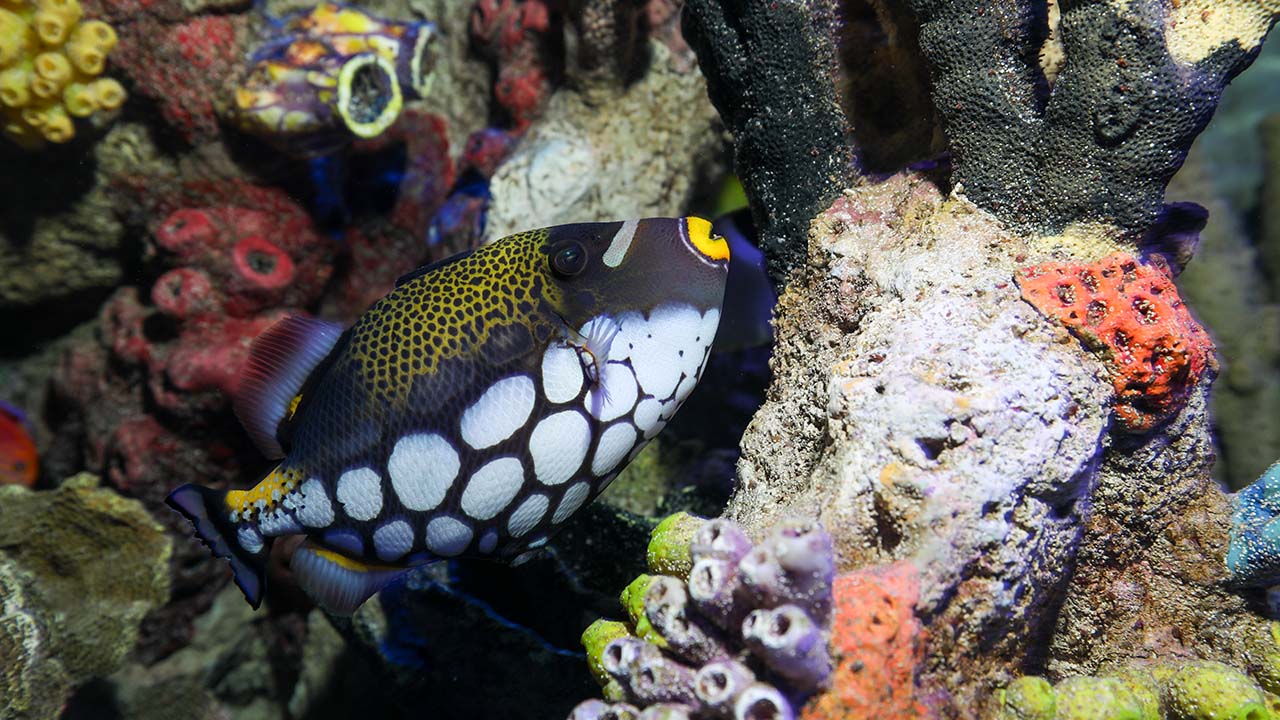
Located in the Tropical Gallery, the Indo-Pacific Reef exhibit represents coral ecosystems found in warm waters off of places like Indonesia and Australia, where photosynthetic coral species thrive under long days of sunlight. Tropical fish, like those in this exhibit, are typically vibrant colors, an adaptation that helps them blend into the background of a colorful reef habitat.
Although the corals in this exhibit are made of fiberglass, the animal behaviors on display are completely natural. Many reef fish are corallivores, grazing on coral polyps, algae, and even the calcium carbonate skeletons of corals themselves. Parrotfish are especially well known for this behavior—and for excreting sand from the coral skeletons that they consume. Aquarists and volunteer divers help keep the exhibit clean, but the fish do much of the work themselves, nibbling on the algae that grows on the artificial coral surfaces, just like on a wild reef. Pausing here to observe these feeding behaviors offers a calm, close-up look at how reef ecosystems function.
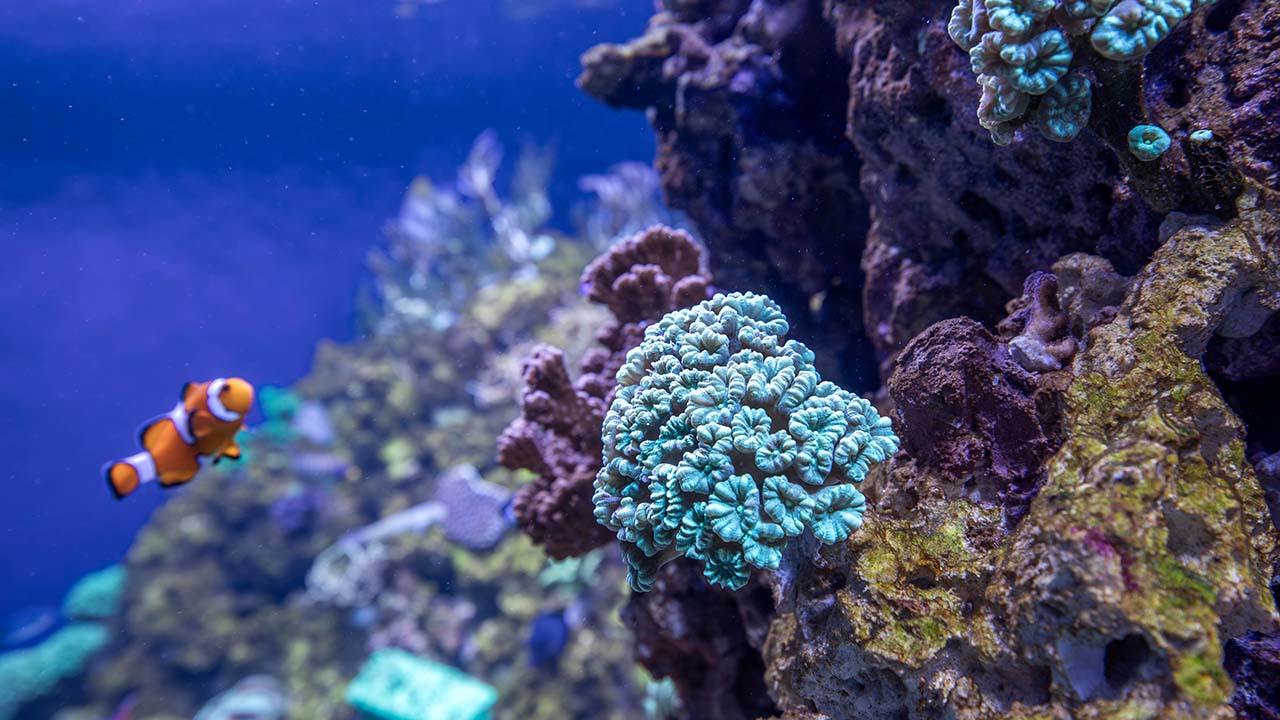
Healthy Corals, Healthy Reefs exhibit
Just steps away, the Healthy Corals, Healthy Reefs exhibit offers a different perspective on the same region, one focused on living coral colonies.
This exhibit showcases live corals that will grow and change over time, creating a reef that evolves with each visit. Aquarists tend to the habitat much like a tropical garden, trimming and fragmenting corals to ensure each colony has enough space to grow.
While it may not be immediately visible from outside the exhibit, corals can be surprisingly territorial. They compete with one another for space on the reef, extending specialized sweeper tentacles to sting neighboring corals and claim room to grow. These subtle moves shape the structure of the reef over time.
As you watch, fish interactions with this living environment come into focus. Some guard eggs laid on coral, others wedge themselves into the reef to rest, and still others move carefully through coral branches in search of shelter—small, everyday behaviors that bring the reef to life.
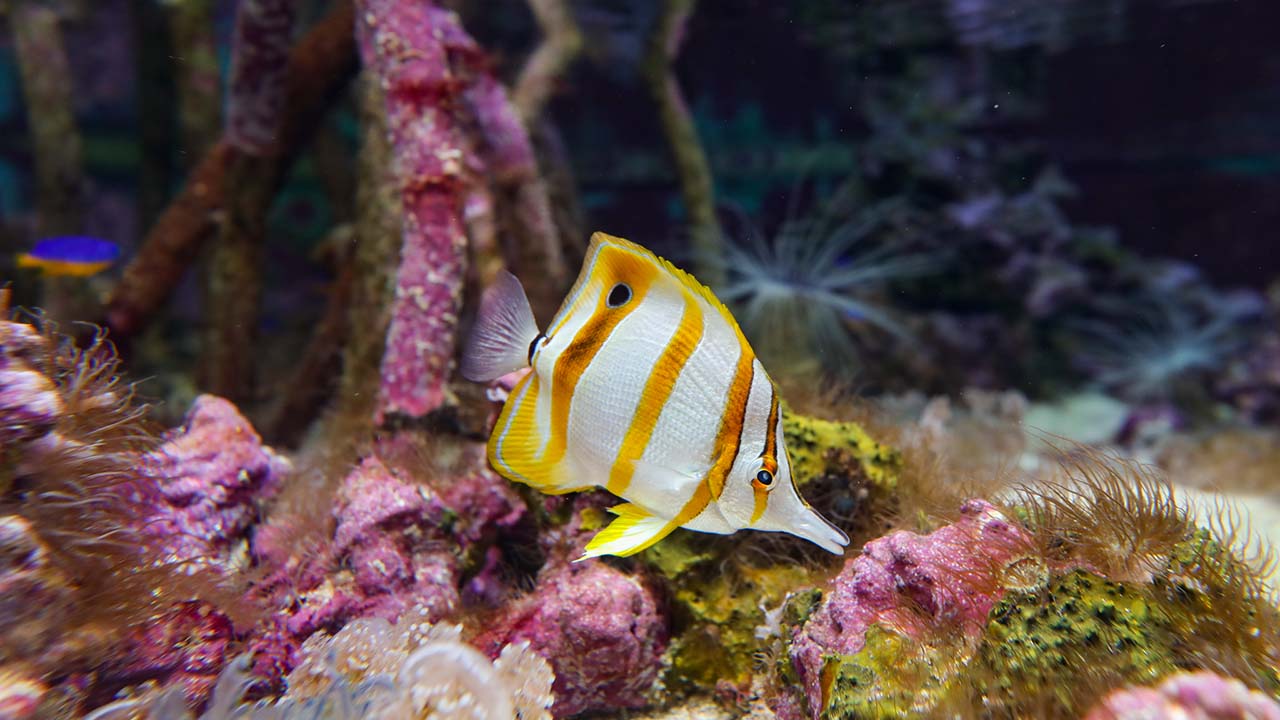
Lagoon Coral Reef exhibit
Common in tropical coastal regions around the world, including the Indo-Pacific and the Caribbean, lagoon coral reefs represented by this exhibit are a quieter setting: a shallow, inshore coral reef often sheltered from strong ocean waves and closely connected to mangroves and nearby seagrass meadows.
These calm, sunlit environments support extraordinary biodiversity, and nearly every surface of the exhibit is alive. Corals form the foundation of the reef, while anemones, fish, shrimp, crabs, snails, sea stars, and urchins fill the spaces between. Observe fascinating natural behaviors, such as cleaner shrimp removing dead tissue from passing fish while hermit crabs often scale the reef.
As evening approaches, coral species in the Lagoon exhibit retract their polyps for protection. Three pink skunk anemonefish remain nestled close to their anemones and rarely venture far from the shelter they provide.
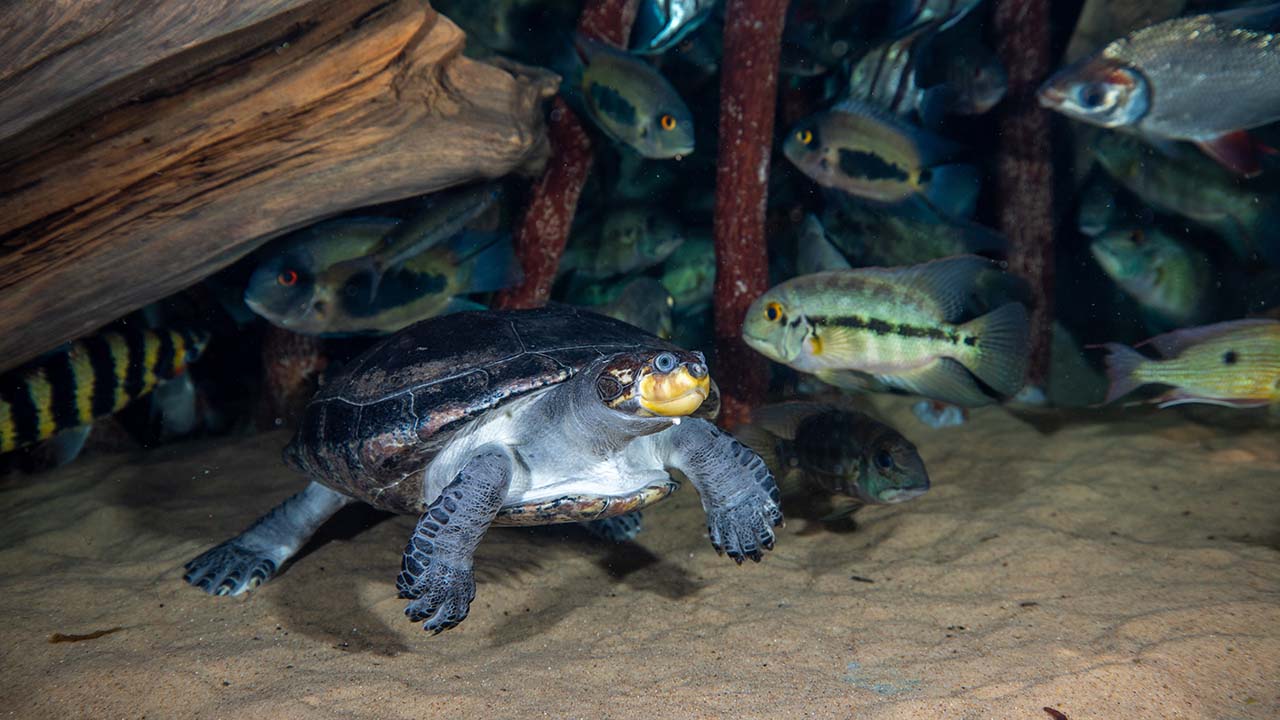
Amazon Basin, South America
Amazon Rainforest
Tropical warmth isn’t limited to the ocean. The Amazon Rainforest exhibit recreates a seasonally flooded forest—an ecosystem shaped by heat, heavy rains, and predictable cycles of rising and falling water.
Each year during the rainy season, rivers overflow into surrounding floodplains, creating a habitat rich in food and shelter. Many animals time their life cycles around this annual “flood pulse,” relying on the abundance of food and space it provides to reproduce and build energy reserves for the drier months that follow.
There are more than 3,000 species of fish in the Amazon River Basin. At the Amazon Rainforest exhibit, visitors may see a red hook myleus—herbivorous relatives of piranhas—who feed on fruits and seeds that fall from trees, playing a critical role in seed dispersal in the wild. Yellow-spotted Amazon River turtles move gracefully through the warm water, while juvenile triangle cichlids feed on nutrient-rich mucus from their parents’ skin during early development.
From the Caribbean Giant Ocean Tank to the Amazon Rainforest exhibit, these tropical environments offer a striking contrast to the winter outside. The next time you want a break from the New England cold, remember that warm-water ecosystems thrive year-round just inside the Aquarium doors.

Related Stories

Every Visit Makes a Difference
Your ticket purchase to the Aquarium directly supports our work to create a vital and vibrant ocean for future generations.