PRESS RELEASE
Rescued sea turtles receive font-inspired names while rehabilitating at New England Aquarium facility
“Franklin” and “Helvetica” among group of 58 turtles recovering from cold stunning

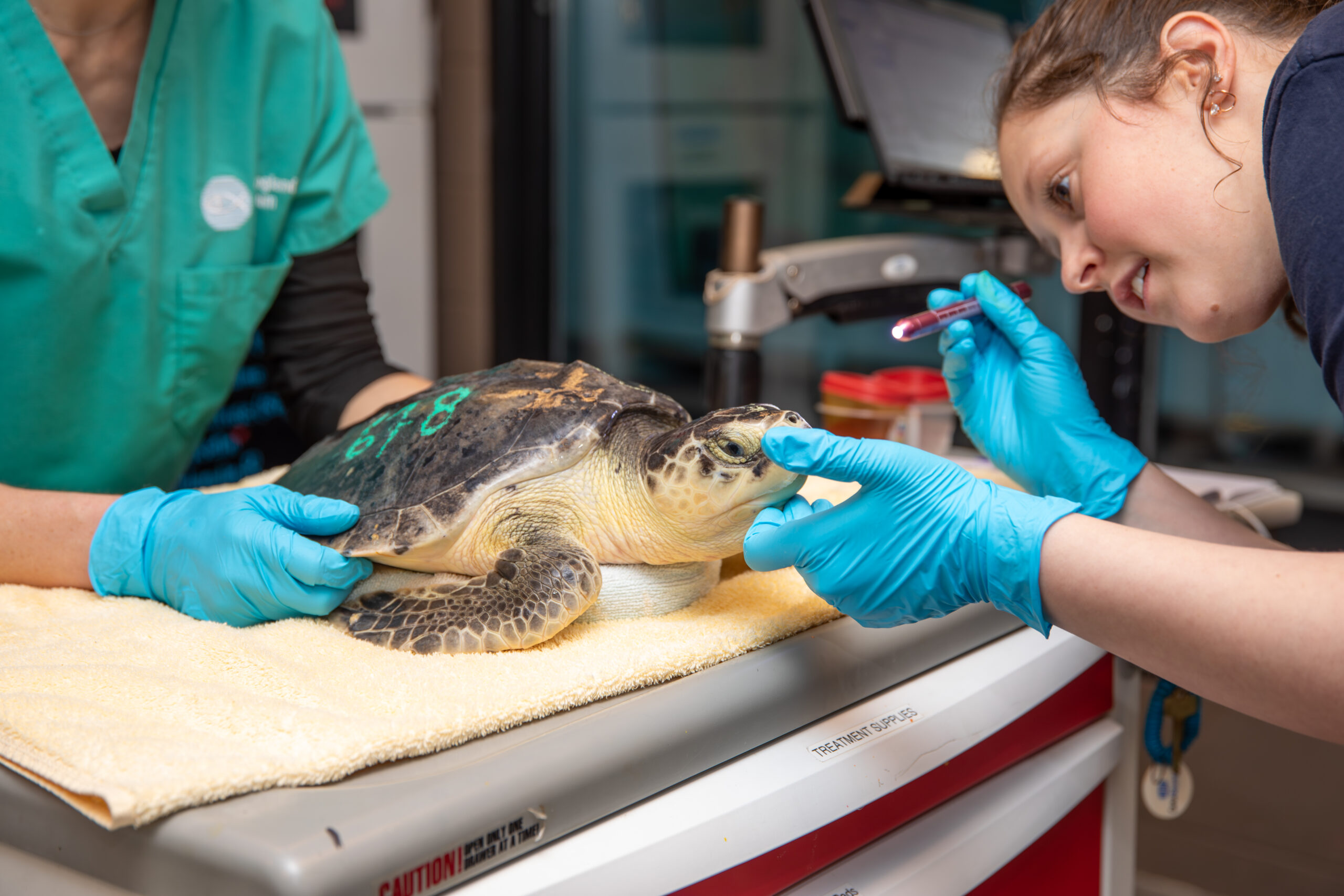
BOSTON, MASS. (March 11, 2026) – As sea turtle rehabilitation efforts continue following the annual cold-stunning season on Cape Cod, the New England Aquarium announced font-inspired names for the more than 50 turtles continuing to receive care at its Sea Turtle Hospital.
**PHOTOS AND VIDEO AVAILABLE HERE WITH CREDIT TO NEW ENGLAND AQUARIUM**
The Aquarium’s Sea Turtle Hospital in Quincy, Mass., treated a total of 473 live turtles that washed onto beaches along Cape Cod Bay from early November to late December. During the triage phase, turtles arrive at the facility in critical condition from hypothermia and related conditions, often in high numbers each day. Once they are stabilized, the focus shifts to long-term care, which is more geared toward helping the turtles heal from various infections of their lungs, joints, and shells.
While many stabilized turtles were transferred to secondary rehabilitation facilities to free up space for new arrivals, 58 of the more critical turtles have remained at the Sea Turtle Hospital to continue undergoing treatment. Aquarium staff, volunteers, and interns have a tradition of naming the turtles receiving long-term care, with this year’s theme being fonts. The group includes critically endangered Kemp’s ridleys “Cavolini” and “Franklin,” green sea turtles “Verdana” and “Chunk,” and loggerheads “Pretty Princess” and “Helvetica.”
“The time of year when we get to name the turtles always brings a lot of joy to the whole team. It’s symbolic, in a way, because these turtles are past the triage phase and are now in the long-term rehabilitation phase. Many are still undergoing significant medical treatments and diagnostics, but they have made such progress from when they first arrived. Now, we work toward getting these turtles healthy enough for release,” said Sammi Chaves, a rescue biologist at the Aquarium.
Most of the turtles have been diagnosed with severe pneumonia, requiring intensive treatment. Others are recovering from conditions including deep plastron shell wounds, limb joint/bone infections, and carapace shell fractures. This cold-stunning season, the air and water temperatures became cold so quickly that the turtles stranded in a narrower timeframe than recent years, with the majority arriving in very critical condition.
“These turtles have overcome incredible health challenges and continue to demonstrate their amazing healing capacities while responding to our treatment regimens and husbandry care. We continuously learn from these animals, adapting new treatment approaches for various severe ailments,” said Dr. Kathy Tuxbury, Senior Veterinarian at the Aquarium.
The Aquarium plans to release the majority of its rehabilitated sea turtles off Cape Cod into Nantucket Sound once the water temperature is warm enough this summer. Turtles that are fully rehabilitated sooner may be transported further south for release in the springtime.
MEDIA CONTACT: Pam Bechtold Snyder—psnyder@neaq.org