Creating Inclusive Spaces for the Scientific Community
MCAF Fellow Ingrid Hyrycena reflects on attending Sharks International 2026, the power of supportive scientific communities, and what it means to help make ocean conservation more inclusive.
By New England Aquarium on Wednesday, July 29, 2026

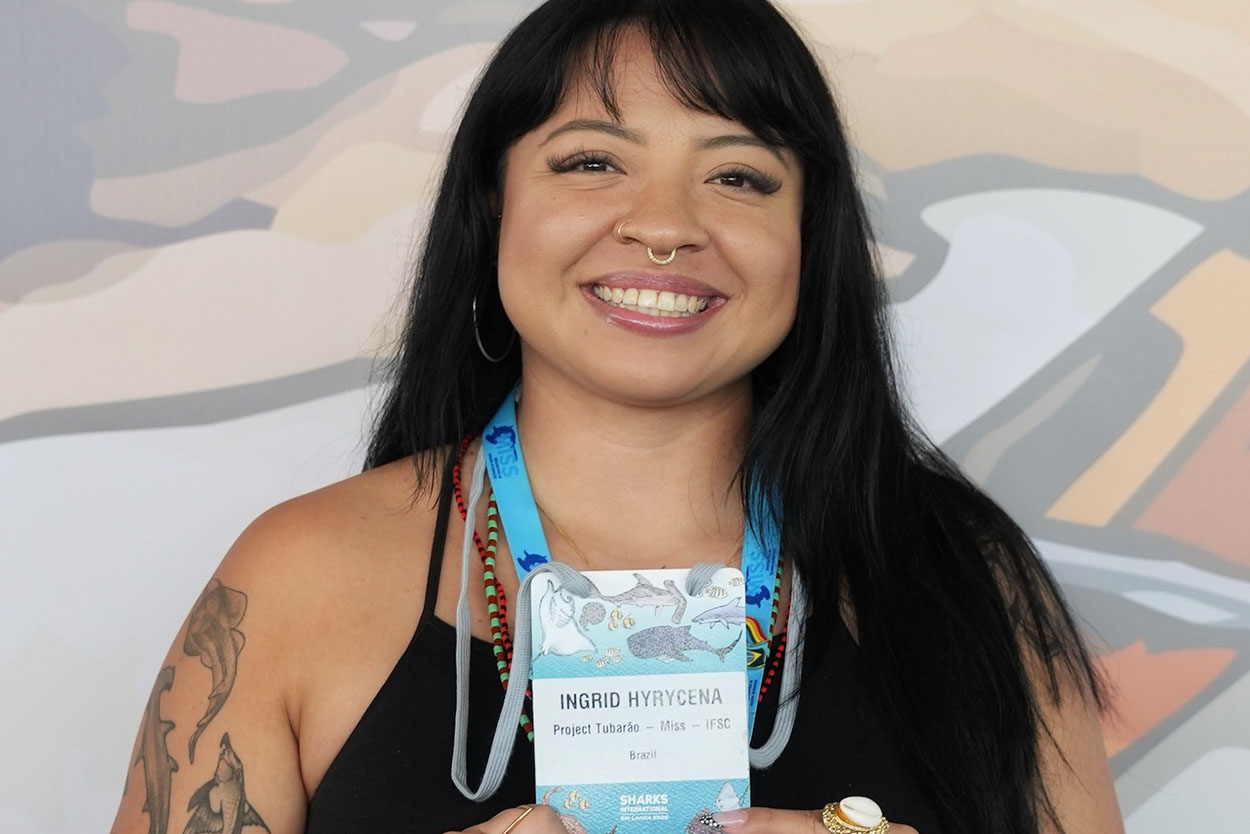
The Marine Conservation Action Fund (MCAF) supports local conservation leaders across the globe who work with local communities to advance lasting solutions for ocean conservation. Supporting conference travel is one way MCAF supports fellows and project leaders, creating opportunities for knowledge exchange, relationship building, professional development, and greater visibility for their work on the global stage.
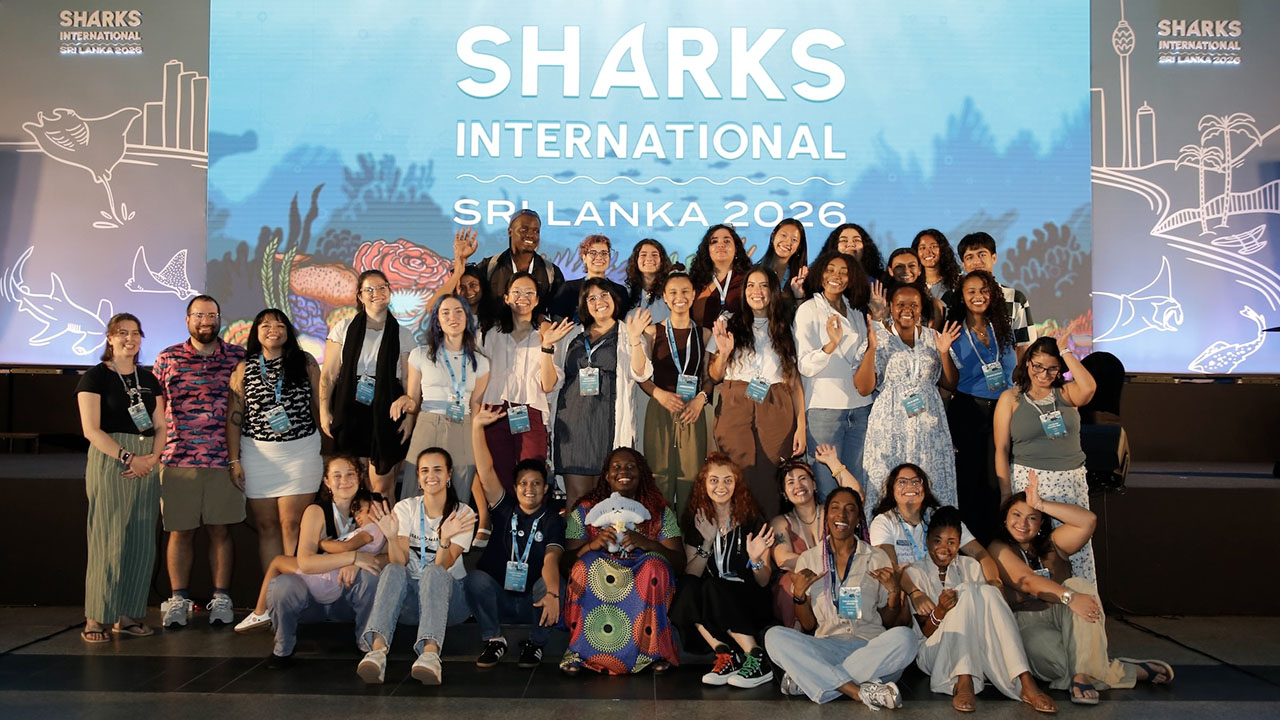
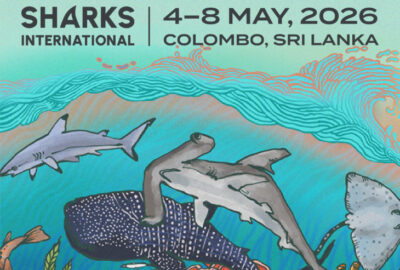
MCAF was honored to be a sponsor of Sharks International (SI) through a multi-year grant that supported MCAF Fellow Daniel Fernando and the Blue Resources Trust team’s efforts to plan an accessible, high-quality conference experience, including subsidizing registration fees and expanding opportunities for student participation.
Here, MCAF Fellow Ingrid Hyrycena reflects on Sharks International, the power of supportive scientific communities, and what it means to help make ocean conservation more inclusive.
This conference was probably one of the most intense and emotional experiences of my career so far.
As a woman and an early career scientist from the Global South, it can be very easy to compare yourself with people from prestigious institutions and more privileged backgrounds. Chatting with other students and early career researchers, I realized this feeling is more common than we sometimes admit. We compare ourselves. We question whether we belong. Sometimes we even convince ourselves that we are less prepared, less capable, or less deserving of being in those spaces. I arrived carrying all of those feelings and insecurities with me.
I had attended the Sharks International Conference before in 2018, when it was hosted in Brazil, my home country. At that time, I was still an undergraduate student. It was my first Sharks International, and I remember feeling overwhelmed by pressure, responsibilities, and everything that came with being in such a large international conference. I spent much of that experience carrying a constant sense that I did not fully belong there. Even though I was in my own country, I never felt comfortable enough to simply be present. So much energy went into masking, hiding what I was feeling, and trying not to let others see how much I was struggling that I never allowed myself to fully experience the conference or take up space in it.
Before arriving in Sri Lanka this year, I was honestly afraid of reliving those same feelings and experiences that had marked me so deeply. Instead, I experienced something completely different. Just a few moments before my talk, I was almost giving up on presenting.
What touched me the most was that friends and renowned researchers, some of whom barely knew me, showed up to support me. They truly understood what I was feeling and didn’t judge me. They sat with me, encouraged me, and reminded me that things would be okay, and that one presentation, whether good or bad, does not define me or my career. In those moments, I realized that support is not always about finding the perfect words. Sometimes it is about someone noticing from afar that you are struggling, sitting beside you in silence, being present, or offering a hug when you need it most.
Later in the conference, I found myself on the other side of a similar situation. Someone else was having a hard time before their presentation, and I had the chance to pass along some of the same kindness and support I had received. That felt really meaningful to me because it reminded me that this is how science communities should (actually, must) be. We were there because of our shared passion for sharks, rays, and chimaeras (we cannot forget about them), but in the end, it was always about the people
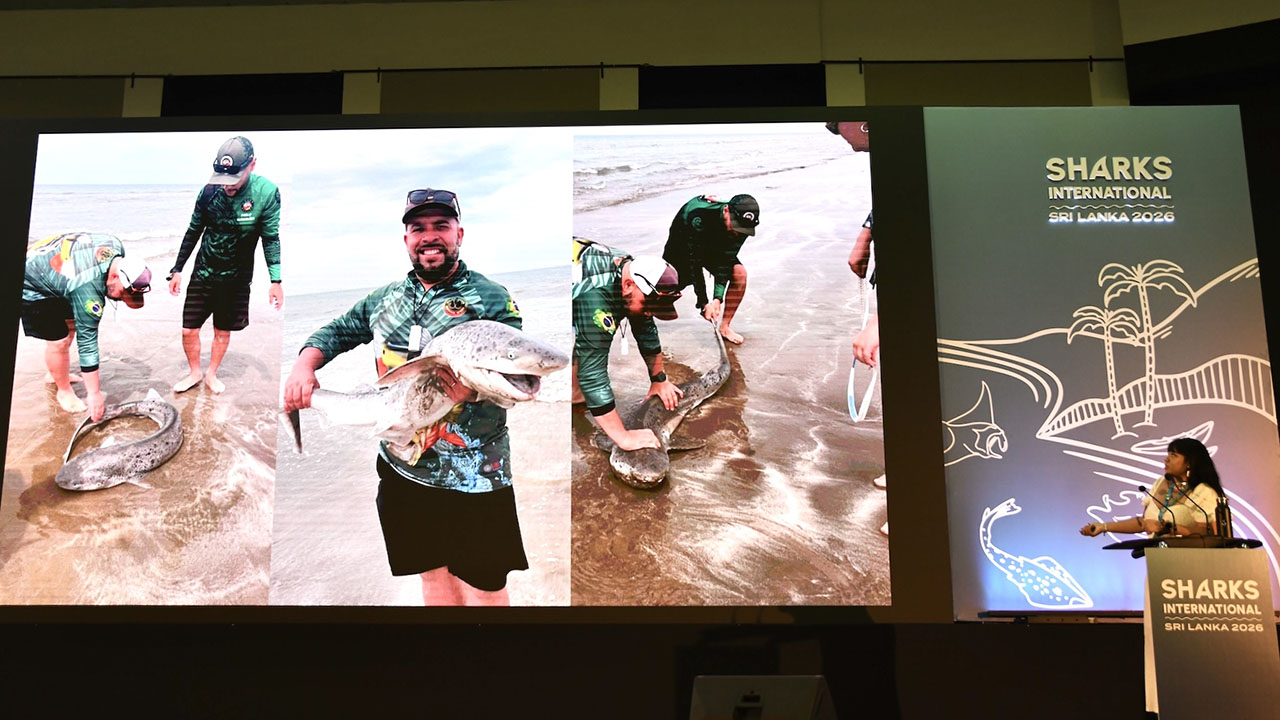
Returning eight years later, now as an early career scientist, I felt emotional in ways I did not expect. The Ingrid from eight years ago could never have imagined being where I am today. Not only attending a conference on the other side of the world, but presenting, connecting with researchers I admire, and feeling like I belonged.
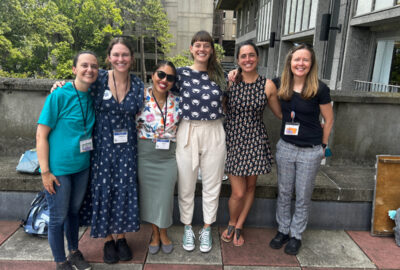
What also felt different was the atmosphere itself. Conversations happened naturally. People from different career stages genuinely seemed interested in connecting. I was also deeply moved by the diversity of people present and by seeing so many different stories and realities come together in the same space. There were people from different countries, cultures, races and ethnicities, and genders.
I was honestly surprised by the number of students and early career researchers there, especially knowing the financial and structural challenges so many of us face on a daily basis just to be able to attend spaces like this. Seeing so many different paths, backgrounds, and journeys represented throughout the conference felt incredibly powerful. It inspired me and gave me hope for the future of our field and for the kind of scientific community we are continuing to build.
The care and hospitality from the organizers, volunteers, venue staff, health care workers, and even the people working at the food trucks also made a huge difference and are something that should not go unnoticed or unappreciated. They highlighted the importance of choosing the right place. Not only the venue itself, its infrastructure, and location, but also the country and city, where people from different nationalities can feel welcomed.
The diversity of presentations and research topics created space for many perspectives and experiences. Together, these elements fostered an environment where people felt welcomed, safe and encouraged to participate, whether by asking questions, sharing ideas, or simply starting a conversation with speakers, or approaching people they had long looked up to and never imagined having the opportunity to talk to.
For me, this conference was proof that our field is changing.
At the same time, we still cannot ignore or forget the barriers and inequalities that many researchers from the Global South and underrepresented communities, including disabled, neurodivergent, trans, and gender non-conforming people, continue to face. Experiences like this also reminded me how important it is to keep building spaces that are accessible, safe, and welcoming. Simple and often low-cost accommodations such as quiet rooms, childcare, and nursing facilities can have a meaningful impact on who is able to attend and fully participate.
But once again, this meeting gave me hope.
It made me feel that more people are talking about and actively trying to create spaces where others can learn, exchange ideas, and simply exist and work without constantly being afraid, feeling the need to prove that they deserve to be there, or giving up on their careers.
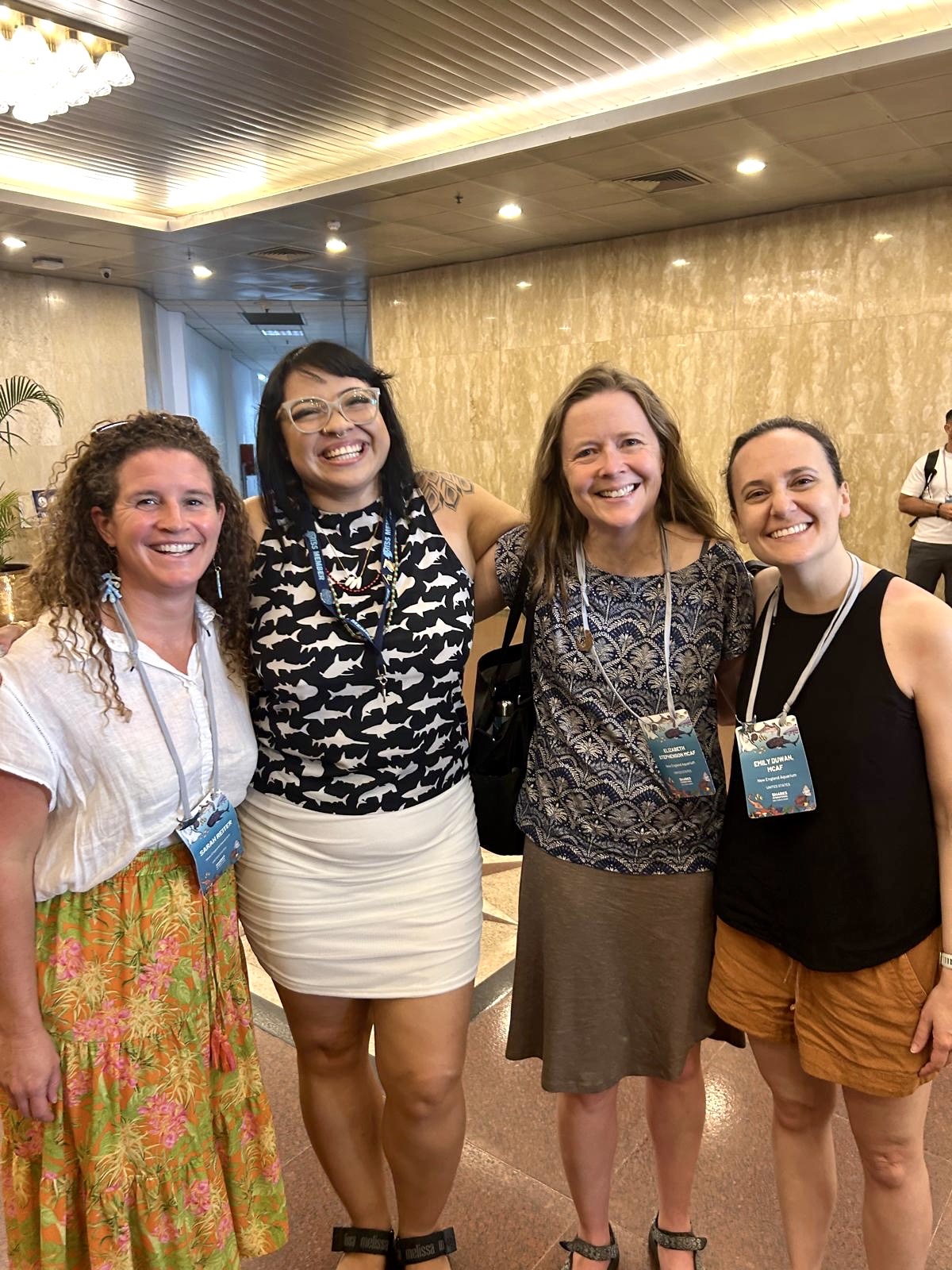
I also want to express my forever gratitude to the New England Aquarium. Your support has meant so much more than funding a trip to attend a conference. It has connected me with opportunities, people, and experiences that have changed the way I see myself, my career, and what I believe is possible for my future.
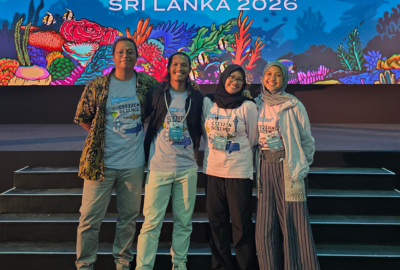
During the conference, I had the chance to stand on the main stage at the world’s largest shark conference, holding a microphone in my hand and proudly saying that I am an MCAF Fellow. That was an incredibly emotional moment because of everything it represented. Eight years ago, I could never have imagined that I would one day receive an international fellowship and be standing there, surrounded by people I admire, feeling a sense of belonging in a space that once felt so far out of reach.
What made that moment even more meaningful was hearing feedback afterward from students and early career scientists who told me they had never heard of a grant program that felt so genuinely supportive. Some said they felt excited and encouraged to apply in the future. Hearing that meant a lot to me because it reminded me of something I want to carry forward from this experience. It is possible. Representation matters. Sometimes seeing someone you can relate to standing in a space you once thought was out of reach can make all the difference.
More than anything, this experience reminded me of how far I have come and everything it took to get here. Looking back, I can finally allow myself to feel proud and recognize that all the sacrifices, obstacles, difficult moments, and things I had to give up along the way were worth it. I realized something I do not tell myself often enough: Yes, I made it this far. Yes, I am capable. And maybe, after all these years, it is finally time to believe in myself a little more. I also hope that, in some way, my story can help someone else believe that they can make it too.

Related Stories

Let's Take Action for the Ocean Together
With your support, we can further our work to ensure a vital and vibrant ocean for all.