Aquatic Adventurers: Meet Five Migratory Species
What do sturgeon, striped bass, salmon, and sea turtles have in common? Each undertake remarkable journeys—and you can see them at the New England Aquarium.
By New England Aquarium on Friday, September 18, 2026

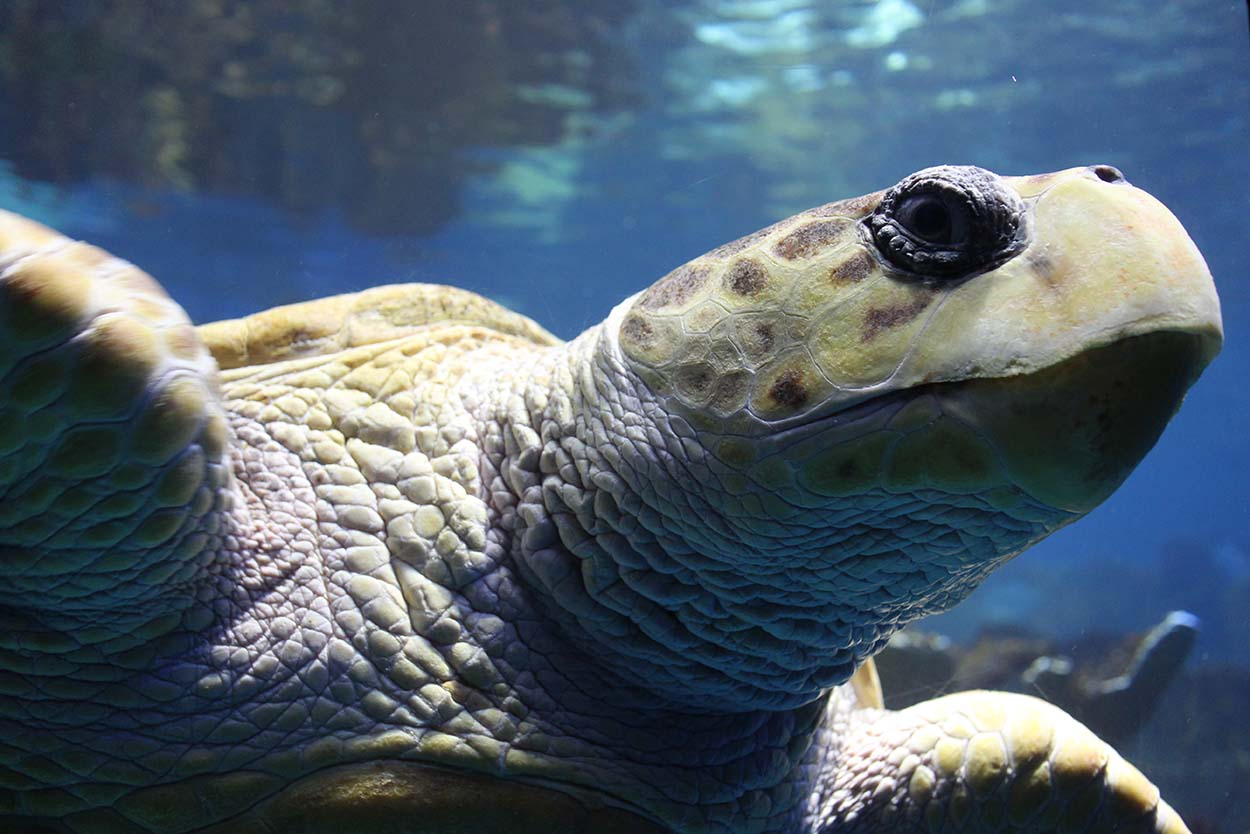
Looking to the sky, New Englanders often witness birds migrating south for the winter and back again. But did you know some of the most impressive migratory species are moving, just out of sight, below the water? Sea turtles travel thousands of miles between cool-water feeding grounds in the Northeast and tropical nesting beaches. Fishes migrate too, following natural cues—shifts in water temperature and even the Earth’s magnetic field—to reach the places where they feed, grow, and reproduce.
Meet some of nature’s most intrepid aquatic adventurers.
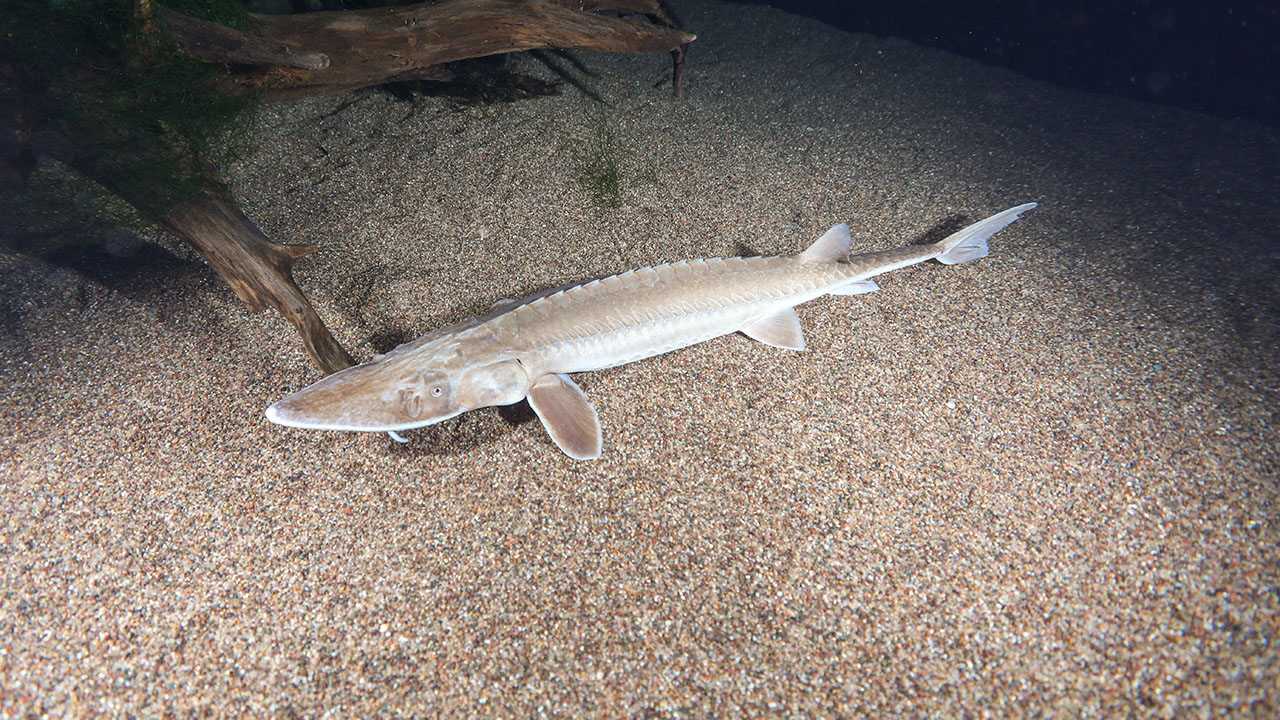
Shovelnose sturgeon
Sturgeon are living links to the past. They’ve been around for more than 200 million years, and they still carry ancestral features that connect them to their long-extinct relatives: a mostly cartilaginous skeleton supported by a rod-like notochord rather than a true spine, large bony plates called scutes instead of scales, and a spiral valve intestine—a nutrient-absorbing structure also found in sharks. To navigate their murky river habitats, they rely on electroreception and sensitive barbels near their mouths that help them find food along the riverbed.
Native to the Mississippi and Missouri River basins, the shovelnose is the smallest sturgeon in the United States, usually reaching about 30 inches and just 3 to 5 pounds—for contrast, the beluga sturgeon, the largest freshwater fish in the world, can weigh up to 2,850 pounds. But these little fish can travel. A 2019 study that tracked them over a decade found they move over 300 miles a year on average, yet rarely leave a “linear home range” of about 140 miles from end to end. They aren’t going from point A to point B so much as roaming a stretch of river as conditions shift. Temperature and water levels, rather than any fixed destination, appear to drive both their movements and their spawning.
Shovelnoses’ meandering migration makes them tricky to protect. Their meat and roe are commercially valuable, and over the course of a year, a single fish may cross multiple jurisdictions with different harvest rules. Add a slow path to maturity—8 to 11 years, with females only reproducing every three to four years—and it’s easy to see why sturgeon are vulnerable to overfishing. The shovelnose is currently listed as vulnerable by the IUCN.
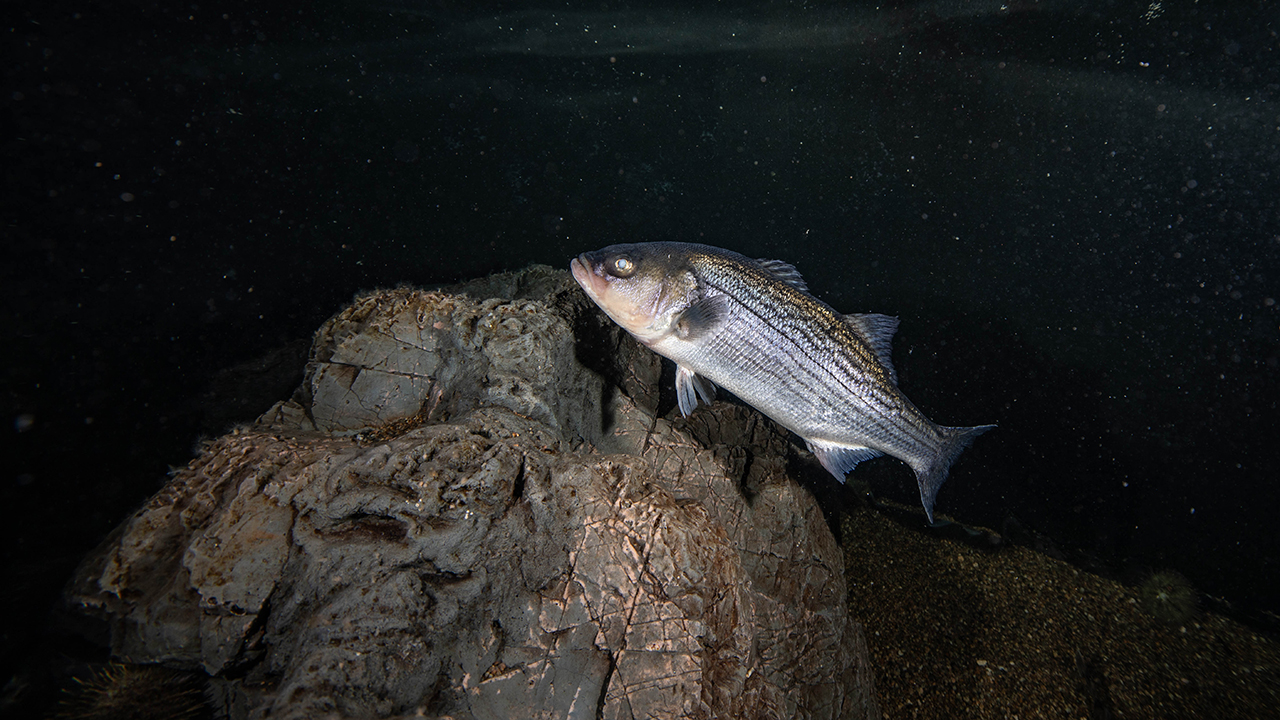
Striped bass
While shovelnose sturgeon roam within a single river system, anadromous striped bass cross between freshwater and salt water—and range along most of the continent’s edge. Each spring, mature bass return to freshwater and brackish habitats to spawn. Their young stay behind, spending up to four years growing in the shelter of environments like estuaries before heading out to the Atlantic. From that point forward, the coast is theirs to explore: stripers range from the St. Lawrence River in Canada to Florida’s St. Johns River, and through the Gulf of Mexico from Florida to Louisiana.
Because spawning striped bass were known to gather in accessible river mouths, they were an important food source for Native Americans and early colonists. Today, the striper is one of New England’s most popular sportfish, and even the state fish of Rhode Island. Anglers have their own vocabulary for them: large females are “cows,” juveniles are “schoolies.” A striped bass can live up to 30 years and reach 60 inches. The largest ever caught, weighing a staggering 125 pounds, was recorded in North Carolina in 1891. Stripers are famously voracious too—as many fishers will tell you, they’ll eat just about anything.
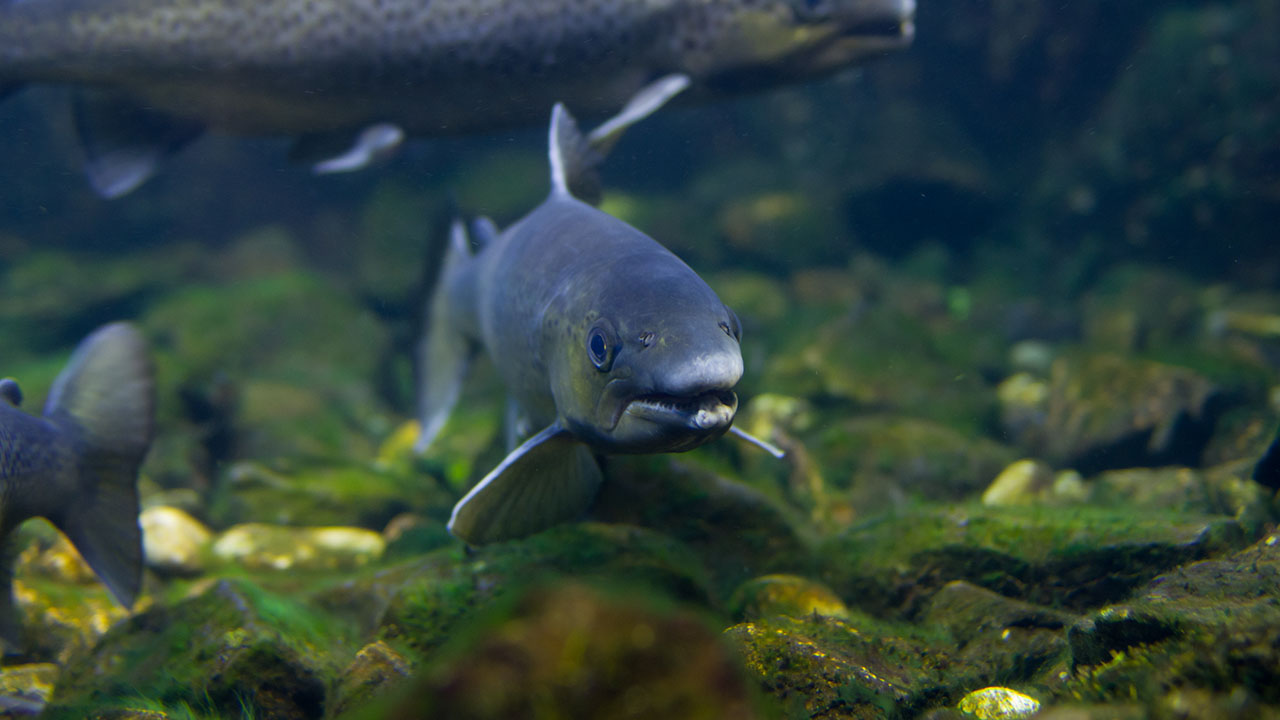
Atlantic salmon
The Atlantic salmon may be the most storied migratory fish of all. Hatched in freshwater, they migrate to the ocean to mature, then journey back upstream, swimming against the current, to spawn. They home to their birthplace using the Earth’s magnetic field to find the right river, then switch to using scent cues gathered on their downstream journey to navigate back to the exact small stream where they hatched. Unlike Pacific salmon, which make that journey upstream only once, some Atlantic salmon complete the round trip multiple times.
Atlantic salmon once filled many rivers north of the Hudson. Now, the only wild populations left in New England are in Maine, where they are listed as endangered. Their disappearance is primarily because of dams on rivers and streams that block salmon from reaching the ocean and returning to spawn, compounded by pollution, habitat degradation, and overfishing.
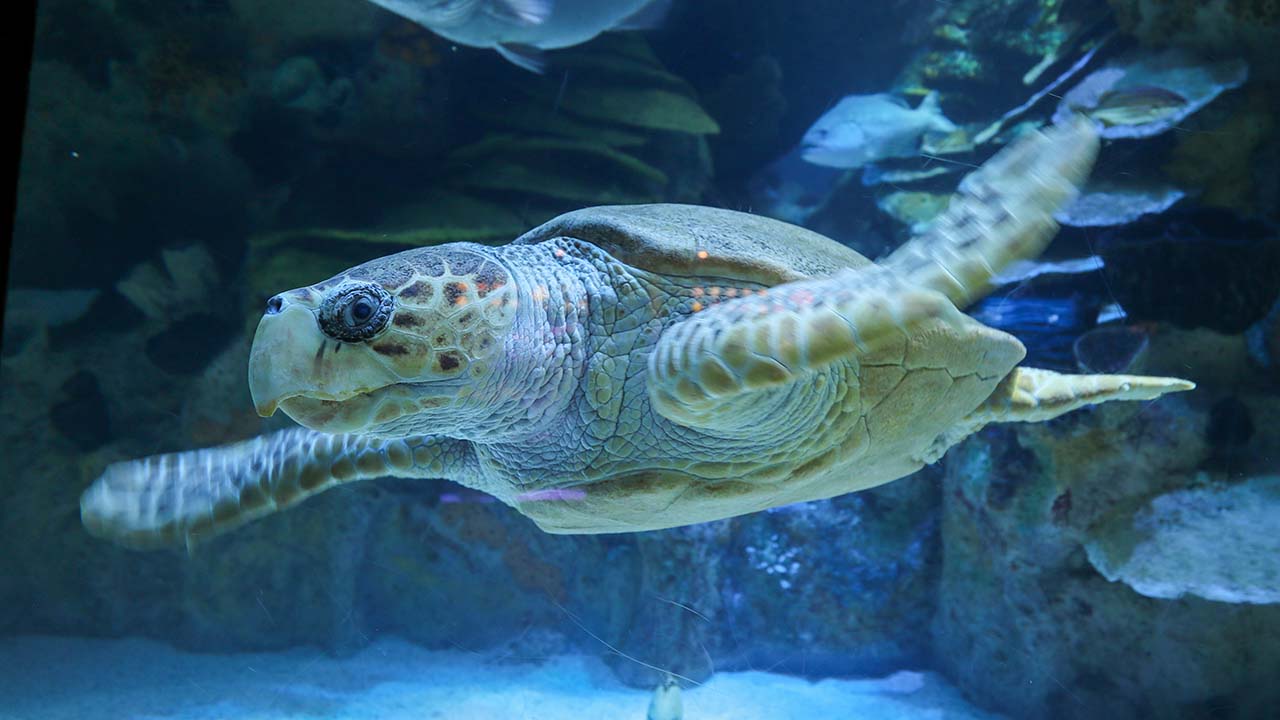
Sea turtles
Sea turtles are among the ocean’s great long-distance travelers, and several species you can visit at the New England Aquarium make especially impressive journeys.
The green sea turtle takes its name not from its shell but from the color of its fat—a nod to its diet as the only known herbivorous sea turtle. Its three largest populations are found near Costa Rica, Mexico, and Australia’s Great Barrier Reef, and its migration between nesting and foraging grounds can cover upwards of 1,500 miles.
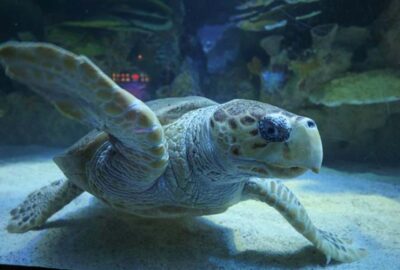
The loggerhead sea turtle, named for its proportionally large head, is the most abundant sea turtle in U.S. waters. Some loggerheads have been tracked traveling from Japan and Australia all the way to the Pacific coast of North America—an 8,000-mile round-trip.
Even that is outdone by the leatherback, which holds the record for the longest migration of any sea turtle: roughly 13,000 miles from Indonesia to Oregon. To navigate these vast distances back to the very beaches where they hatched, sea turtles use magnetoreception, sensing the planet’s magnetic field to find their way home.
Tagging along
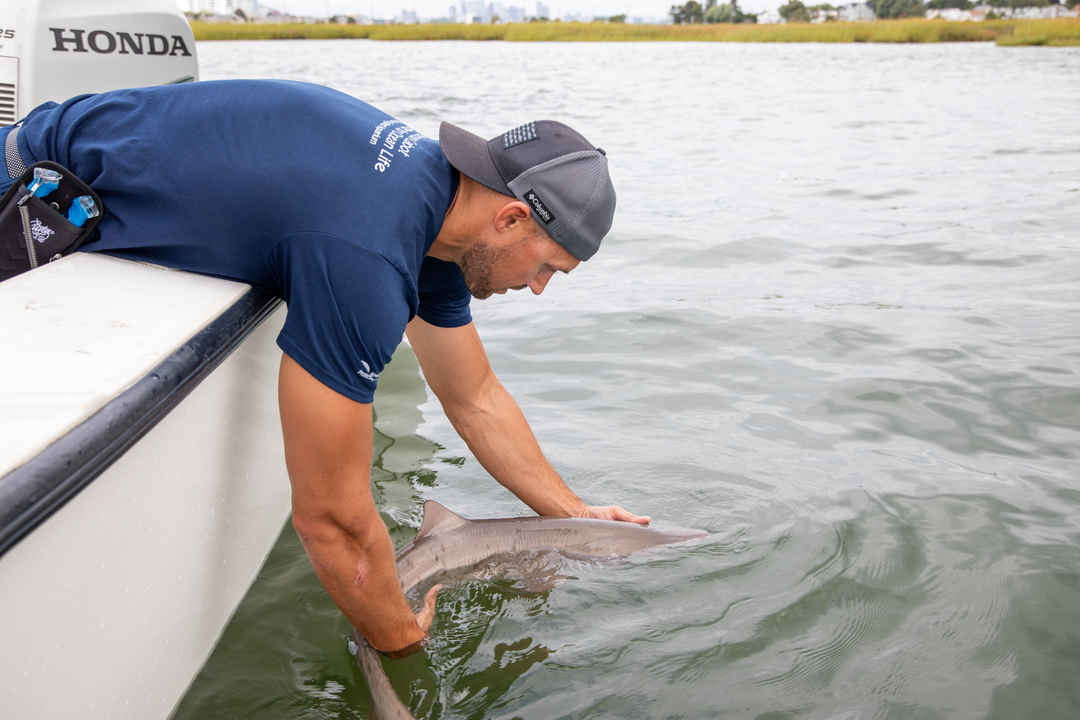
Understanding these travelers isn’t just fascinating—it’s active science. Much of what we know about these migratory routes comes from satellite tagging. In Haiti, Marine Conservation Action Fund Fellow Francklin Barbier leads that work for the Haiti Ocean Project, including tagging their first female green sea turtle, adding a piece to a map that’s still being drawn. At our Anderson Cabot Center for Ocean Life, scientists also tag sea turtles to learn about their behavior, habitat use, and nesting activity—and you can follow some of their journeys on our Sea Turtle Tracker!
Senior scientist Jeff Kneebone and colleagues at the Aquarium’s Anderson Cabot Center for Ocean Life use acoustic tags to track migratory fishes. Their work on false albacore found one fish that traveled more than 1,100 miles from Florida back to Nantucket Sound in just 40 days.
By using data to understand where these species go, when, and why, we can better help protect animals—no matter what journey they’re on.
Visit the Aquarium to learn more about these aquatic explorers and how we can all play a part in protecting them!

Related Stories

Every Visit Makes a Difference
Your ticket purchase to the Aquarium directly supports our work to create a vital and vibrant ocean for future generations.