On Wednesday, April 8, the Aquarium will be closed for an internal event. Normal operating hours will resume on Thursday, April 9.
PRESS RELEASE
Eastern fiddler rays make their debut at the New England Aquarium
“Viola” and “Tasman” join the Trust Family Foundation Shark and Ray Touch Tank

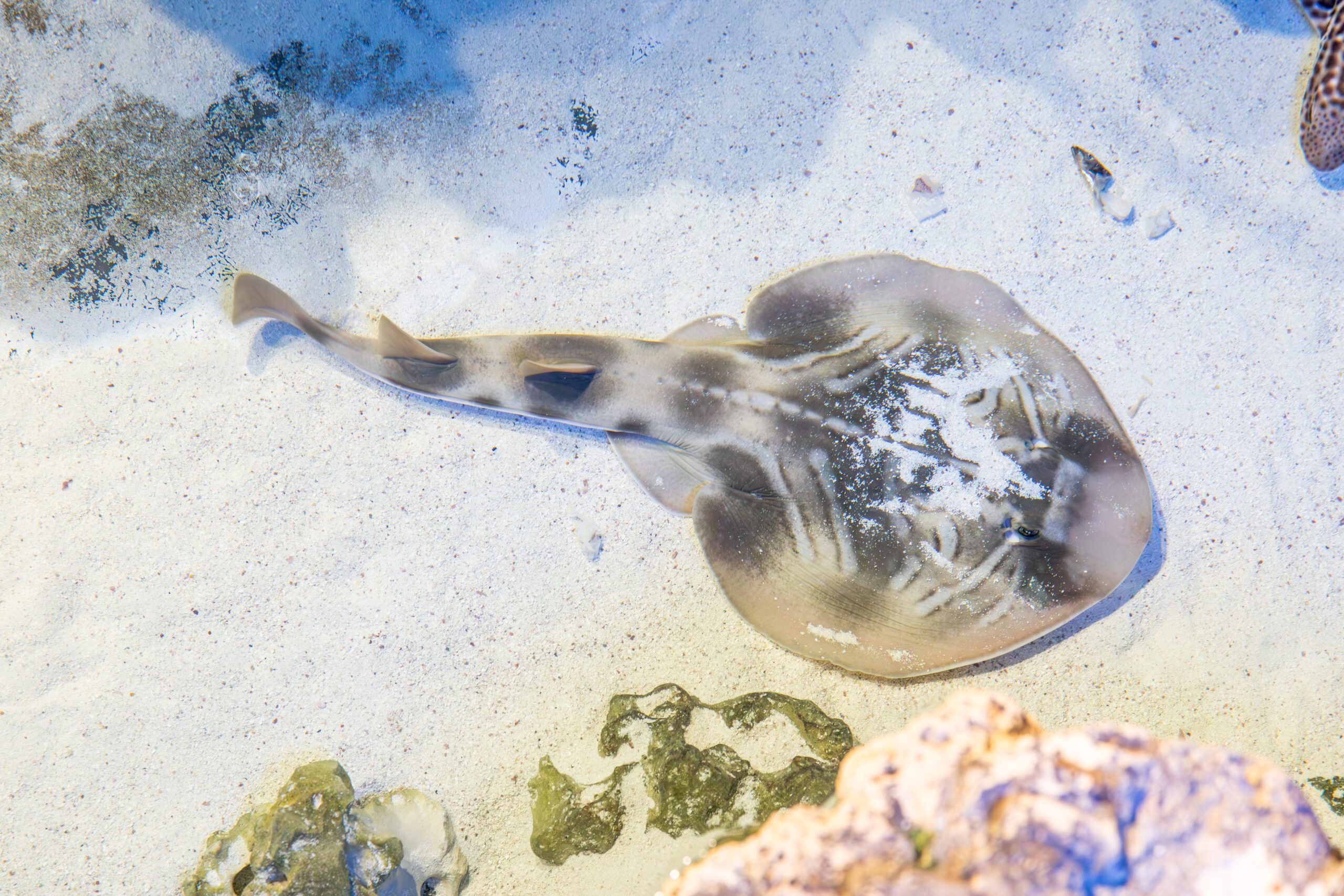
BOSTON, MASS. (April 2, 2026) – The New England Aquarium has introduced two eastern fiddler rays to its Trust Family Foundation Shark and Ray Touch Tank, marking the first time this species has been part of Aquarium exhibits. The two females are named “Viola” and “Tasman.”
**PHOTOS AND VIDEO AVAILABLE HERE WITH CREDIT TO NEW ENGLAND AQUARIUM**
Commonly known as “banjo rays” for their distinctive shape, eastern fiddler rays are native to the coastal waters of Australia, where they inhabit seagrass meadows, shallow sandy areas, and reefs. Their skin feels more like a shark’s than a stingray’s, though they are not sharks and are a close relative of guitarfish.
Viola and Tasman’s names reflect the species’ musical monikers and geographic roots. Viola is named for the string instrument, a nod to the fiddler ray name. Tasman is named after the Tasman Sea, situated on the southeastern coast of Australia, where the species is found. Guests who look closely may notice the two can be told apart by their markings, a fun challenge at the touch tank.
“Our new fiddler rays are a dynamic addition to the touch tank and have warmed up quickly to their surroundings,” said Sarah Tempesta, Manager of Interactive Exhibits at the New England Aquarium. “They are avid eaters of shrimp, clam, squid, silversides and capelin. Guests have had wonderful opportunities to interact with them already, and we can’t wait for more guests to meet them.”
Eastern fiddler rays can grow up to four feet long. Unlike stingrays, they do not have a stinging spine on their tail, called a barb. Females are also ovoviviparous, meaning that they give birth to live young from eggs that develop and hatch inside the mother. While the species is not endangered, fiddler rays face threats in the wild from being caught accidentally, or as bycatch, in commercial and recreational fishing.
Viola and Tasman join a diverse community of animals in the Shark and Ray Touch Tank, where Aquarium guests can observe and interact with them daily.
MEDIA CONTACT: Pam Bechtold Snyder—psnyder@neaq.org