The New Balance Foundation Marine Mammal Center will be closed from Monday, April 13, to Friday, April 17, for exhibit maintenance.
The Trust Family Foundation Shark and Ray Touch Tank will open at 10:30 a.m. on Tuesday, April 14, and Thursday, April 16, due to routine animal care.
We apologize for the inconvenience.
PRESS RELEASE
North Atlantic right whales return to southern New England waters, prompting slow zone for mariners
At least 23 right whales seen south of Massachusetts in past week

BOSTON, MASS. (Jan. 13, 2026) – North Atlantic right whales have returned to the waters south of Massachusetts, prompting federal authorities to designate a voluntary slow zone.
**AERIAL SURVEY PHOTOS AVAILABLE HERE – PLEASE SEE CREDIT INFO IN FOLDER**
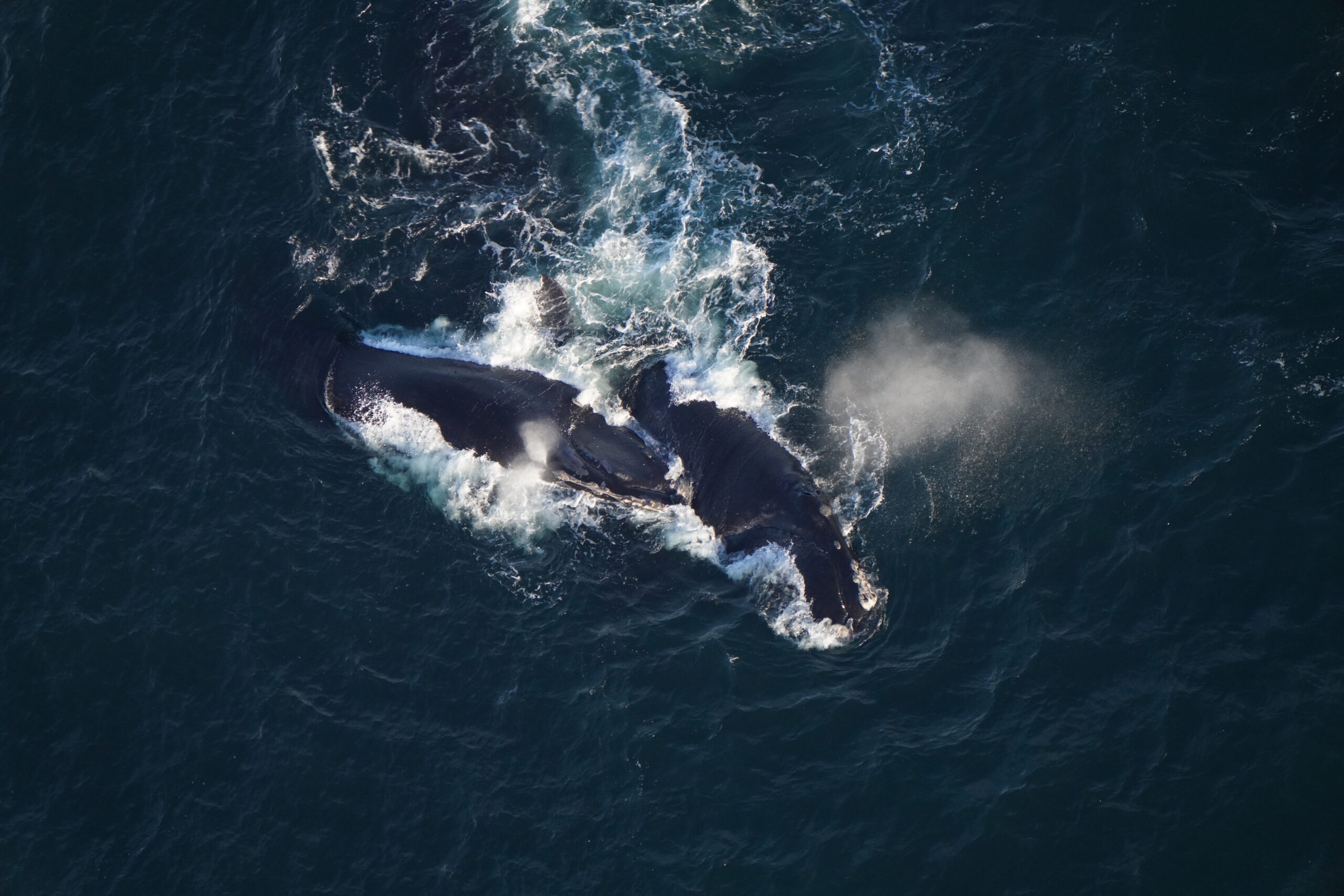
Scientists from the New England Aquarium’s Anderson Cabot Center for Ocean Life were flying an aerial survey on Jan. 5 when they sighted an aggregation of eight right whales 37 miles south of Nantucket. A second survey on Jan. 8 found over 20 right whales. Between both surveys, at least 23 unique whales have been identified so far. The group included two female right whales who have calved in recent years, “Braces” (Catalog #3320) and “Maple” (Catalog #1711), as well as “Atoll” (Catalog #4714), a young adult female who may be nearing calving age. These three females were all seen in surface active groups, a social behavior that involves several right whales closely interacting at the surface. These surface active groups can also provide mating opportunities, although not always. The majority of whales identified have been adult males including “Batman” (Catalog #1017) and “Dune” (Catalog #3351).
Assistant Scientist Kate Laemmle, who was one of the observers aboard the survey plane, noted the high number of these social groups in such a concentrated area.
“All around us, we saw groups of whales rolling, splashing, and bursting out of the water,” Laemmle said. “Seeing these critically endangered right whales on our first surveys of the New Year is a great way to start the season and leaves us hopeful for more whales returning to the area.”
The winter/spring season marks the peak time of year for right whale sightings in southern New England waters. In addition to the Aquarium sightings south of Nantucket, the Center for Coastal Studies has also sighted right whales in Cape Cod Bay over the last month. Cape Cod Bay is subject to a mandatory slow zone for boats and ships known as a Seasonal Management Area (SMA) until May 15.
The Jan. 5 whale sightings by the Aquarium triggered the National Oceanic and Atmospheric Administration (NOAA) to implement a voluntary slow speed zone called a Dynamic Management Area (DMA) for mariners to reduce their speed to 10 knots to protect the whales. The DMA is in effect until Jan. 20, one of several active voluntary slow zones from Massachusetts to Virginia due to right whale sightings. Vessel strikes are one of the leading causes of injuries and deaths for this species, which numbers about 380 individuals, making it critical that vessels slow down to the recommended speed.
“These recent sightings are an important reminder that right whales can be found throughout New England waters during the winter and spring. Reducing vessel speed in mandatory and voluntary right whale management areas is one of the most effective actions mariners can take to reduce the risk of vessel strikes and help protect this critically endangered species,” said Katherine McKenna, Associate Scientist in the Aquarium’s Anderson Cabot Center who was aboard the Jan. 8 survey flight.
For the past 15 years, the New England Aquarium has conducted aerial surveys over the waters south of Martha’s Vineyard and Nantucket, collecting data on all marine animals with a focus on protected species of whales and sea turtles. In recent years, the Aquarium has expanded survey coverage in New England including coastal Maine, the Gulf of Maine, and the Canyons along the shelf break. These flights help monitor changes in animal populations, identify various species, recognize trends using standardized data, and monitor aggregations. Determining where right whales occur and how they are using habitats provides crucial information that can be used to better protect endangered species like North Atlantic right whales.
MEDIA CONTACT: Pam Bechtold Snyder—617-686-5068; psnyder@neaq.org