PRESS RELEASE
Scientists urge public to be vigilant after first white shark of season confirmed off Massachusetts
Beachgoers and boaters can stay informed with “Sharktivity” app

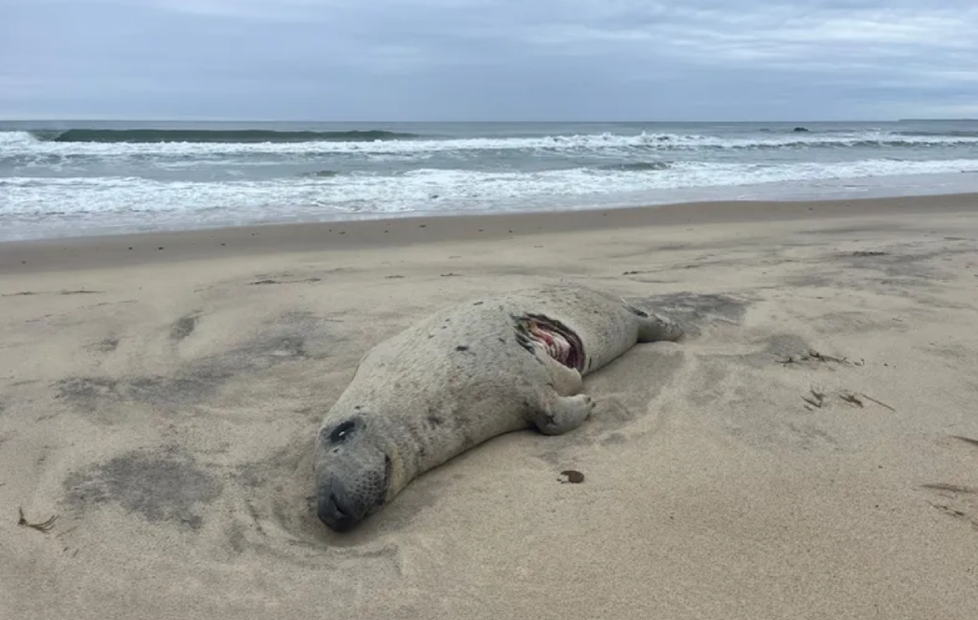
BOSTON, MASS. (May 13, 2026) – As Memorial Day Weekend approaches, the New England Aquarium is urging the public to be vigilant and report shark sightings after the first white shark of the season was confirmed off Massachusetts.
A dead gray seal with a visible wound was discovered on Lucy Vincent Beach in Chilmark, Martha’s Vineyard, on May 10. Andrew Jacobs from the Natural Resource Department of the Wampanoag Tribe of Gay Head (Aquinnah) went to investigate the animal on May 11 and reported the suspected shark bite to the Massachusetts Division of Marine Fisheries.
John Chisholm, an adjunct scientist in the Aquarium’s Anderson Cabot Center for Ocean Life, examined photos of the seal and agreed the bite wound was consistent with that of a white shark.
“This is just the beginning of white shark season in New England, and it serves as a good reminder to be mindful of the presence of these sharks in inshore waters. Their numbers will continue to increase throughout the summer with peak activity occurring in the fall,” Chisholm said.
Chisholm, who has been researching white sharks for nearly 40 years, emphasized the importance of being “shark smart”—aware of sharks’ presence in shallow waters, avoiding areas where seals are present or schools of fish are visible, and staying close to shore where emergency responders can reach you if needed.
The public can report sightings and stay informed on shark activity through the Atlantic White Shark Conservancy’s Sharktivity app. Sharktivity provides information and push notifications on white shark sightings, detections, and movements to raise awareness and help people and sharks co-exist. As part of a partnership between the New England Aquarium and the Atlantic White Shark Conservancy, Chisholm serves as Citizen Science Coordinator for the Aquarium, verifying shark sighting reports made by the public and identifying legitimate sightings to be posted on Sharktivity.
“In addition to alerting others about the presence of sharks in near real time, these sightings contribute to our scientific understanding about sharks in our local waters, helping us to understand the health of their populations and the marine environment that supports them,” said Dr. John Durban, a senior scientist in the Aquarium’s Anderson Cabot Center for Ocean Life.
The New England Aquarium has a team of scientists in the Anderson Cabot Center for Ocean Life that studies sharks. Over 15 shark species reside in New England waters depending on the time of year. The researchers’ work focuses on tracking migration patterns and habitat use with electronic tags and sightings from aerial surveys, and assessing the impacts of commercial and recreational fishing activities on shark populations.
MEDIA CONTACT: Pam Bechtold Snyder—psnyder@neaq.org