Please note: The Atlantic harbor seals will temporarily be off exhibit while we improve their habitat for their comfort and well-being.
PRESS RELEASE
The Ocean Carbon Sink: Oceanographer Marina Lévy on the Facts, Fictions, and Opportunities
Free lecture: Thursday, November 12 at the New England Aquarium’s Simons Theatre

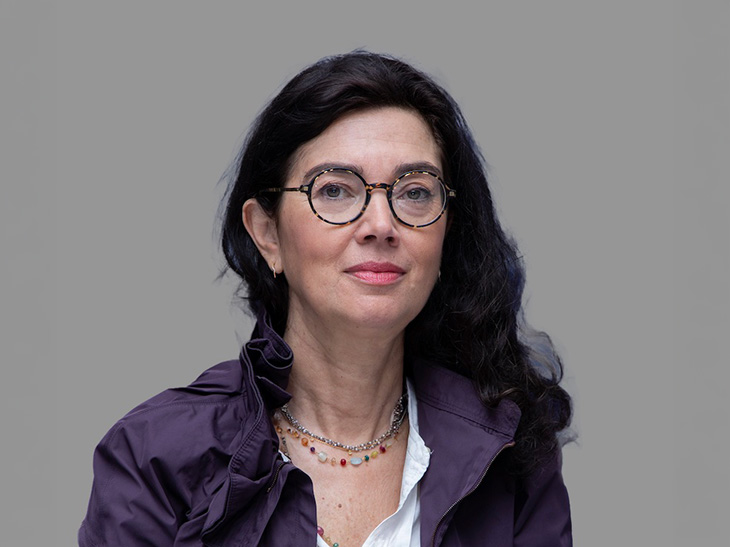
WHAT: The New England Aquarium’s Lowell Lecture Series and the Lorenz Center of the Department of Earth, Atmospheric, and Planetary Sciences at MIT present the John H. Carlson Lecture, featuring oceanographer Marina Lévy on an exploration of the ocean’s extraordinary carbon machine. From forests on land and underwater, to microscopic phytoplankton, to the web of marine life and the global ocean circulation, the lecture will follow carbon through the ocean to discover what actually makes it one of the planet’s great carbon sinks and why that matters as the ocean warms and its circulation changes. And if we understand how this remarkable machine works, could we help it absorb even more CO₂? Lévy will also explore emerging ideas for using the ocean to remove carbon from the atmosphere, along with their promises, limitations, and unanswered questions.
WHEN: Thursday, November 12, 2026 from 6:30 to 7:30 p.m. All are invited to arrive early to explore exhibits by MIT students and climate scientists in the Simons Theatre lobby. Doors open at 5:30 p.m. with a cash bar available.
WHERE: In person at the New England Aquarium’s Simons Theatre, 1 Central Wharf, Boston. The lecture will also be livestreamed via Zoom.
HOW: Register here for in-person and virtual attendance to the event. Advance registration is required. This free lecture is made possible by a generous gift from MIT alumnus John H. Carlson to the Lorenz Center and is presented in partnership with the New England Aquarium and the Lowell Institute.
WHO: Dr. Marina Lévy is an oceanographer and senior scientist at the French National Centre for Scientific Research (CNRS), based at LOCEAN–IPSL at Sorbonne University in Paris, France. She is currently director of the Ocean Institute of the Sorbonne University Alliance.
Her research explores how ocean circulation, climate, and marine ecosystems interact, from the dynamics of phytoplankton to the ocean carbon cycle and its response to human-induced climate change. She has contributed to understanding how physical processes shape marine ecosystems and influence the ocean carbon cycle.
Lévy is also strongly engaged at the interface between science and society. She leads the scientific coordination of the international Starfish Barometer, an annual assessment of the state of the ocean, and contributes to efforts to bring ocean science into public debate and policy.
MEDIA CONTACT: Pam Bechtold Snyder—psnyder@neaq.org