Please note: The Atlantic harbor seals will temporarily be off exhibit while we improve their habitat for their comfort and well-being.
Protecting Kemp’s Ridley Sea Turtles from New England to Texas
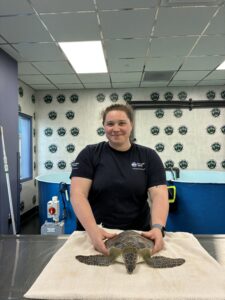
Linda Lory, manager of the New England Aquarium’s Sea Turtle Hospital, and biologist Charlotte Clark traveled to South Padre Island, Texas to assist Sea Turtle Inc. with rescue efforts during nesting season.
By New England Aquarium on Thursday, September 10, 2026

At the Sea Turtle Hospital in Quincy, MA, our Rescue and Rehabilitation team works to treat cold-stunned sea turtles found stranded on Cape Cod during the late fall and early winter. Each year, as many as 500 patients come through our doors.
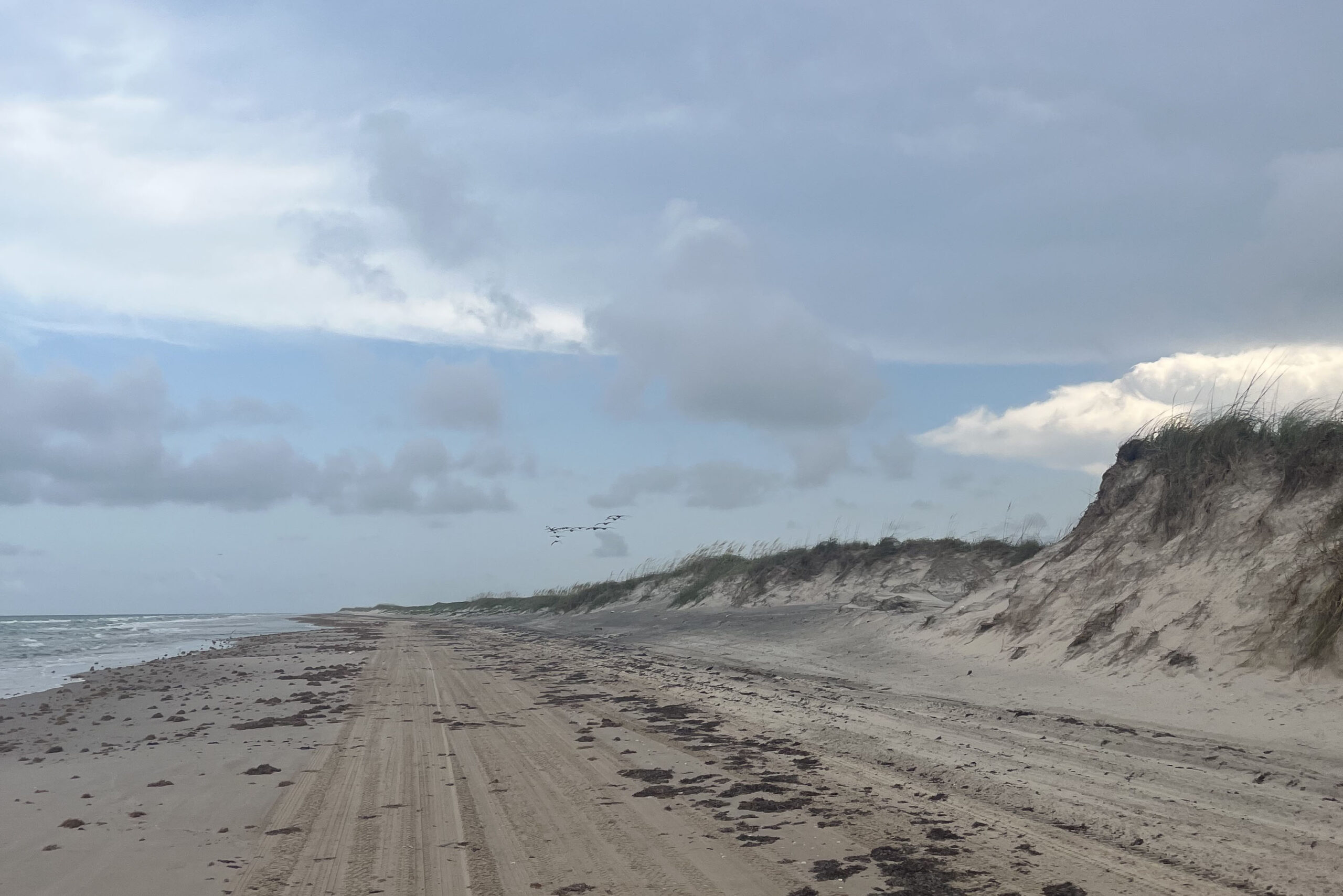
Kemp’s ridley sea turtles, a critically endangered species, make up the majority of rescues. Juveniles spend time in New England waters in the summer months, feeding along the coast. As adults, females return to the beaches where they were born for nesting—which includes the shoreline along the Gulf of Mexico. The turtles’ journey is what brought New England Aquarium biologists Linda Lory and Charlotte Clark to South Padre Island, Texas, earlier this year.
The pair traveled to volunteer with—and learn from—the team at Sea Turtle Inc., a conservation organization based on the island that works to protect sea turtles through veterinary care and research as well as education efforts.
“Our goal was to see the operation, as far as their nesting work and rehab care goes,” said Linda. “Plus, not many of us here [in Quincy] have seen these turtles come out of the water and nest.”
Beach patrol and nest relocation
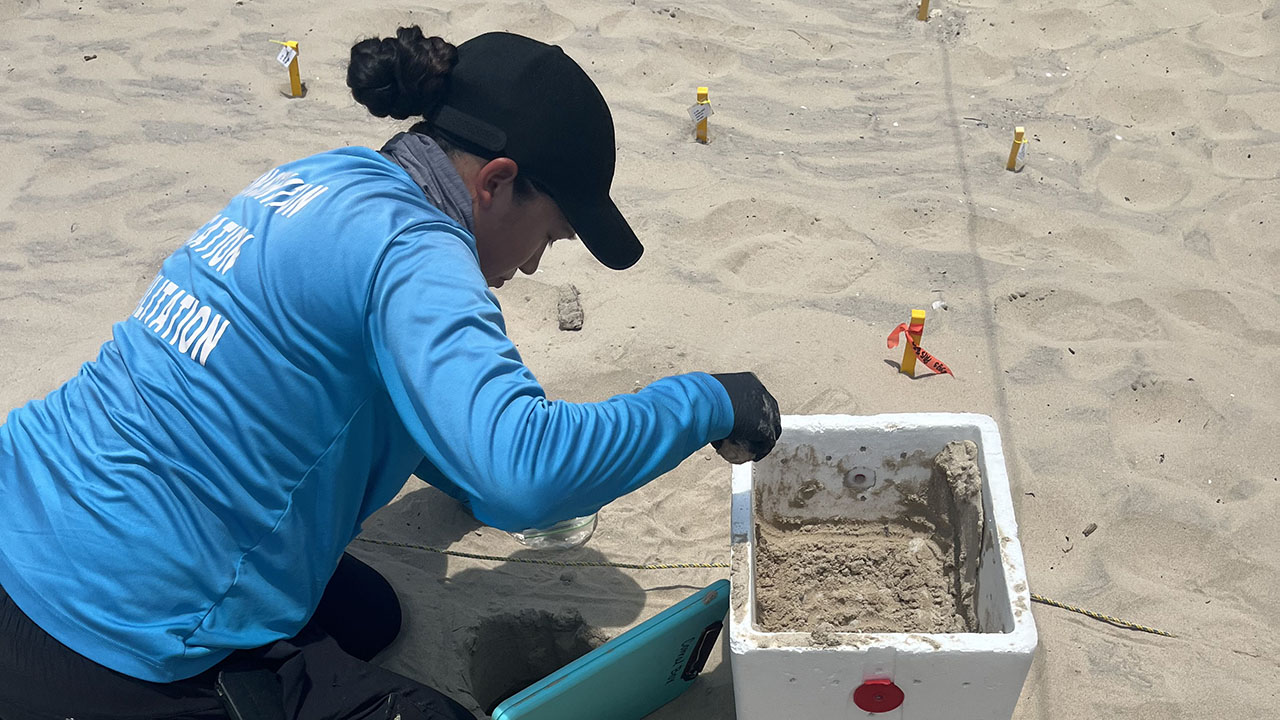
While Linda and Charlotte arrived soon after the arribada—when large numbers of Kemp’s ridley sea turtles arrive on the beach together to lay their eggs—they still got to work identifying and protecting vulnerable new nests.
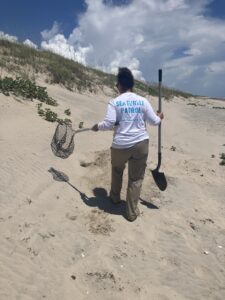
“We were able to go out with the sea turtle patrollers, and we got to observe and help with excavating nests,” Charlotte said. In early April, during Kemp’s ridley sea turtle nesting season, volunteers with Sea Turtle Inc. patrol 50 miles of beach in south Texas, in search of nesting activity. After volunteers identify a nest, the eggs are then taken to a protected area of the beach, called the turtle corral, and re-buried for incubation.
Keeping the eggs in the hatchery protects them from predation or interference from human activity. As hatchlings emerge from their eggs, teams help release the baby sea turtles. Releases are held at night, away from bright lights, to improve the young turtles’ chances of successfully reaching the ocean.
“Seeing the dedication and the organization they had managing the process, and also how much knowledge they had about the turtles and nesting was really inspiring,” Charlotte said. They encountered nests in a range of stages, including newly laid nests with fragile eggs. Charlotte also noted a memorable encounter with a common predator of turtle nests: “I fought off a badger,” she laughed.
“The badger had already been eating away at some of the eggs,” Charlotte said. “But they were a more mature nest, and the eggs were harder.” Thankfully, much of the nest was unharmed—but even these more developed eggs required careful attention during excavation to prevent any damage to the growing turtles inside. During excavation, the team works diligently to reorient the eggs in the exact position they were found.
This year, the team at Sea Turtle Inc. protected over 200 nests, breaking the previous record.
Another side of the rescue story
During their week in Texas, Linda and Charlotte were also able to observe the rescue and rehabilitation side of the operation, where stranded and injured turtles are nursed back to health—much like at the Aquarium’s Sea Turtle Hospital in Quincy, MA. One major difference is that Sea Turtle Inc. is home to several resident sea turtles who were deemed non-releasable.
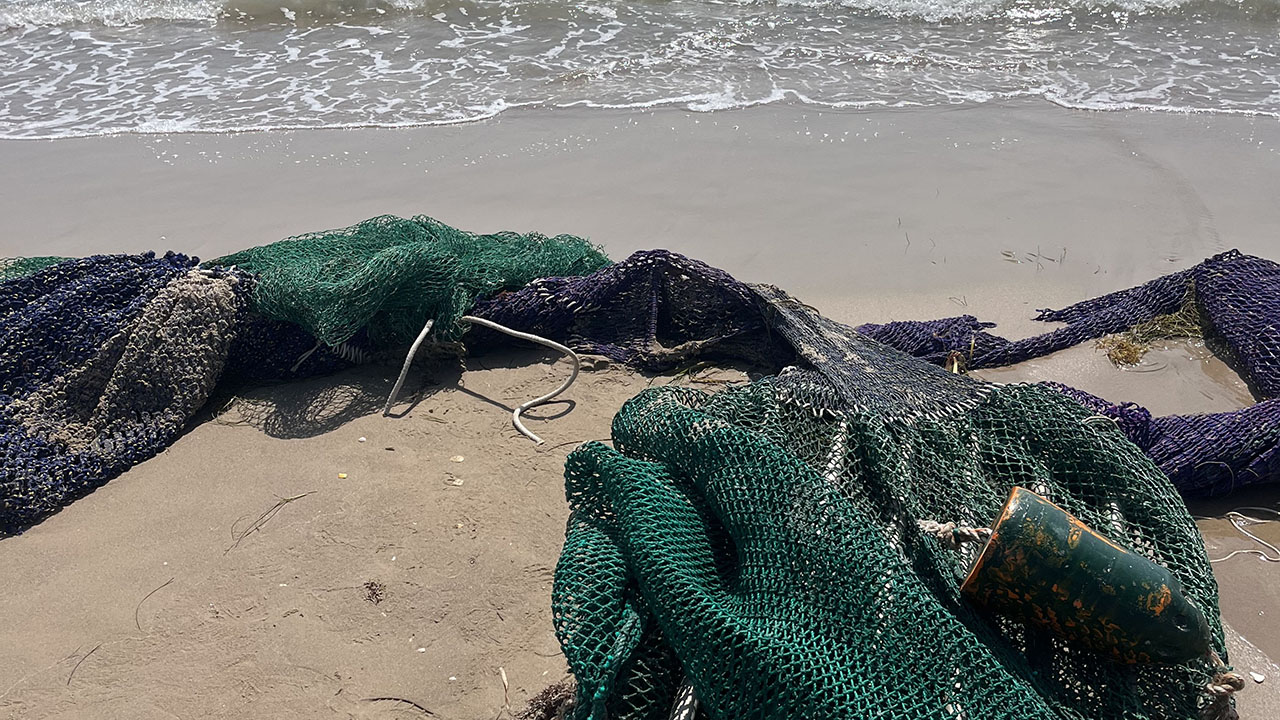
“Another thing that was super eye-opening was the amount of pollution on the beach,” Linda said. “There’s so much of it, and all of it has these little marks on it that are confirmed turtle bites. So, these turtles are growing up and they’re eating that plastic,” she added.
Charlotte agreed. Because the sea turtles are exposed to so much plastic waste, accounting for it becomes part of the rescue and rehabilitation process—whether it’s ensuring the turtles’ digestive tracts are free of plastic before release or monitoring trash on the beach.
“They pick up some of it, like illegal fishing gear that washes up, and track it,” Charlotte said. “It was just a different thing to see that’s not something we typically deal with here in Massachusetts.”
It’s impossible to say if any of the hundreds of Kemps ridley sea turtles that have been rescued by the Sea Turtle Hospital team in New England were now nesting on South Padre Island. But, still, seeing the “other side” of the work felt impactful for Charlotte and Linda.
“Every turtle we see would die if they weren’t collected off the beach from cold-stunning,” Charlotte said. “So, giving them a second opportunity to reach the next generation of turtles is really inspiring. It’s such a full-circle moment of getting to see them in their juvenile stage and now reach adulthood.”

Related Stories

Protect the Blue Planet
Staff from the New England Aquarium’s Sea Turtle Hospital traveled to South Padre Island, Texas to assist Sea Turtle Inc. with rescue efforts.