Aquarium Celebrity Spotlight: Myrtle the Green Sea Turtle
For 56 years, Myrtle has been the beloved star of the Giant Ocean Tank. Here’s what we know about the New England Aquarium’s most famous turtle.
By New England Aquarium on Thursday, June 11, 2026

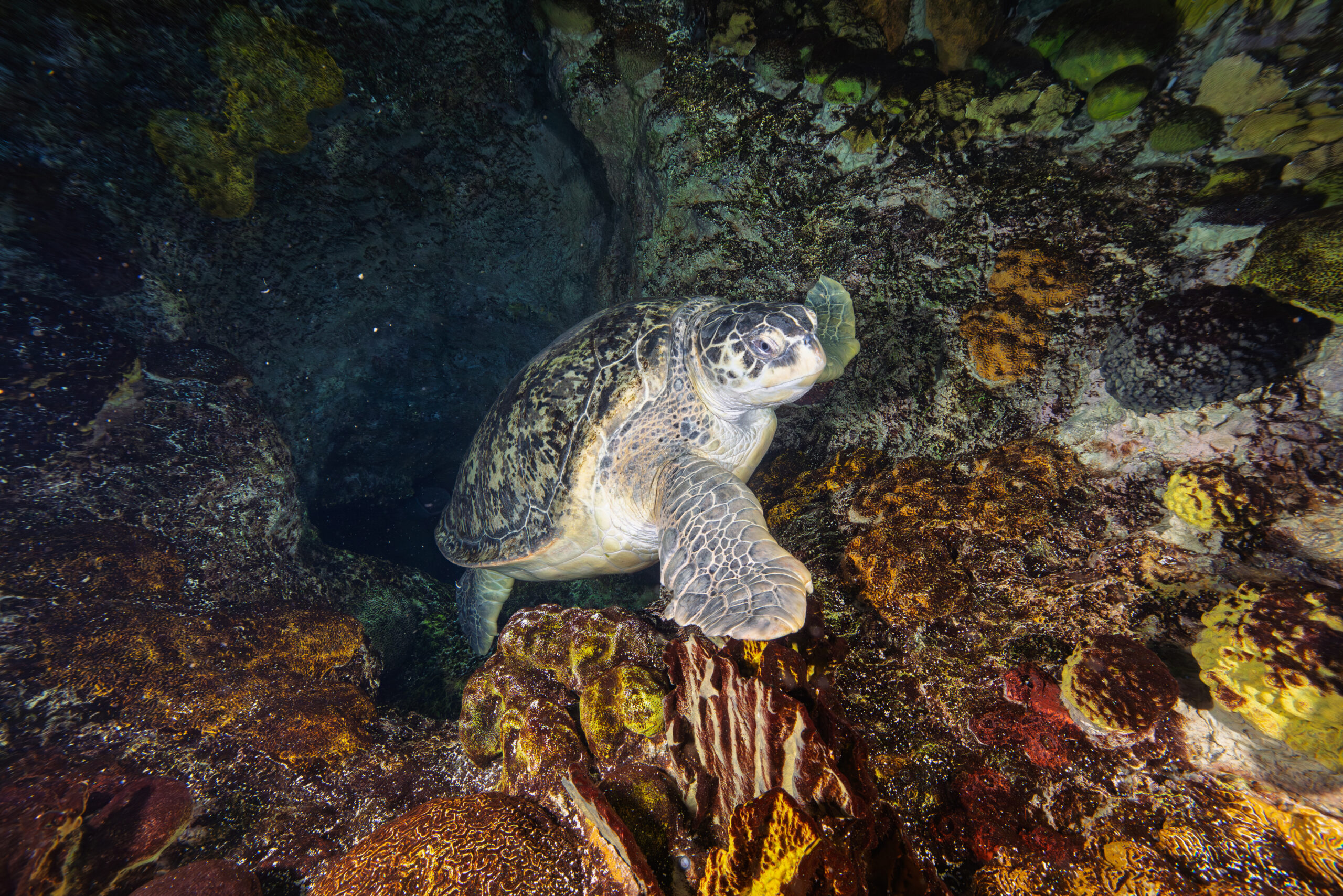
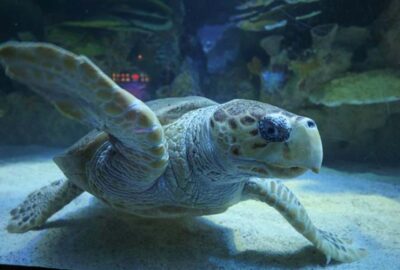
The undisputed star of the New England Aquarium’s largest exhibit, the four-story Giant Ocean Tank, is also one of the Aquarium’s largest residents. Weighing more than 500 pounds and measuring about four and a half feet long, Myrtle the green sea turtle tends to draw an admiring crowd each time she glides, looking unbothered, toward the surface to wait for her twice-daily meals of green vegetables including romaine lettuce, Brussels sprouts, and cucumbers, along with some fish and squid, just as she has done since arriving at the New England Aquarium on June 12, 1970—56 years ago.
But who is Myrtle when she (metaphorically) comes out of her shell ?
The many eras of Myrtle
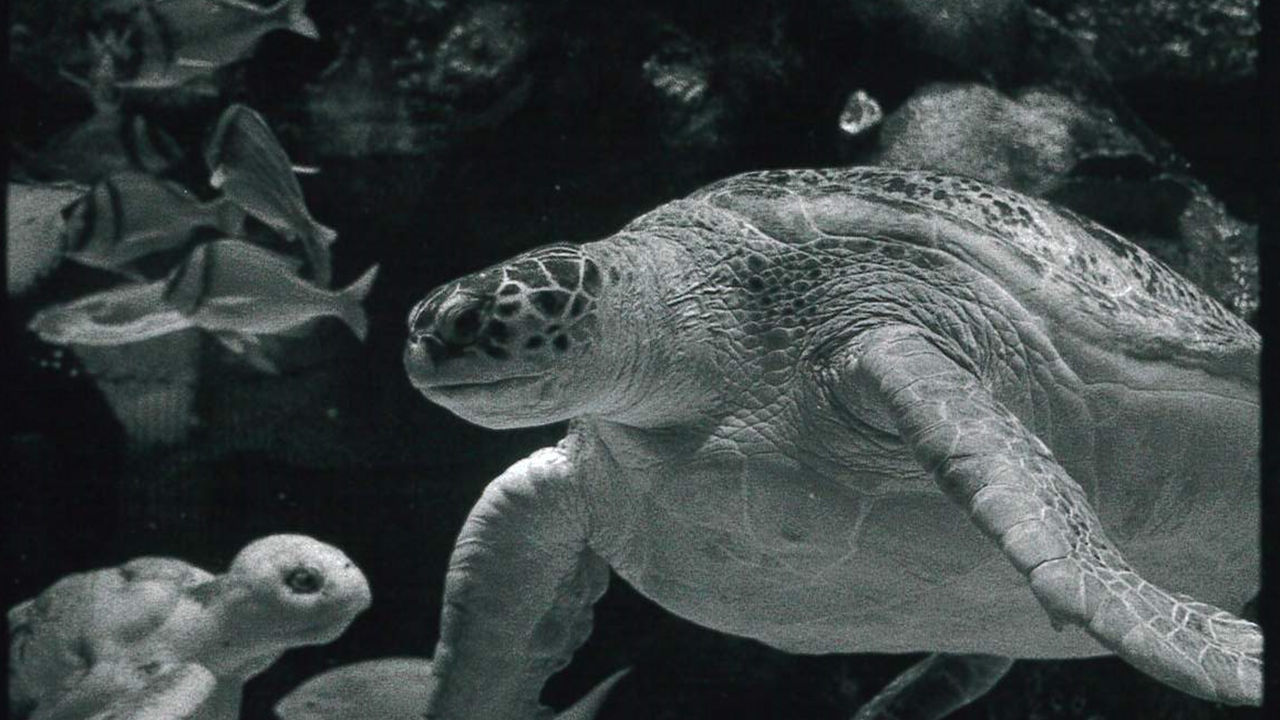
Some of the details of Myrtle’s early life remain a bit of a mystery. DNA work done in the early 2000s traced her lineage to a nesting group from a beach on Florida’s Gulf coast, where she would have hatched. From there, her trail runs through Key West before she eventually made her way north to the Provincetown Marine Aquarium. When that aquarium closed its doors, Myrtle came to the New England Aquarium as a donation. She has lived here ever since, earning the title of our longest resident.
Like any great star, Myrtle is timeless—and somewhat ageless. Experts determined based on her size, weight, and maturity that she was between 20 and 40 years old when she arrived at the Aquarium. Add 56 years, and she is now between 76 and 96. That is to say, Myrtle was alive before the Beatles broke up, before the moon landing, before the internet, and before the Red Sox broke their 86-year championship drought.
The temperament of a legend
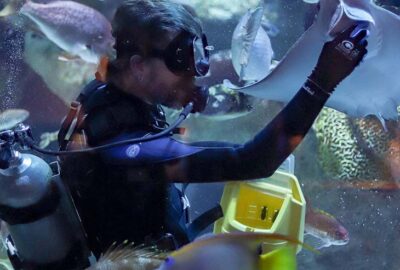
Chris Bauernfeind, the manager of the Giant Ocean Tank, has known Myrtle for more than 20 years. In fact, during his scientific diver certification in the exhibit, he experienced Myrtle’s tendency to involve herself when she swam between him and the weighted belt he was supposed to retrieve. This tendency is now one he knows well, and he described Myrtle as “curious, persistent, and unintimidated.”
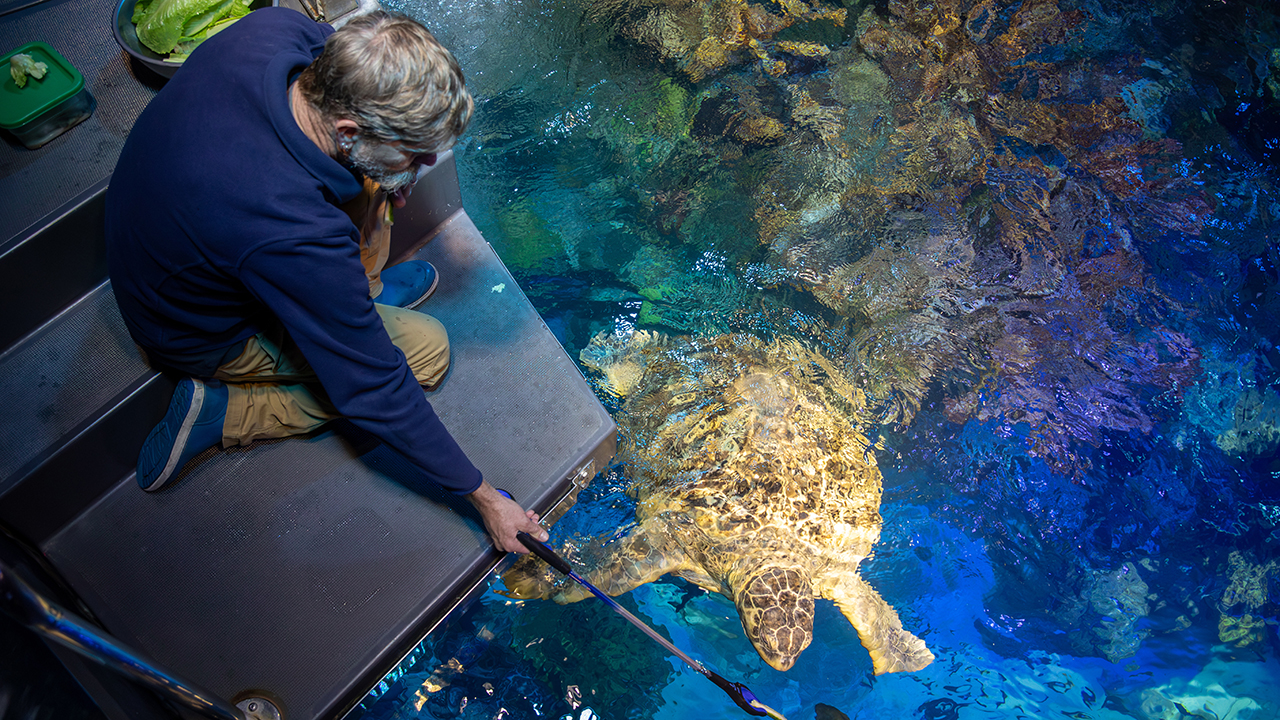
If there is something happening in the exhibit, Myrtle investigates. If a diver brings a GoPro, she will be the first to swim up and try to bite it. During routine animal exams, the staff must assign a person the role of “Myrtle distractor” or risk her interrupting the process. The team also feeds her slowly and deliberately at the platform so she stays occupied while other animals get their turn. If that plan fails—say someone feeds her too fast and she finishes early—the quarter-ton sea turtle will swim around the exhibit chasing down tiny scattered scraps of seafood. At least once, she has even tried to steal a meal being fed to a shark, Chris noted.
Second to food, Myrtle seems to enjoy a good back scratch, whether by hand or brush or stray piece of the exhibit’s artificial coral. The center of her shell is where the sensation seems to be strongest, Chris said. She rocks back and forth into the scratch “like a bear against a tree.” If divers are in the water and she isn’t being fed, she will plant herself in their path, a charming but immovable blockade, until someone obliges. The exhibit’s two loggerhead turtles, Carolina and Retread, on the other hand, want nothing to do with being touched.
A multi-generational talent
Myrtle is not the most social when it comes to other animals, and enriches her days “through her curiosity and harassing us, the divers,” Chris laughed. In the 90s, Myrtle did share the exhibit with a male green sea turtle who courted her for about a decade, but Myrtle was consistently uninterested in his advances.
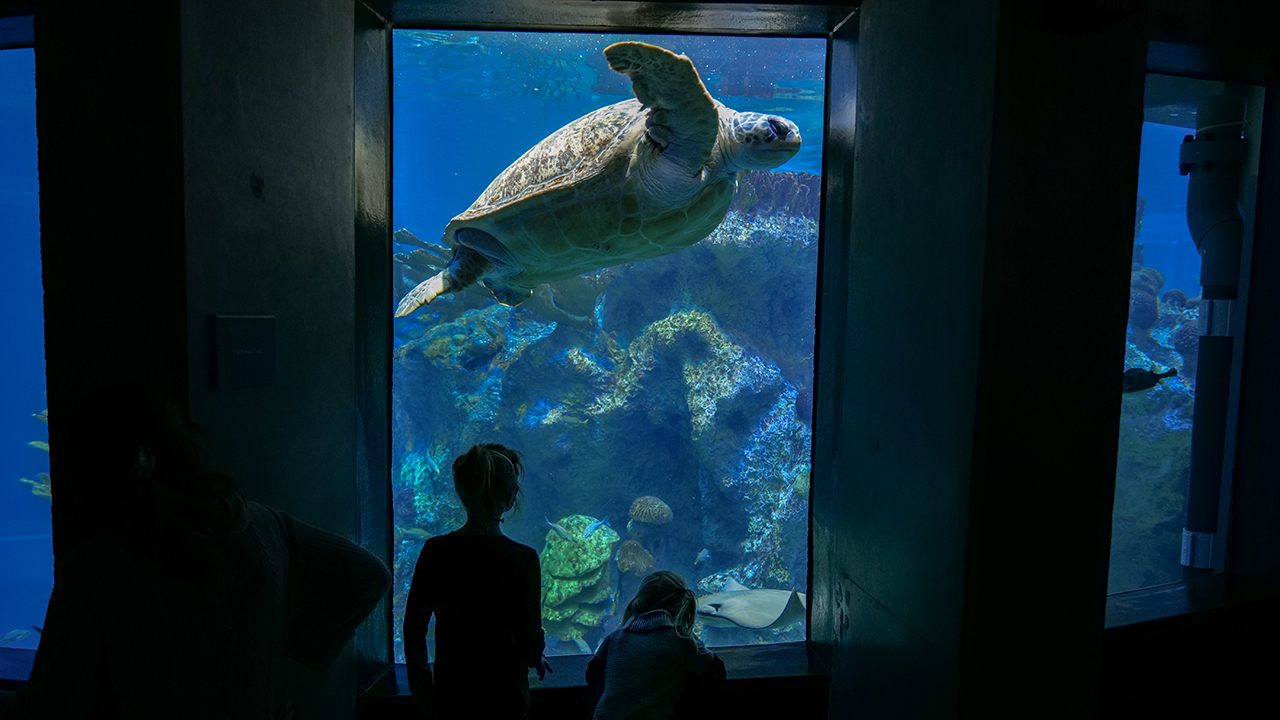
Myrtle continues to have plenty of human admirers coming to visit her exhibit. These encounters span generations. It’s not uncommon for a parent—or even a grandparent—to be able to tell their little ones that Myrtle is the same turtle they visited as a kid.
For over half a century, Myrtle has been quietly working as an ambassador, sparking her fans’ interest in green sea turtles, a species that is slowly rebounding and, until recently, was endangered across much of the world, threatened by overfishing, pollution, and climate change. Myrtle’s regular physicals, blood draws, ultrasounds, and range-of-motion checks on her flippers, help scientists understand how these turtles age and heal, knowledge that aids in rescuing turtles in the wild. Researchers have even learned by working with Myrtle that sea turtles can be trained to respond to underwater sounds, a finding that might one day steer wild turtles away from danger.
In short, Myrtle advances her species’ cause simply by being her magnificent self.
Visit the Aquarium to say hello to Myrtle and thousands of other animals in our care!

Related Stories

Every Visit Makes a Difference
Your ticket purchase to the Aquarium directly supports our work to create a vital and vibrant ocean for future generations.