Please note: The Atlantic harbor seals will temporarily be off exhibit while we improve their habitat for their comfort and well-being.
Studying Harbor Porpoises as a Sentinel Species in Coastal Maine
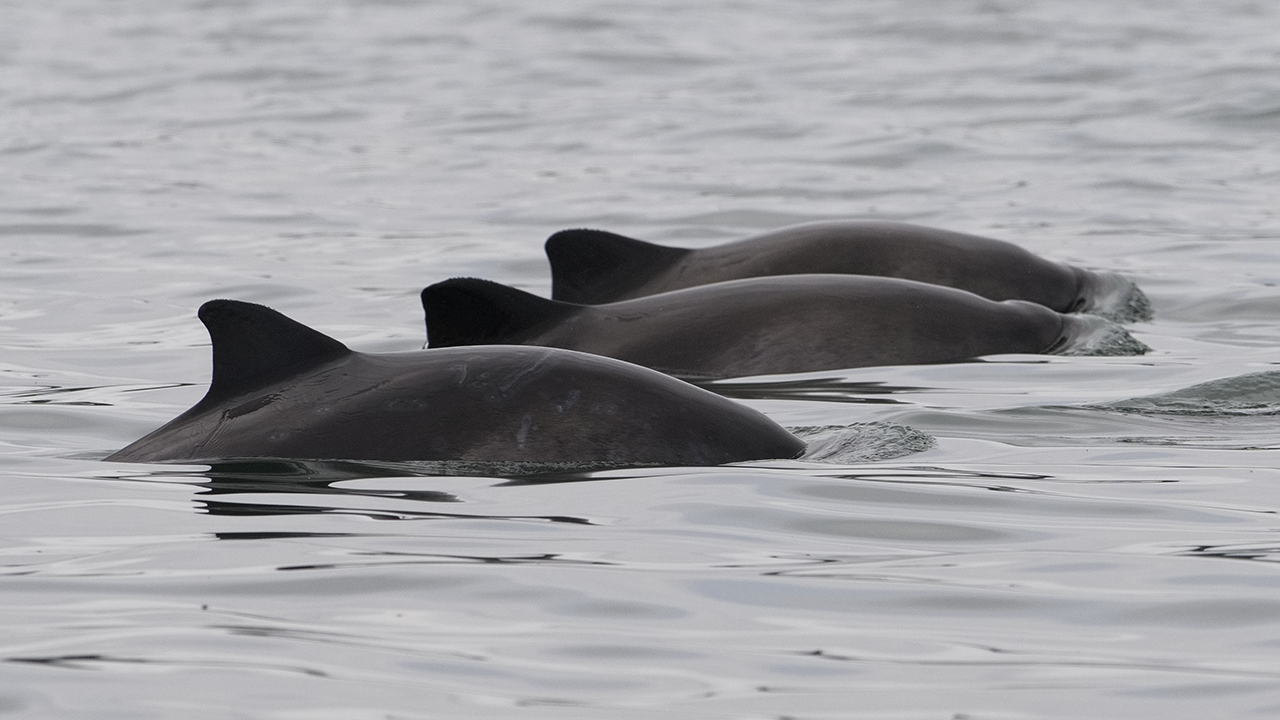
Dr. John Durban of the New England Aquarium’s Anderson Cabot Center for Ocean Life is leading a first-of-its kind study of harbor porpoises to understand the health of a local ecosystem.
By New England Aquarium on Wednesday, November 04, 2026

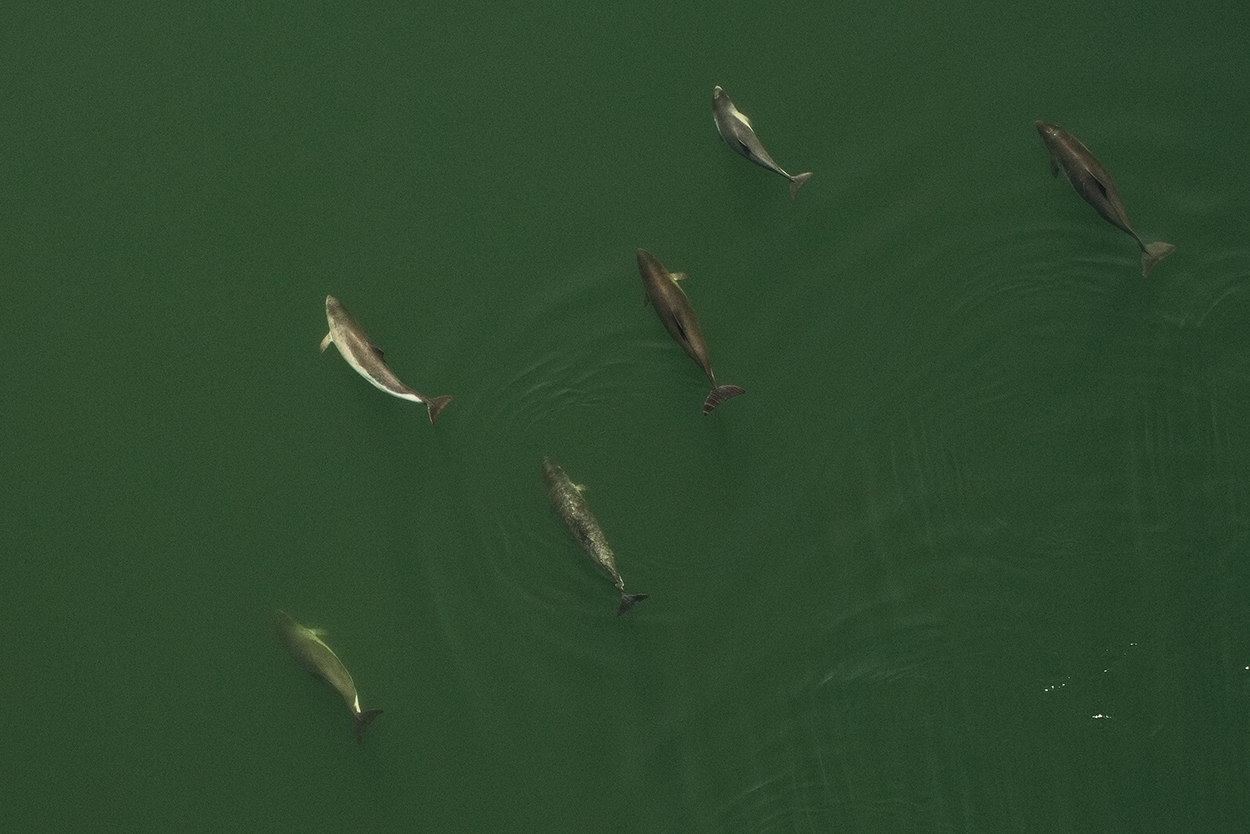
Off the coast of Maine, where the St. George River meets the Gulf of Maine, Dr. John Durban is looking at harbor porpoises to learn about the ecosystem they inhabit. As a senior scientist in the New England Aquarium’s Anderson Cabot Center for Ocean Life and chair of Ecology, Mapping, and Assessment of Populations, John’s research combines the study of how and why animals are distributed with methods that measure the health of populations and individuals.
While his tools—namely, photo-identification from small boats and photogrammetry using drones—have been used in his research on killer whales in Alaska and right whales in New England, this project is the first of its kind to employ both on harbor porpoises.
Harbor porpoises, which are typically cryptic and hard to observe, gather regularly and abundantly in this region of Maine. Thanks to techniques honed researching other “skittish” species and some unique local conditions—these animals may also be more used to boat noise, as they forage around lobstering boats—John and team have successfully documented the population across two years of study.
Research methods
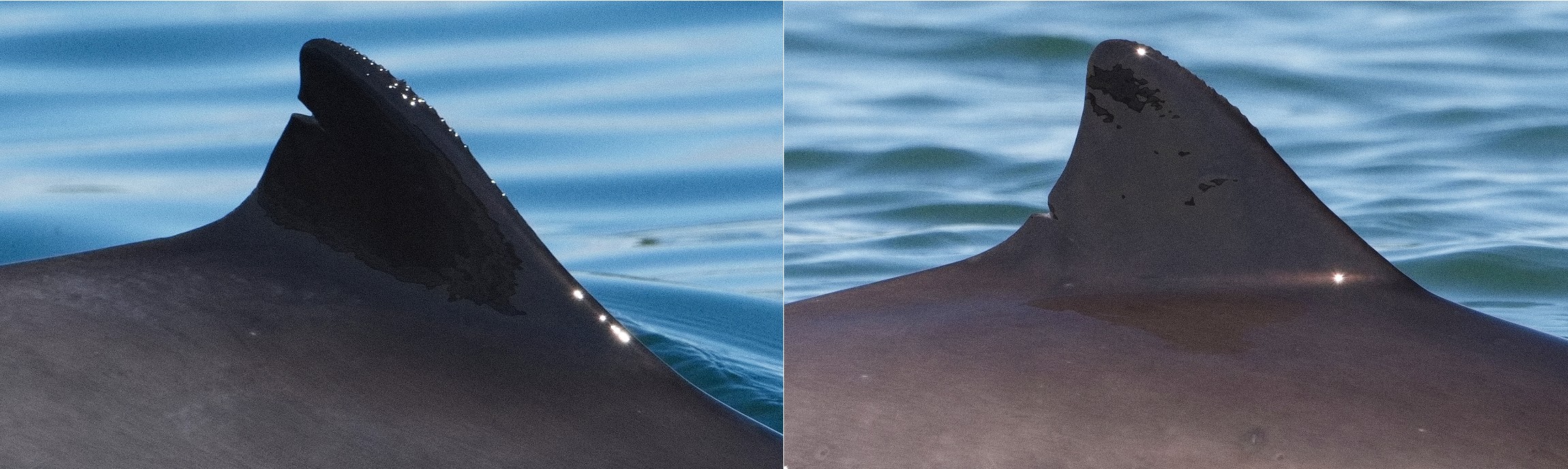
John, in collaboration with local Maine scientist and boat captain Kiirsten Flynn, is deploying the same non-invasive photographic methods honed in his other studies to learn more about the porpoises in the coastal entrance to Maine’s St. George River.
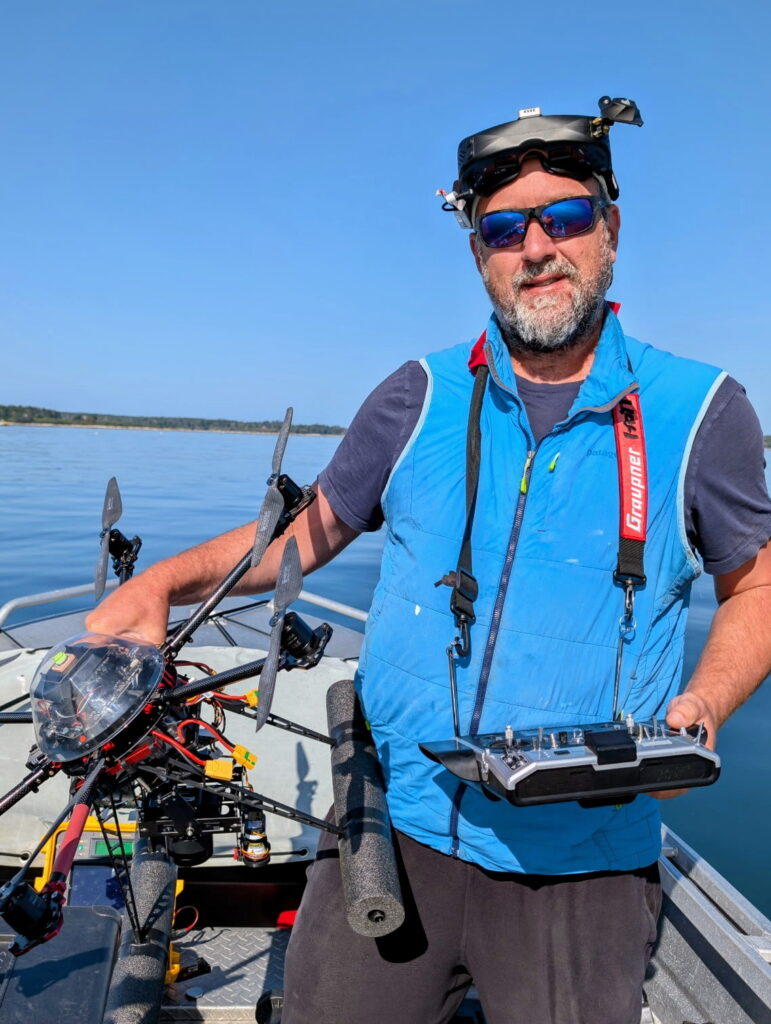
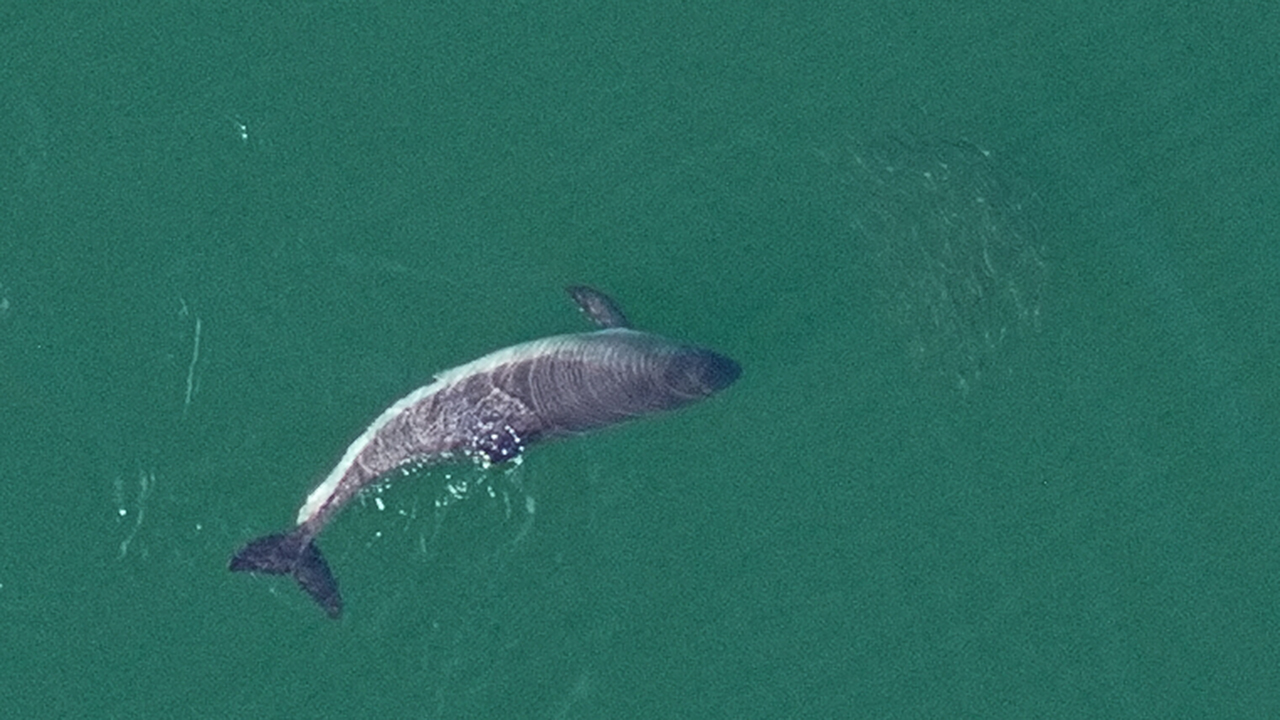
From the boat, researchers photograph the porpoises with high resolution cameras and long lenses for the purpose of collecting photo-ID, identifying recognizable individuals with distinct natural markings. They also deploy a custom research drone to collect photogrammetry data—images from more than 100ft up that can be used to assess the body condition of animals, including body shape characteristic of potential pregnancies, and body length is estimated by scaling measurements from pixels to real size using a precise laser altimeter onboard the drone
To capture the photogrammetry images, John hovers the drone high above the porpoises, allowing photographs from directly overheard without the use of a plane. It gives researchers a closer look at the animals while remaining non-invasive, and provides the unique overhead perspective needed to make repeatable measurements from photographs.
Because the team is local, they don’t have to travel far for their research. Fieldwork often requires just two people in a small boat at a time—and their results are significant.
In the first two years of the study, these researchers have collected more than 6,500 drone images of porpoises and 5,000 ID photos, documenting more than 60 individuals that can be tracked over time thanks to unique physical characteristics and markings. In their research, the team has also revealed that this population has strong site fidelity; many of the individuals remain in or return to the same area to feed.
“More than half of the animals we’ve photographed have been seen in multiple months, and 95 percent of individuals identified in the first year were seen this year as well,”
John said. “This is a community of porpoises we can monitor over time. We can expect to track differences in their health and numbers one year to the next.”
The ecosystem question
In studying the harbor porpoises, John and team hope to answer a larger question about the health of this local ecosystem. The waters of the Gulf of Maine are warming faster than 90 percent of the world’s ocean, and scientists want to know how species and ecosystems are responding to such drastic change.
“We are seeing and anticipating rapid changes affecting food chains and important fisheries in the Gulf of Maine, through changes in abundance and distribution of key forage fish like Atlantic herring and menhaden,” John said.
These fish play an important role in the marine food web—they’re food for predators from harbor porpoises to ospreys and are also eaten by such as striped bass that support recreational fishing opportunities. Menhaden are currently important to the local economy of Maine, as they’re a major source of bait for commercial lobster traps.
As one of the predators of these forage fish, harbor porpoises are affected by fluctuations in their food supply. By looking at the porpoises’ health and population changes, John and team aim to understand if the populations of forage fisha re robust enough to maintain the rest of the food chain, including fisheries.
Studying a sentinel species
By looking at the harbor porpoises to understand the health of a whole ecosystem, John and team have identified these animals as a sentinel species. The term refers to animals that, much like the “canary in the coal mine,” act as an early warning of deteriorating conditions in their environment. As one of the more visible predators, data on harbor porpoise can reveal changes that may otherwise be hard to identify.
Compared to other species of whales, dolphins and porpoises (cetaceans), harbor porpoises “live life in the fast lane,” John said. Most importantly, these small cetaceans reproduce annually, starting when they mature at around two or three years of age.
“That makes them powerful indicators of change,” John added.
Thanks to a recent gift from a donor, John is poised to continue this research for at least two more years. The team is also expanding their study by collecting floating fecal samples left by the porpoises, which will be analyzed for additional health indicators in the Anderson Cabot Center’s Wildlife and Ocean Health lab, and allow identification of diet changes through DNA analysis John is also partnering with Anderson Cabot Center to study how the presence of large sharks in Maine is affecting where the harbor porpoises travel, how they feed, and more.
As this study continues, results will be shared with other scientists and managers at Maine Department of Marine Resources to provide sensitive data for a better understanding of ecosystem changes and the sustainability of local fisheries.
“Of the many research projects I’ve conducted in my career, this is among the most exciting,” John said. “Very quickly we’re collecting huge amounts of data on a species that has previously been largely overlooked because it is hard to study—it’s a really rich and deep study—and it’s exciting to advance it to produce useful and timely data on ecosystem health.”

Related Stories

Protect the Blue Planet
Your ticket purchase to the New England Aquarium directly supports our work to create a vital and vibrant ocean for future generations.