Tag Along on a Turtle Trek
Recently, our team transported 18 rehabilitated sea turtles for release off the coast of North Carolina. Here, learn about the experience from one of our Rescue & Rehabilitation team biologists.
By New England Aquarium on Thursday, May 07, 2026

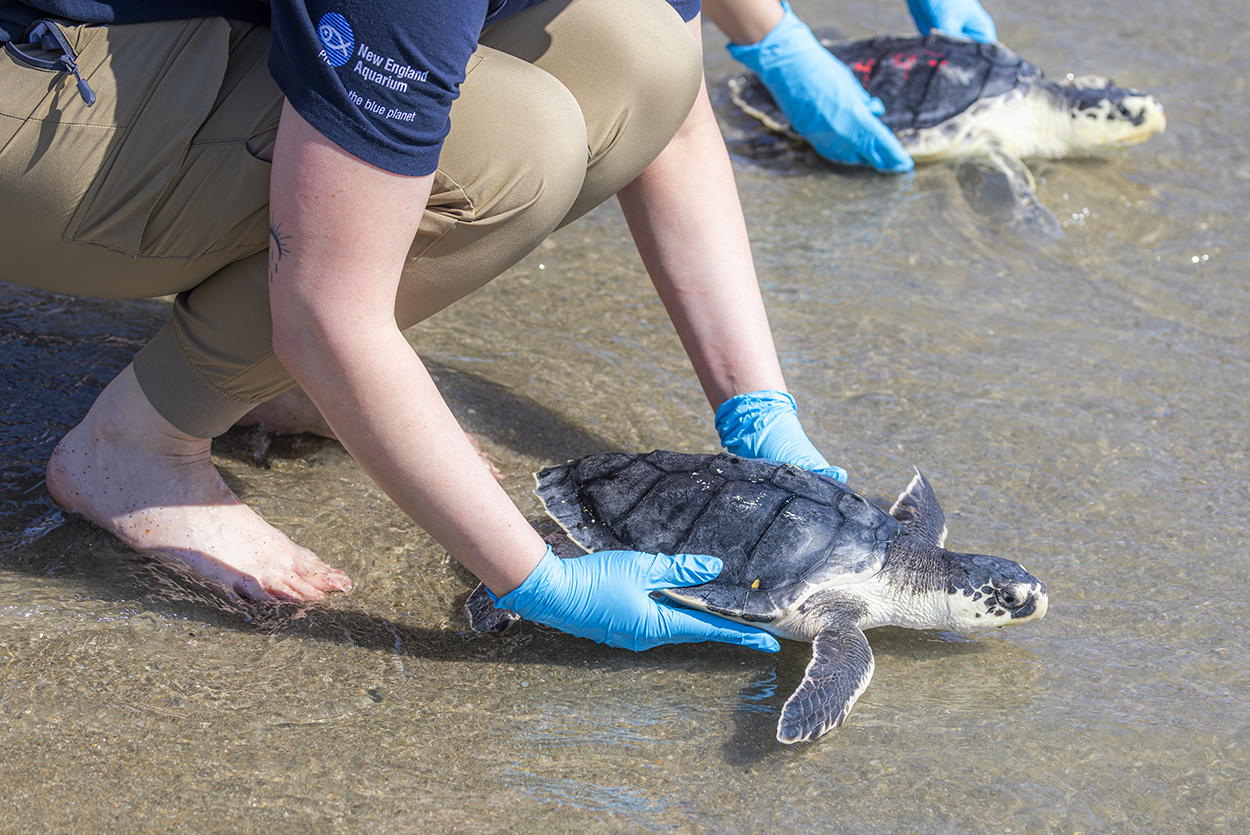
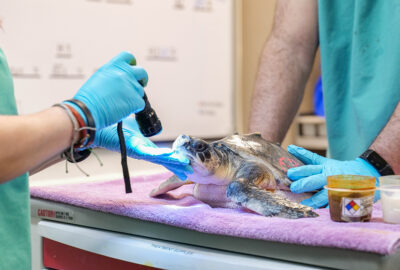
Each year during cold-stunning season, the Aquarium’s Sea Turtle Hospital in Quincy, MA, sees hundreds of intakes of sick and injured sea turtles. Our team works to restore them back to health and get them ready to return to the ocean as soon as they’re able—which, when it’s still chilly up here in New England, means taking a trip to sunnier shores.
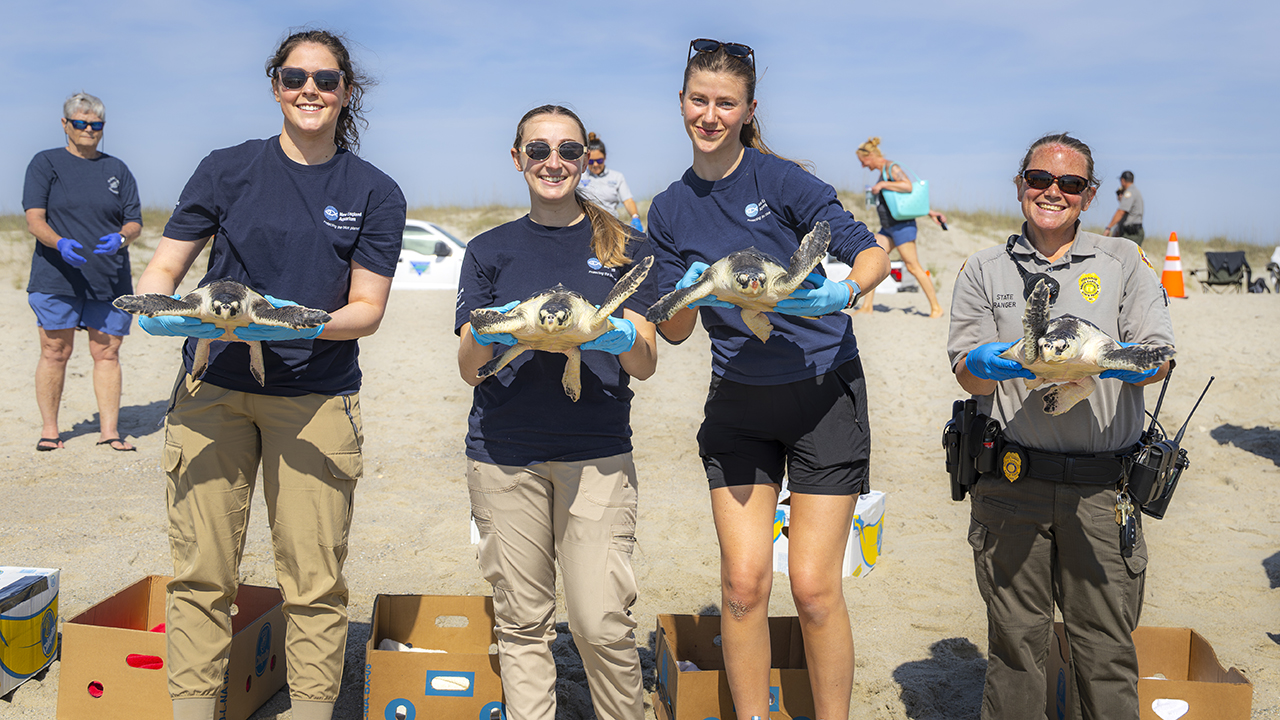
In early April, Biologist Gabriela Shorten led a crew on a “turtle trek” down to Fort Fisher, North Carolina, transporting 18 rehabilitated sea turtles to be released back into the ocean. Read on to learn how they plan and prep for the trip, make sure the sea turtles are comfortable during the long drive, and what it’s like to see them head back home.
Planning the trip
As spring arrives, the team closely monitors ocean temperatures along the Atlantic Coast, waiting to see the water warm up enough so that sea turtles can be safely released. Once local sea turtle experts say the ocean down south has reached an acceptable temperature for release, we’re ready to start planning.
“We work with our Animal Health department to come up with a finalized list of turtles who are deemed ‘ready to release,’” said Gabriela. Leading up to the trip, the team will get updated photos and measurements of all the releasable turtles and will outfit them each with a PIT tag for identification as well.
Preparing for the drive
“This year, all of our turtles were small enough to fit in banana boxes,” Gabriela said. “It’s very full circle considering the turtles are brought to us during intake season in banana boxes and then will be transported in them on the way back to the ocean!”
Banana boxes are ideal for moving the turtles long distances. They’re sturdy, easy to carry, and have lids and ventilated sides for keeping each passenger safe. For added comfort, the team includes towels as “bedding.” Each turtle also received fluids, and their shells and flippers are lubricated before they’re loaded into the vehicle.
Before the trip, the humans have some prep to do, too. “When it comes time to leave, we make sure our staff is very well rested and plenty of snacks are packed for the long drive!” Gabriela added.
On the road
The team is ready to depart our Animal Care Center by 6:00 p.m. the night before the release. They drive straight through the night, making a few short pre-planned stops to refuel and swap drivers, and arrive in Fort Fisher by late morning the next day. On this trip, four of the 18 released turtles were picked up from Mystic Aquarium—the turtles were initially triaged by our team before continuing their rehabilitation there.
“We had three staff members in the car, and we rotate who is driving, who is in the passenger seat, and who is sleeping in the back—usually every three hours,” Gabriela said.
On board, a temperature probe helps the team keep vehicle conditions just right for the turtles. During transport, the interior temperature is carefully set to match the water at the release site and monitored throughout the journey.
“Our goal is to match the temperature of the water at the release site so that the turtles’ body temperatures have time to acclimate,” Gabriela said. “We keep volumes levels low to minimize the turtles’ stress, and drive safe, as we have very special cargo!”
The New England Aquarium van always attracts attention along the route—though onlookers usually don’t expect the passengers in back! “It’s always fun stopping at gas stations and rest stops along the way and people seeing our vehicle but having no idea we have 18 endangered sea turtles with us,” Gabriela said.
Back to the ocean
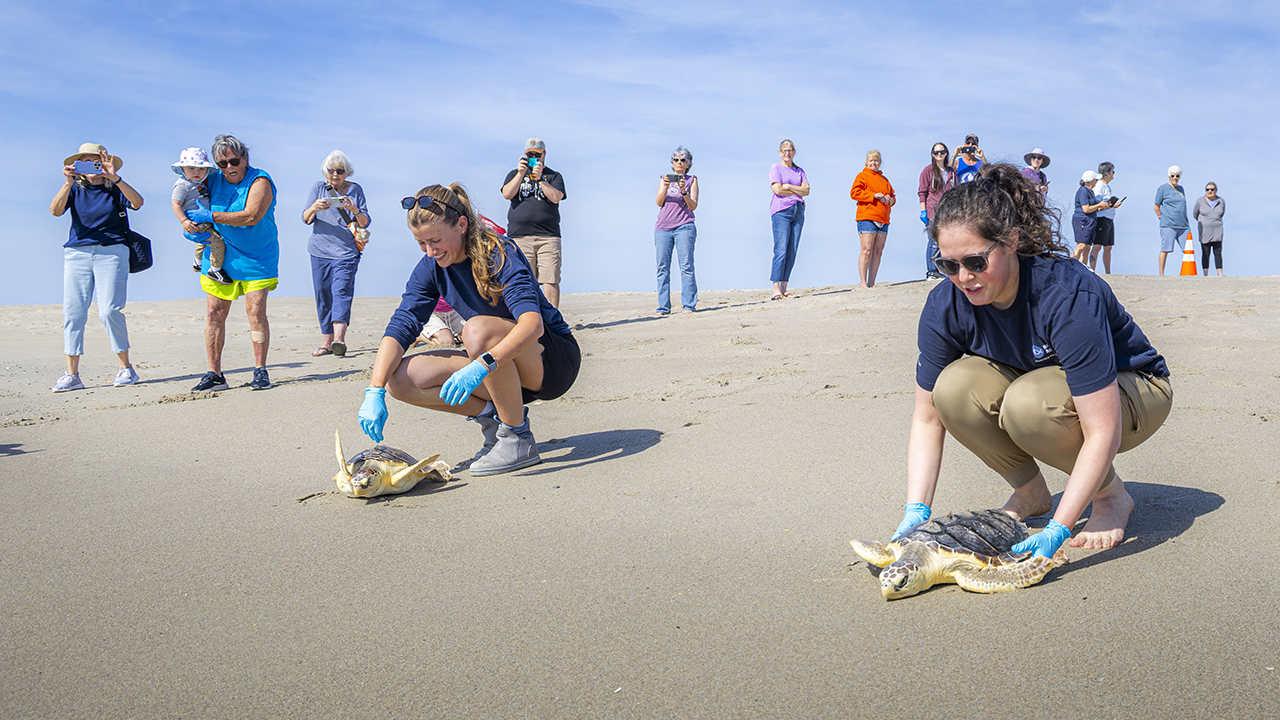
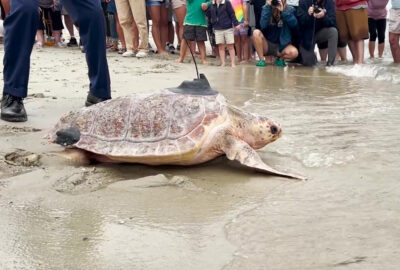
It was a perfect, sunny morning by the time the team—and turtles—arrived to the release site at Fort Fisher. “From there, we get to work very closely with the Fort Fisher Park staff. Upon arrival, they help us load all the banana boxes into their truck, and we get to ride with the turtles in their truck bed to the beach where people are waiting to watch the release!”
After nearly five months of rehabilitation at our Sea Turtle Hospital, all 18 turtles safely made their way back to the ocean, including “Meep,” who, at the time of rescue, had a heart rate of one beat per minute and a deep fracture on its shell. With sea turtle strandings rising steadily over the next decade, the work of everyone on our Rescue & Rehabilitation team is critical to the survival of these animals.
“Sea turtles are incredibly resilient animals,” said Gabriela. “When these cold-stunned turtles first come into our care, they are barely responsive—but when we carry one down to the beach for release, we’re reminded exactly why this conservation work matters.”

Related Stories

Make a Difference for Sea Turtles
Your support makes a difference for threatened and endangered marine life everywhere by helping provide the Aquarium with the resources to conduct research, advocate, and rehabilitate.