Please note: The Atlantic harbor seals will temporarily be off exhibit while we improve their habitat for their comfort and well-being.
PRESS RELEASE
New England Aquarium spots blue whales during back-to-back aerial surveys over Northeast Canyons and Seamounts Marine National Monument and off southern New England
Unusual sightings of endangered whale species occur within 24 hours

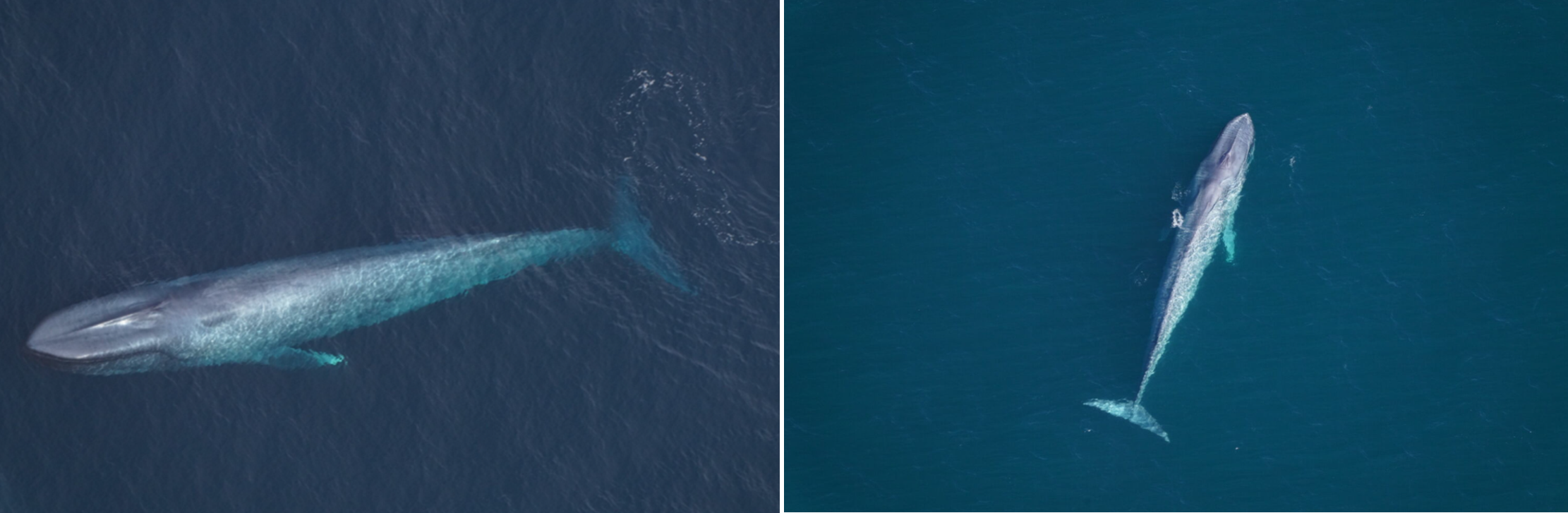
BOSTON, MASS. (March 5, 2026) – In an unusual occurrence, the New England Aquarium’s aerial survey team spotted endangered blue whales during aerial surveys two days in a row and more than 170 miles apart.
**FULL-RES IMAGES AVAILABLE HERE – PLEASE CREDIT NEW ENGLAND AQUARIUM**
On Feb. 27, scientists with the Aquarium’s Anderson Cabot Center for Ocean Life were flying over the Northeast Canyons and Seamounts Marine National Monument when they sighted a blue whale at the base of Lydonia Canyon. Just 24 hours later, on Feb. 28, the team saw two other blue whales 15 miles south of Martha’s Vineyard while conducting an aerial survey over southern New England waters. It marks the first time the Aquarium has documented a blue whale in the southern New England survey area.
“Seeing blue whales outside of their Canadian feeding grounds is rare in the Atlantic,” said Katherine McKenna, Associate Scientist in the Aquarium’s Anderson Cabot Center who was aboard both survey flights. “Finding them in two different areas of the ocean just 24 hours apart was a first for us.”
Blue whales are an endangered species, but little is known about the Western North Atlantic population. It is thought that this population may consist of only 400–600 individuals. They are best studied in their summer feeding grounds in the Gulf of St. Lawrence, Canada; sightings outside of this area are relatively uncommon. The Aquarium had sighted blue whales in New England waters just two other times before now: once in the Monument in 2020 and once off the coast of Maine in the fall of 2023. Other research teams in the area have also sporadically sighted blue whales in New England.
“Encountering blue whales spread out across the waters off southern New England likely means that oceanographic conditions are ripe for them to find food,” said Research Scientist Orla O’Brien, who sighted the whales during the Feb. 28 flight. “Blue whales can range over huge swaths of the ocean unseen by scientists, so each sighting gives us an important glimpse into their winter and spring movements.”
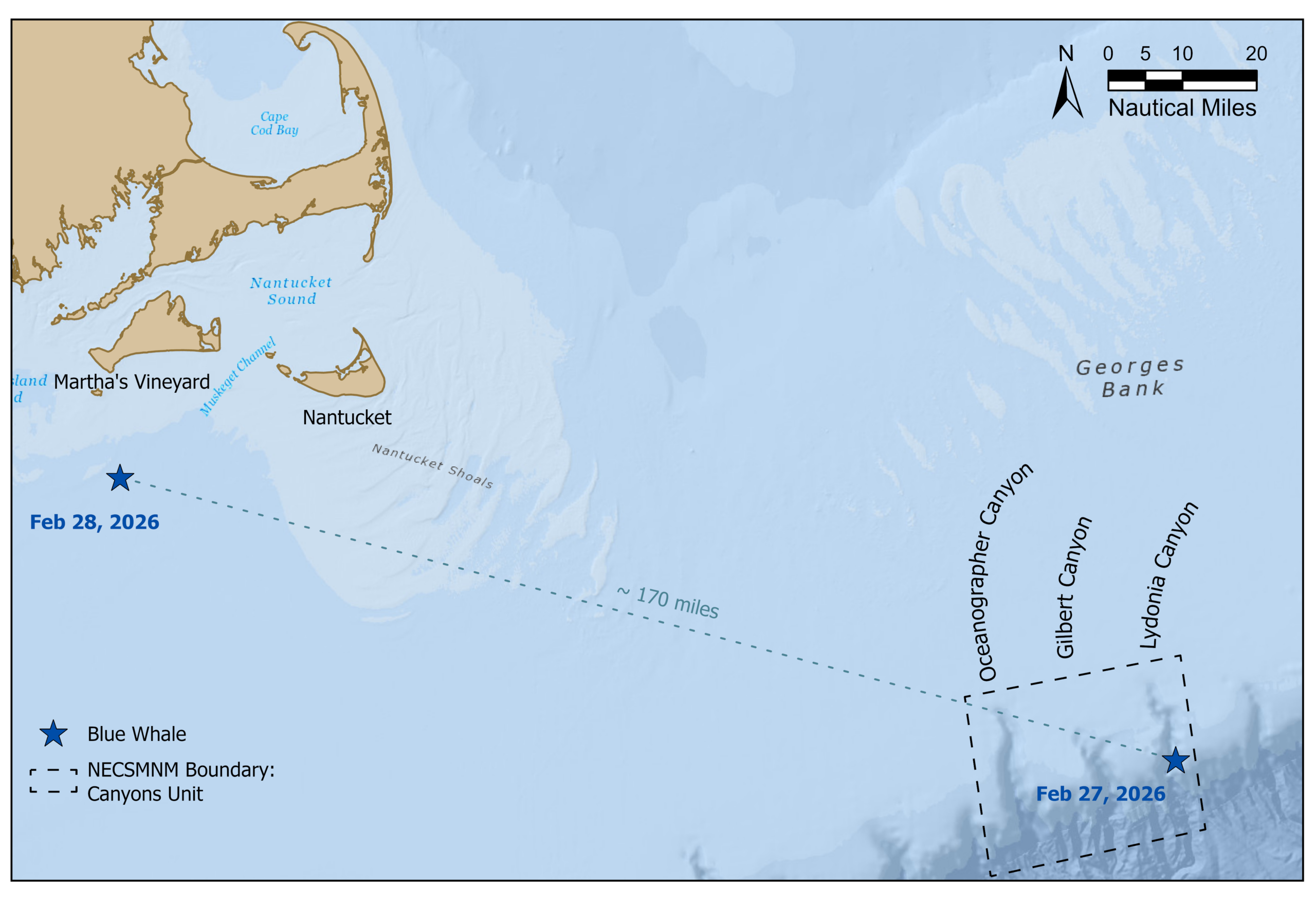
The Feb. 27 survey over Northeast Canyons and Seamounts Marine National Monument revealed some other exciting sightings, including two other species of endangered whales. In addition to the endangered blue whale, the aerial survey team spotted more than 300 animals, including three endangered fin whales, three endangered sperm whales, about 50 pilot whales, and hundreds of dolphins.
The sightings came a month after the Trump Administration announced the rollback of protections for the Monument, which is the only U.S. marine monument in the Atlantic Ocean. The area, an underwater sanctuary about 130 miles southeast of Cape Cod, is home to deep-sea corals, various fish species, whales, and sea turtles. Regular aerial surveys by the Aquarium’s Anderson Cabot Center showcase the diverse range of marine mammals that use this habitat.
“I have been studying blue whales throughout the world’s oceans for more than two decades, and sightings in our U.S. East Coast waters are always special to me. Our aerial survey team has seen them twice in the Monument, emphasizing the incredible diversity supported by the Monument and why it is so important to protect this special place,” said Dr. Jessica Redfern, Associate Vice President of Ocean Conservation Science in the Aquarium’s Anderson Cabot Center for Ocean Life.
The Aquarium has been documenting the marine mammal biodiversity in the Monument for nearly a decade. The team also regularly conducts aerial surveys in southern New England and the Gulf of Maine.
MEDIA CONTACT: Pam Bechtold Snyder—psnyder@neaq.org