All About North Atlantic Right Whale Research at the New England Aquarium
Learn more about this critically endangered species and how scientists at the Aquarium’s Anderson Cabot Center for Ocean Life are working to protect right whales.
By New England Aquarium on Thursday, April 23, 2026

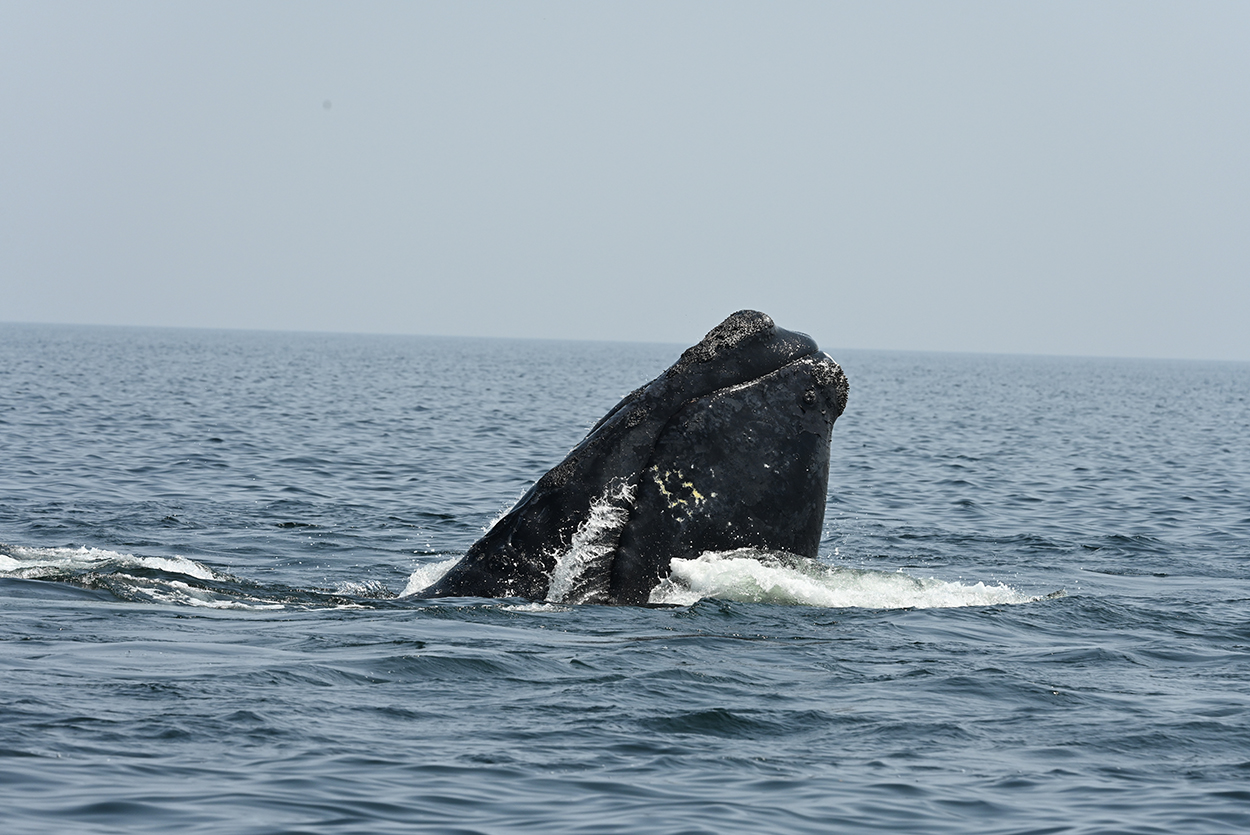
North Atlantic right whales are the official state marine mammal of Massachusetts, and they can often be seen right here in our backyard, gathering in Cape Cod Bay and southern New England waters.
They’re a critically endangered species, with an estimated 380 individuals remaining. Right whales range throughout the Atlantic coast, from the Gulf of St. Lawrence in Canada down to Florida, where females give birth each winter. Their habitats include busy shipping and fishing areas—putting them at increased risk of deadly entanglements and vessel strikes.
These threats, along with increasing pressure from climate change, put right whales at risk of extinction. However, we know through our research that innovative technological advancements in fishing gear and real-time monitoring and proactive vessel speed restriction zones can prevent these human-caused, negative impacts on right whales.
Here, read on to learn more about these animals and how researchers at the Anderson Cabot Center for Ocean Life are working each day to protect them.
A history of protecting right whales
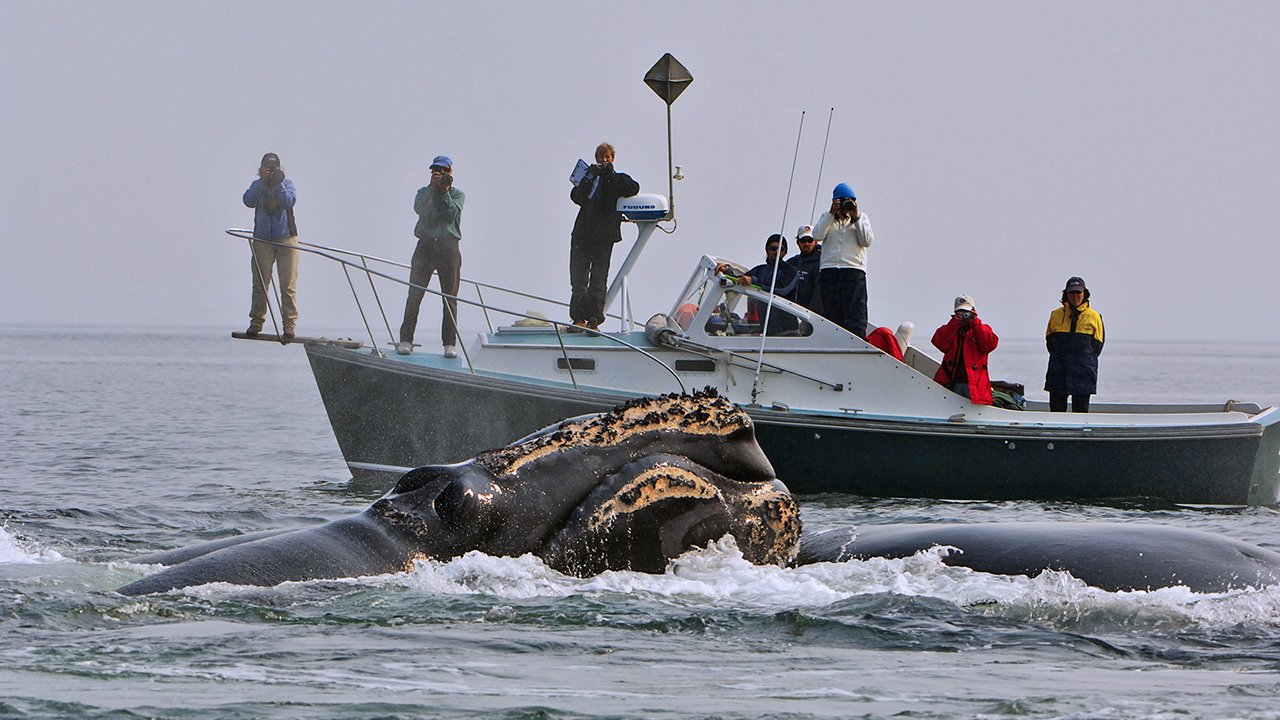
For over 40 years, the New England Aquarium and our Anderson Cabot Center for Ocean Life have led research efforts on the critically endangered North Atlantic right whale. Our work started over 45 years ago in the Bay of Fundy, Canada. Since then, as right whales have shifted their summer habitat use to the Gulf of St. Lawrence, we’ve continued to have a research presence in the region, collaborating with other institutions to collect essential data on right whale health.
The Aquarium is also a founding member of the North Atlantic Right Whale Consortium, and our Anderson Cabot Center scientists manage the North Atlantic Right Whale Catalog. The Catalog contains more than two million photographs, creating an invaluable resource to track individual right whales throughout their lives.
Our work today
Our right whale research program, established in 1980, is one of the longest-running and most comprehensive whale research and conservation initiatives in the world.
Here are a few ways the New England Aquarium and our Anderson Cabot Center for Ocean Life are working to protect this critically endangered species:
Boat surveys
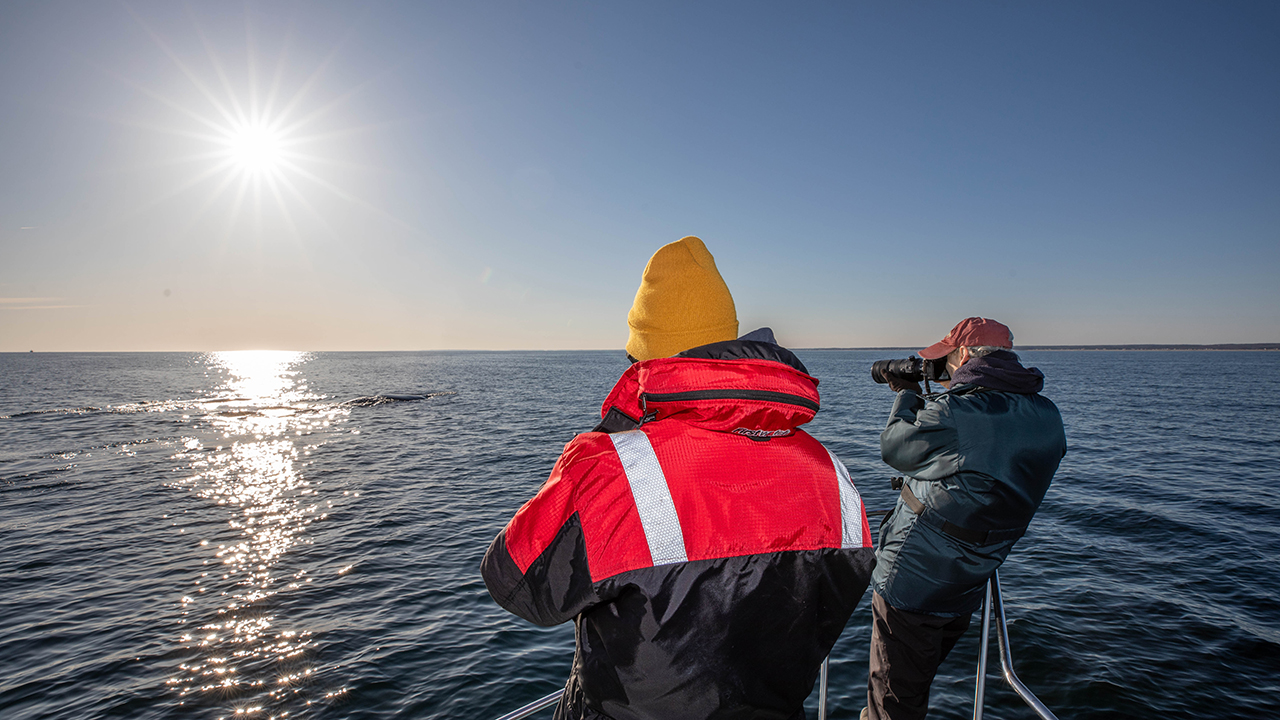
Our right whale scientists conduct field research, monitoring habitats such as Cape Cod Bay and the Gulf of St. Lawrence for right whales.
Aerial surveys
Our Aerial Survey team documents animal populations, like the North Atlantic right whale, recording how they travel through and use the ocean and the impacts of wind farms on those movements.
Hormone analysis
Anderson Cabot Center scientists have developed a way to detect pregnancy and stress in North Atlantic right whales through the analysis of biopsy and fecal samples collected during field season while out on boat surveys, and from baleen samples collected from deceased whales.
North Atlantic Right Whale Catalog
The North Atlantic Right Whale Catalog is a directory of more than a million photographs and physical details of more than 830 living and dead right whales dating back to 1935. Reproduction, entanglement rates, health, and population numbers are tracked using the Catalog.
Tracking anthropogenic injuries
Aquarium scientists have developed innovative ways to noninvasively assess health and the frequency and impacts from human activities.
Right whales need our help
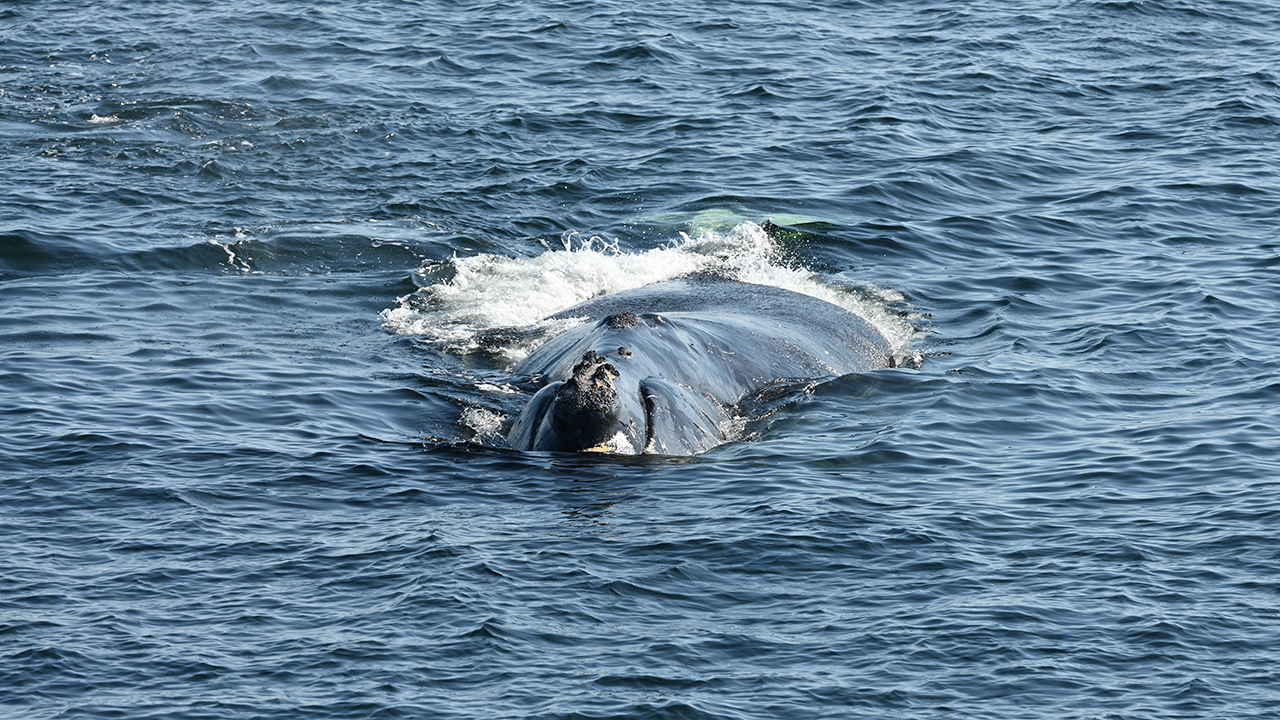
Right whales are one of the world’s most endangered large whales, with an estimated 380 individuals remaining.
Through our research, we know the primary causes of right whale mortality are entanglement in fishing gear and vessel strikes. These are threats the whales face often. More than 86% of right whales have been entangled at least once, and right whale habitats are in areas of the ocean with some of the highest vessel traffic.
But, we also know that through innovative technological advances in fishing gear and real-time monitoring and vessel speed restriction zones, these human-caused, negative impacts can be prevented.
Here’s how you can support our efforts to protect right whales:
- Spread awareness about the situation facing right whales, and the threats they encounter in the ocean.
- Support whale-safe fishing and ask about the source of your seafood in restaurants or the grocery store.
- Be aware of whales when you’re on the water, keeping at least 500 yards away.
- Report right whale sightings to NOAA (866-755-6622) and photographs to the North Atlantic Right Whale Catalog.
- Sponsor a right whale and help our research and conservation efforts.
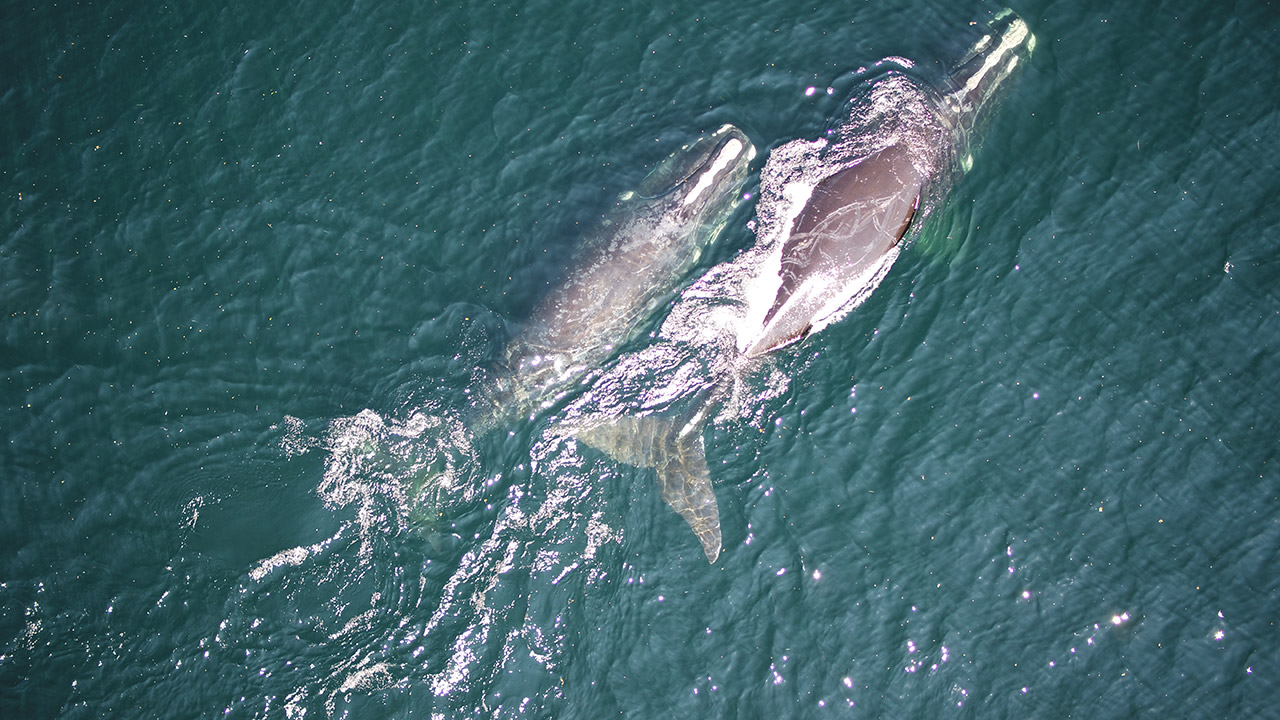
Protecting North Atlantic Right Whales
The right whale population has continued to gradually increase from fewer than 350 individuals in recent years to near 380. Protections against entanglement and vessel strikes can help their numbers continue to rebound.

Related Stories

Make a Difference for Right Whales
These critically endangered animals need our help. See how you can support the Aquarium’s work to protect right whales.