Representing Peru at the Student Conference on Conservation Science
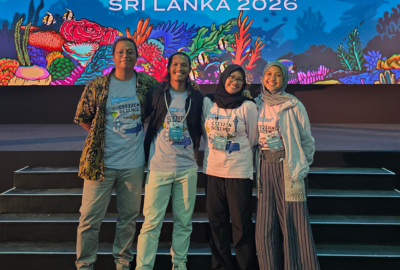
Marine Conservation Action Fund Early Conservation Program project leader Aurora Maguina Silva shares her experience attending the conference earlier this year at the University of Cambridge, England.
By New England Aquarium on Monday, August 10, 2026

The Marine Conservation Action Fund (MCAF) supports local conservation leaders across the globe who work with local communities to advance lasting solutions for ocean conservation. Supporting conference travel is one way MCAF supports fellows and project leaders, creating opportunities for knowledge exchange, relationship building, professional development, and greater visibility for their work on the global stage.
Aurora Maguina Silva, one of our MCAF Early Conservation Program (ECOP) project leaders, shares her experience attending one of the most renowned international conferences for early-career researchers in the field of conservation.
What is SCCS?
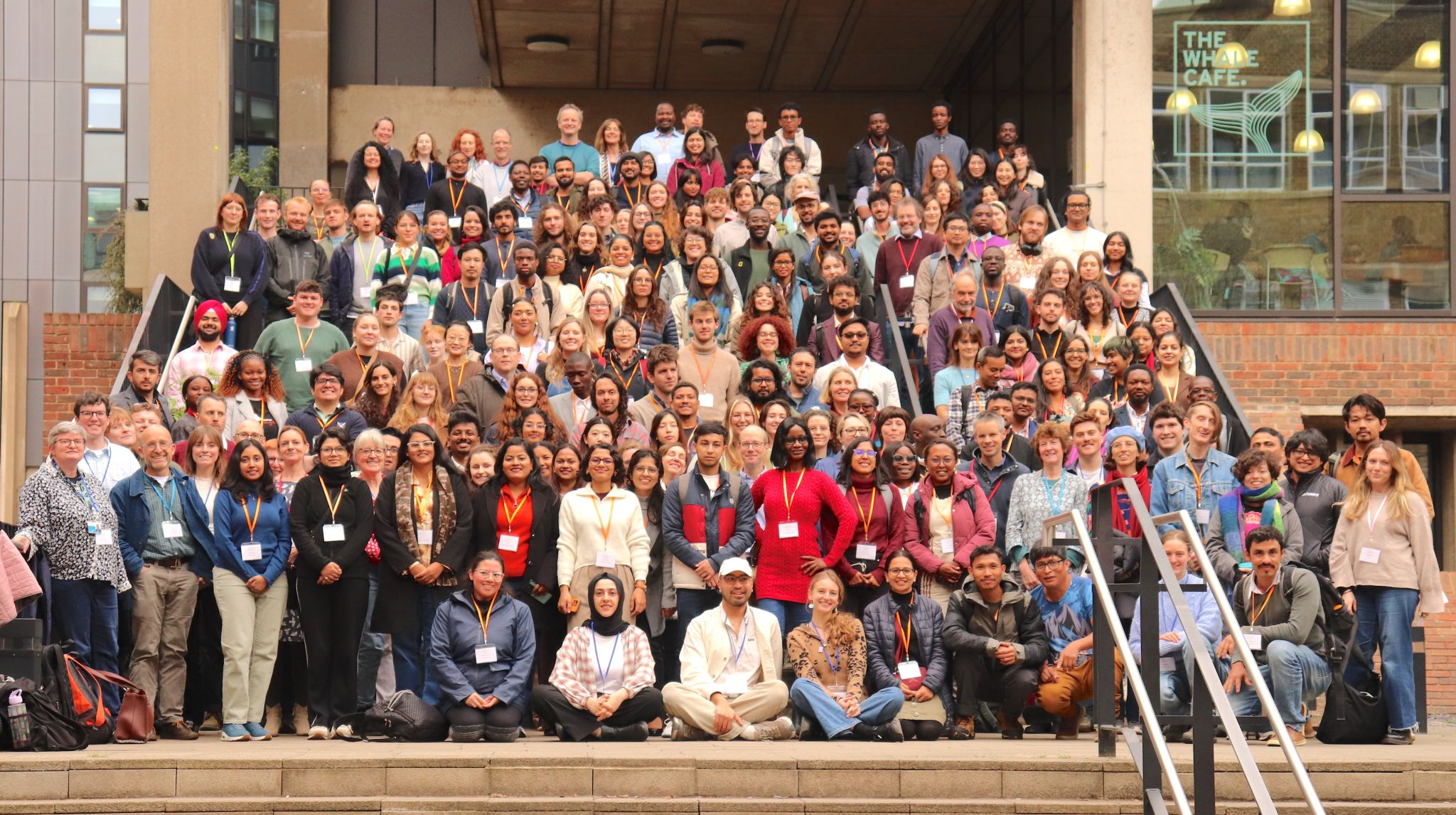
The Student Conference on Conservation Science (SCCS), at the University of Cambridge, brings together some of the most promising early-career researchers from around the world. Its mission is to train, empower, and connect the next generation of conservation scientists by providing a platform for sharing research, receiving mentorship, building professional networks, and bridging the gap between académico research and conservation practice.
What did you present?
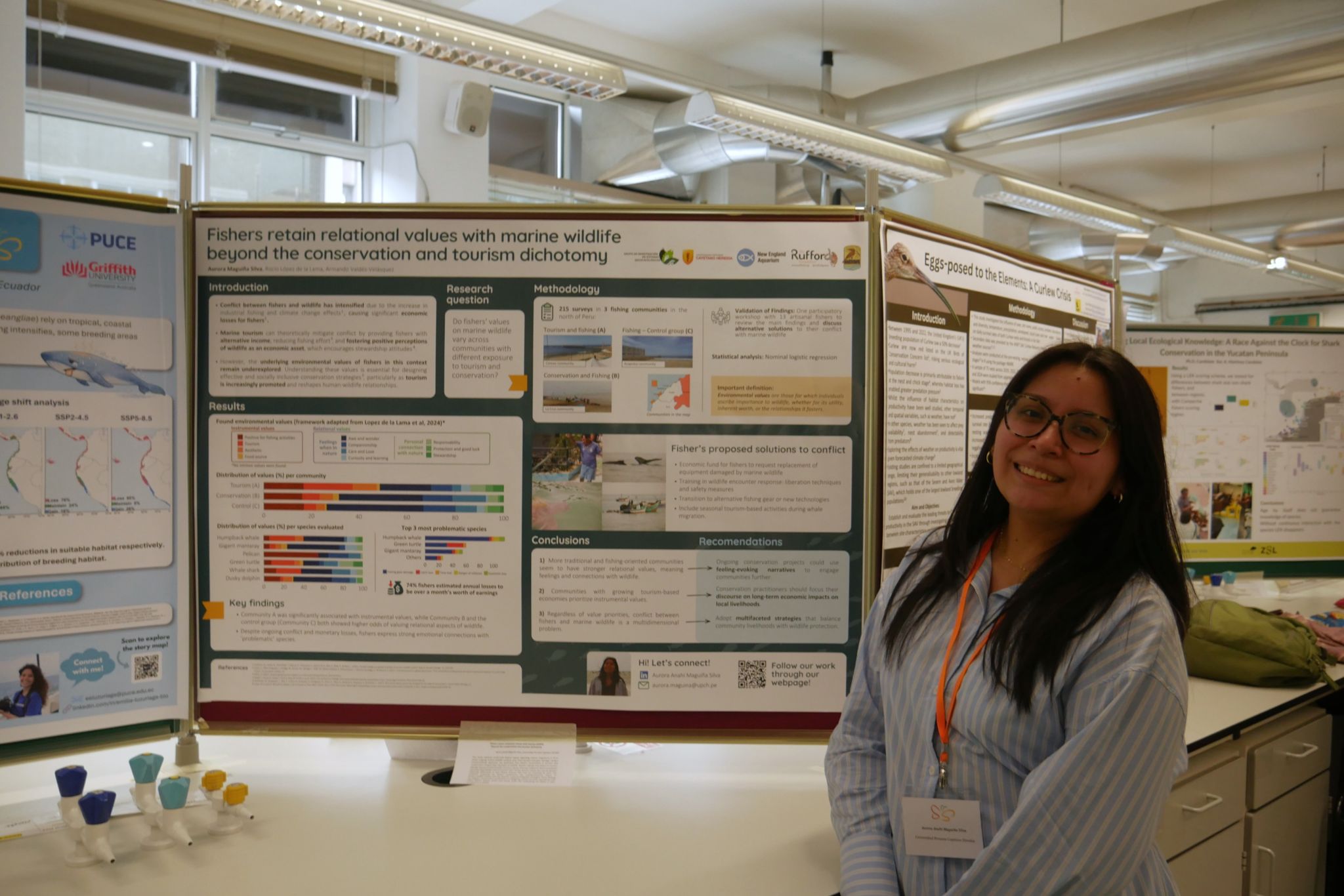
My poster, titled Fishers Retain Relational Values with Marine Wildlife Beyond the Conservation and Tourism Dichotomy, explored how fishers’ relationships with marine wildlife extend beyond the commonly discussed trade-off between conservation and tourism. This poster was made based on the preliminary results of my ongoing ECOP project centered around exploring the relationship between fishers and marine megafauna species in northern Peru.
How was your experience?
Going to the SCCS was not only discovering a new country, but also being exposed to an incredible diversity of ideas from across the conservation field. Throughout the conference, I attended talks and poster sessions covering topics ranging from innovative legal approaches for legislation to groundbreaking interdisciplinary projects integrating perceptions with biological survey data. There were even researchers using artificial intelligence to detect leopards in Nepal for human-wildlife coexistence, among many other inspiring examples of how creative and exciting conservation science can be.
Beyond listening to the presentations, meeting researchers and practitioners from all over the world who are pushing conservation forward in thoughtful and inclusive ways. I spoke with researchers working alongside women involved in seaweed farming in India, others studying how global politics influence developing countries’ conservation targets, and researchers documenting local ecological knowledge of sharks in coastal communities in Mexico.
One particularly memorable exchange was with fellow marine researchers interested in tourism as a pathway for coexistence and sustainable coastal development. Hearing their experiences from different parts of the world reinforced something I have been observing in Peru: tourism is reshaping how people value marine ecosystems.
What was the highlight of the event?
I would say the most rewarding aspect of attending such a globally recognized conference was the opportunity to interact with representatives from well-known NGOs and conservation organizations. These conversations allowed me to ask questions about funding opportunities, career pathways, and potential collaborations.
As an early-career researcher, I often find the prospect of approaching international organizations a bit intimidating. Contacting large international organizations often seems like an unattainable goal. Having the chance to speak with people directly, exchange contacts, and gain insight into how these organizations operate gave me a great deal of confidence.
Those interactions left me feeling more prepared and motivated to continue developing research on human-wildlife conflict, coexistence, and community-based conservation in my home country.
Finally, none of this experience would have been possible without the incredible support of the ECOP Program from the New England Aquarium and MCAF. Their support allowed me to attend SCCS and share my work on an international stage. Programs like this provide invaluable opportunities for early-career researchers, especially those working in regions where access to international conferences and professional networks can be limited. It gives young researchers the confidence to keep learning, keep asking questions, and keep working towards a more sustainable and equitable future—one step at a time.

Related Stories

Let's Take Action for the Ocean Together
With your support, we can further our work to ensure a vital and vibrant ocean for all.