A Right Whale Scientist Takes Flight for Leatherback Sea Turtles
Monica Zani, a research scientist at the New England Aquarium's Anderson Cabot Center for Ocean Life, lent her expertise as a drone pilot to a team tagging leatherback turtles in Puerto Rico.
By New England Aquarium on Thursday, August 06, 2026

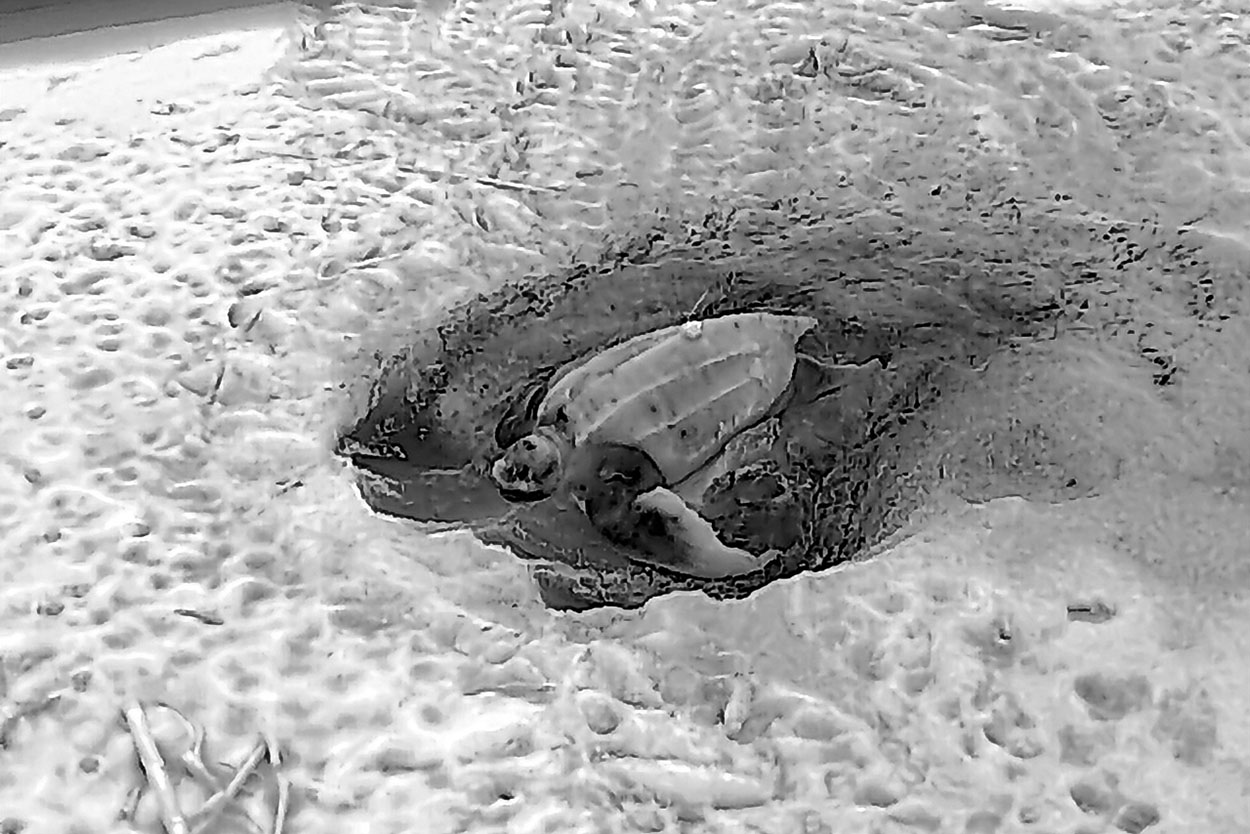
Monica Zani, a research scientist at the Aquarium;s Anderson Cabot Center for Ocean Life, is an experienced drone pilot, often using research drones to collect blow samples from North Atlantic right whales. But she had never flown at night, in the dark.
“That was new for me,” Monica said. “Completely different, definitely a bit of a learning curve.”
Monica was part of a team of fellow Anderson Cabot Center scientists, Aquarium staff, and community-led conservation organizations working in Puerto Rico to tag nesting leatherback sea turtles. So: how did a right whale scientist end up on a beach, on an island, in the middle of the night, looking for sea turtles?
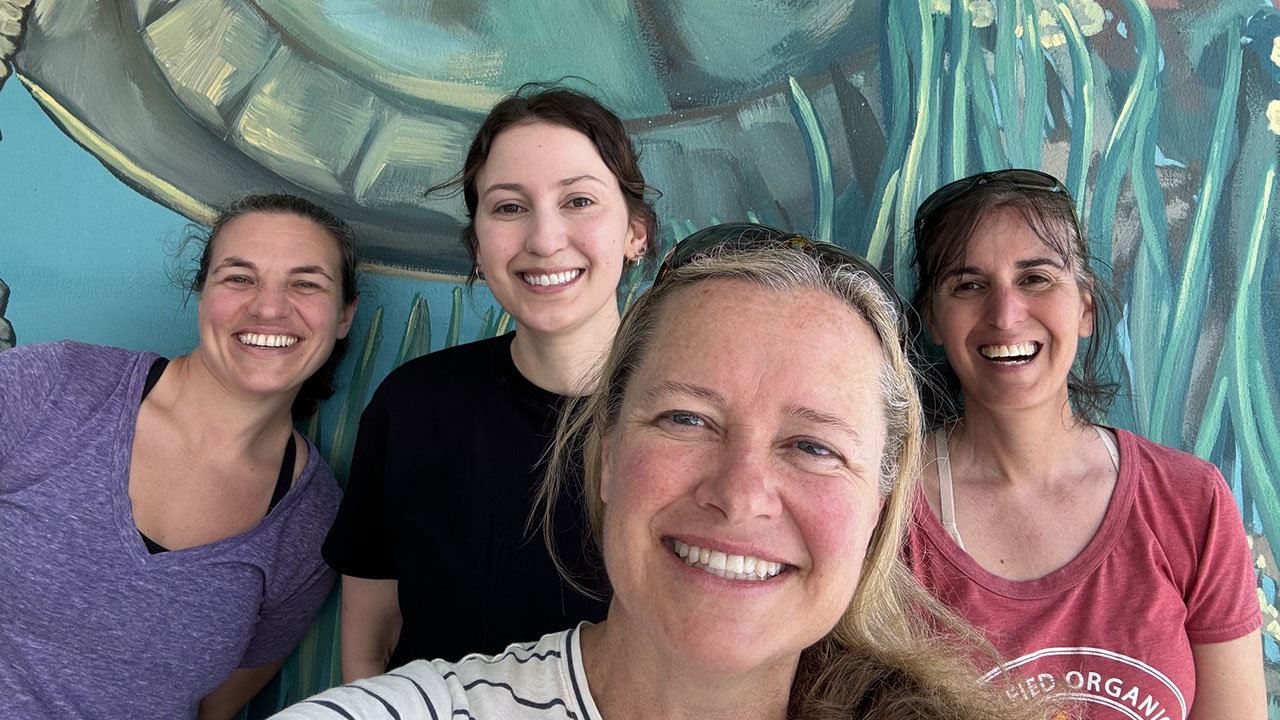
For the past six years, Anderson Cabot Center scientist Dr. Kara Dodge has been leading the leatherback research project, working closely with collaborators in Puerto Rico. One of those partners is Luis Crespo of Amigos de las Tortugas Marinas, whose pioneering work using thermal drone technology to search for nesting leatherbacks was supported by our Marine Conservation Action Fund.
The thermal drone allows researchers to survey in minutes what used to take a beach-walking team hours, greatly increasing the likelihood of locating and identifying every nesting female in a given night. “For us, the drone is an awesome tool that has substantially strengthened the accuracy and effectiveness of our night patrols and our ability to find turtles,” said Rafael A. Rodriguez, who pilots a drone for Chelonia, another partner organization conducting research on the island.
This season, the Anderson Cabot Center team acquired an in-house thermal drone for conducting surveys—which is how Monica got involved with the project.
Practice makes perfect
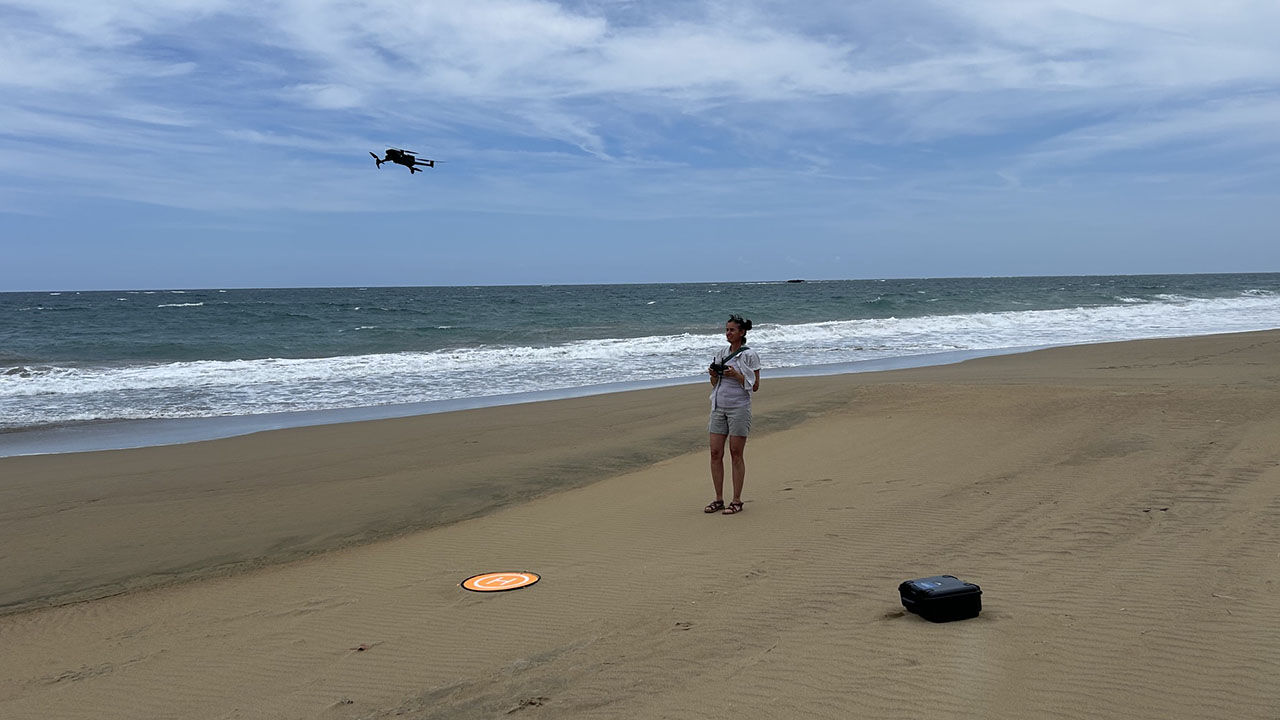
Before she arrived along Puerto Rico’s tropical shores, Monica practiced flying the thermal drone in a much different environment—coastal Maine in late-winter. “I’m lucky enough to live near a beach that was sort of ideal for this—long and straight—and I worked with the local police station to get access to go fly there,” Monica said. “But I’m trying to have this real-world experience and I’m flying with mittens on,” she laughed.
Once on the island, she said, it took time to get used to flying at night in the much darker environment. “The drone itself is similar to what we use for collecting whale blow, but it has a lot of bells and whistles, and the controller is completely different than what I’m used to,” Monica said. “So, the learning curve was really the controller and then getting comfortable doing it all in the dark.”
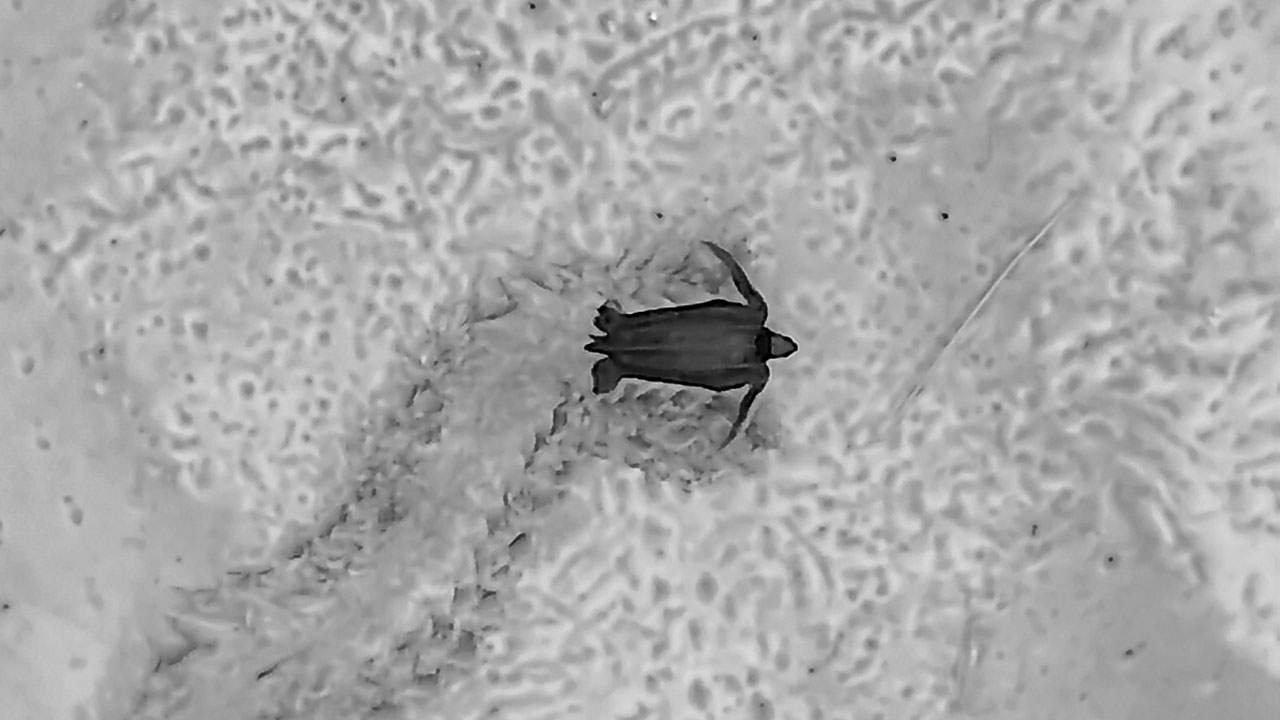
Luckily, Luis was on hand to help Monica learn the ropes, and she relied on other members of the team for additional expertise. The first night, she recalled, her biggest concern was that she wouldn’t be able to identify a turtle. Back in Maine, she had occasionally spotted people walking on the beach. “So, I knew I could find a person. But a turtle? I had no idea what they looked like in the thermal image,” Monica said. She shared her worry with her colleagues, who assured her that, without a doubt, she would be able to spot a leatherback as soon as she came across one.
“But that first night, we didn’t have any turtles, so I was convinced I missed them,” Monica said. “Then on the second night, we had turtles and the first time I saw one I was like, ‘Oh! That’s so obviously a turtle! Why didn’t anyone tell me it’s that easy?’”
Coming full circle
Monica’s involvement this year is a natural evolution of what’s been a “very collaborative” project from the start. “First, we trained Luis and his team on satellite tagging. Then he got the grant from MCAF for the drone. Now, it’s come full circle with Luis training our team to do drone work,” said project leader Dr. Kara Dodge.
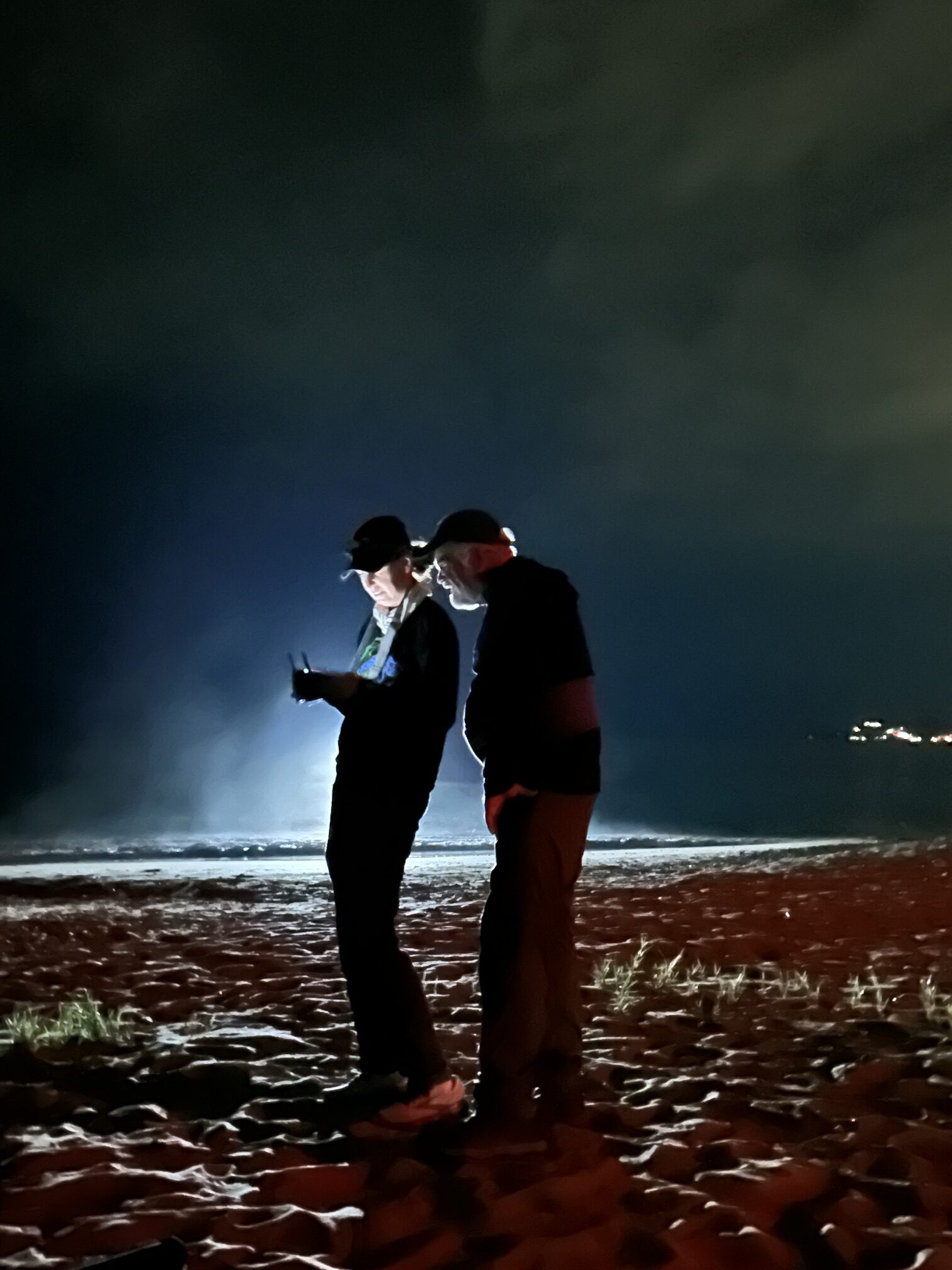
Along with Monica, Luis has trained others on how to conduct surveys with the drone, turning what once seemed like a niche idea into an essential research tool. Teams around Puerto Rico are now conducting field work this way, and the method is starting to be used by researchers in other locations. In Dorado on the north coast, the team from Chelonia now has two licensed drone pilots with additional staff working on certification. They invested in their own drone for 2026 surveys, flying alongside Monica during the final week of the trip.
“Using the thermal drone, being able to detect a nesting turtle as she emerges from the ocean with incredible precision gives our team the advantage to make better decisions at the right moment,” said Debbie Feliciano, deputy director of Chelona. “With more than 30 volunteers supporting our night patrols, we continue to keep them actively involved by maintaining areas where they can contribute directly to the monitoring process. Technology allows us to strengthen their work, not replace it. Innovation, teamwork, and passion working together for the future of these incredible species.”
Now that she’s back in New England, Monica and the right whale team are looking forward to exploring how the thermal drone can contribute to right whale research in the field. She and her colleagues are planning to explore how thermal imagery could contribute to the ongoing visual health assessment work on right whales.
“I feel really fortunate that I was able to join and bring something to the team in Puerto Rico,” Monica said. “Luis is a pioneer for this type of work, and working alongside his team taught me so much about reading the beach through this technology. He built this technique from scratch when nobody knew if it would work, and it shows in how efficiently his team operates now.”

Related Stories

Protect the Blue Planet
At the New England Aquarium, ocean conservation is at the center of everything we do. And with your help, we can tackle pressing threats facing the ocean and all who rely on it.