PRESS RELEASE
Scientists announce new group of 20 named North Atlantic right whales
Named whales include “Donegal,” a whale first seen off Ireland, and “Dolly”

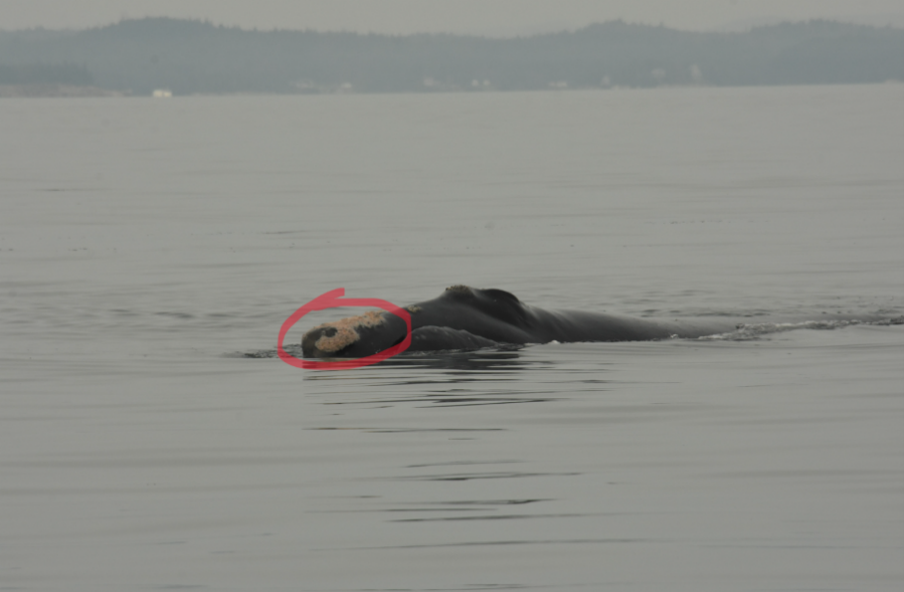
BOSTON, MASS. (Nov. 19, 2026) – Scientists have unveiled the new names of 20 North Atlantic right whales, an annual tradition that helps researchers in the field more easily identify individual whales in real time.
**PHOTOS OF WHALES AVAILABLE HERE – SEE CREDIT INFORMATION IN FOLDER**
Every right whale in the North Atlantic Right Whale Catalog, curated by scientists in the New England Aquarium’s Anderson Cabot Center for Ocean Life, has a four-digit number assigned to them, but even for a small population of fewer than 400 individuals, remembering numbers for each whale is challenging. To make the whales easier to remember, scientists started naming the whales based on easily recognizable features or facts about them. The naming process involves submissions from North Atlantic Right Whale Consortium members and various research organizations.
“Naming right whales is a fun and creative activity for our research community, but it also allows an opportunity to connect with the whales on an individual level,” said Amy Warren, scientific program officer in the Aquarium’s Anderson Cabot Center, who coordinates the naming effort. “It can be hard to relate to Catalog #5299, but a whale named Nibbles is bound to be memorable.”
The 2026 group includes “Grand Slam” (Catalog #3991) whose callosities (white patches of raised tissue) resemble three bases on a baseball field. Her sister, “Slide” (Catalog #4991), was also named this year because of a curved scar on her back that looks like someone sliding into a base. These baseball-themed names run in the family, as their mom’s name is “Fenway” (Catalog #2791), the home of the Boston Red Sox.
The Aquarium collaborates with Whale and Dolphin Conservation (WDC) on playful yearbook-style bios for each of the newly named whales. (The full list with annotated images is available on neaq.org.) Grand Slam’s bio indicates her favorite song is “Sweet Caroline” by Neil Diamond because of the decades-long tradition of the song being played at Fenway Park. The bio for “Dolly” (Catalog #4191), a right whale with a callosity marking that resembles the late Dolly Parton’s iconic hair, has “Jolene” listed as her favorite tune.
Another whale named this year made itself famous for its journey across the North Atlantic Ocean. Catalog #5499 was named Donegal for the bay it was first discovered in, off the coast of Ireland. Months later, it was resighted in Massachusetts waters and later added to the Catalog. Donegal is easily recognizable by the extensive fishing gear entanglement and boat propeller scarring all over its body and was unfortunately seen recently looking in poor health.
“Although the names are intended to help researchers at sea, they also give the general public a better understanding of the individual whales,” said Caroline Mowdy, marketing and communications specialist at Whale and Dolphin Conservation. “We see these whales and their families grow each year, and knowing them makes the tragedies even more tragic, but it also makes our determination to protect them even stronger.”
This year’s group also has many animal-themed names, a fun example of how the animal kingdom is all interconnected. “Hippo” (Catalog #1719) has a callosity that resembles the side profile of a hippopotamus. “Snail” (Catalog #4050) has a callosity that looks like a snail and a scar that resembles the snail’s trail. “Goose” (Catalog #4520) has a callosity that is similar to a goose with its long neck, and “Seal” (Catalog #5253) has a large scar on his head that looks like a seal sitting in its signature “banana pose.”
Earlier this week, the North Atlantic Right Whale Consortium released the latest population estimate for North Atlantic right whales, which shows more work is needed to protect this critically endangered species. The population is not yet on a clear path to recovery and remains vulnerable to entanglements and vessel strikes.
“The recovery of large whales is key to combatting climate change and saving our own future. We need right whales to survive as if our future depends on it, because it does,” Mowdy said.
Since its incorporation in 2005, WDC’s North American office has run a dedicated program to save the imperiled North Atlantic right whale and implement protective measures to save right whales from human impacts, namely vessel strikes and accidental entanglement in fishing gear. WDC’s work to protect right whales is expansive, from the halls of Congress to the waters of the North Atlantic and classrooms across the country. WDC is ensuring that the next generation of right whales will swim, socialize, feed, and raise families in a safer environment.
The New England Aquarium has been studying North Atlantic right whales, one of the world’s most endangered large whale species, for more than 40 years. Scientists in the Aquarium’s Anderson Cabot Center are pioneering hormone and stress research, assessing and tracking anthropogenic injuries, and conducting aerial surveys to monitor the animals’ habitat use, which provides crucial information to better protect the species.
MEDIA CONTACT: Pam Bechtold Snyder—psnyder@neaq.org