With 2025 Right Whale Population Estimate, Scientists Stress Continued Protections Are Vital for Species Recovery
The latest estimate signals that the right whale population is continuing to struggle, and the species remains at serious risk from entanglements and vessel strikes.
By New England Aquarium on Monday, November 16, 2026

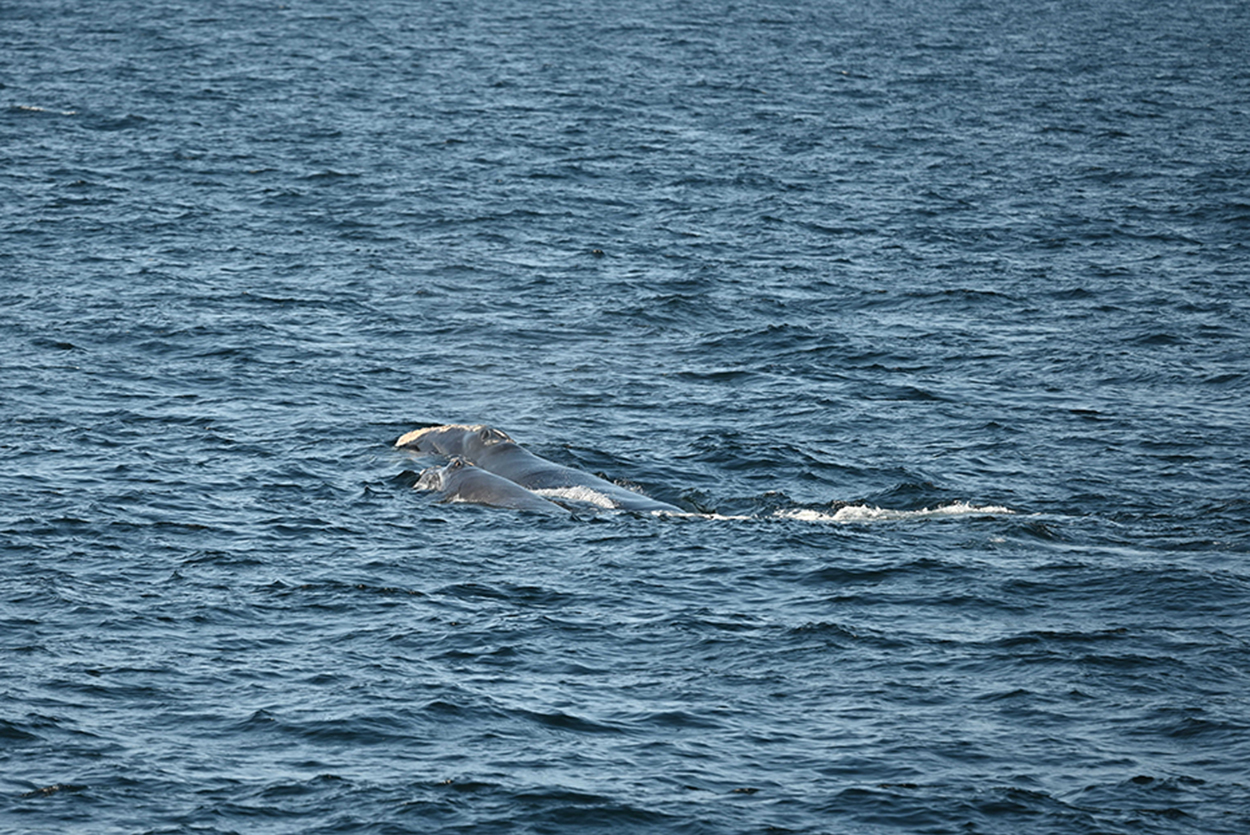
Following the latest population estimates from the North Atlantic Right Whale Consortium, scientists expressed concern over right whales’ continued struggle as a species. While it’s encouraging that the population has not seen a major decrease in numbers in recent years, their slow growth signals that these animals remain vulnerable.
At their annual meeting each fall, the North Atlantic Right Whale Consortium releases the annual population numbers for the species using the most up-to-date data, as well as updated numbers for previous years.
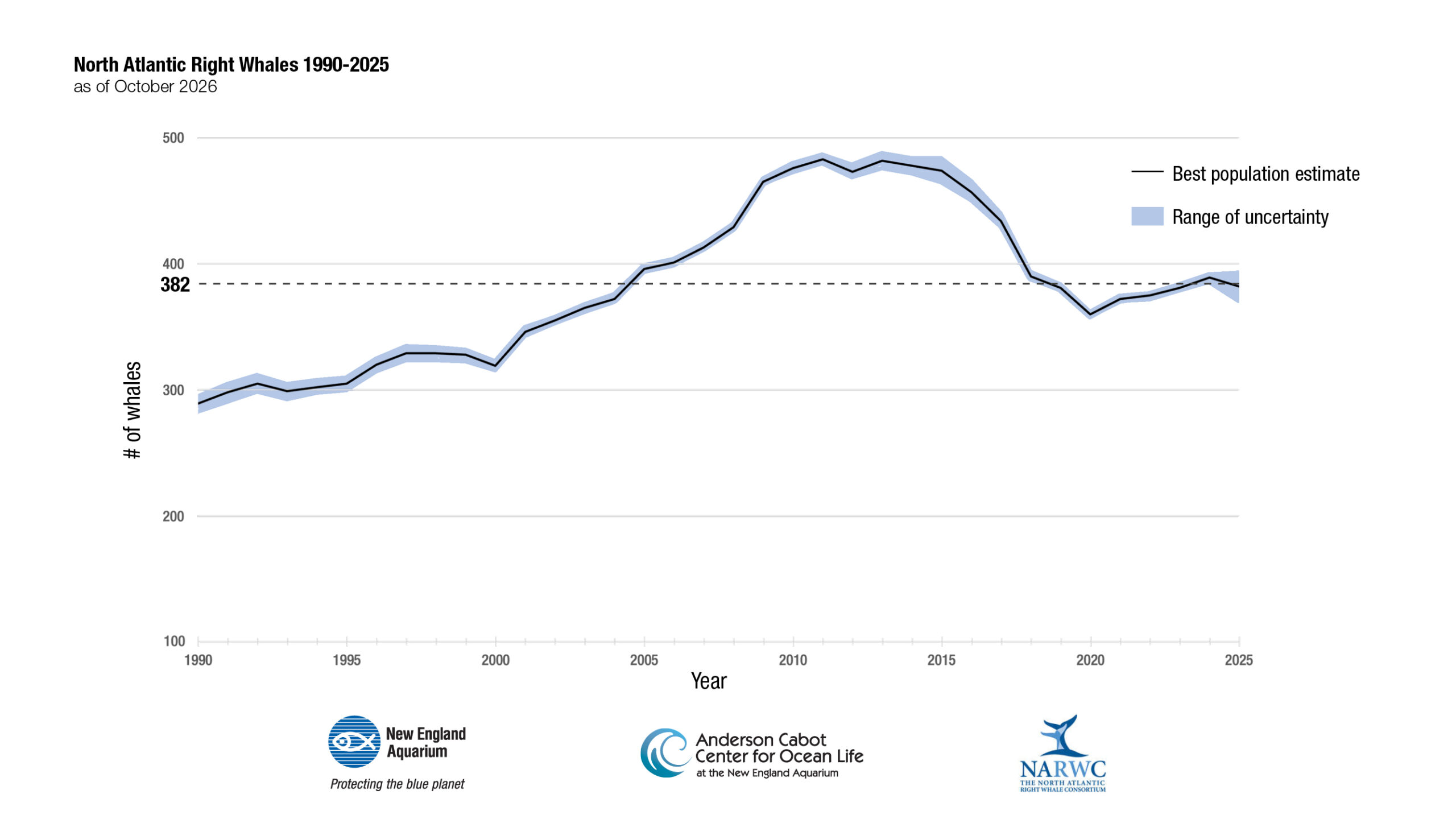
The estimate for 2025 is 382 (+/-11 range of error), representing a 1.8 percent decline in population size from the 2024 estimate, which was recalculated as 389 (+/-3) using updated right whale sighting data. The estimated number of reproductive females held steady at 73 (+3/-2).
“The newly released right whale population estimate underscores that more work is needed to protect this species,” said Heather Pettis, who leads the right whale research program in the Aquarium’s Anderson Cabot Center and chairs the North Atlantic Right Whale Consortium. “The population is not yet on a clear path to recovery and is incredibly vulnerable to entanglements and vessel strikes, threats we know how to reduce. Recovery for this species depends on sustained protective actions in both the US and Canada.”
Right whale mortalities
There were two detected right whale mortalities in 2026, one of an entanglement and one of unknown cause.
Division (Catalog #5217) was a four-year-old male who was last seen free of gear on July 5, 2025, in the Gulf of St. Lawrence and was sighted severely entangled off the coast of Georgia in late 2025. Despite repeated disentanglement attempts by authorized responders in the southern US, the entanglement persisted, leading to severe injury for the whale. In January 2026, Division was found deceased off the coast of North Carolina. A further assessment of the entanglement by Fisheries and Oceans Canada and experts from the National Oceanic and Atmospheric Administration determined the gear was from a Canadian snow crab fishery.
Just a few weeks after Division’s death, in early February 2026, a second deceased right whale washed ashore on a barrier island off Virginia. Scientists in the Anderson Cabot Center identified the carcass as a three-year-old female , later cataloged as Catalog #5393. The cause of death remains unknown. The young whale was the 2023 calf of mother Porcia (Catalog #3292), whose three previous calves have all died, two from fishing gear entanglements.
Human impacts
In 2026, in addition to the year’s two deaths, there were eight recorded human-caused injuries to right whales. Three whales had entanglements with gear still present, and four had shed gear from apparent entanglements, but the whales remained injured. Another whale, a calf born in 2025 to mother Check Mark (Catalog #3705), was injured in a vessel strike.
One of the actively entangled whales, Catalog #5192, was seen in September off the coast of Montauk, NY, in extremely poor condition and is not expected to survive. A second, the 2025 calf of Monarch (Catalog #2460), has not been seen since being partially disentangled in April.
Recent proposed changes to federal regulations and laws—including weakening of the Endangered Species Act—could put right whales at further risk of harm, increasing the likelihood that whales are killed or injured by entanglements and vessel strikes.
“Actions to further delay entanglement protections and deregulate vessel strike measures will stall meaningful progress that is already underway to protect the species and ensure a thriving blue economy. Right whales cannot afford to wait any longer for adequate protection,” Pettis said.
Right whale calves
Each year, scientists at the Aquarium’s Anderson Cabot Center help identify new right whale mothers and maintain a detailed list of right whale mother-and-calf pairs, complete with family histories for each calf.
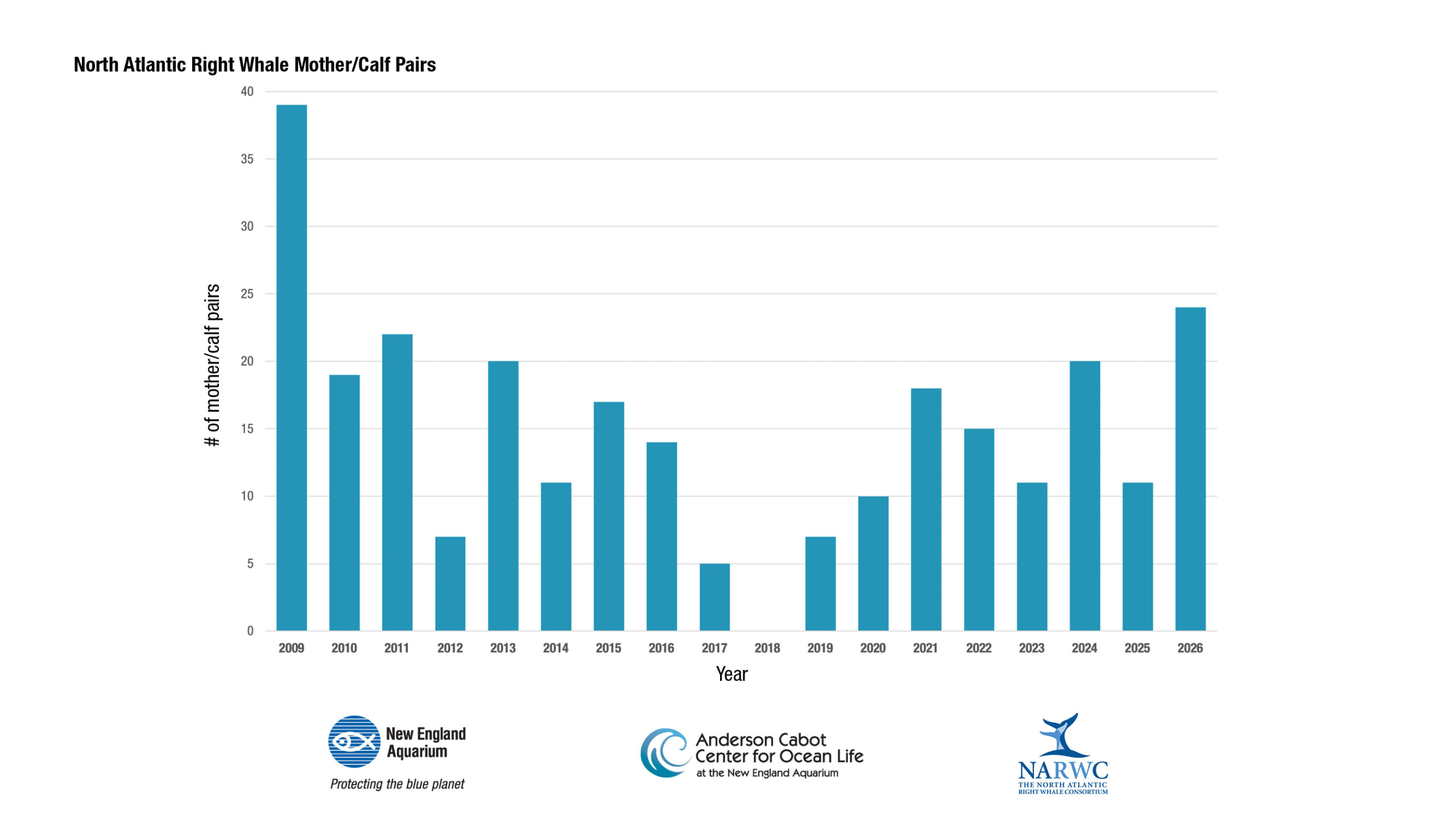
The 2025–2026 calving season resulted in the most calves born in over a decade, with 24 total—including a late addition, to mother Silt (Catalog #1817), sighted for the first time in Canadian waters in September 2026.
“This is encouraging news in a species with relatively low reproductive success,” said Lindsey Jones, a scientist in the Aquarium’s Anderson Cabot Center who manages the North Atlantic Right Whale Catalog. “However, population growth depends on every calf being able to reach maturity free from human-caused harm.”
This sentiment was echoed by Anderson Cabot Center senior scientist Philip Hamilton, who stressed that efforts to diminish or remove protections for right whales and other marine animals threaten the species’ survival.
“With 24 calves born this year, the whales are doing their part,” Hamilton said. “But the overall lack of growth in the population is even more concerning when seen in the context of a number of proposed management setbacks in the US this year. It’s disheartening to see our efforts to protect these animals backslide.”
About the North Atlantic Right Whale Consortium
Started in 1986 as a collaborative data-sharing group, with the New England Aquarium as a founding member, the North Atlantic Right Whale Consortium includes research and conservation organizations, shipping and fishing industries, technical experts, US and Canadian government agencies, and state and provincial authorities, all of whom are dedicated to the conservation and recovery of the North Atlantic right whale. The Consortium is internationally recognized and has been identified as a model for establishing other species-related consortia.
Learn more about the North Atlantic Right Whale Consortium

Related Stories

Make a Difference for Right Whales
These critically endangered animals need our help. See how you can get involved with the Aquarium’s work to protect right whales.