PRESS RELEASE
New England Aquarium treating elderly penguin with acupuncture
African penguin “Pip” is twice the age penguins typically live in the wild

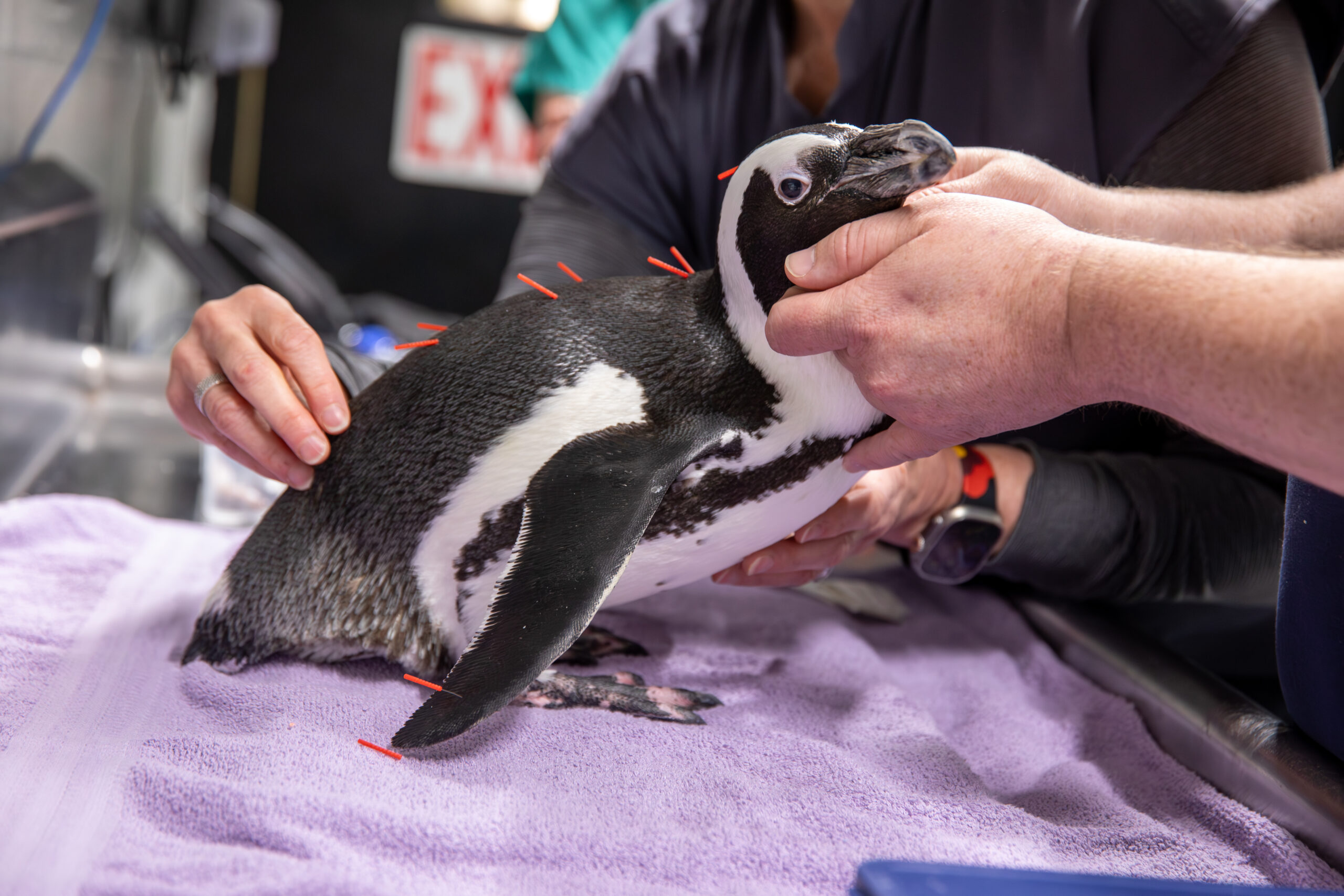
BOSTON, MASS. (Sept. 22, 2026) – The New England Aquarium is treating an elderly African penguin with acupuncture to relieve symptoms of advanced age.
**PHOTOS AND VIDEO AVAILABLE HERE WITH CREDIT TO NEW ENGLAND AQUARIUM**
“Pip” is a 29-year-old African penguin who hatched at the Aquarium in 1997. He has doubled the typical life expectancy of 10-15 years for African penguins in their native environment. At the end of last year, trainers and veterinary staff at the Aquarium noticed that Pip had an abnormal gait and was walking with a limp. After treating Pip with different pain medications, the team decided to pursue integrative therapies and brought in a licensed acupuncturist.
“Similar to humans, aging penguins commonly develop osteoarthritis or spinal disease that can lead to gait changes and discomfort,” said Dr. Melissa Joblon, Director of Animal Health at the New England Aquarium. “Using additional treatments such as acupuncture and physical therapy allows us to decrease the dosage of pain medications and can greatly improve an animal’s quality of life.”
Acupuncture uses hair-thin needles in local areas where there is muscle tightness, which decreases inflammation and increases circulation. The Aquarium sought the expertise of Dr. Claire McManus, a licensed acupuncturist with 25 years of experience treating both humans and animals. Dr. McManus has treated several of the Aquarium’s penguins and rescued sea turtles over the years.
She began working with Pip nine months ago. The Aquarium’s penguin trainers say Pip has become increasingly comfortable with the acupuncture treatments with the help of fish, head scratches, and positive reinforcement.
“Pip has come such a long way in his training. He’s even offering to preen and court his trainers during treatments. These increasing signs of comfort help us provide the care he needs in a stress-free way,” said Eric Fox, the Aquarium’s Associate Curator of Penguins.
Following the acupuncture procedures, Pip has appeared more relaxed and is doing well, with veterinarians observing an improvement in his gait.
All 49 penguins at the New England Aquarium receive individualized care that includes training and enrichment opportunities, creating an environment where each penguin can thrive based on their unique needs and personalities. About 60 percent of the Aquarium’s penguin residents have exceeded the 15-year life expectancy of their wild counterparts. Like Pip, many geriatric penguins require specialized treatment. Last year, the Aquarium created a “retirement home” for some of its African penguins, a designated space for birds experiencing medical conditions related to advanced age.
African penguins are a critically endangered species experiencing an alarming and continuing decline in their native environment on the coast of South Africa and Namibia, largely due to depletion of food from overfishing and climate change. The New England Aquarium has cared for African penguins for decades and participates in several education and conservation initiatives, including the Association of Zoos and Aquariums’ Saving Animals From Extinction (SAFE) African Penguin program, an international effort to protect and restore wild African penguin populations. The Aquarium has committed to sending penguin trainers annually to South Africa to support field conservation work, and its Marine Conservation Action Fund helps fund penguin rehabilitation efforts.
MEDIA CONTACT: Pam Bechtold Snyder—psnyder@neaq.org