Please note: The Atlantic harbor seals will temporarily be off exhibit while we improve their habitat for their comfort and well-being.
How Every New England Aquarium Ticket Supports Ocean Conservation
From animal care to studying endangered species, learn about the work we do—and how your Aquarium visit helps support a vital and vibrant ocean for future generations.
By New England Aquarium on Saturday, June 20, 2026

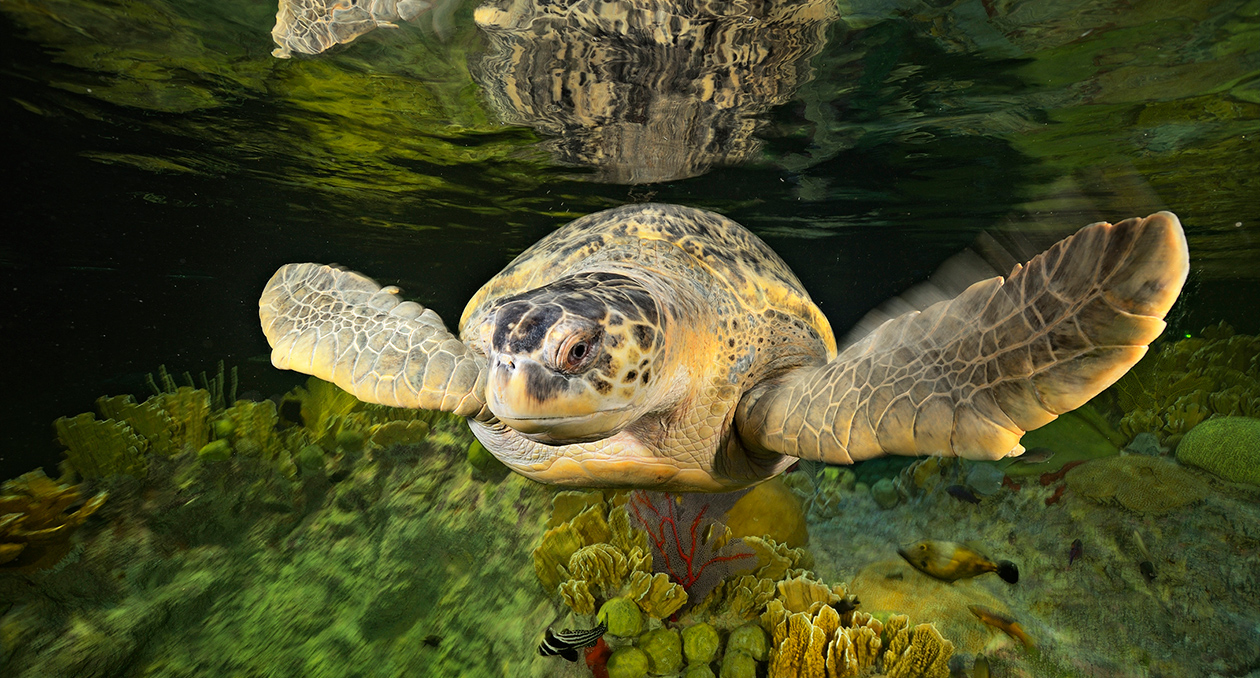
Did you know: A portion of every Aquarium ticket purchase goes directly toward our work to protect the blue planet? It’s true! Each time you hang with the California sea lions, marvel at Myrtle, or get up close with animals at our Trust Family Foundation Shark and Ray Touch Tank, you’re helping give back to the ocean. Learn more about some of what we do thanks to your support.
World-class animal care
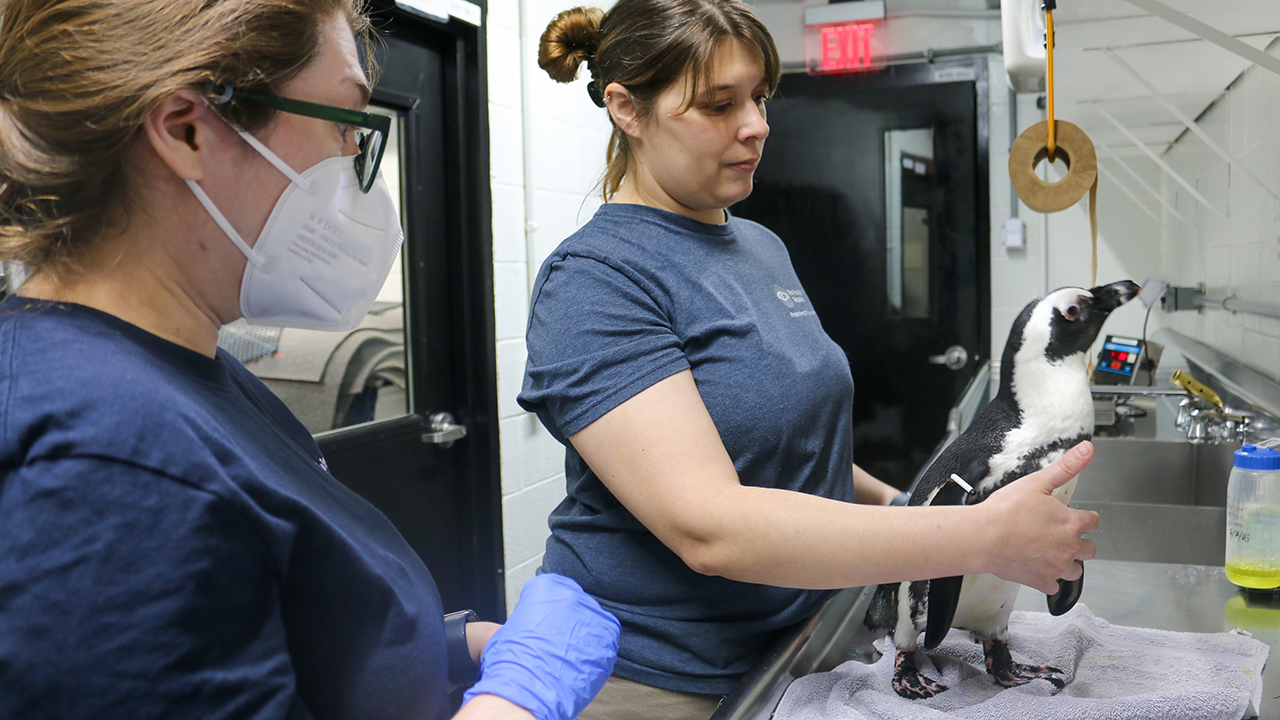
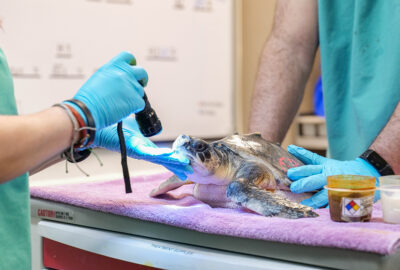
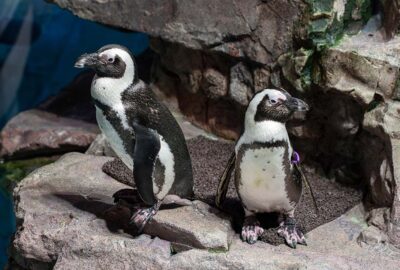
There are nearly 10,000 individual animals at the Aquarium that serve as ambassadors to their species and providing them with the best care possible is our top priority each day. Our Animal Health team conducts routine medical exams for everyone from Thomas, our green moray eel, to puffer fish, anacondas, and 500-pound sea turtles. Plus, many animals receive specialized treatment plans—including the critically endangered geriatric African penguins on our “retirement home” island, a specially designed habitat to suit the needs of aging birds.

Marine research
From the scientists in our Anderson Cabot Center for Ocean Life to experts in the BalanceBlue Lab, research at the Aquarium is helping drive change for the ocean each day. At the Anderson Cabot Center, we study and protect marine animals and habitats—working at the forefront of North Atlantic right whale research, helping to better understand animals’ movements in the ocean through aerial surveys and satellite tagging, gaining valuable insights into animal health using hormone data, and more.
At our BalanceBlue Lab, the team works closely with industry partners to help advance ocean-friendly practices in fishing, shipping, and other sectors of the blue economy, promoting a balanced use of the ocean.
Sea turtle rescue
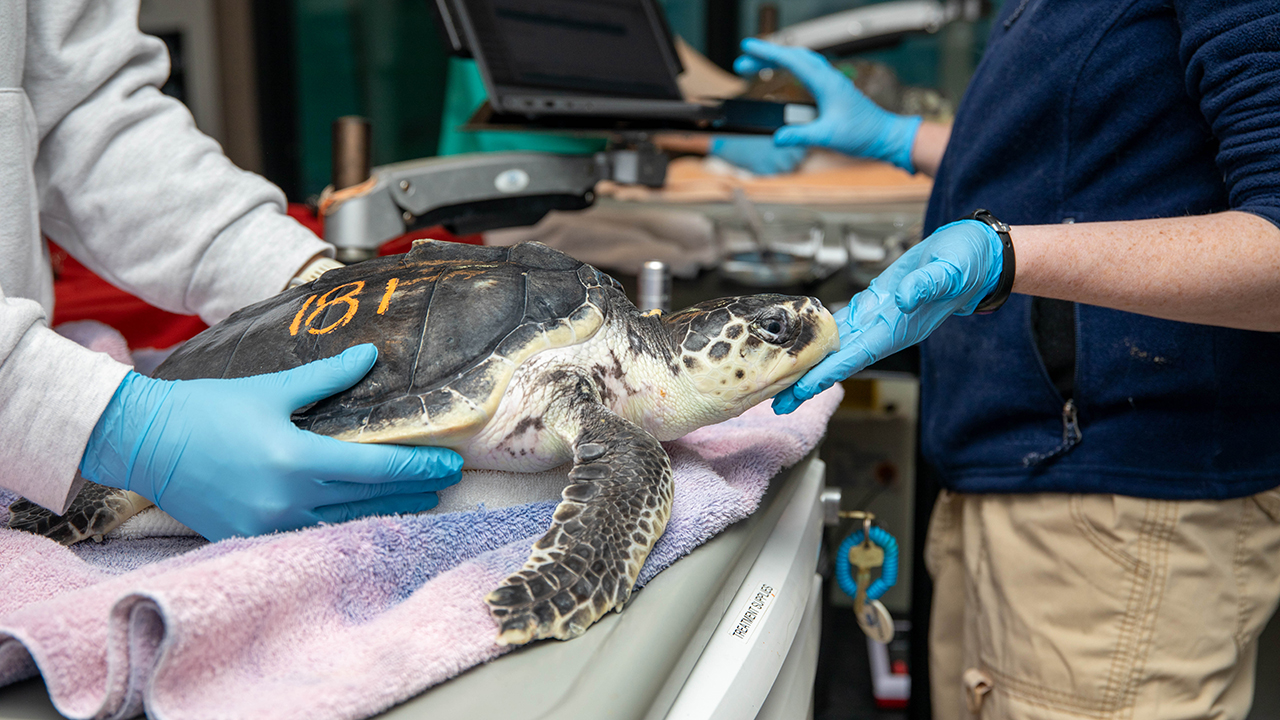
Each fall and winter, at our Animal Care Center in Quincy, MA, our team takes in hundreds of sick and injured sea turtles that are rescued after being stranded along the beaches of Cape Cod. We work to quickly triage patients and help nurse them back to health, with the goal of releasing them back to the ocean.
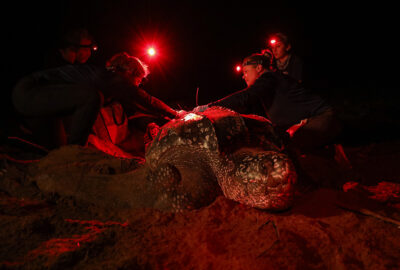
While many of these sea turtles are transferred to other facilities to continue their rehabilitation after being stabilized, dozens of more critical patients continue treatment with our Rescue and Rehabilitation team. After months of expert care, these sea turtles—many of which are critically endangered Kemp’s ridleys—return to the ocean in the summer. In recent years, Rescue and Rehabilitation has teamed up with Anderson Cabot Center scientists to tag and track released turtles to help understand how they fare after rehabilitation and how to better protect these animals in the future.
Global conservation efforts
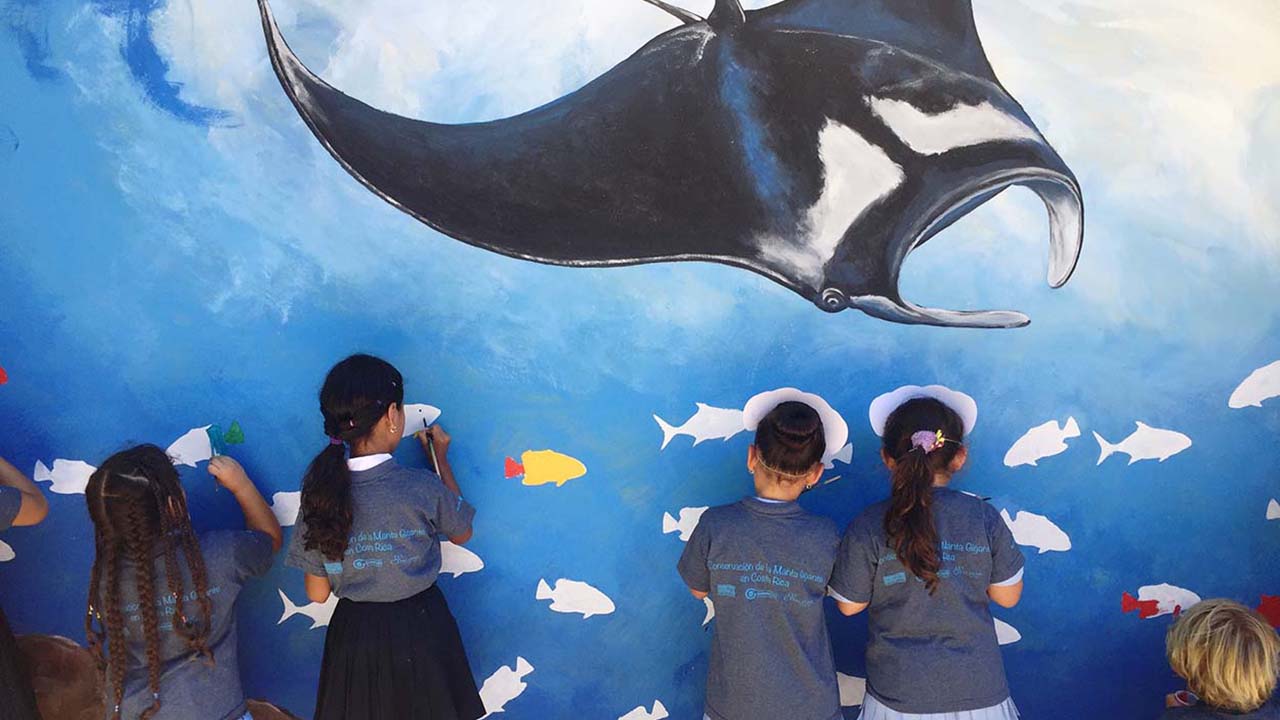
Through our Marine Conservation Action Fund (MCAF), the Aquarium supports ocean conservation around the globe. MCAF offers small grants and fellowships for local conservation leaders who are spearheading community-led projects in low- and middle-income countries around the globe. Thanks to this partnership, MCAF fellows and project leaders are creating solutions that benefit ocean health and support their communities.
Since it was founded in 1999, MCAF has backed over 250 projects in more than 60 countries and across six continents—and is continuing to grow.
Each time you visit the Aquarium, you’re part of our work to protect the blue planet. We couldn’t do it without you!

Related Stories

Let's Take Action for the Ocean Together
With your support, we can further our work to ensure a vital and vibrant ocean for future generations.