From Alor to Hua Hin: When the Voices of Coastal Women Became Part of a Global Conversation
The New England Aquarium’s Marine Conservation Action Fund supported project leader Laraswati Clarita Ola to attend the World Small-Scale Fisheries Congress in Hua Hin, Thailand. Here, she shares her experience.
By New England Aquarium on Thursday, November 12, 2026

This post is one of a series on projects supported by the New England Aquarium’s Marine Conservation Action Fund (MCAF). Through MCAF, the Aquarium offers multi-faceted support to leaders from low- and middle-income countries who are spearheading community-based ocean conservation initiatives.
By Laraswati Clarita Ola
Women Development Coordinator at Thresher Shark Indonesia
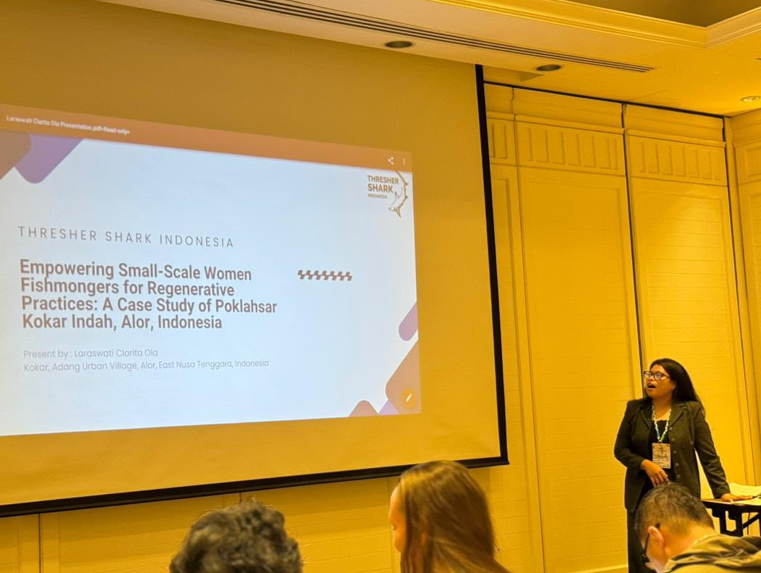
“I never imagined that one day I would stand before people from around the world to share the stories of women fishmongers from Alor.”
A few minutes before my presentation began, I took a deep breath as I watched the room gradually fill with participants. Before me were researchers, academics, practitioners, civil society organizations, government representatives, and small-scall fishing communities from across the globe. To be honest, I was nervous. It was my first time speaking at an international conference.
Most of my experience has been facilitating discussions with women’s groups in the coastal villages of Alor, rather than addressing an international audience. Standing on the stage of the World Small-Scale Fisheries Congress felt as though I was bringing the voices of these women into that room.
Many questions raced through my mind. Would the story of a small island in eastern Indonesia resonate with people from around the world? Would the experiences of women fish processors and traders in Alor be meaningful enough to share at a global forum?
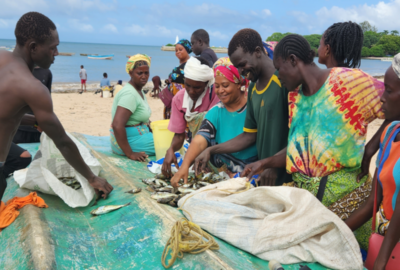
But as I began to speak, my nervousness gradually gave way to a deep sense of pride. I was not there to present cutting edge technology or large-scale scientific research. Instead, I came to share the stories of women who work tirelessly behind the scenes of small-scale fisheries, women who help maintain the quality of the catch, transform fish into value added products, and play a vital role in supporting their families’ livelihoods.
At that moment, I realized that although we came from very different places, we were united by the same purpose: building a future where small-scale fisheries are more equitable, resilient, and sustainable.
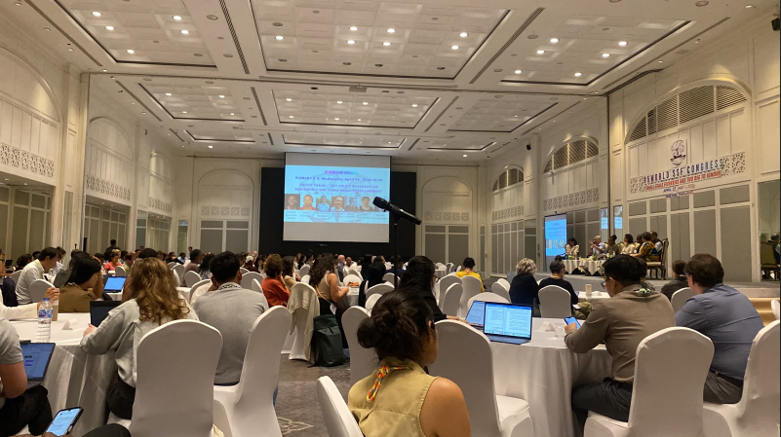
Learning from small-scale fisheries communities around the world
In addition to presenting our work, I attended a range of sessions that broadened my perspective on the future of small-scale fisheries. One of the most inspiring was the plenary session titled “Regenerative Wisdom.” The discussion encouraged us to recognize that solutions for the future of fisheries do not come solely from research, technology, or policy. They also emerge from the knowledge of the people who live alongside the ocean every day. As I listened, my thoughts immediately turned to the women we work with in Alor. Through years of experience, they have developed a deep understanding of how to maintain the quality of fish. They know when fish must be processed immediately, how to preserve product quality, and how to make the most of every catch to minimize waste.
That session reminded me that innovation never begins from scratch. Rather, meaningful innovation is built upon the knowledge that communities already possess. Our role is not to replace their experience, but to strengthen it by introducing new approaches, appropriate technologies, and opportunities that respond to their needs and build upon their existing knowledge.
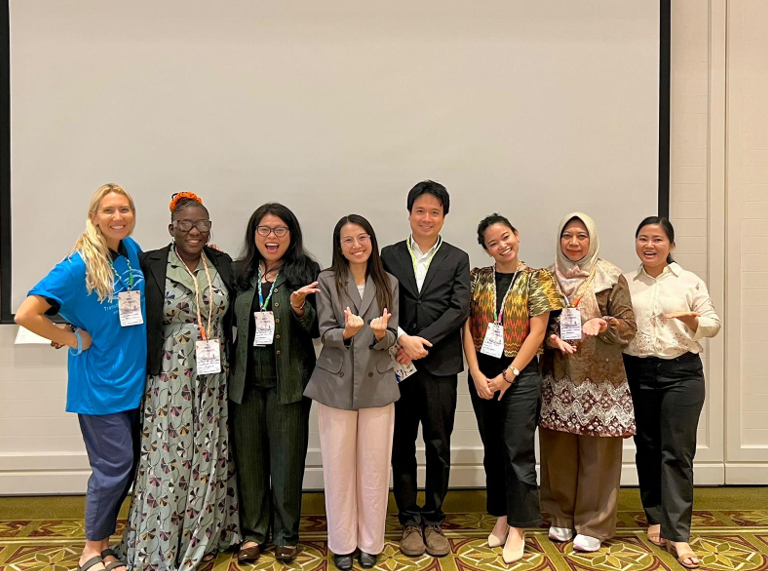
When women become part of the solution
This perspective was further deepened during the session “Women and Gender in Small-Scale Fisheries: Lesson from Around the World.”
Speakers from different countries shared how women play indispensable roles throughout the small-scale fisheries value chain. They process and add values to fish catches, ensure product quality, manage family businesses, and drive their local economies. Yet despite these significant contributions, their work often remains overlooked in public policies and development programs.
The longer I listened, the more I realized that the stories of the women in Alor are not unique. The challenges they face in limited access to training, appropriate technologies, market, and opportunities to participate in decision-making are shared by women fishmongers in many parts of the world.
This realization strengthened my conviction that women’s empowerment is about far more than increasing income. It means creating opportunities for women to learn, lead, innovate, and actively participate in decisions that shape the sustainable management of coastal and marine resources. When women are recognized as partners in conservation and development, their knowledge, leadership and lived experiences become powerful drivers of resilient coastal communities
More than just a conference
Some of the most valuable lessons I learned took place outside the conference sessions. After lunch, in conversations after presentations, and during informal discussions with fellow participants, I met people from different countries who shared the same passion for supporting small-scale fisheries and coastal communities.
We exchanged stories about our successes, our challenges, and even our failures in working alongside coastal communities. Those conversations reminded me that there is no single solution that works everywhere. Every community has its own culture, values, and knowledge systems. Lasting and meaningful change can only happen when communities are active participants in the process, not merely beneficiaries of development initiatives.
That realization reinforced one of the most important lessons I brought home from the congress: sustainable solutions are not created for communities, but with them. When local people are trusted as partners and their knowledge is valued, conservation and community development become stronger, more inclusive and more enduring
Bringing new hope back to Alor
When I left Hua Hin and returned to Alor, I brought home much more than conference notes, photographs, and new professional connections. I returned with a stronger conviction that marine conservation cannot be separated from community empowerment, particularly the empowerment of coastal women. My experience at the World Small-Scale Fisheries Congress reinforced my commitment to continue working alongside women in Alor to strengthen post-harvest fish handling, develop value-added fish products, expand access to markets and decision-making opportunities, and create spaces for shared learning that recognize and build upon local knowledge
Related Stories

Let's Take Action for the Ocean Together
With your support, we can further our work to ensure a vital and vibrant ocean for all.