On Wednesday, March 8, the Aquarium will be closed for an internal event. Normal operating hours will resume on Thursday, March 9.
Meet Carolina and Retread, Loggerhead Legends of the Giant Ocean Tank
Two rescued sea turtles help tell the story of conservation, care, and recovery in New England.
By New England Aquarium on Friday, January 16, 2026

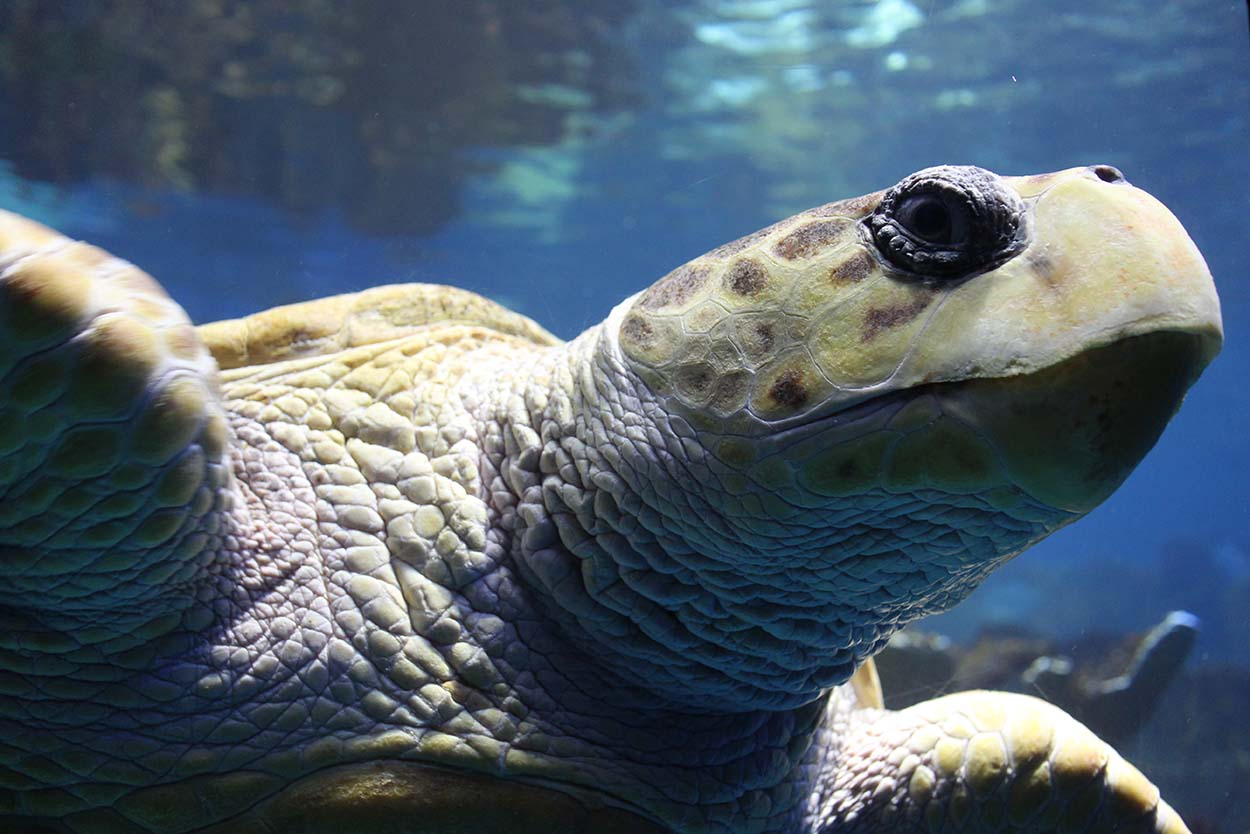
Carolina and Retread are two of the New England Aquarium’s most visible ambassadors for ocean conservation and rescue work along the New England coast—both are sea turtles.
These female loggerheads, a species considered vulnerable globally, were found cold-stunned. Similar to hypothermia, cold-stunning occurs when ocean temperatures drop in late fall, leaving turtles weak and stranded on Massachusetts beaches. For more than 35 years, the New England Aquarium’s Sea Turtle Rescue and Rehabilitation program and partner Mass Audubon Wellfleet Bay Wildlife Sanctuary have responded to these strandings, rescuing hundreds of turtles each year.
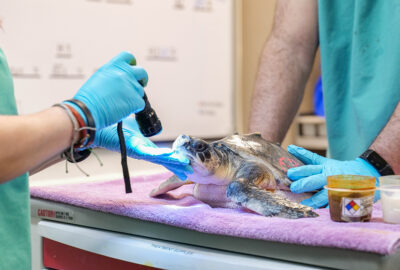
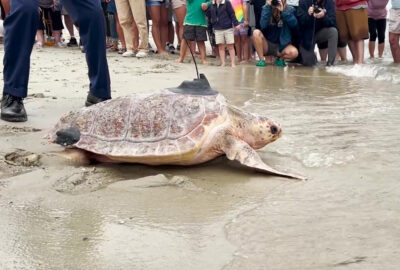
Once transported to the Aquarium’s Sea Turtle Hospital, cold-stunned turtles receive specialized veterinary care to stabilize their condition before continuing recovery at authorized rehabilitation facilities. The most critically ill patients remain at the Sea Turtle Hospital until they’re strong enough to return to the ocean, a journey nearly 85% of the turtles treated through the program ultimately make.
Carolina and Retread were among the small number of turtles for whom long-term care offered the best chance to thrive. Today, they play an important role in helping Aquarium visitors learn about sea turtles—and the rescue, rehabilitation, and research efforts that support them.
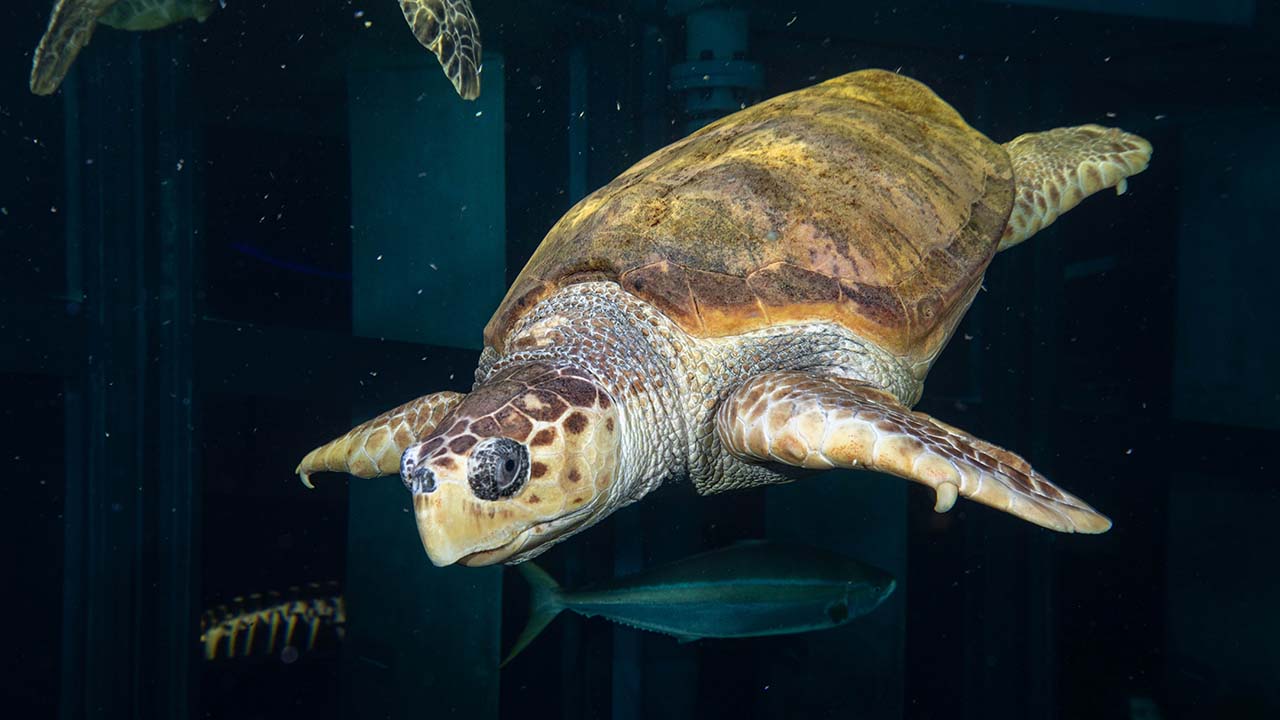
Retread’s story: made new, recalled to service
Retread was found in critical condition on a Brewster, Massachusetts beach on Thanksgiving Day in 1987. The 30-pound turtle had frostbite on her face and shell, and her condition was so severe that veterinarians initially couldn’t detect her heartbeat—it had slowed to about one beat per minute.
As she slowly warmed at the Sea Turtle Hospital, she began to move. After many months of continued care, she pulled through, demonstrating the resilience of her species.
Although she recovered well overall, the frostbite caused extensive damage around Retread’s eyes. With about 90% of her vision lost, life at sea would have been unsafe. While the goal of the Sea Turtle Rescue program is always to return animals to the Atlantic, long-term care offered the best path forward, and Retread became part of the four-story Giant Ocean Tank exhibit.
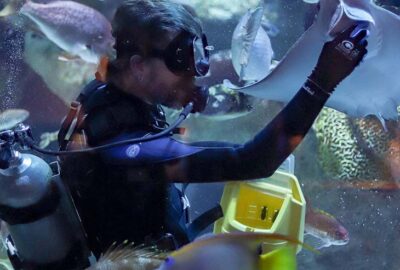
On the reef, Aquarium divers feed Retread using audio cues from a homemade rattle to guide her to her feeding station without relying on sight. She has also learned that air bubbles are a reliable sign of food and will follow divers accordingly. They use stick feeding to place food directly into her mouth.
Today, Retread weighs about 200 pounds, and staff estimate she is between 43 and 48 years old.
Her name means both “made new” and “recalled into service”—a nod to her remarkable comeback and her service as an ambassador for her species.
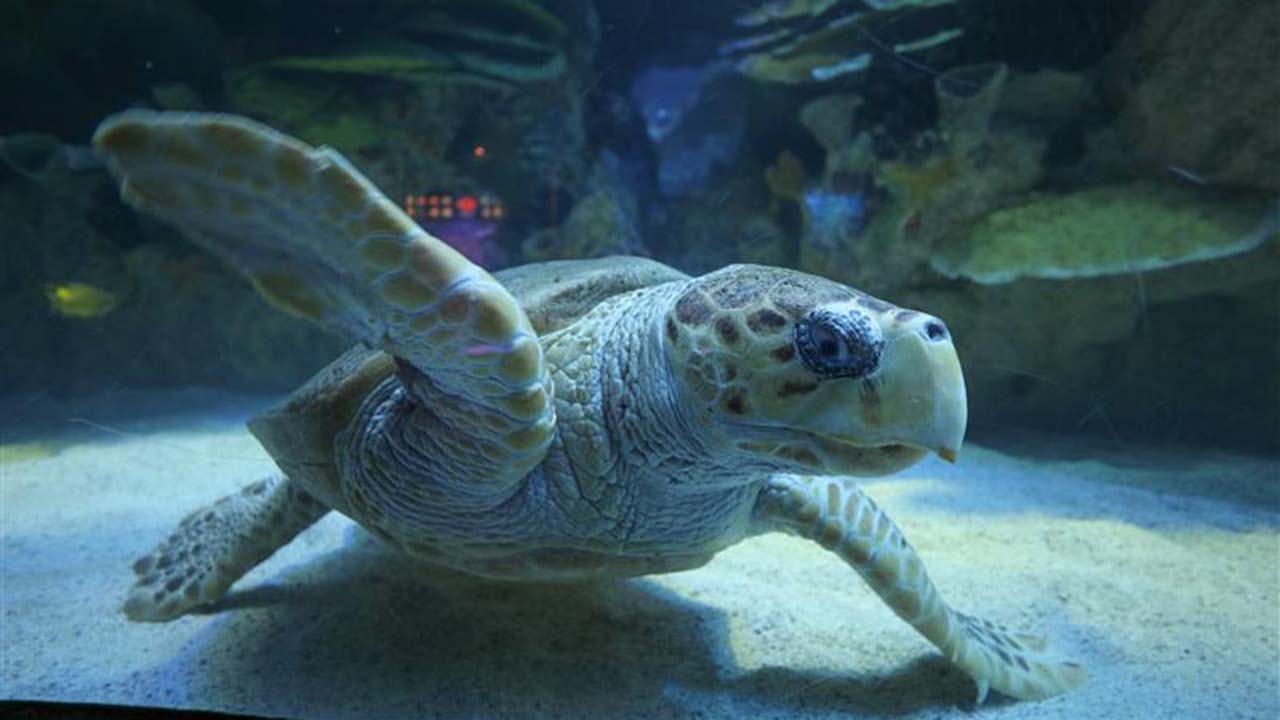
Carolina’s story: from cold-stunned to thriving
Carolina was rescued during a large sea turtle stranding event in 1999, when 127 turtles were recovered from beaches off Wellfleet on Cape Cod. She was named for one of loggerheads’ primary nesting regions: the Carolinas, where many of these turtles return year after year to lay eggs. At the time of her rescue, Carolina weighed about 65 pounds.
Although her physical health improved dramatically during rehabilitation, staff noticed that Carolina struggled to locate food independently, an essential survival skill in the wild. Long-term care offered a safer alternative for her, and Carolina joined Retread in the Giant Ocean Tank exhibit, where she could thrive with daily support.
There, divers use stick feeding to offer food directly to Carolina. If food falls and she’s unable to locate it, divers retrieve it and offer it again, ensuring she receives the nutrition she needs.
With years of expert care, Carolina has grown into a healthy adult weighing about 150 pounds. Aquarium staff estimate she hatched between 1985 and 1990, placing her in her mid-to-late 30s or early 40s.
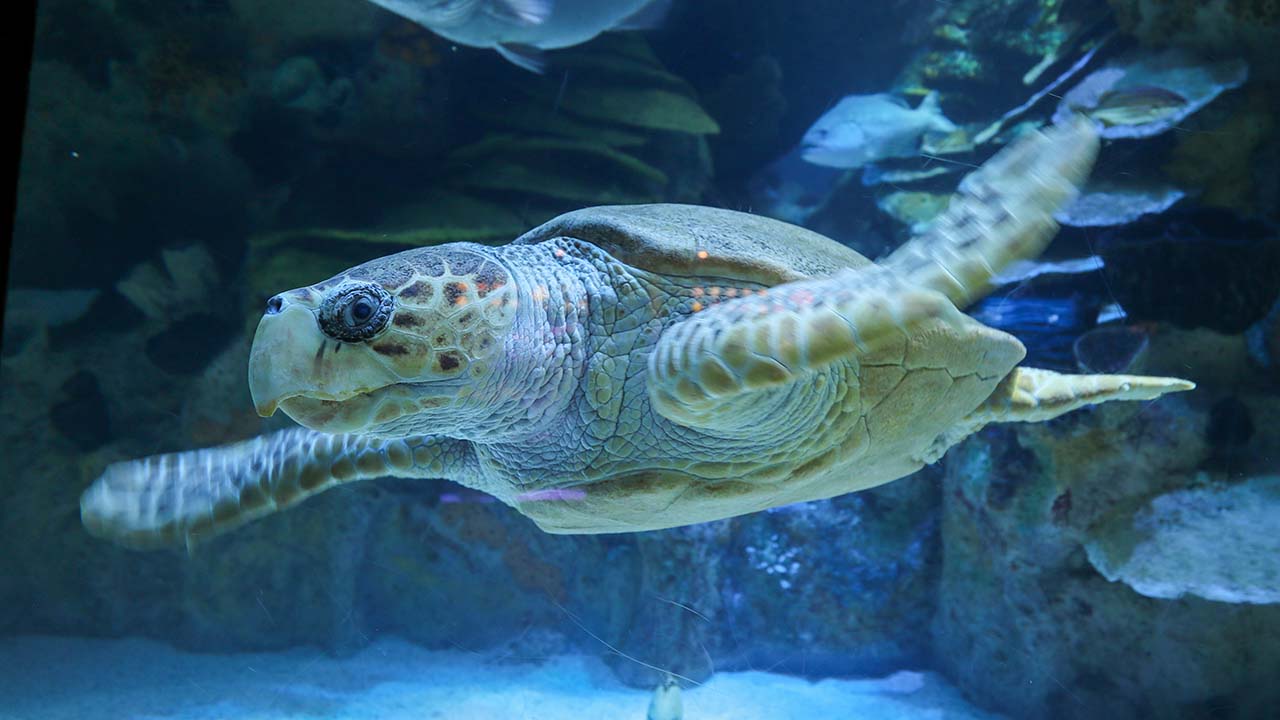
Life as sea turtle ambassadors
Today, the loggerheads enjoy a routine designed around their individual needs. Their daily 10 a.m. breakfast includes squid “tacos”—squid mantles stuffed with fish such as capelin, with vitamins added several days a week. Feeding time can be lively, with both turtles occasionally bumping into divers and each other. Retread is often the more eager of the two.
When they’re not eating, the two loggerheads often rest in a quieter, darker section of the tank, napping for hours at a time before resurfacing for air. Visitors hoping to spot them can watch the upper levels of the Giant Ocean Tank exhibit, where turtles glide up for a breath before looping back down when they’re active. They can be hard to tell apart, but when they’re near each other, Carolina’s smaller size and Retread’s more patterned carapace offer helpful clues.
Both turtles also receive routine veterinary checkups, including physical exams of their mouths, necks, flippers, and nails, along with ultrasounds and blood tests to monitor and support their long-term health.
Carolina and Retread play an important role beyond their daily routines. They help Aquarium visitors connect with sea turtles as individuals—and as a species facing real challenges in the wild. Seeing a loggerhead up close often sparks curiosity, empathy, and questions: Where do they travel? What threats do they face? How can people help?
These moments of connection support the Aquarium’s broader mission of ocean conservation, research, and education. Carolina and Retread also help tell the story of the Sea Turtle Rescue and Rehabilitation program, highlighting the care and expertise that go into every rescue and the many turtles that successfully return to the ocean each year.
Visit Carolina and Retread during your next trip to the Aquarium to see these living examples of the rescue, rehabilitation, and long-term care in action.

Related Stories

Make a Difference for Sea Turtles
Your support makes a difference for threatened and endangered marine life everywhere by helping provide the Aquarium with the resources to conduct research, advocate, and rehabilitate.