New Exhibit Spotlight: New England Harbors
Get a look inside the 1,000-gallon exhibit spotlighting local species and eco-friendly designs reshaping our harbors.
By New England Aquarium on Thursday, July 09, 2026

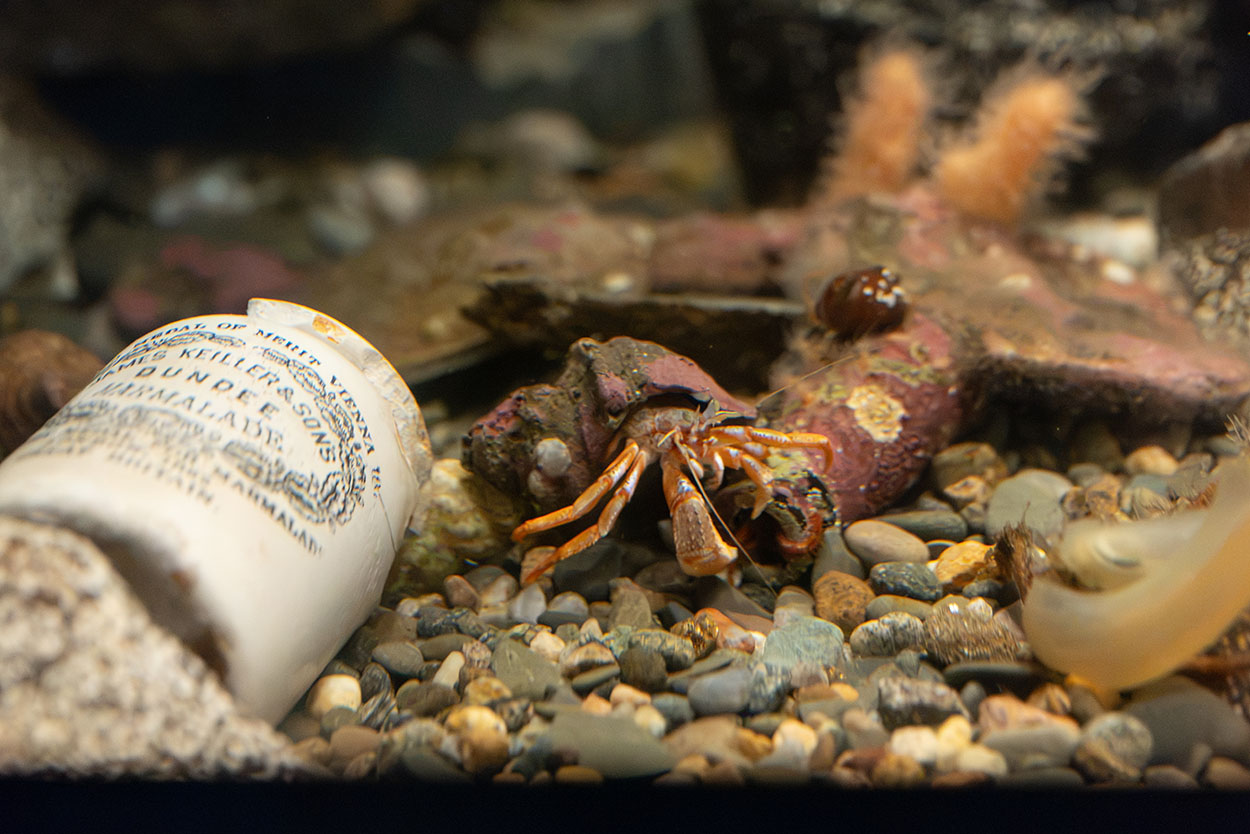
Harbors have been busy gateways between New Englanders and the sea for centuries. The cold, nutrient-rich North Atlantic feeds a blue economy built on fishing, shipping, and tourism, and it’s also home to remarkable marine life. Where these two worlds meet, there’s a lot more going on than you might notice from the dock.
The New England Aquarium’s New England Harbors exhibit explores these spaces humans and marine life share, and highlights how eco-friendly science and design can help cities like Boston stay resilient while letting marine life thrive. For example, Boston Harbor is home to North America’s first Living Seawalls, textured tiles added to harbor structures that better mimic natural shapes and spaces animals recognize as home.
New England Harbors also showcases the animals who rely on these dynamic habitats. Here are just some of the noteworthy neighbors you’ll see in this 1,000-gallon exhibit.
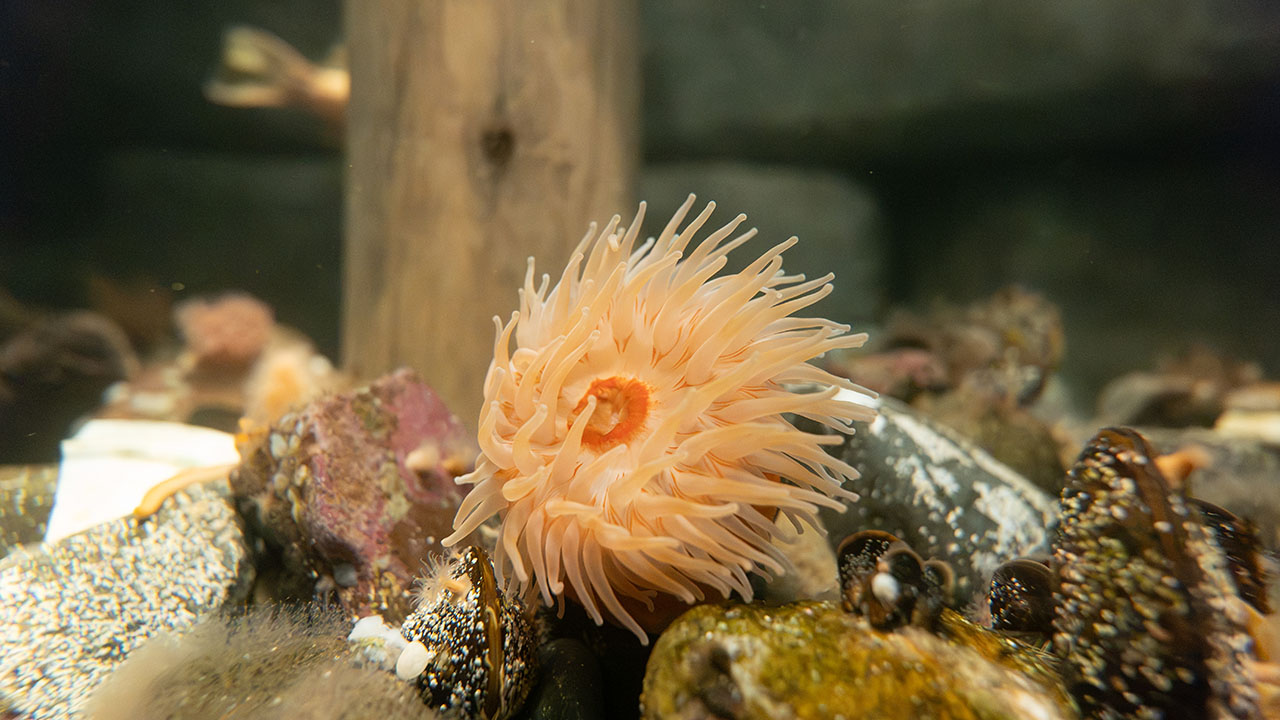
Northern red anemones (Urticina felina)
Named for the flowers they resemble, these animals have large tentacles branching out from a central stalk to catch food drifting by in the current. Their tentacles are covered in barbed stinging cells called nematocysts that capture a variety of food and bring it to their oral cavity. At the Aquarium, we feed them a mix of shrimp, clam, capelin, silversides, and squid.
The pedal disc at the base of their stalk secretes a type of glue that keeps them anchored to a rock or other surface, but they can slowly move the pedal disc to position themselves in more ideal water flow.
At the New England Harbors exhibit, you’ll learn about these and other fascinating marine animals in the harbor like the Acadian redfish, grubby sculpins (masters of camouflage you’ll have to look very closely to find), and Atlantic silversides, tiny, schooling minnows the Aquarium raised from eggs as part of our aquaculture program.
Deep-sea scallops (Placopecten magellanicus)
Named after Portuguese explorer Ferdinand Magellan, these scallops can go on explorations of their own, swimming short distances using jet propulsion by snapping their shells open and shut. They also have about 200 iridescent eyes lining the edge of their mantle—yes, eyes! These complex visual organs work similarly to optic systems found in advanced telescopes.
You can roughly age a scallop by counting the rings (annuli) on its shell, much like a tree, with each ring representing one year.
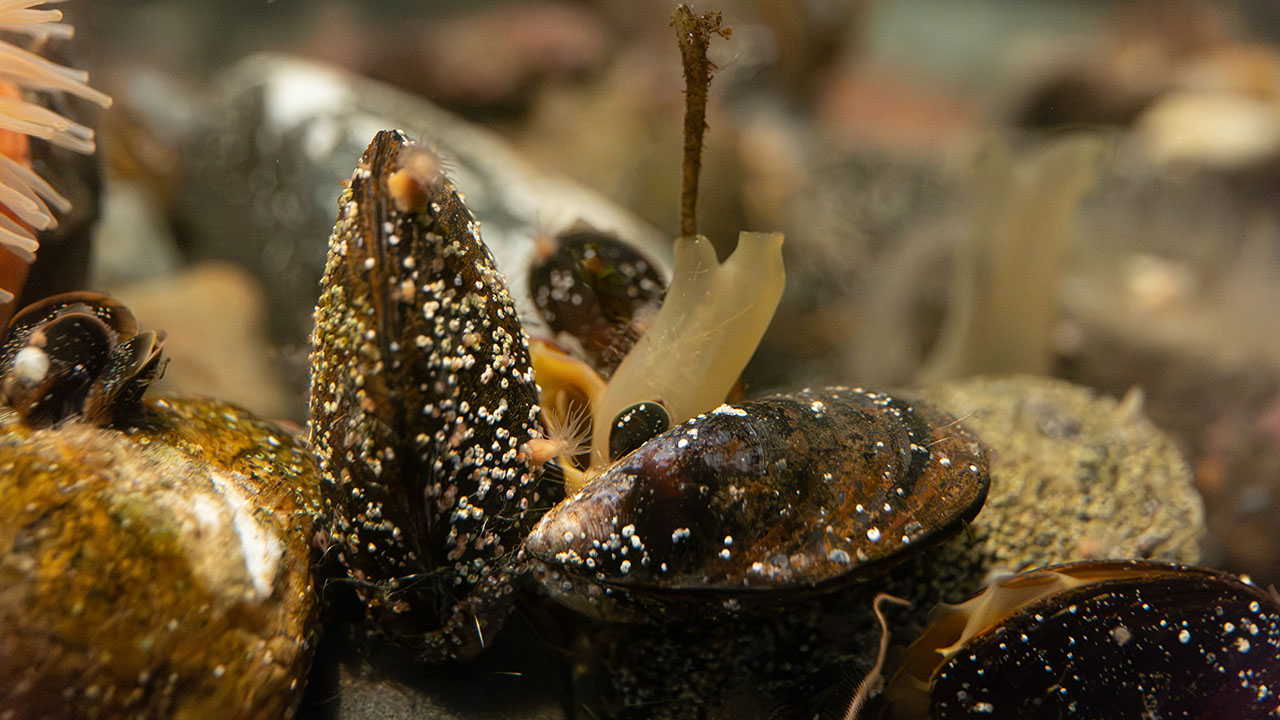
Sea vases (Ciona intestinalis)
Sea vases are tunicates, marine filter-feeders with water-filled, sack-like bodies. They feed by drawing water in through a siphon at the top of their body and trapping food particles in a mucus net that lines their pharynx before expelling the water. They’re also called “sea squirts” because when taken out of water, they, well, squirt seawater.
So resilient that they’re considered invasive in much of the world, dense clusters of sea vases can easily cover boats, anchors, docks, and seawalls. Despite their unassuming form, they’re more closely related to humans than most other invertebrates are. As larvae, they have a notochord—a flexible, spine-like support structure you can see in their translucent body. But once they mature, sea vases reabsorb their notochord and rearrange their organs into their adult form.
Rock gunnels (Pholis gunnellus)
With their elongated bodies and slithering movements, it’s easy to mistake these fish for eels. You can tell the difference by looking for their tiny extra fins and smaller heads. These resourceful Gulf of Maine residents can breathe air—a useful trick that allows them to seek shelter beneath rocks and seaweed in tide pools at low tide and survive temporarily out of water.
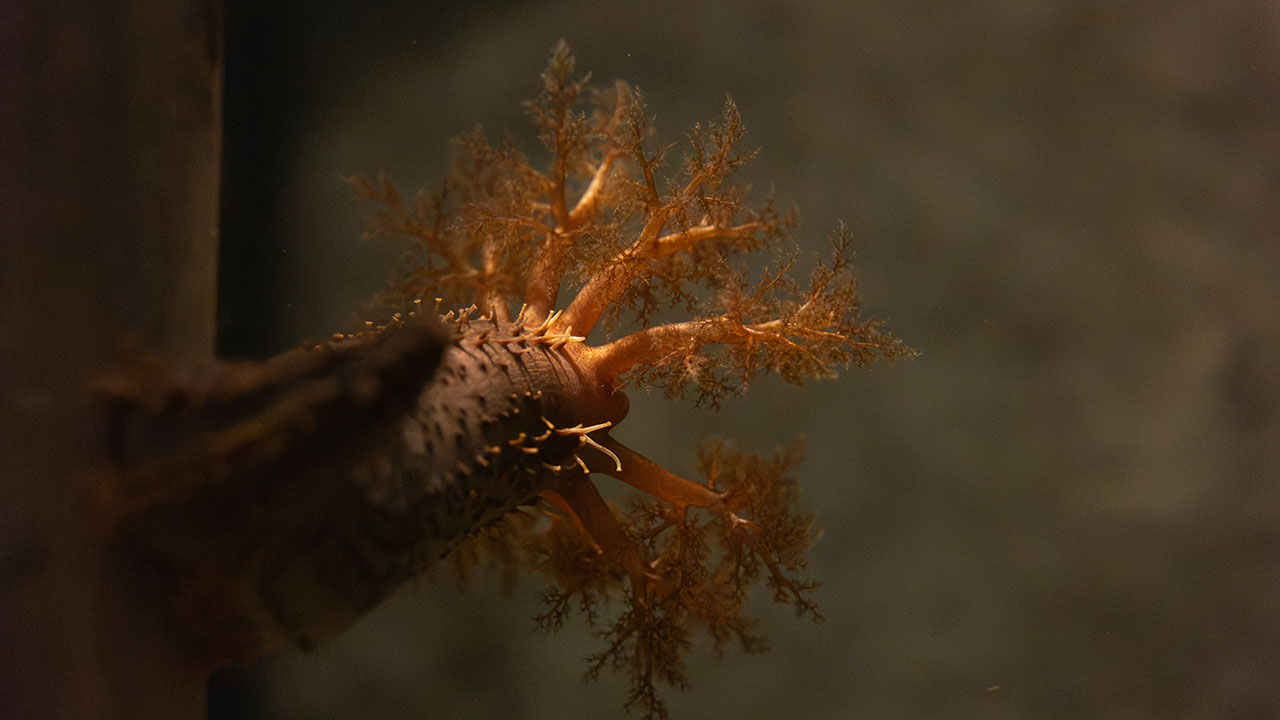
Orange-footed sea cucumbers (Cucumaria frondosa)
These aren’t the cucumbers in your garden, though they are named after them. Dynamic orange-footed sea cucumbers are shape-shifters of the ocean, using their collagen-rich body walls to squeeze through tight crevices and re-expand on the other side. Their rows of small tube feet help them crawl and stay in place during strong currents like those in the Gulf of Maine, while tentacles catch plankton and deliver it to their mouths.
Dead man’s fingers (Alcyonium digitatum)
Morbidly named for their resemblance to a human hand, these soft corals look fuzzy and feathery when their polyps extend in the flow of the current or to feed, and like little heads of broccoli when retracted. You’re most likely to see them fully extended in the depths of winter—December and January—when they’re breeding. Through autumn, they’re more often in their broccoli-like state.
Blood sea stars (Henricia sanguinolenta)
These sea stars are often red, but they also appear in shades of orange, pink, and purple. Contrary to their name, they actually don’t have blood at all. Instead, they circulate seawater through an open vascular system, with water entering through a tiny dot on their colored side, called the madreporite. These remarkable invertebrates are capable of regenerating lost arms in weeks or months and living thousands of feet deep in the North Atlantic Ocean.
Visit the Aquarium to explore the New England Harbors exhibit! You’ll find it just left of the giant Pacific octopus on our third floor.

Related Stories


Every Visit Makes a Difference
Your ticket purchase to the Aquarium directly supports our work to create a vital and vibrant ocean for future generations.