Please note: The Atlantic harbor seals will temporarily be off exhibit while we improve their habitat for their comfort and well-being.
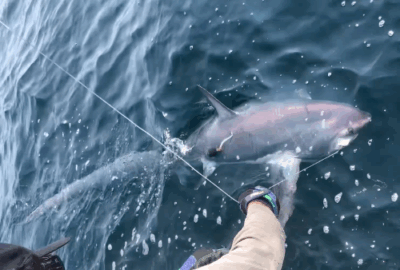
Assessing angler attitudes, fishing behavior, boatside handling, and release practices in the northeastern United States recreational fishery for Shortfin Mako and other pelagic sharks
By Jeff Kneebone, Joseph Holbeche, William M Goldsmith, Diego Bernal
Originally published in the North American Journal of Fisheries Management in April 2025

Abstract
Objective
Recreational fishing for pelagic sharks is a popular activity off the northeastern United States. Recently, new regulations have been implemented in the fishery in response to the overfished status of the North Atlantic Shortfin Mako Isurus oxyrinchus stock, including hook restrictions, larger and sex-specific minimum retention sizes, and ultimately a full retention ban. Under these regulations the number of retained Shortfin Makos has decreased, but thousands continue to be targeted by catch-and-release anglers or incidentally captured, and there is a need to better understand how ongoing fishing practices may affect fishing mortality and stock recovery.
Methods
We surveyed private and for-hire recreational anglers from North Carolina to Maine who hold a shark endorsement with their federal highly migratory species fishing permit to evaluate the gear, tactics, and practices employed in the fishery.
ResultsAround half of respondents who targeted pelagic sharks within the past 5 years attested that Shortfin Mako was their primary target species, although anglers from more southerly latitudes targeted the species less frequently since the implementation of new, more restrictive harvest regulations in 2018. The majority (∼80%) of respondents claimed to use nonstainless, nonoffset circle hooks when targeting sharks with natural baits and generally believed that circle hooks are effective at reducing incidence of internal hooking. Terminal tackle and handling practices varied across the fishery; however, most respondents testified to handling sharks boatside by manipulating the leader and to releasing sharks by cutting the leader as close to the hook as possible.
Conclusions
Collectively, recreational anglers employ a relatively consistent set of practices when targeting pelagic sharks off the northeastern United States and generally comply with federal and state regulations governing the fishery. Nonetheless, continued outreach is needed to maximize regulatory compliance and to promote the use of the most responsible fishing practices in the fishery.
Full Text
Affiliated Authors

Related Stories


Research That Drives Action
Through pioneering conservation research and strategic partnerships, our team of 40 scientists at the Anderson Cabot Center for Ocean Life works to combat the unprecedented impacts on the ocean from climate change and other human activities.
