Research Guides Mitigation Efforts to Reduce Harm to Right Whales
A recent publication in Nature Climate Change from Anderson Cabot Center for Ocean Life research scientist Dr. Laura Ganley shows how careful planning can reduce impacts of wind energy development on North Atlantic right whales—with minor cost to developers.
By New England Aquarium on Thursday, August 13, 2026

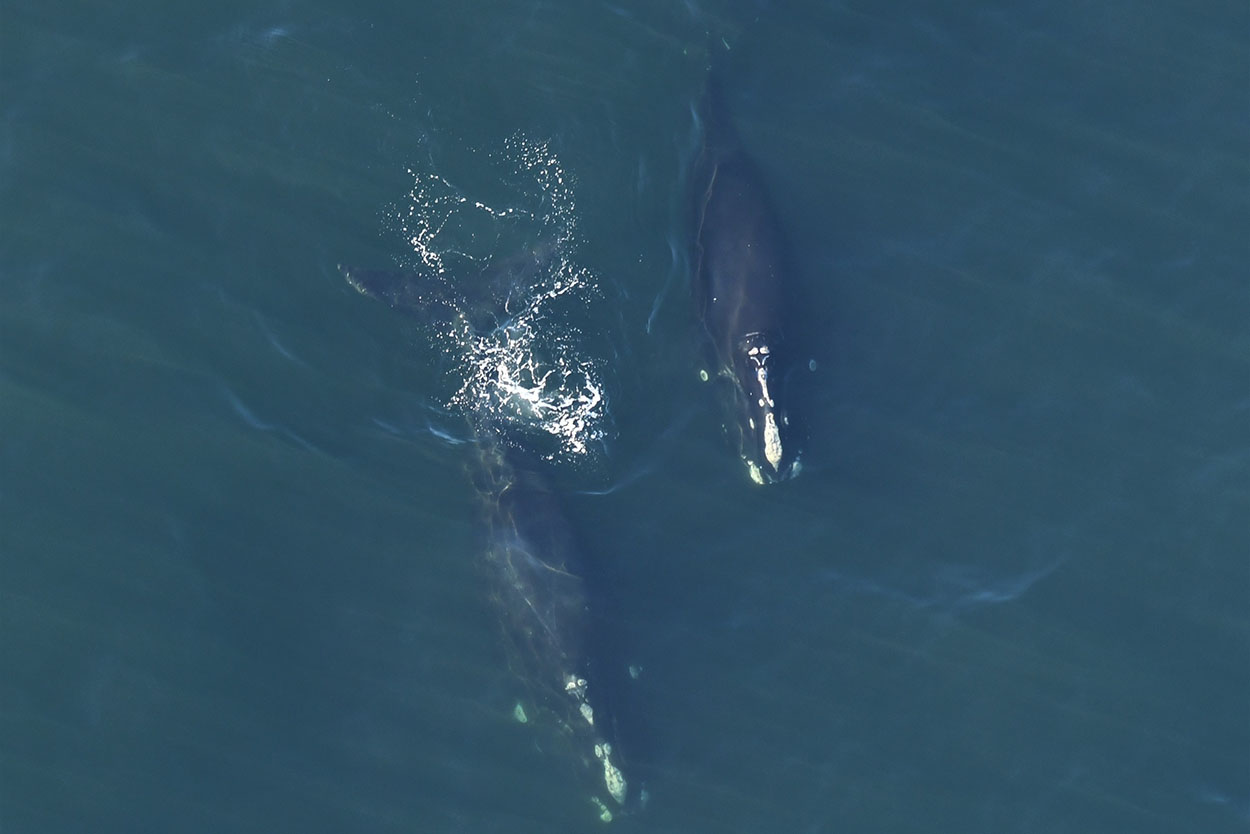
When Anderson Cabot Center for Ocean Life research scientist Laura Ganley began analyzing how North Atlantic right whales were using the waters around New England’s wind energy development areas, she knew a couple of things from the start. First: Wind energy presents a major opportunity for clean energy transition and reducing the impacts of climate change. Second: Piledriving of turbines creates significant underwater noise, which can have a detrimental effect on marine life.
“I wasn’t satisfied with the idea that we have to choose between developing wind energy to fight climate change and protecting endangered species,” she said. So, Laura and her collaborators at the Anderson Cabot Center, Cornell University, LAUTEC US, and the National Oceanic and Atmospheric Administration worked to endeavored to determine how developers could move forward with construction while reducing the impact to whales, specifically the critically endangered North Atlantic right whale.
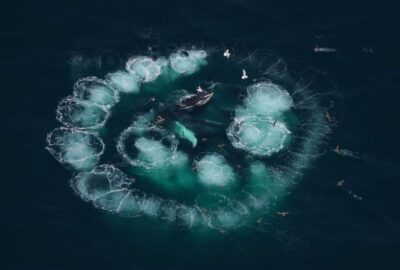
Their results, recently published in Nature Climate Change, show that mitigation strategies—such as bubble curtains around piledriving to dampen noise, or carefully planned schedules for construction when animals are not in the area—can greatly reduce the number of North Atlantic right whales that might be affected at minimal costs to developers.
“Ultimately, the main question was ‘Is there a way to reduce the number of right whales that are going to be impacted without making the project financially untenable?” Laura said.
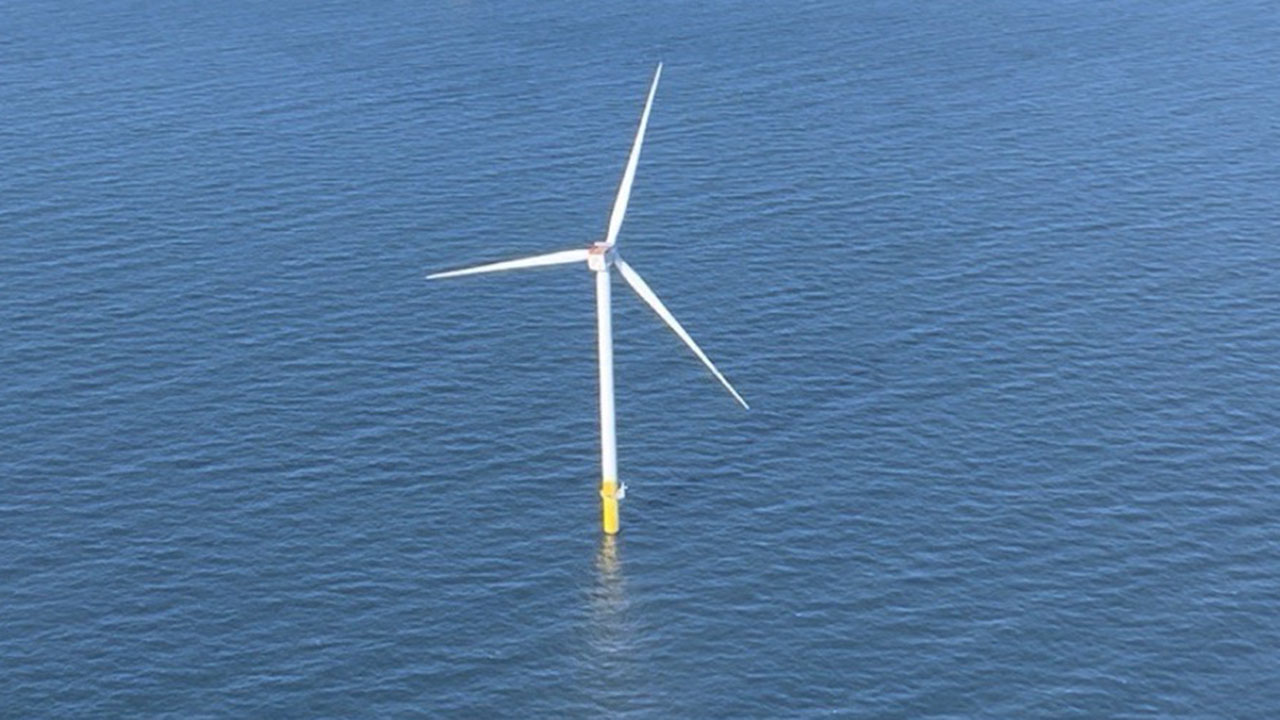
Analyzing aerial survey data
Laura’s research highlights a strength of the Anderson Cabot Center for Ocean Life: the tight-knit team’s diverse skill set that allows them to not only collect the data in the field but also carry the analysis through to completion.
“We were able to do this study because we had sightings of whales from regular aerial surveys data going back more than 10 years,” Laura said. The Anderson Cabot Center’s aerial survey team has flown regular surveys over southern New England waters—a prime location for wind energy development—around twice a month for over a decade.
Laura and her collaborators used data on right whale sightings collected from these aerial surveys to estimate the number of right whales in and around the Rhode Island and Massachusetts wind energy areas throughout the year. Over fifteen years ago, when wind energy development was originally slated for the area south of Martha’s Vineyard and Nantucket, scientists believed right whales did not use the habitat during the summer months. However, as climate change has shifted the distribution of right whales’ food sources, surveys showed the species had increased in abundance in New England waters in the summer months, when construction was scheduled to occur. “We were able to map predictions of whale occurrences in eight-day time periods,” Laura said. “So, you could approximate week by week how many right whales were going to be in the area and how that was going to overlap with construction.”
Reducing impacts to right whales
The team used the spatial analysis they developed to estimate the conservation value of mitigation measures at different times of year, looking at the distances that piledriving sound could travel to predict the number of right whales that could be impacted and estimating how different mitigation measures reduced the size of the impact zone. These analyses allowed the team to identify which measures resulted in the largest reduction in the number of whales predicted to be impacted by piledriving noise.
By better estimating the number of right whales in the area, developers can more carefully plan construction to avoid peak times, when the highest numbers of animals are present. Developers can also include mitigation measures that restrict the highest risk areas closer to the site of piledriving, decreasing the number of whales that could be negatively affected by construction.
Future applications
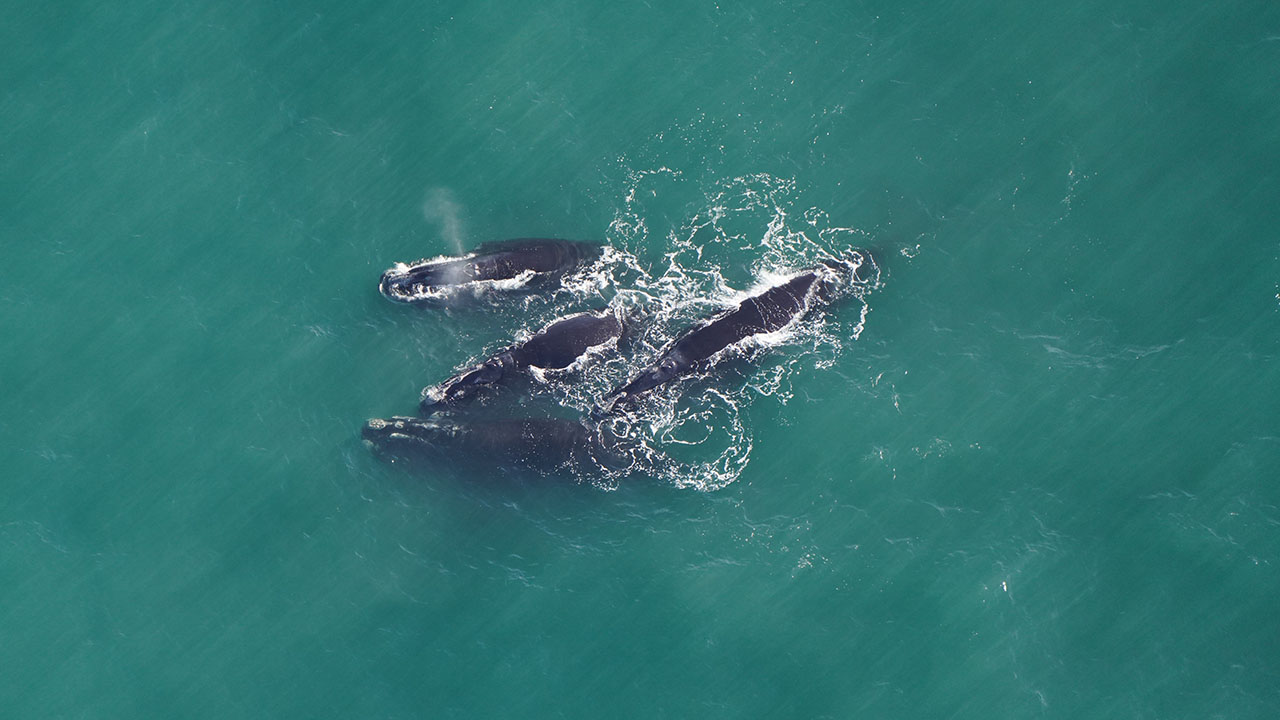
In addition to publishing their results, the team developed a prototype app that wind energy developers could use in planning projects to help improve conservation outcomes without increasing costs.
Laura noted that, while the political climate for wind energy development in the US remains uncertain, this framework of assessing costs of mitigation against conservation value can be applied for wind energy development in other countries or to other ocean industries, including in commercial fishing for reducing entanglements. There is also potential to apply the model to plan mitigations for other species, such as humpback whales or endangered fin whales that are prevalent in New England during the summer.
“I think that we’re better prepared to inform responsible wind energy development now and, in the future,” Laura said. It’s also an important opportunity to highlight these types of cost-benefit considerations, and how industry leaders and conservationists can work together to achieve better outcomes across the board.
“It’s complicated, it takes a lot of time and a lot of collaborators. But, collectively, we can do it,” Laura said. “It doesn’t have to be all or nothing.”

Related Stories

Research That Drives Action
The Anderson Cabot Center for Ocean Life is the Aquarium’s dedicated research arm that uses marine science to protect animals and help others use the ocean responsibly.