Please note: The Atlantic harbor seals will temporarily be off exhibit while we improve their habitat for their comfort and well-being.
Using Citizen Science to ID Southern Right Whales in Patagonia
Marine Conservation Action Fund Fellow Florencia Vilches, with colleagues at Instituto de Conservación de Ballenas, is working with local whale watching guides to help conserve southern right whales off the Argentinian coast.
By New England Aquarium on Monday, July 20, 2026

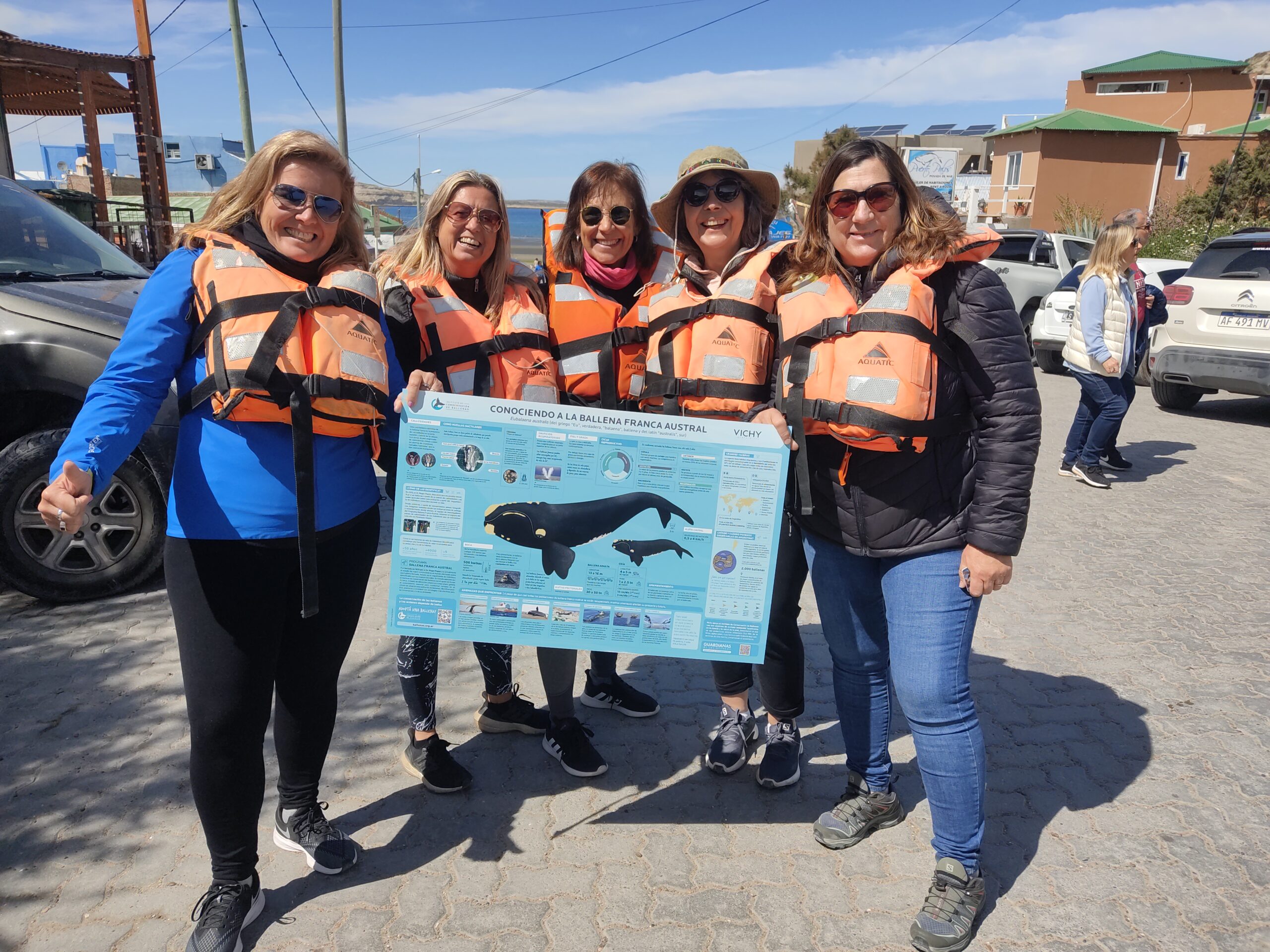
This post is one of a series on projects supported by the New England Aquarium’s Marine Conservation Action Fund (MCAF). Through MCAF, the Aquarium offers multi-faceted support to leaders from low- and middle-income countries who are spearheading community-based ocean conservation initiatives.
Since 1996, the Instituto de Conservación de Ballenas in Argentina has been dedicated to the protection of whales and their habitats through research and education. We have been studying southern right whales at Península Valdés in Patagonia, following the lives of individual whales using photo-ID, a method that works like a human fingerprint, as each whale has a unique pattern of callosities on its head.
At least once a year, aerial pictures of the whales are taken from a plane or a drone. These photos help us identify new or known whales, record their sex, age, body condition, and whether they have calves. This study is part of the Southern Right Whale Research Program, initiated in 1970 by Dr. Roger Payne and directed by Prof. Victoria Rowntree (Ocean Alliance) and Dr. Mariano Sironi (ICB).
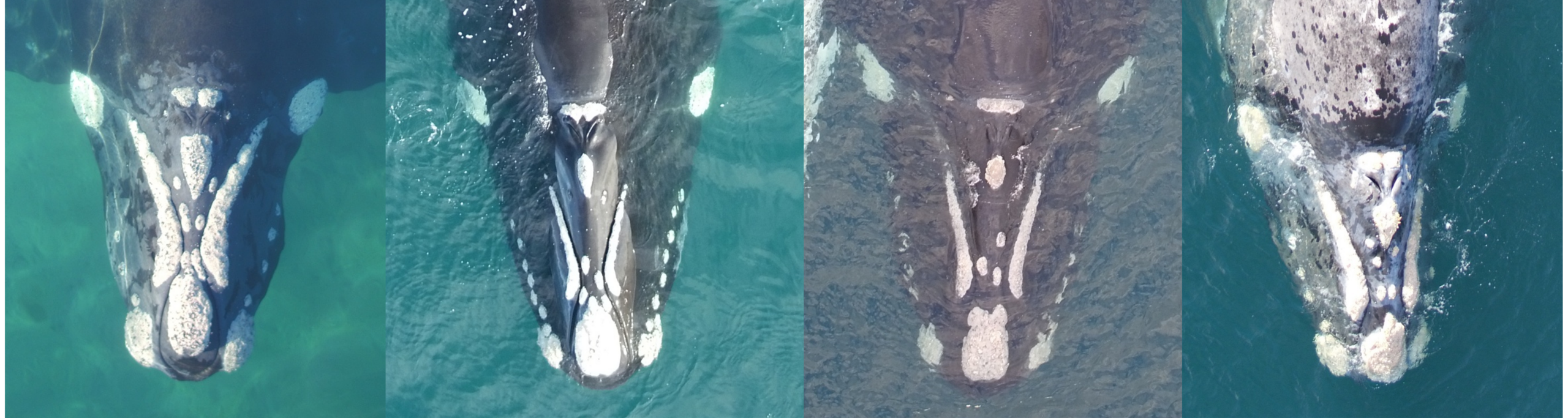
Currently, our long-term database includes information on more than 5,000 identified individuals. It serves as a vital resource for studying population abundance, reproduction success, survival, and other research topics. This 55-year-old database is the longest-running scientific whale research project worldwide based on photo-ID and provides a continuous source of data not only for scientific research but also for promoting conservation efforts and public outreach.
In 2016, we launched a citizen science project in collaboration with the Puerto Pirámides Whale-Watching Guides Association to incorporate whale photographs taken from tourist boats into our aerial survey catalog. Through this initiative, the local community plays an active role in the research and conservation of southern right whales, a species closely tied to the identity, culture, and tourism-based economy of Puerto Pirámides. Thanks to the support of the Marine Conservation Action Fund (MCAF), the project expanded in 2022, strengthening local capacity through the training of a full team of Argentine right whale photo-ID researchers led by MCAF Fellow Florencia Vilches. We received more than 460,000 photos from whale-watching guides, from which we identified 278 new individuals to add to our catalog, as well as 122 known individuals that were missed during our aerial surveys.
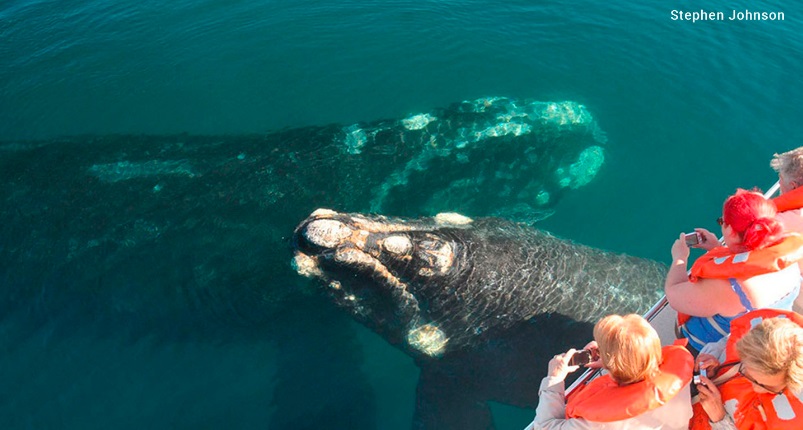
Calves are particularly challenging to identify from aerial photographs because their small heads and still-developing callosity patterns lack sufficient detail, especially in older analog images. For this reason, most whales are not identified in their first year of life, making boat-based photographs especially valuable. Among the photos contributed to the citizen science project was a 2007 photograph taken by guide Stephen Johnson, showing a small calf swimming alongside its mother. Through this project, we identified that calf as whale A2226. Although it was recorded in our 2008 and 2016 aerial surveys as a yearling and as an adult, respectively, Stephen’s photograph allowed us to determine its birth year and link it to female A0645, its mother. As a result, we now know that A2226 is now 19 years old and belongs to a family we have followed since the 1970s.
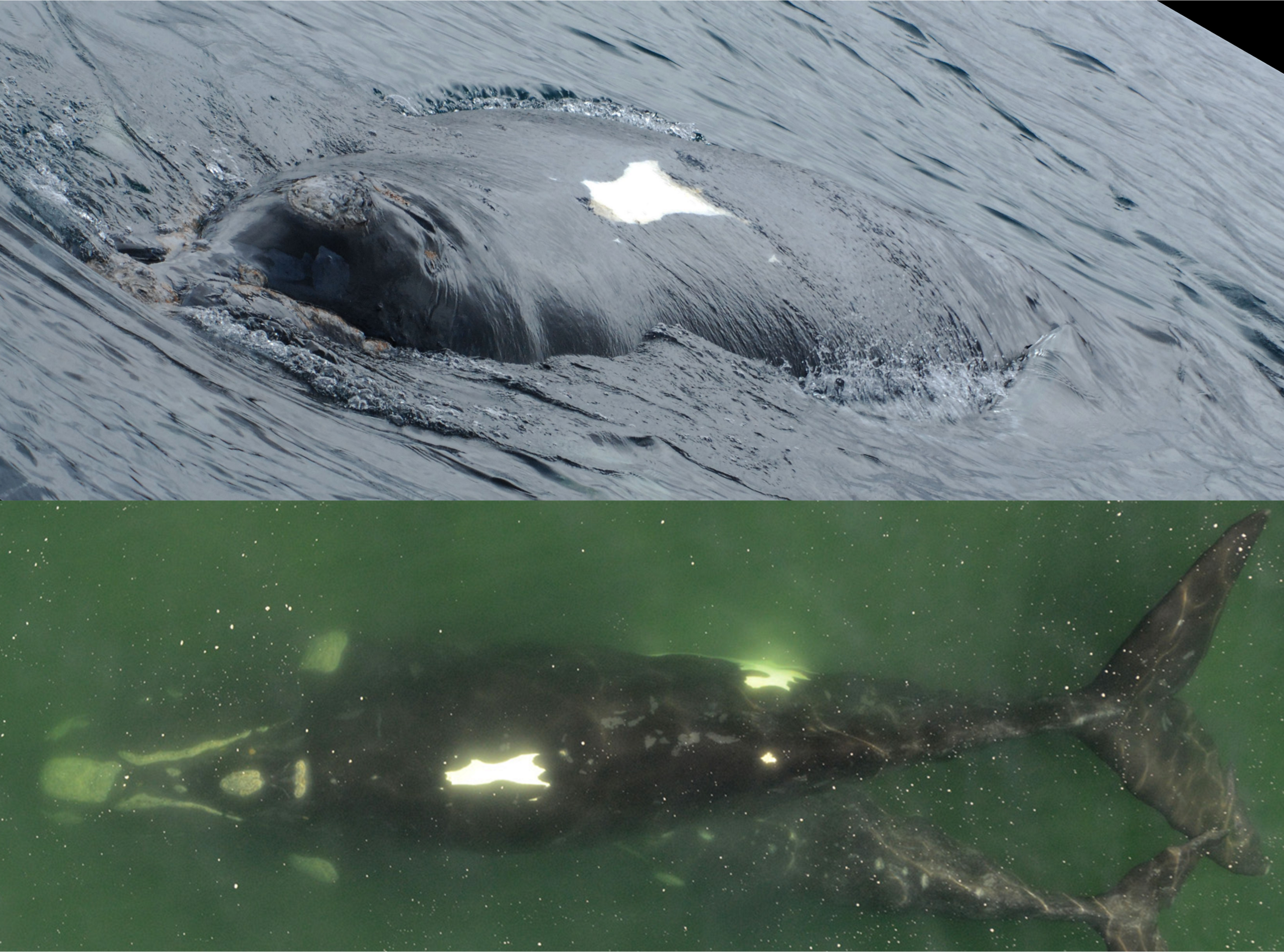
A similar case is that of “Espuma.” In 1994, he was photographed from the air as a calf. While his callosity pattern was not clearly visible, his unusual grey-morph coloration—mostly white with black splashes—made him distinguishable, allowing us to assign him an ID. The following year, close-up photographs taken by whale-watching captain Rafael Benegas captured finer pigmentation details. Those images made it possible to match Espuma with photographs taken 22 years after, when he was instrumented as part of the satellite tracking project Siguiendo Ballenas. Without the contribution from whale-watching photographers, this connection across decades would not have been possible. Espuma became an iconic whale within the local community and belongs to a family in which five generations have been documented in our catalog.
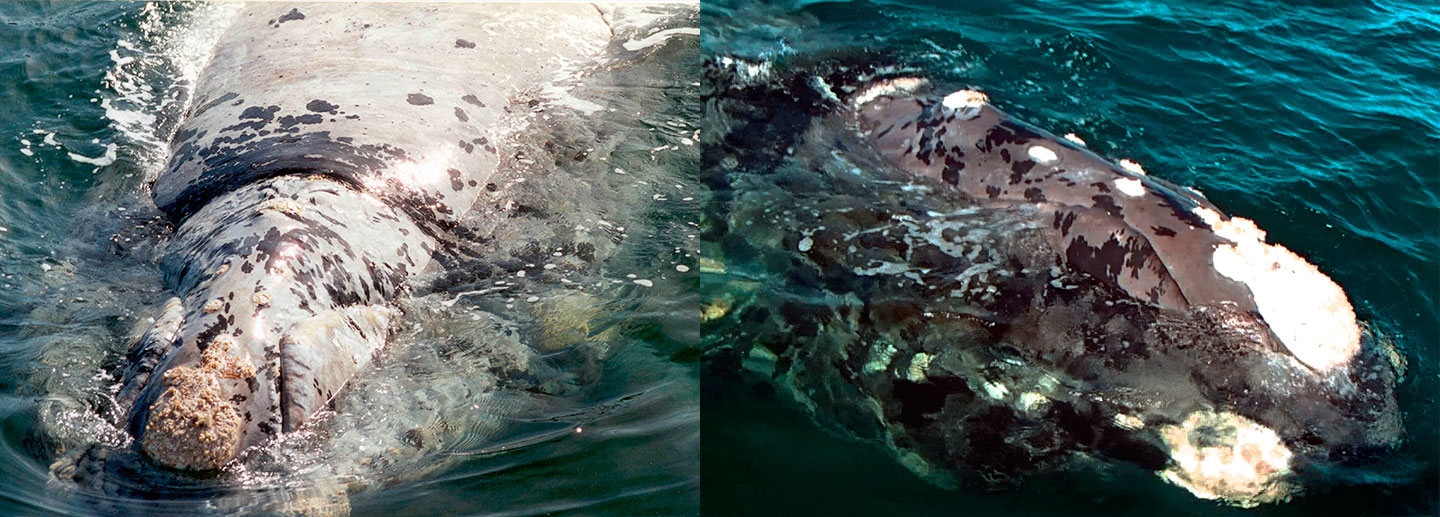
In 2026, we are excited to continue this project with MCAF’s support, which allows us to sustain and grow this citizen science initiative. During this next phase, we will continue our analysis to include drone photos, as photographers in the whale watching community now use drones, and the images are of higher quality.
The Instituto de Conservación de Ballenas (ICB) is an Argentine non-profit organization.
-
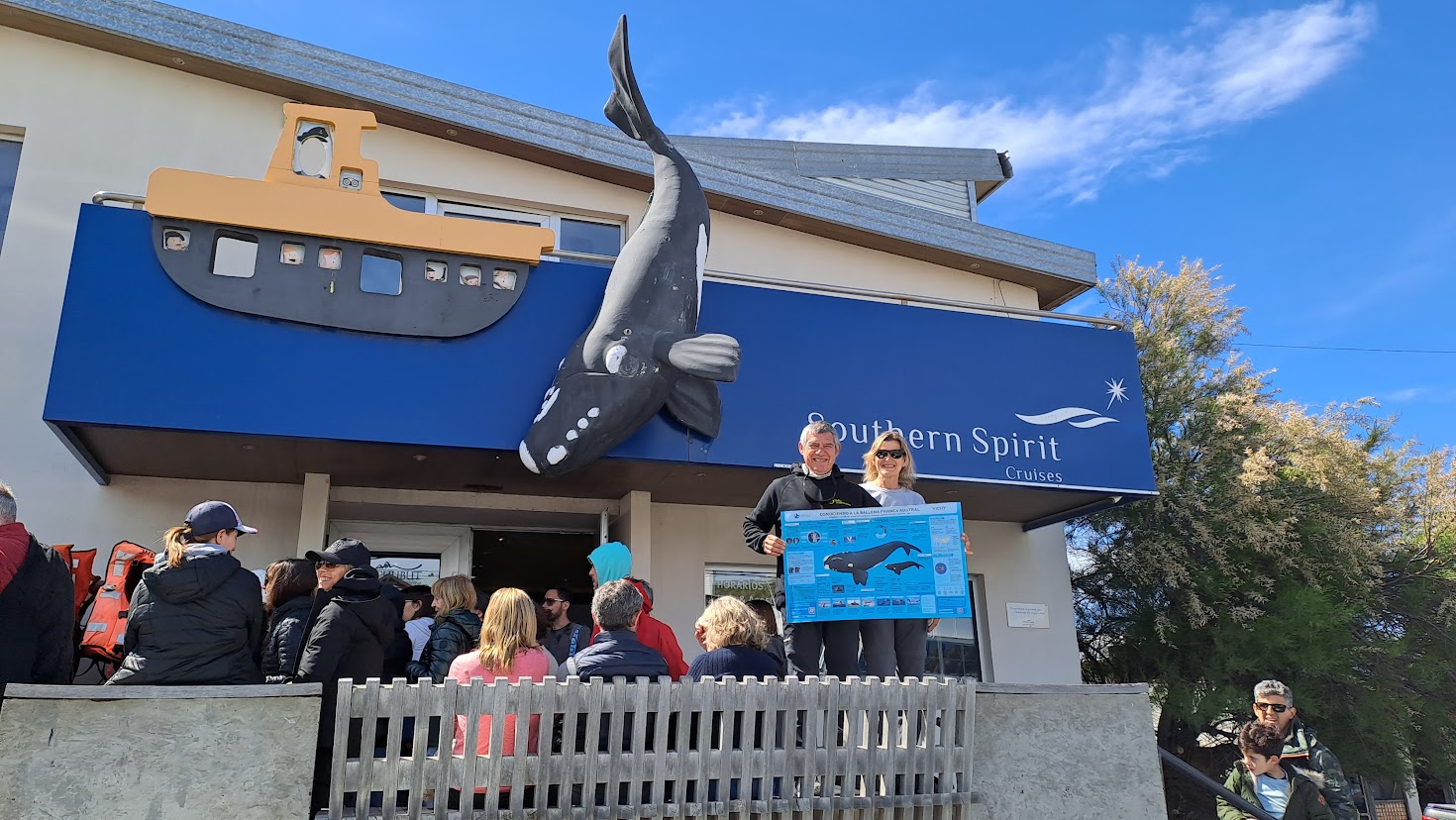
The scientific knowledge produced by ICB researchers and the local community is used to develop outreach materials that are displayed at the whale watching offices and boats Photo Credits: Instituto de Conservación de Ballenas -
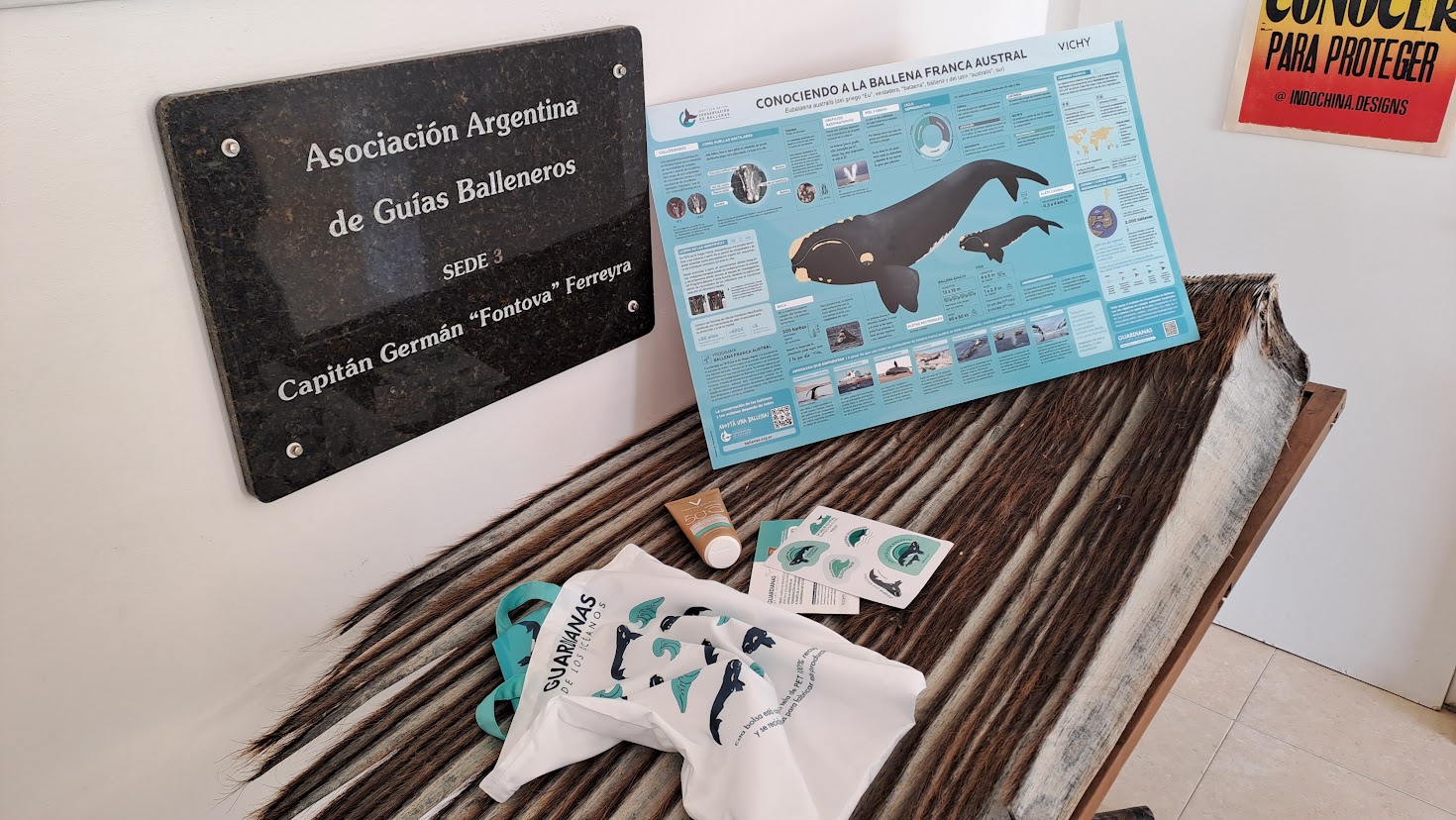
The scientific knowledge produced by ICB researchers and the local community is used to develop outreach materials that are displayed at the whale watching offices and boats Photo Credits: Instituto de Conservación de Ballenas
/
All ICB team extend their heartfelt thanks to MCAF for the continued support of this project, which not only enhances our Southern Right Whale Research Program but also strengthens our engagement with the local community. To learn more about the Instituto de Conservación de Ballenas (ICB) and its Southern Right Whale Adoption Program, which supports ongoing scientific research, conservation, and outreach efforts focused on southern right whales, please visit https://ballenas.org.ar/.

Related Stories

Supporting Locally-Led Ocean Action Worldwide
The New England Aquarium’s Marine Conservation Action Fund is a small grants and fellowship program that provides support for community-based projects spearheaded by local conservation leaders in low- and middle-income countries around the globe.