Please note: The Atlantic harbor seals will temporarily be off exhibit while we improve their habitat for their comfort and well-being.
Widespread ecosystem effects of an extreme fresh pulse event in a temperate marine ecosystem
By Lesley H. Thorne, Janet A. Nye, Jacqueline M. McSweeney, Joseph Warren, Roy Price, Nathan Hirtle, Joshua Meza-Fidalgo, Tyler Menz, Toniann Keiling, Katherine Gallagher, Chelsi Napoli, Zachary Hoffman, Julia Stepanuk, Hannah Blair, Timothy V.N. Cole, Arthur Kopelman, Marianne McNamara, Orla O’Brien, Jessica Redfern, Rachel Carlowicz Lee, Paige Tortorice, Monique Escalante, Alison Ogilvie, Haocheng Yang & Lang Ming
Originally published in Scientific Reports in June 2026

Abstract
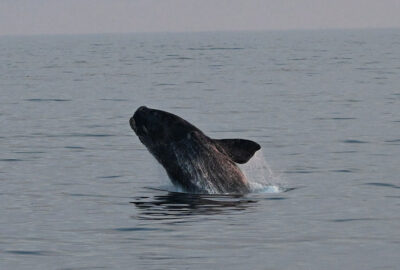
Extreme climate events are becoming more frequent and intense under climate change, but their impacts on marine food webs are not well understood. In the North Atlantic, salinity anomalies over decadal timescales have been well studied, but extreme freshening has been observed in recent years at a magnitude far greater than prior measurements. Further, short-term fresh pulses and their ecological effects are poorly understood. We integrate recent monitoring data from the New York Bight with long-term datasets to document the ecosystem impacts of a short-term fresh pulse which influenced this region from September 2023 to September 2024. Mean surface salinity in this region was lower from February through August than in any other year of observation in a 30-year dataset, with salinity anomalies of -0.80 to -1.43 psu (mean − 1.13 psu). Profound ecosystem impacts of this event were observed throughout the food web. We observed aragonite saturation levels below 1, reflecting corrosive conditions for calcifying organisms. Elevated densities of key copepods occurred in spring and summer, while fish and invertebrates showed marked equatorward shifts in a reversal of recent poleward trends. Humpback whale body condition and residence time were unusually high. Anomalously high sightings rates of endangered North Atlantic right and sei whales occurred during a particularly fresh period in summer. Our findings address a gap in knowledge regarding the ecological impacts of fresh pulses, and portend widespread impacts of these events under continued climate change with implications for commercial and protected species.
Full Text
- Read at Scientific Reports
Affiliated Authors

Related Stories
Research That Drives Action
Through pioneering conservation research and strategic partnerships, our team of 40 scientists at the Anderson Cabot Center for Ocean Life works to combat the unprecedented impacts on the ocean from climate change and other human activities.
