Sustainable Aquaculture at the New England Aquarium
Our larval fish program started with tiny eggs nearly two decades ago. Today, it’s helping reshape how aquariums around the world build their exhibits.
By New England Aquarium on Tuesday, August 25, 2026

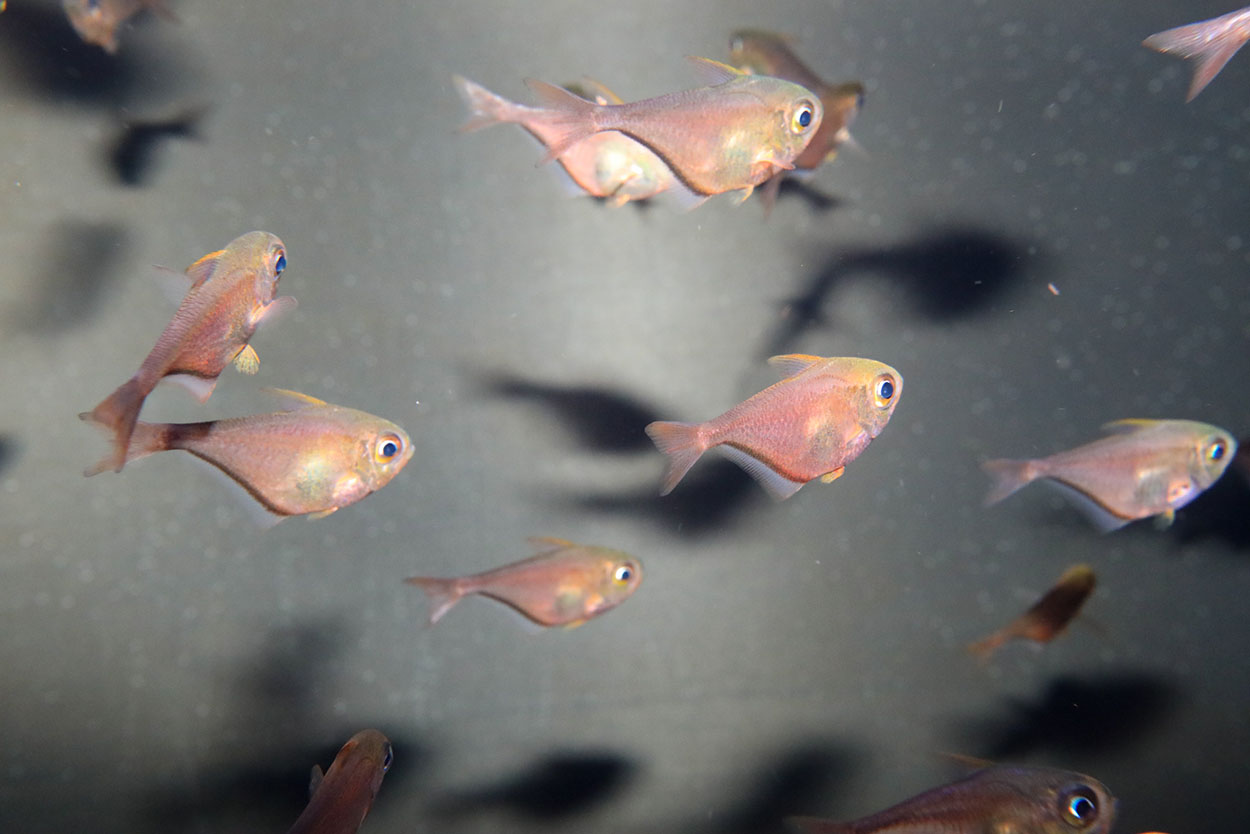
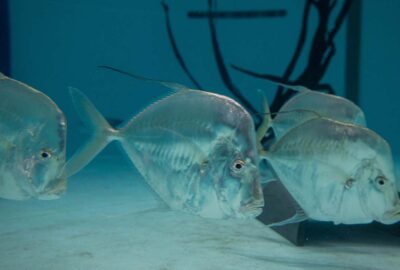
On May 27, a two-ton shipment left the New England Aquarium’s Animal Care Center in Quincy, Massachusetts, bound for the Netherlands. Inside 50 carefully prepared boxes were 20 lookdowns and 30 copper sweepers, headed for a new exhibit at ARTIS Aquarium in Amsterdam, which reopened in June after a five-year renovation.
None of these fish came from a reef. Every one of them hatched here at the Aquarium, from eggs laid by fish in our care—part of a sustainable aquaculture program we’ve been building for nearly two decades in partnership with Roger Williams University. The fish at ARTIS Aquarium will act as ambassadors for their species, spreading knowledge and inspiring ocean advocates around the world.
What is a sustainable aquaculture program?
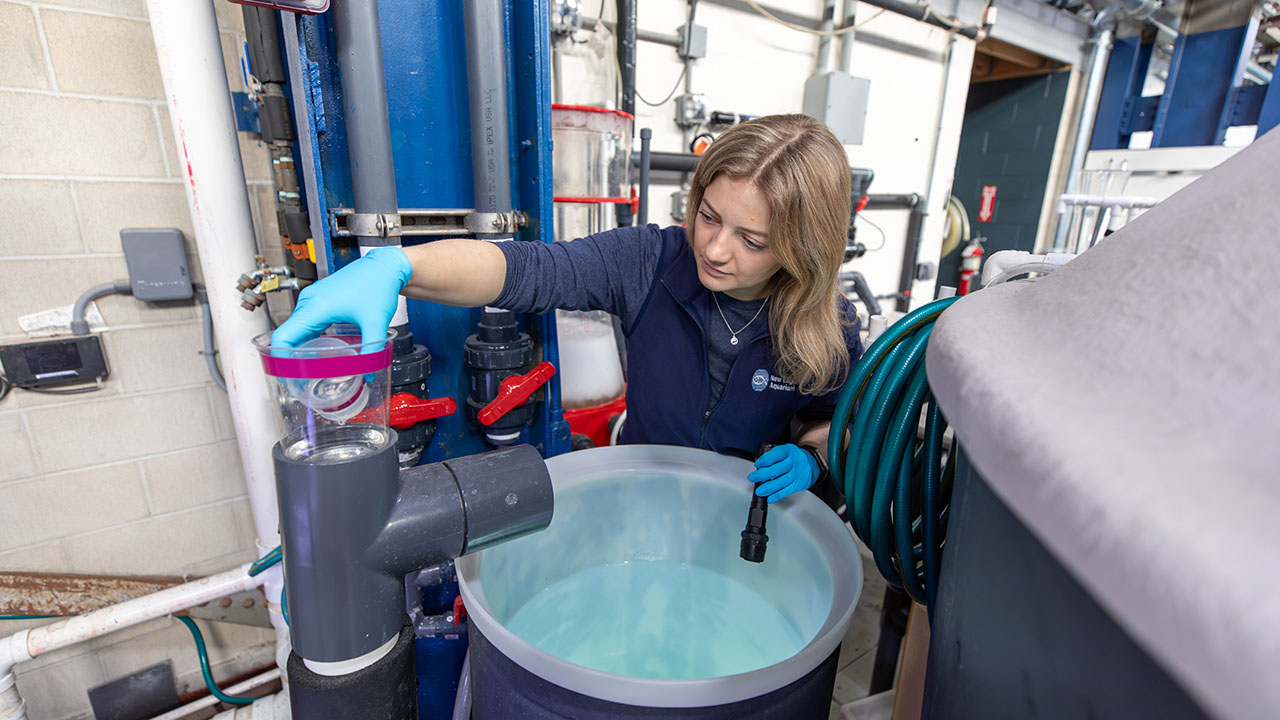
Our sustainable aquaculture program aspires to raise certain marine species in-house, encouraging conservation and reducing the need to remove animals from their native habitats. We care for adult fish, called broodstock, at our Animal Care Center in Quincy, MA, collect the eggs they spawn, and raise those eggs into juveniles and then adults, either in-house or at Roger Williams University.
We even produce the live food the larvae eat. A larval fish is often smaller than a grain of rice when it hatches, with a mouth to match, and it needs living prey at exactly the right size at exactly the right moment.
Since the program began in 2008, the team has successfully reared 15 species this way, including lookdowns, smallmouth grunts, copper sweepers, blue chromis, and brown chromis. Five of them had never been raised in an aquaculture setting anywhere before.
Why does this matter?
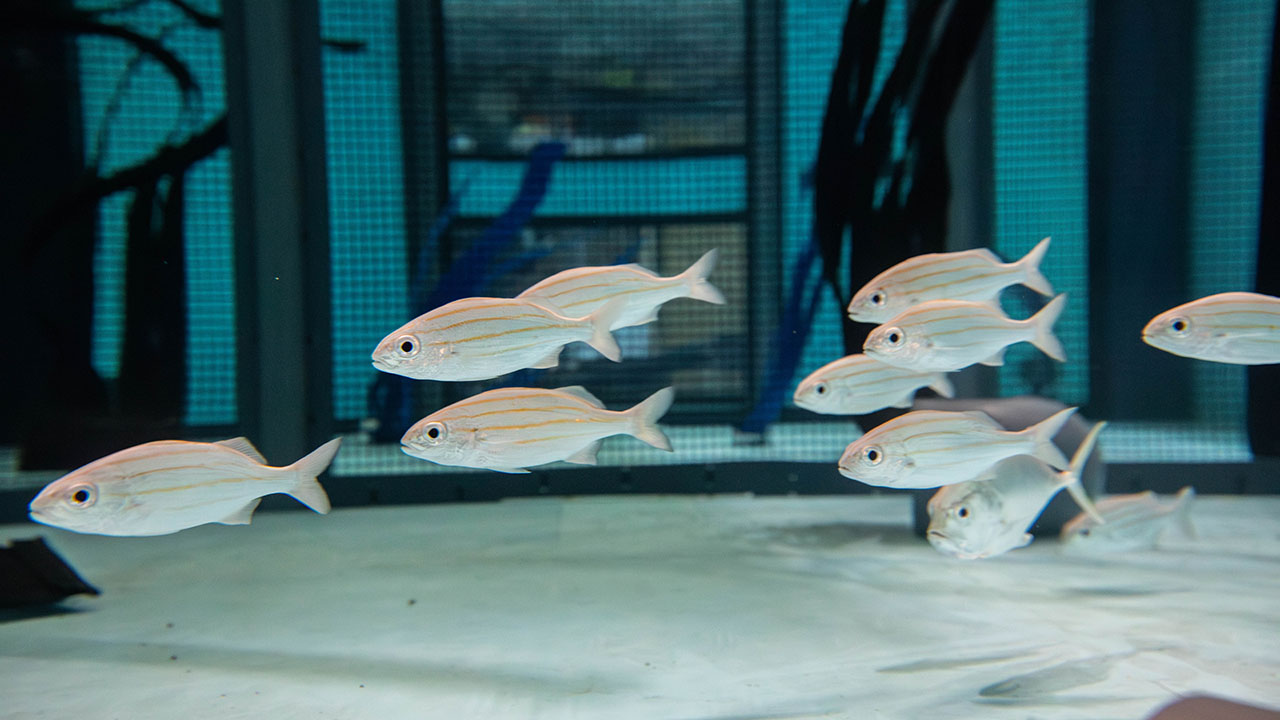
Raising fish in-house reduces pressure on wild populations by providing a sustainable source of fish for aquarium display and improves animal wellbeing. More than 70% of the animals in our Giant Ocean Tank exhibit were aquacultured by the Aquarium.
The aquaculture program also helps us gain knowledge about the species we raise. When you know a fish’s exact hatch date, you can chart its growth curve and its longevity. Lookdowns and smallmouth grunts reach about an inch long within 60 days, while glassy sweepers take roughly three months to hit the same size, for instance.
These learnings feed back into conservation. Understanding how a species breeds—what it looks for in a spawning site, how its eggs and larvae disperse—is exactly the information that helps protect wild populations.
How do we do it?
Meticulously! When eggs are collected, aquarists log their quantity and quality. Over months and years, patterns emerge from the data: Did the broodstock spawn more heavily at a certain phase of the moon? Did egg quality improve after a diet change?
Once the eggs hatch, the larvae move to small tubs, where the team adjusts variables like diet, light, water flow, and temperature—changing only one variable at a time, so any effect can be traced to a single cause.
And the team assumes nothing. Early on, while raising queen triggerfish, aquarists sensibly increased the size of the food as the fish grew, only to discover under a microscope that the fish’s mouths were actually getting smaller as they developed! They needed smaller food over time instead of larger.
Documentation is essential throughout the process, ensuring findings are easy to refer back to and care is consistent no matter who is caring for the fish on a given day. The end goal for each species is a rearing protocol—a repeatable process with reliably successful results. Getting there takes patience. In this work, progress is measured less by whether an attempt succeeded outright than by how much further it got than the last one.
Are other aquariums involved?
In recent years, the program has expanded through partnerships within the Association of Zoos and Aquariums (AZA), a nonprofit dedicated to advancing zoos’ and aquariums’ efforts in conservation, education, science, and recreation. In the AZA’s Aquatic Collections Sustainability Committee collaborative model, member institutions divide up species according to their expertise, then share both the resulting fish and everything they learned raising them. Think community-supported agriculture, but for reef fish: resources, knowledge, and experience are pooled into one group and redistributed to the whole community.
We’ve also built a Marine Fish Egg Catalog documenting more than 100 species’ eggs, with photos and identifying details, so aquarists anywhere can recognize what kind of egg they’re looking at, which is often the first step toward raising a species in-house.
Sometimes that sharing crosses an ocean. The Amsterdam shipment took five months of planning, 278 emails, 50 prepared boxes, nine packers, and four rolls of tape.
Where can you see the fish?
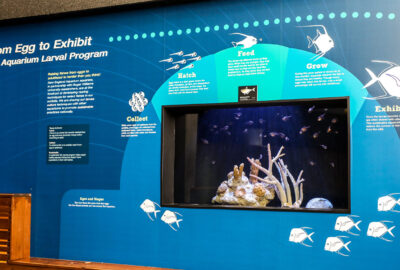
Look for the shimmering schools of lookdowns and smallmouth grunts at the Aquarium’s Giant Ocean Tank exhibit—many of them started out as eggs in Quincy. Then, head to the larval fish exhibit in our Blue Planet Action Center on the first floor to see the next generation of young fish.

Related Stories

Help Protect the Blue Planet
At the New England Aquarium, ocean conservation is at the center of everything we do. And with your help, we can tackle pressing threats facing the ocean and all who rely on it.