On Tuesday, March 31, the Atlantic Harbor Seals Exhibit will be temporarily closed for maintenance. The Harbor Seal presentations are scheduled to resume at 3:30 p.m.
Looking Back at 2025’s Top Stories
As a new year begins, take a moment to reflect on some of the work we did to protect the blue planet at the New England Aqauarium and our Anderson Cabot Center for Ocean Life.
By New England Aquarium on Thursday, January 08, 2026

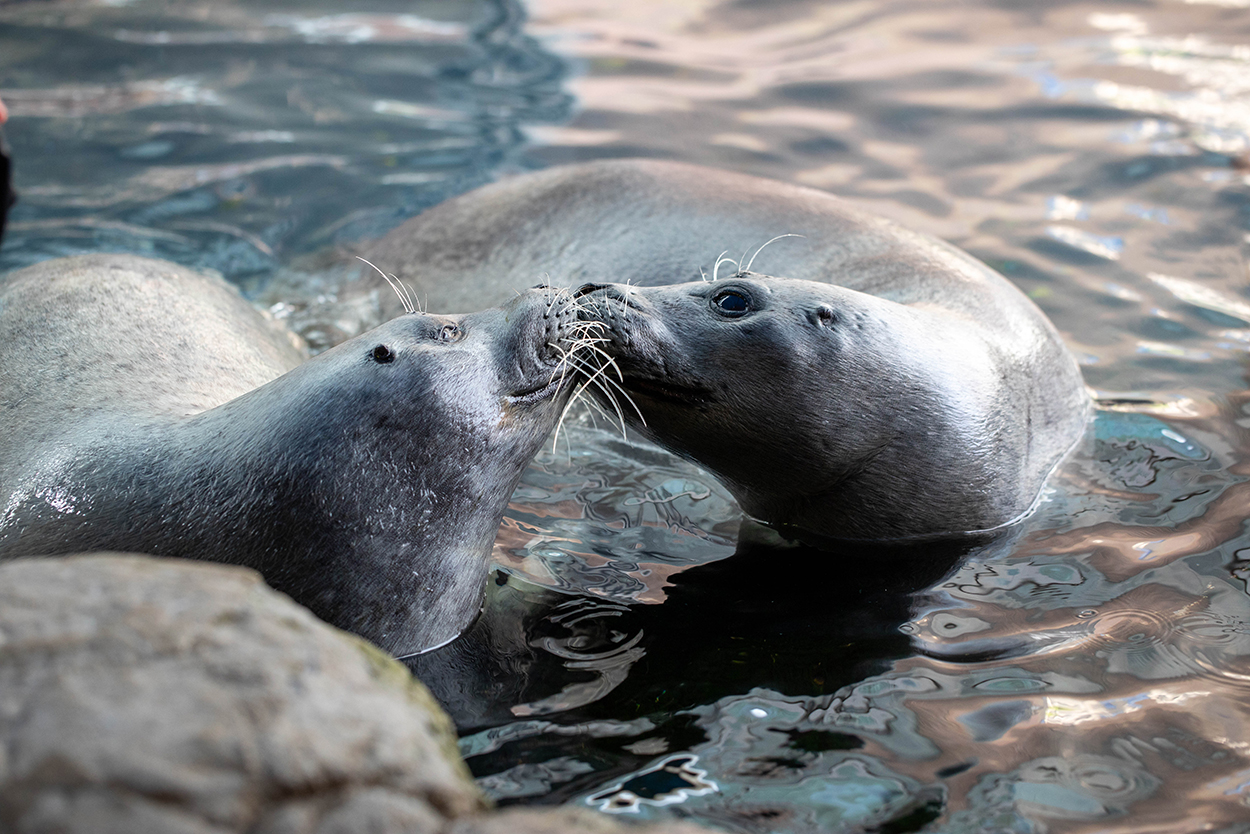
From celebrating a milestone birthday for two Atlantic harbor seals to another summer of right whale fieldwork and a busy sea turtle rescue season, take a look back at some of our top stories from the year.
Every ticket purchase, membership, and donation helps support all the work we do to protect the blue planet each year—we couldn’t do it without you!
Animal Care
Two seal sisters turned 40
We celebrated a milestone birthday for Atlantic harbor seals and half-sisters Amelia and Trumpet, as they turned 40 in early spring! Staff at the Aquarium threw a party, complete with cards for visitors to sign and special enrichment for all the Atlantic harbor seals. Learn more about how our expert Animal Care team has helped all the harbor seals exceed their expected lifespans in the wild.
A new home for “retired” penguins
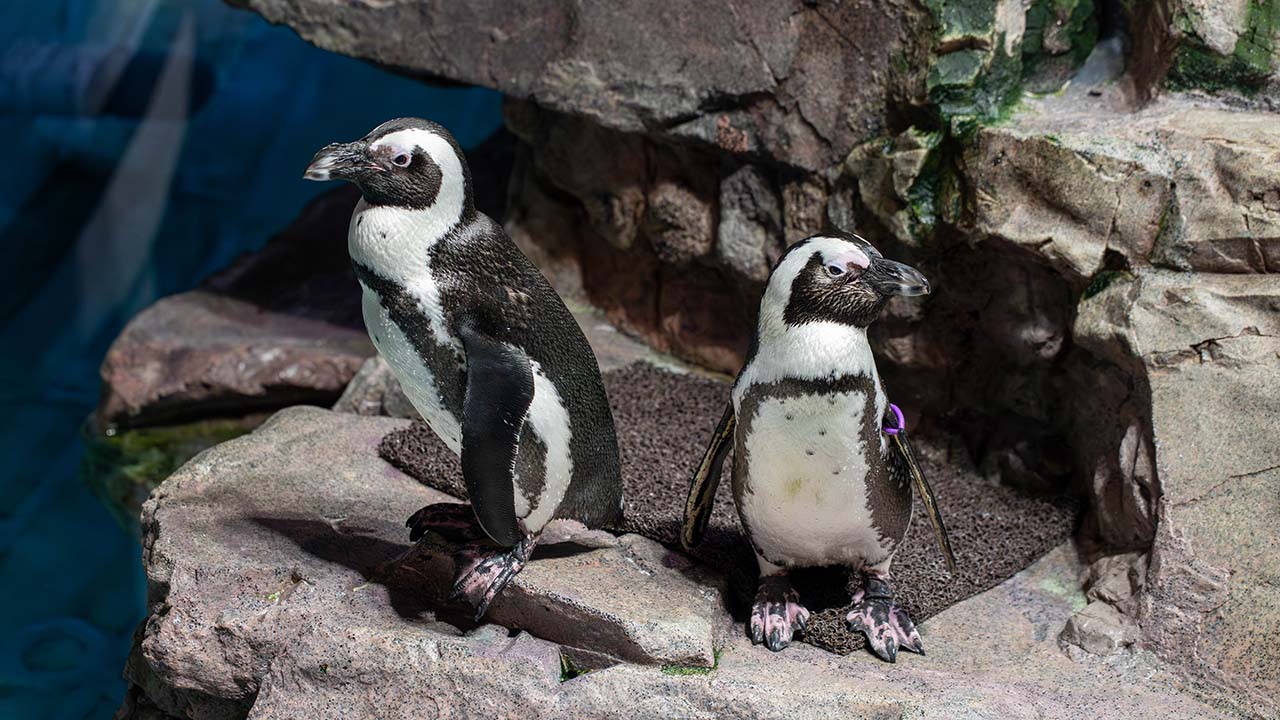
Amelia and Trumpet are far from the only older animals at the Aquarium—in fact, many of our African penguins are also considered “geriatric,” living into their 20s, 30s, and even 40s. Aging animals face many of the same challenges as aging humans, so, to accommodate the needs of some of our most senior penguins, our team created a penguin “retirement home” in the African penguin habitat. There, a small group of birds enjoy a slower pace of life, with terrain and enrichment tailored to their needs.
Note: As of January 2026, the Penguin exhibit is undergoing further improvements and, during that work, the birds are behind-the-scenes for their safety. You can take a peek at them via our penguin webcam during your visit, and they’ll be back out on exhibit by February 14.
Our penguin trainers share their expertise beyond our walls, too. Staff have the opportunity to travel to SANCCOB in South Africa to work hands-on with African penguins and help conserve them in the wild.
Saving sea turtles
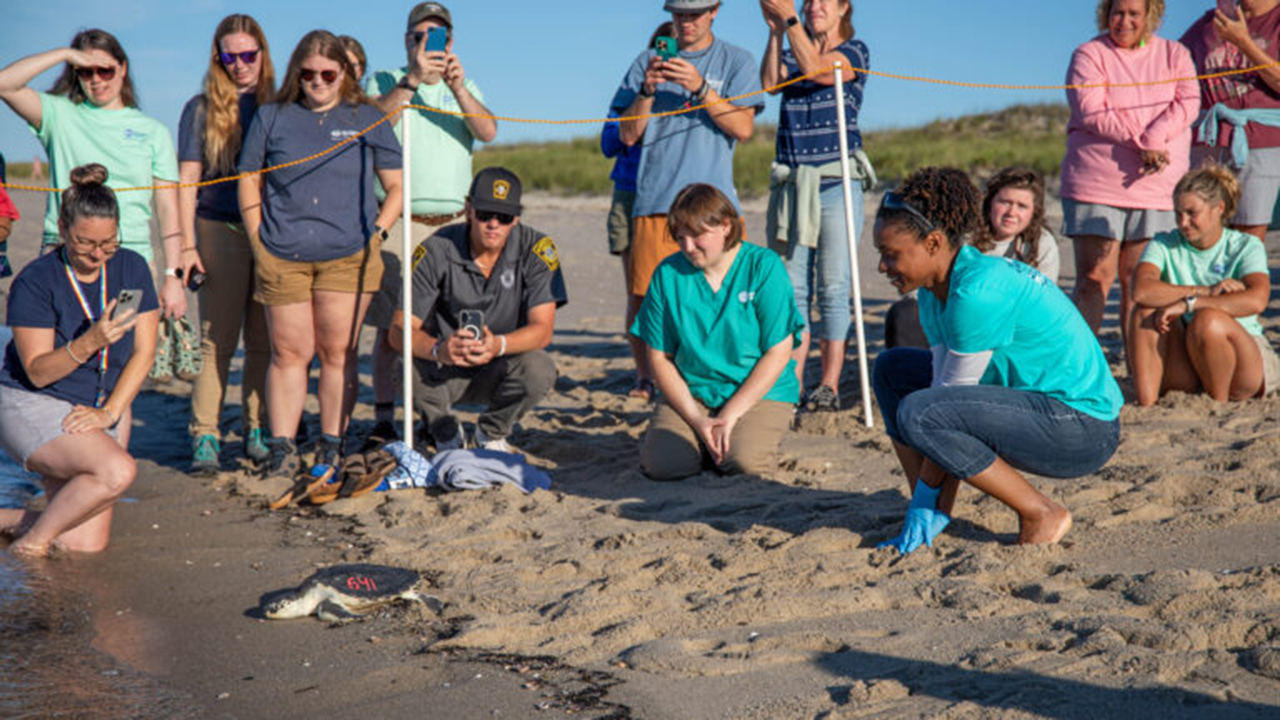
The previous year’s sea turtle rescue season usually wraps by January, and any patients remaining at our Sea Turtle Hospital in Quincy, MA, transition to long-term care. In 2024, we took in over 500 patients and, during summer 2025, released 40 turtles back into the ocean off Cape Cod. Two of those turtles were Hercules and Athena, whose stories we spotlighted.
2025’s cold-stunning season saw more than 450 injured turtles come through our doors and, as of January, there were 60 patients still undergoing treatment. Stay tuned for updates as they progress on their journeys back home!
As we release turtles, many receive tags to help researchers better understand sea turtle behavior. Back in 2021 and 2022, scientists from our Anderson Cabot Center for Ocean Life, working alongside our Animal Health and Rescue and Rehabilitation teams, took a novel approach to their tagging research by surgically implanting acoustic tags in 14 rehabilitated loggerhead sea turtles. These longer-term tags have allowed our researchers to collect years’ worth of data on the turtles’ survivorship and habitat use—showing that rehabilitated turtles continue to do well several years after their release. Read more about their work.

Research
Right whale fieldwork and photogrammetry
Right whale researchers in our Anderson Cabot Center conducted another year of fieldwork in Cape Cod Bay—where they were aboard our research vessel Nereid for the first time since 2020!—doing photo ID-surveys, using a drone to collect blow samples and conduct photogrammetry, and recording sounds of whales in the bay.
During the summer, our scientists were also in the field for collaborative research in the Gulf of St. Lawrence, joining up with partners at the Canadian Whale Institute for two two-week offshore vessel cruises, as well as two two-week day-trip surveys between June and August.
This year, the team in our Spatial Ecology, Mapping, Assessment, and Photogrammetry (EcoMap) program at the Anderson Cabot Center also kicked off efforts to “take whale science to new heights.” Led by Dr. John Durban, and inspired by his research on killer whales in Alaska, the team is preparing to conduct photogrammetry—capturing photos to assess body condition and health—of right whales from aerial survey planes. Learn more about their efforts.
Leatherback tagging in Puerto Rico
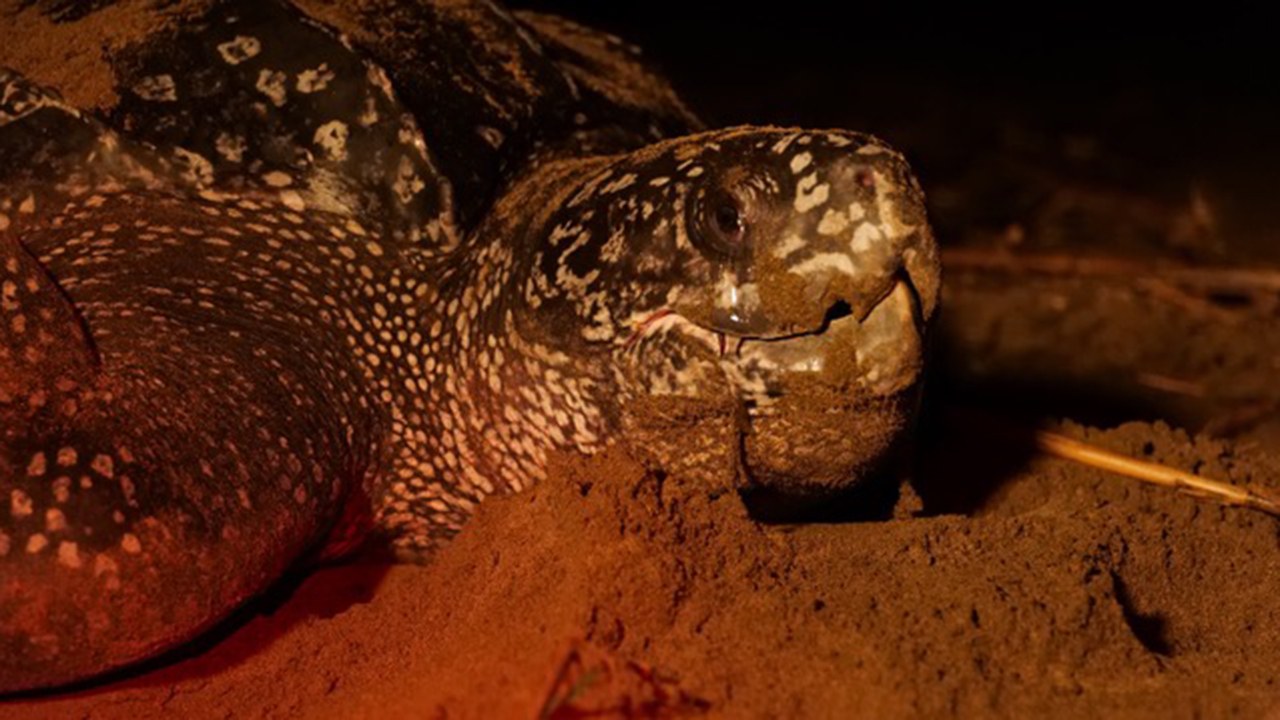
In May of 2025, scientists from our Anderson Cabot Center for Ocean Life headed to Puerto Rico for their fifth season of leatherback sea turtle research. The study, led by Dr. Kara Dodge, is conducted in partnership with community-led sea turtle conservation groups on the island, using satellite tag technology to collect data on the nesting habits and migratory patterns of female leatherback turtles. It’s also an opportunity for collaboration with Aquarium staff members! Each year, biologists from our Rescue and Rehabilitation team, who work with cold-stunned sea turtles at our Sea Turtle Hospital, join the tagging efforts, getting first-hand experience with a species they don’t see during their day-to-day. Learn more about this year’s fieldwork.
Shark science near and far
The long-term research of nurse sharks in the Dry Tortugas, FL, entered its 34th year in 2025. Scientists from our Anderson Cabot Center for Ocean Life were joined by members of our Animal Care team for another season of tagging sharks in this popular mating habitat.
Our researchers also continued their work partnering with charter boat captains in Florida and Georgia to tag sharks, including bull sharks, in recreational fishing areas. Read about their work here!
Closer to home, our team was out in Boston Harbor tagging sand tiger sharks to better understand how to protect the species as their presence in the region rebounds.
Community
Inspiring the next generation of ocean advocates
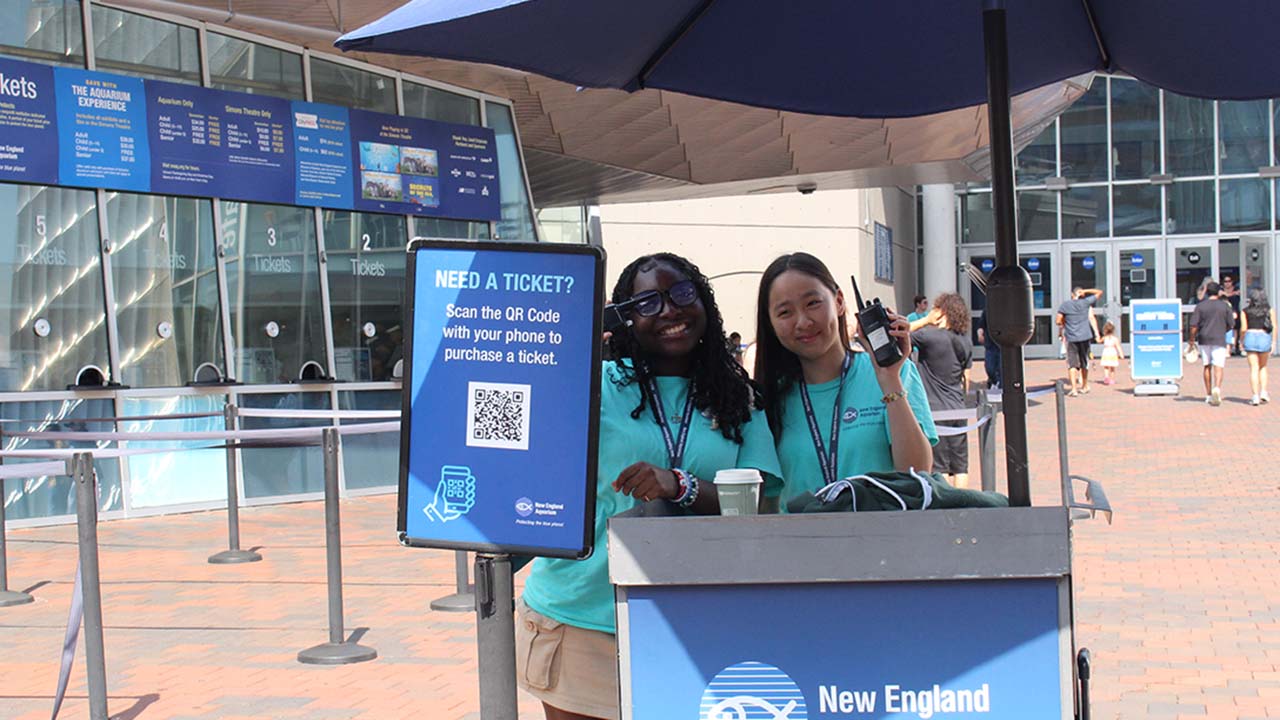
In 2025, 41 teens joined us as Summer Teen Interns, becoming an integral part of the Aquarium community. Over the course of the summer, each of them contributes to the Aquarium’s operations through a variety of roles in animal care, visitor services, education, and more.
While they work, they develop valuable professional development, communications, and ocean conservation skills, too! Learn more about Youth Development Programs at the Aquarium.
Welcoming four new MCAF Fellows
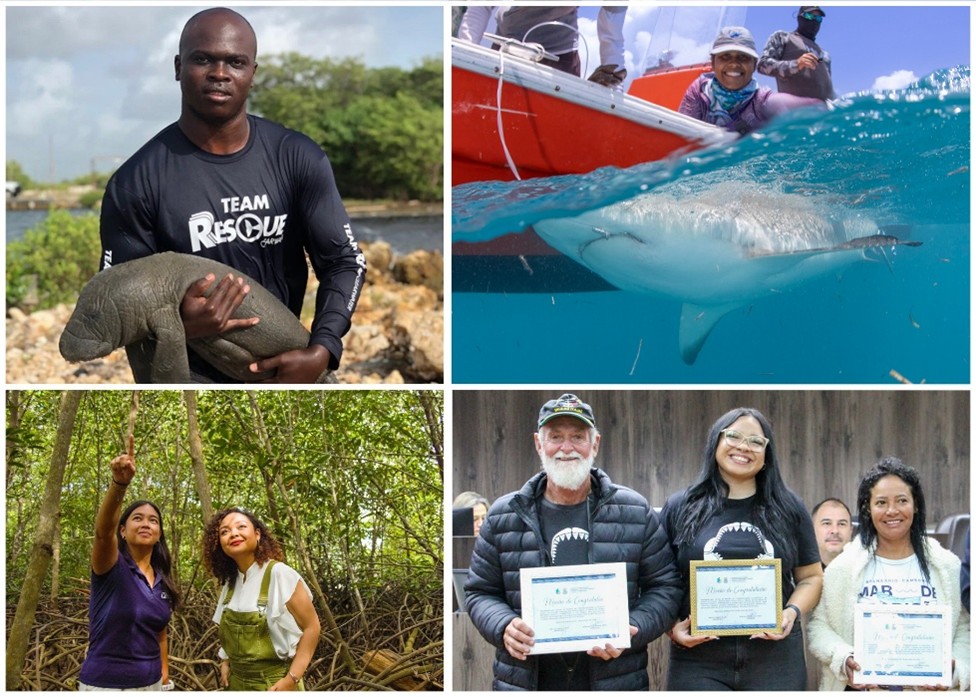
Our Marine Conservation Action Fund (MCAF) welcomed four new fellows to the program’s growing global community of conservationists working in low- and middle-income countries. Through the MCAF Fellows Program, launched in 2015, the New England Aquarium has developed enduring partnerships with proven conservation leaders to help them catalyze lasting conservation outcomes. Meet them all and learn about their work here!
Going global
The New England Aquarium joined the International Union for Conservation of Nature (IUCN), a global coalition of organizations working for the environment. The Aquarium was recognized as a member because of its commitment to conservation and the IUCN mission, demonstrated through our extensive animal care, innovative scientific research, and marine conservation and education work.
That’s just a hint of everything that happened at the Aquarium in 2025. Whether we were out spotting Gulf Stream Orphans, behind the scenes ensuring our animals—and our water quality—are in tip-top shape, or taking care of some really cool fish, we worked every day for the ocean. Thank you for your support as we continue protecting the blue planet. See you at the Aquarium in 2026!

Related Stories

Every Visit Makes a Difference
Your ticket purchase to the Aquarium directly supports our work to create a vital and vibrant ocean for future generations.